I'm Anna Martin, the host of the Modern Love podcast. In every episode, we peek into an intimate corner of someone's life and learn about what love means to them.
You know, I can tell you, 35 years with another person, I've never spent that much time with anyone else either.
So we both kind of said I love you pretty fast. My advice is that it's okay if it's hard. You can listen to Modern Love wherever you get your podcasts.
From the New York Times, this is the interview.
I'm David Marchese.
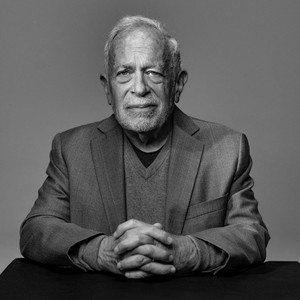
For more than 40 years, Robert Reich has been banging a drum about rising inequality in America.
He did it as a member of three presidential administrations, including a stint as Labor Secretary under President Clinton, and as a revered professor at UC Berkeley, Brandeis, and Harvard. Currently, he's talking about inequality online.
line. He's somewhat improbably become a new media star.
He's built a devoted audience of millions across Substack, TikTok, and Instagram.
All along, Reich has warned that inequality, in various forms, chips away at social trust, diminishes democracy, and creates openings for populist demagogues.
That's why I wanted to talk to Reich about this political moment, which also includes the rise of democratic socialists who focus on income inequality.
People like Alexandria Ocasio -Cortez and Zoran Mamdani, who won New York City's Democratic mayoral primary just a few days after we first spoke.
I also wanted to talk to him about where he is personally.
He recently retired from teaching.
He's the subject of a new documentary about that called The Last Class.
And he also has a memoir coming out next month, Coming Up Short.
At 79, he's really reckoning with the failures of his generation when it comes to inequality and how best to correct them.
Here's my conversation with Robert Reich. Hi, Robert.
How are you? David, how are you doing?
I'm good. I'm good.
So to start, the title of your memoir, Coming Up Short, is, you know, a pun.
It's a pun on the fact that you're short.
But then, of course, it also refers to your Your argument that your generation, the baby boomers, failed to strengthen democracy, failed to reduce economic inequality, and generally, as you put it, failed to contain the bullies.
Without giving away the whole book, what went wrong?
I think we took for granted, David, a great deal of what our parents and their parents bequeathed to us.
I was born in 1946, as was George W.
Bush and Bill Clinton and Donald Trump.
But in 1946, that so -called greatest generation gave us not only peace and prosperity, but the largest middle class the world had ever seen.
And what I try to understand is how we ended up with Donald Trump.
Donald Trump, I think, is the consequence, not the cause, of what we are now experiencing.
He is the culmination of at least 50 years of a certain kind of neglect, a certain kind of failure.
Despite what our parents gave us, bequeathed to our generation, we did not appreciate it.
We did not build on it adequately.
And I say this very personally because this is a story of my life as well.
I was part of this failure.
It is a reckoning that I feel is deeply personal.
How useful or explanatory is the generational frame?
Because alongside the shortcomings, you know, baby boomers helped reduce racial discrimination, grew the environmental movement, bolstered feminism and gay rights, helped to shepherd a long giant technological advance.
So, is it really accurate to sort of describe the problem as a generational failure or is the issue more that, you know, conservative politics, which plenty of baby boomers themselves have always held, has won some pretty significant victories over the last 50 years?
Well, it's not fair to blame a generation, certainly.
And I try not to in the book.
But I think it is fair to say that over the last 50, 60, well I'm now 70, going on 79 years old, there has been in America a failure to appreciate the importance of democracy.
The importance of holding back big money, the moneyed interests, because as inequality has got worse and worse and the richer Americans have become far richer, the poorer Americans have become poorer, the middle class has by many measures shrunk.
That is an open invitation for corruption.
We see more and more big money undermining our democratic institutions.
We could not have stayed on the path we were on, even if Trump hadn't come along.
We were opening ourselves to, if not a demagogue, then something like a demagogue, because so many people became so angry and frustrated, and so many were convinced, even before Trump, that the system was rigged against them, that America was ripe for what happened.
I don't want to minimize the good things that have happened over the past 70 years, obviously.
But the fact of the matter is that we ended up with a very large number of Americans who are deeply distraught, who feel that the American system and the promise of America was a sham.
I think undergirding a lot of the problems that you've pointed to is this issue of economic inequality, which has really been a recurring issue for you for decades now, it's fair to say.
You know, I think people in the abstract have some sense of what economic inequality means, but can you make it a little bit more concrete for me?
What are you referring to?
you? I'm talking about the extraordinary inequalities of not just income and wealth, that's the surface, but the inequalities that stem from inequalities of income and wealth, inequalities of access to a good education, racial inequalities, class inequalities.
We are now seeing inequalities having to do with who is here on the basis of their citizenship.
But basically, I see bullying as central to inequality getting out of control.
That is, certain people have control over other people in ways that enable them to brutalize those people.
And here I would include a lot of the employers that I began to see as I was labor secretary.
I'd include men who have brutalized and exploited women.
And again, I go back to race and ethnicity that have been so central to the brutality in America and our own brutal history.
This all stems, David, from inequality.
But when inequality gets out of control as it has, we eventually get a bully -in -chief named Donald Trump.
Can you tell me why bullies and bullying, why they have such heat for you?
Well, I am very short.
I've never reached quite over four foot eleven.
And I've always been short.
When I was a kid in school, in kindergarten, first grade, I was bullied, made fun of, humiliated, to the point where I really feared going to school.
Now, I'm not alone in that.
Bullying happens in every elementary school, I'm sure, in America, and many kids are bullied.
I felt, though, that my bullying, that is, the bullying of me, made me so deeply afraid in so many aspects of my early life.
It undermined my sense of personal security and self -worth.
It wasn't until I had a wonderful teacher in third grade that I learned that I actually might have something to contribute.
I might be worth something, not in a grandiose societal way.
I just mean in terms of a very tiny little eight -year -old way.
And then I found that if I had a couple of older boys to protect me from the bullies, that would help.
People I just sort of latched onto because I knew that they were kind.
For somebody like me at the age of five or six, kindness in an older boy was really something that I recognized very quickly.
One of those boys who was one of my protectors was named Mickey.
I didn't know his last name or, you know, as a little boy, I just knew him as Mickey with a sailor's cap and a wonderful smile.
I don't recall him ever actually interceding on my behalf, but he just exuded a kindness.
People around him felt his kindness.
He changed the atmosphere, if you will, around him.
Long story short, Mickey was a civil rights worker.
His full name was Michael Schwerner, and he, along with two other civil rights workers, were brutally murdered in the summer of 1964 as I entered college.
I had lost track of Mickey entirely by that time.
They were part of Freedom Summer.
summer, and when I heard that the person who had protected me from the bullies had been murdered by the Ku Klux Klan, I think in many ways it changed my life.
It made me see bullying, not just in terms of the toughs in my elementary school, but But in terms of the powerful against the powerless, people who desperately needed protection from those who abused their power.
Now let me say, in any society, there are always going to be the more powerful and less powerful.
There's always going to be inequality.
Some inequality is not bad.
In fact, it may be necessary to give people the appropriate incentives to work hard and innovate.
But at some point, we tip over into a culture that is a brutal culture and that's what I discovered, particularly when I was Secretary of Labor when I looked at what was happening out in America at the people who were losing jobs or losing good jobs at the decline of unionized jobs, which were by definition good jobs.
I mean, it's not American manufacturing that creates good jobs.
It's that they were unionized jobs.
I began to see that economic bullying was a central aspect of the late 20th, early 21st century America.
Did you ever feel like you came up with a reliable strategy for dealing with bullies?
So that's sort of the personal side of the question.
And then in a bigger picture sense, are there reliable strategies for dealing with economic bullies?
Well, I felt that I personally had come up with a good strategy.
That was my own protection racket, the older boys.
Right. But your larger question has to do with what we do about the economic bullying, what we do about the bullying in our society.
If you're an average working person today, you are extraordinarily vulnerable.
I mean nobody is protecting you.
I think this is one of the attractions that Donald Trump wittingly or unwittingly presented in 2016 and continues to present.
He has, in effect, provided an explanation for people who have been economically and socially brutalized and bullied, an explanation for what has happened to them.
An explanation that is, by the way, completely wrong, you know, has to do with immigrants and the deep state and transgender people and, you know, the rest of the boogeymen that he has created.
And part of the book is my attempt, failing so far, to help the Democrats or at least progressives or anybody politically to see that the way forward is to talk truthfully about why it is that so many people are powerless and bullied and feel so vulnerable and so angry.
What's your diagnosis for why Democrats have struggled so mightily with coming up with a story to help them gain traction?
I think Democrats, some Democrats, don't want to tell the true story of concentrated wealth and power because they are drinking at the same trough as Republicans in terms of their campaigns.
This quandary has been growing since I was in my 20s, you know, beginning to watch money and politics and the Faustian bargain that the Democrats were making.
That is the Democrats want to be on the side of social justice and fairness and equal opportunity and political equality.
And yet some Democrats, I don't want to tar with too broad a brush here, but some Democrats are taking money and don't want to bite the hands that feed them.
And I've seen it personally.
I've seen it, you know, when I was at the Federal Trade Commission.
I saw it when I was at the Justice Department working in the Ford administration.
I saw it very close up when I was in the Clinton administration, and then at a distance when I was providing some advice to Barack Obama.
One of the frustrating things about writing this book and reliving these years is that I came across memos and letters and videos of me at that time.
I'm repeatedly saying over and over again, you know, like a broken record, if we stay on this path, we are going to find ourselves in the not too distant future with a demagogue and our democracy is going to be threatened.
Is there anything you could have done to have been more effective in delivering the message that you just outlined?
Because if you were in the halls of power being able to talk to the people with power, Or do you ever think, oh, if I had done X differently or made Y move differently, do those thoughts arise?
I often think about that.
Yeah. And I tell myself that if I had been more cunning, wiser, more aggressive, more articulate, maybe I could have been more effective.
is a wonderful perspective.
Take my arguments in the Clinton administration with Bob Rubin, who incidentally is a delightful man.
He was the Treasury Secretary, just for people who don't remember.
He was the Treasury Secretary under Bill Clinton.
He was from Wall Street, and he had good arguments, and I understood his arguments.
But he was wrong. I mean, he just was wrong.
wrong. He was wrong about globalization.
He was wrong about deregulation of finance.
He was wrong about so many things.
I, in retrospect, it's easy to say, but at the time I could not bust through.
In fact, I'm so sure that I would try to find out when Bill Clinton's limo was heading out of the White House because I was the only one who could fit in the jump right across from where Bill Clinton was sitting.
And I'd run and get into his limo and have maybe five minutes with him just alone to try to make my case.
And I think back on those instances and worry that I didn't make it as effectively as I could have. And if, as you say, the Democrats or some Democrats are drinking from the same trough as the Republicans in conjunction with the fact that Democratic growth in terms of voters, you know, it's connected to the more wealthy, more educated pockets of the country.
Given those factors, how would Democrats then authentically find common ground with working people who are struggling?
Democrats would point to the large corporations in this country, to their monopolistic practices, their anti -labor practices, to all sorts of things that they are doing that are keeping the rest of America poorer.
Or Democrats would do what Bernie Sanders and AOC and Elizabeth Warren have done quite effectively.
It strikes me as a little bit crazy that the Democrats are divided between the establishment Democrats, or the Democrats who I call corporate Democrats, and the progressive Democrats.
Why aren't all Democrats progressive Democrats?
I mean, who in the world needs corporate Democrats when you have a Republican Party that is pretty good at representing big corporations, even though it now has a facade of populism?
Surely there are those on the left who could be friendly or friendlier to big business and at the same time hold sort of left -leaning social values.
Yeah. David, you talk about, and you're not alone, left and right.
Yeah. I don't any longer know exactly what those terms mean.
I mean, you know, I'm asked very often, should the Democrats move to the center?
I don't even know what the center is.
Where is the center between democracy and dictatorship, which is what we're really now facing?
There is no center.
Maybe a working definition of the center could be connected to a term that you have used a lot, which is that which best serves the common good.
Yes, we don't talk about the common good nearly enough.
Ayn Rand and others thought it was a recipe for fascism or socialism or some other ism.
But the fact of the matter is that there certainly is a common good.
it. The core of that common good is our constitution, the rule of law, the processes and institutions of a democracy.
If we don't believe in any of this, then how in the world can we ever achieve a common good?
Do you see hope or positive energy in figures like AOC or maybe Zoran Mamdani in New York, who I assume are the kind of progressive Democrats that you support?
I do see them as the future of the Democratic Party, assuming that they appeal to working people.
My fear is that they will not, or at least that they will be carried in the currents of progressive politics, politics which right now are overwhelmingly college graduates and urban and coastal centers.
That's not bad, but you have to be inclusive.
You have to include the working class and the poor, and it should be easy to do now.
When you see the billionaires standing there in front of Trump at at his inauguration, people who are not just billionaires.
They are multi -billionaires.
They are hundred billionaires.
We don't even have terms for these billionaires any longer.
So, you know, you're pretty popular on TikTok, on Instagram.
You have a popular sub stack.
Do you have a sense of what the demographics of your audience are?
No, I don't. But I'm kind of always worried that I'm not getting through to the people who I would like to get through to.
That is, I worry that I'm not getting through to working class people who feel disenfranchised and alienated from the American system.
Well, what's the best way of actually reaching these people?
Now, you know, Fox News and Newsmax and these other entities, they play upon and exploit the anger that was already there.
I mean, I go into this in some detail in the book because Rush Limbaugh and Roger Ailes were working contemporaneously with me.
I had interactions indirectly with Rush Limbaugh and certainly directly with Roger Ailes, and I know what they were doing.
I know why they were doing it.
I talked to Roger Ailes about what he wanted to achieve with Fox News.
It was very clear to me that he was building upon discontent and anger that he saw there, as was Limbaugh before him.
And I don't want to suggest, David, that it was purely cynical on their parts.
Maybe they believed in what they were doing.
But from what I saw, from my conversations, particularly—again, I never talked to Rush Limbaugh, but I did talk to Roger Ailes.
It seemed to be very cynical indeed.
You know, minus the cynicism, is there anything you could have learned from how Roger Ailes and Rush Limbaugh communicate?
Because I just saw the other day someone sent me a TikTok video of you doing a little shimmy to big band music while sort of political slogans popped up on the screen.
I thought, well, that's cute.
Well, I didn't learn dancing from Rush Limbaugh or Roger Ailes, but I did learn that humor is very important.
People love humor. Also, what Rush Limbaugh and also Roger Ailes understood is that satire is critically important.
I don't really do that.
I don't want to be mean -spirited.
And sometimes satire, the line between satire and mean -spiritedness is very, very, very vague.
And you can lose sight of yourself very easily in terms of not going over that line.
But they did it well.
They understood satire.
You know, in addition to the memoir, you're also the subject of a documentary that's called The Last Class, which is about the run -up to your last class at Berkeley.
And you taught at different universities for 40 -some years.
Are there ways your students changed any of your fundamental ideas or beliefs?
It was very important and became more and more important over the 42 or 43 years I taught not to give students my opinions.
Because they could always read my books.
They could always find my opinions.
I wanted them to do the work.
I asked them sincerely to find people who disagreed with them and told them over and over again that this is the best way of learning.
because the worst kind of learning environment is a learning environment in which everybody agrees politically or everybody has the same basic views or there is an overwhelming consensus culturally or in terms of economics or politics because then you just don't have anybody to headbang against. You don't have any contrasting viewpoints.
And at the places, some of the places I've taught, I mean Harvard and Brandeis and certainly Berkeley, That is one of the biggest obstacles to learning.
It's funny. I went, just out of curiosity, I went on ratemyprofessor .com and looked up what students had to say about you.
And I will say that I think the vast majority of the evaluations that were submitted to that website were extremely positive.
But there were a small handful of students who said things to the effect of like, you know, the professor's class is great if you only want to hear a left -wing perspective on the issues, Which kind of echoes what you were just saying about the problem of consensus, which of course is also a hot -button issue for conservative politicians right now who talk about there needing to be more ideological balance in academia.
How would the problem of detrimental ideological consensus be addressed in academia?
Well, a very good and current question.
The attacks that Republicans are now making on Harvard and other so -called bastions of liberalism are centered on exactly that question.
JD Vance, when he was, even before he became Vice President, was making similar attacks on prestigious institutions.
Even Yale, where he went to law school.
I think that that particular issue has got to be viewed with a little bit more specificity.
That is, there is a larger kind of cultural set of assumptions that have to do with people who are likely to go to college.
Those cultural assumptions are very cosmopolitan, very literate.
They are very, very inclusive at least on the surface.
But they tend also to be prejudicial against people who do not have or from families that are not college educated.
I certainly found this at Harvard to a lesser extent at Brandeis.
I don't really find it at Berkeley very much. But there is a kind of cultural snobbery.
It's wrong to call it progressivism or liberalism.
That's really not the problem.
That's not where the problem to the extent that there's a problem.
That's not where it lies.
It really lies in kind of a – in the culture of inequality in which we now find ourselves as a country.
I think the best way of overcoming that is to make it possible for either everybody to go to college or to reduce the demands that people go to college.
I've said this over and over again.
And I think it's a terrible conceit that the only way, the only avenue to get into the middle class today is through a four -year college degree.
My son Sam, for example, dropped out of high school.
And I think that we are intolerant as a society, too intolerant.
What was your reaction when your son said he was dropping out of high school?
Oh, wow. I was floored, very, very worried for him, very anxious.
But Sam said, don't worry, Dad.
I know what I'm doing.
I'm going to make videos for the internet.
And that was a time in the 90s.
And he said, great, yes.
No, no. I said, first of all, the internet and videos are two separate industries.
They'll never come together.
You don't know what you're doing.
And if you don't have a college degree, you know, you're going to be in deep trouble.
How long did it take for you to feel secure in the decision that he'd made?
A few weeks. Oh. Because Sam has enormous presence of mind and wisdom and responded to every one of our concerns in a very sophisticated way.
Who do you talk to when you're looking for people to present opposing opinions from your own?
Well, I have some—and have had some wonderful friends.
Alan Simpson was one of my dearest friends.
The former senator from Wyoming.
The former senator from Wyoming, that's right.
Who died not that long ago.
Yes. When we were together, we mixed humor and serious discussions, and he viewed public policy in very different ways than I did.
I mean, for example, he was a deficit hawk.
I was never a deficit hawk.
But in our conversations, we laughed and we asked each other serious questions and we traded anecdotes and stories.
And sometimes we discovered things that we didn't know.
And I, well, I wish there were more people like Alan Simpson.
Did he change your mind about anything?
He did. Ed, I was out in Wyoming visiting him in Cody a few years ago after the Trump administration had begun and after Trump had done his Trumpish, Trumpian things, started to do them.
And he invited many of his friends and family to a dinner.
And I was surrounded by Republicans.
I mean, I don't think I'd ever been to a, this was 12 or 15, maybe there were 20 people around a table.
They were all Republicans.
And some of them were Trumpers.
And they were, I think it's fair to say, absolutely lovely people, generous and kind and totally enjoyable.
And I think that Alan taught me that the humanity of people in Wyoming and in the center of this country and many, many, many Republicans is so much more important than whether they believe in social security.
After the break, Robert Reich and I sit down in person in New York to talk about why Zoran Mamdani has struck such a chord. A young and charismatic candidate who understands that 70 % of Americans are living paycheck to paycheck, that's a kind of candidate who should be a featured aspect of the Democratic Party.
I'm Judson Jones. I'm a reporter and meteorologist at the New York Times.
For about two decades, I've been covering extreme weather, which is getting worse because of climate change.
And it's becoming more important to get timely and accurate weather information.
That's why we send these customized newsletters, letting you know up to three days in advance about extreme weather that could impact you or a place you care about.
At The Times, you can be confident that everything we publish is based off the most accurate scientific and vetted information available to us, because we want you to be able to make real -time decisions about how to go about your life.
This is the kind of work that makes subscribing to The New York Times so valuable, and it's how you can can support fact -based independent journalism.
So if you'd like to subscribe, go to nytimes .com slash subscribe.
Your home is an active investment, not a passive one.
And with Rocket Mortgage, you can put your home equity to work right away.
When you unlock your home equity, you unlock new doors for your family, renovations, extensions, even buying your next property.
Get started today with smarter tools and guidance from real mortgage experts.
Find out how at rocketmortgage .com.
Rocket Mortgage LLC.
Licensed in 50 states.
NMLSConsumerAccess .org.
3030. Hi, Robert. Hello, David.
Thank you for coming into the studio.
It's rare that I speak with someone remotely for the first conversation and then do it in person for the second.
So I'm glad you're here.
Thank you. You know, we're talking just a couple of days after Zoran Mamdani won the Democratic primary.
And I was just looking at some very early data and I saw that he won all over the city.
He won all different types of people.
But it seems like Andrew Cuomo outperformed him with lower -income voters, despite the fact that Mamdani's whole shebang was affordability.
What might explain that?
Well, this is the old song.
You know, lower income voters tend not to read everything and absorb every piece of news, and they tend to be very impressed by the major endorsers.
You know, Bill Clinton endorsed Andrew Cuomo.
I endorsed, you know, Mondani, but no, nobody paid attention to that, obviously.
So I think that even though he talked about affordability a lot, that did not necessarily break through with low -income voters.
Had he not talked about affordability, I think he would have done much worse, even with low -income voters.
It's interesting to hear you say that because, you know, my colleague on the show, Lulu Garcia -Navarro, earlier this year, she interviewed the Democratic Senator Ruben Gallego.
And he made a point that was basically that Americans don't necessarily begrudge the wealthy because they, too, would like to be wealthy.
and democratic messaging perhaps misses that fact in favor too much of like a eat the rich philosophy.
Do you think there's something to that, that sort of democratic messaging isn't taking into account the aspect of the American ethos that involves aspiring to being wealthy?
No, that's utter bullshit.
I mean, it may have been the case.
I think it probably was was the case in the 60s 70s 80s maybe even early 90s when the gap between the wealthy and everybody else was not in you know a chasm but it's it's now utterly ridiculous uh to make that that point i mean the idea that uh the american dream is still alive uh is for most people uh a sham i mean they They understand it's a sham.
They understand that hard work and obeying all of the rules is not going to get them much, particularly since the financial crisis of 2008.
They saw the banks get bailed out.
You know, millions of them did not, lost their jobs, their savings, their homes.
Obama had almost no program for helping homeowners who were underwater and they're angry about the system, the system being rigged against them.
They know it is. The idea that the game is rigged, the system is rotten, and therefore we need sort of outsider candidates to come and shake things up is one that has worked well for Trump.
Also seems like it worked for Zoran Mamdani.
Do you think there are lessons that the Democratic establishment establishment should learn from Mamdani's success?
And also, what's the likelihood that they will learn those lessons?
Completely different questions.
Yes, they should learn.
Now, the caution, obviously, is that we can't generalize too much from one success.
But a young and charismatic candidate who appeals not only to young people, but has a very broad range of appeal in terms of the diversity that's America, that speaks to the economic needs of Americans.
As someone who understands that 70 % of Americans are living paycheck to paycheck and are just one paycheck away from some real pain in their lives, um that's a kind of candidate who uh is and should be a featured aspect of the democratic party the democratic party really can't move in a positive direction if it's dominated by corporate democrats who would just want to protect big corporations and the wealthy or even the the college educated.
Now, the second part of your question is, will the Democrats?
David, I've been, as you now know, because you've looked at some of my writing, I've been saying much the same thing for 40 years.
You know, I'm embarrassed by how much repetition.
You're a one trick pony.
Well, I admit to that, but I think it's an important trick.
Yeah. I think it was your 79th birthday recently.
And I got your newsletter.
You were talking about turning 79.
And the newsletter took the form of a Q &A exchange.
Oh, with some of my young graduate students.
And one of the questions centered on you being grouchy because, using the language from the newsletter, everything you've worked for your entire life has gone to shit.
And, you know, your answer is like, there's that.
I didn't want to dwell on that.
Is that really how you feel?
No, it was a bad joke.
And my students laughed.
But I think we're at a very perilous point in our history.
I worry that we're not taking it as seriously as it should be taken.
We have to acknowledge that this is extraordinarily dangerous.
We have a president who continues to lie about very big things and also scapegoat people and institutions and undermine social trust. If you can talk about sinful behavior in the terms of public office, this is the core of sinful behavior.
You had shared this story last time about going to a dinner party at the home of your late friend, the Republican Senator Alan Simpson, and how you were pleasantly surprised by the fact that these Trump supporters who were there with you turned out to be lovely people.
But is there some point at which people stop being lovely if they also support a politician who you see as sort of a detestable bully?
When does that become— It's a very complicated and good question.
When does that become intention?
I think—I would guess that most Trump supporters are good people and nice people, and they probably, you know, love their families and they are patriotic.
But they have been sold a bill of goods by a conman, by a malignant narcissist, who has come along at a very dangerous point in this country's history.
And I'm not blaming them.
I don't blame anybody.
I mean, I think that I blame, I certainly blame Trump and his lackeys and the people around him and Republicans in the House and the Senate.
I can't imagine what they tell each other or even tell themselves in the morning when they're putting their lapel pins in, looking at the mirror.
I mean, what possible justification can they give themselves for continuing to mislead the public as they have?
And they mainly are working for, you know, the oligarchs in this country.
I mean, I have no other word for it.
I think that the democratic establishment, and I think to a certain extent the Republicans, have this problem of the gerontocracy.
People from your generation who don't want to leave the stage.
And I wonder, do you think about whether you continue to be the best person to deliver your message?
Or do you think about how you might develop other younger voices?
Absolutely. I think about it every day.
I love the fact that Mamdani is 33 years old and AOC is 35.
Yeah, we have to have young people.
I mean, I've retired from teaching, the best job I ever had, because I felt that I couldn't do justice to the job any longer.
I didn't want to give my students less than the best I was capable of.
Well, why don't politicians feel the same way?
Why don't others in positions of leadership feel the same way?
Well, it's others in positions of power.
Leadership and power, exactly.
Power is difficult to walk away from.
And power is seductive.
It's hard to walk away from it.
And for the rest, for younger people, it's hard to take the keys away from the grandparents.
But those grandparents cannot any longer do the job.
We're a different country.
Mr. Reich, thank you for taking all the time to speak with me.
I appreciate it. David, thank you for taking your time.
That's Robert Reich. His memoir coming up short is available August 5th.
The documentary The Last Class is currently in theaters.
To watch this interview and many others, you can subscribe to our new YouTube channel at youtube .com slash at symbol the interview podcast. This conversation was produced by Wyatt Orme.
It was edited by Annabelle Bacon, mixing by Sonia Herrera.
Original music by Dan Powell and Marian Lozano. Photography by Devin Yalkin, Our senior booker is Priya Matthew, and Seth Kelly is our senior producer.
Our executive producer is Alison Benedict.
Video of this interview was produced by Brooke Minters and Paola Neudorf.
Special thanks to Rory Walsh, Renan Borelli, Jeffrey Miranda, Nick Pittman, Matty Macielo, Jake Silverstein, Paula Schumann, and Sam Dolnik.
We'll be back in two weeks when Lulu talks with Jonathan Greenblatt, head of the Anti -Defamation League.
I'm David Marchese, and this is The Interview from The New York Times.