From The New York Times, this is The Interview.
I'm Lulu Garcia Navarro.
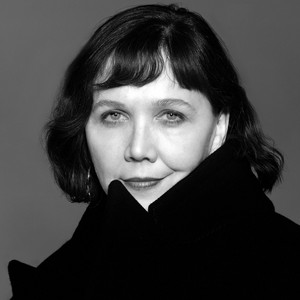
Maggie Gyllenhaal has always had this kind of fascination with the darker side of sex and love.
Her breakout role as a young actor came with her award-winning performance in the 2002 film Secretary, where she's a troubled woman who embarks on a sadomasochistic relationship with her boss.
In Crazy Heart, she played a young mother who falls in love with an older alcoholic country singer.
That role earned her an Oscar nomination.
And in the series The Deuce she starred as a sex worker who becomes a director of pornographic films.
That last role made her want to be a director in real life, too.
And so in 2021, she won acclaim with her feature directorial debut.
The Lost Daughter about the taboo feelings some women feel over motherhood.
For me, the through line in all her work is a desire to tell the stories of women who live outside conventional boundaries.
Enter her newest film, The Bride, an imaginative retelling of the story of the Bride of Frankenstein, starring Jesse Buckley, which Gyllenhaal both wrote and directed.
The film is part love story, part crime caper, with some surreal musical numbers thrown in.
But Gyllenhaal's signature themes of sexual violence, female power and transgression undergird it all.
Here's my conversation with Maggie Gyllenhaal.
Thank you so much for being here.
I really appreciate you coming to the interview.
It really is my pleasure.
You know, it's interesting to me because I interviewed you in 2019 for The Deuce.
And in that interview you said to me playing that role where she, your character, becomes a director of pornography, but a director nonetheless.
It's like a real journey.
You said that that had made you realize that you would also be a director.
And I was wondering, now sitting here with this big budget movie...
You know, where you're at in that kind of evolution.
I mean, I feel like I'm deeply, like, in process.
That's how I feel.
You know, I feel like I knew I was going on a major journey starting The Bride.
And I was scared.
I was actually terrified.
Hmm.
And, to be honest, I remember I mean I don't know it's interesting that I'm sharing this, but like I remember being at Venice with Peter.
Peter Sorsgaard, your husband.
My husband, who had a movie there.
And feeling so scared about the prospect of directing The Bride.
And we went to a lovely restaurant that we'd booked.
We were so excited for it.
We knew it.
And I remember feeling so anxious and getting up and going to the bathroom, looking at myself in the mirror and thinking oh, I don't have to direct this.
I can let someone else direct it.
I've written it.
I've cast it.
I've conceived of it.
Oh, I don't have to do this.
And I came back to the table and I said to Peter, I don't know if I'm going to do it.
I feel so relieved that And he was like, you don't have to do it.
But that doesn't mean that you shouldn't.
But I feel, having come out the other side and only really having finished it in October it's February now like I went on a trip.
I learned so much.
And now I'm on the trip of putting it out into the world.
Well, let's talk about The Bride because I think it's an incredible film.
And it tells the story of the Bride of Frankenstein's monster.
And you have said that you were inspired by the 1930s movie original.
This is almost a century later.
Why are we still so interested in monsters and Frankenstein?
And what was it for you that seemed so enduring about that story?
Yeah, I mean...
I think we have monstrous aspects inside of us, each of us, all of us.
I do believe that.
And I think we can spend our lives running from those really truly monstrous aspects of ourselves, or we can turn around and shake hands with them.
And that's terrifying.
And that's the kind of monstrousness I was curious about and interested in.
Frankenstein as a piece of cultural mythology, I actually hadn't read the book.
I mean, I'll tell you how it all came to me.
I was getting kind of pitched IP after The Lost Daughter, you know, like...
Maybe you want to do a Marvel movie or whatever, something.
And I had made this little tiny movie really left alone, like almost entirely.
It was cheap enough that, and it was COVID and they sort of forgot about us.
That's what I think when I look back on it, but it made an impact.
And I thought, I don't know how many more opportunities I'll have to make a film.
I want to do something bigger.
And I also thought The Lost Daughter hit a little vein where other people could relate to something that hadn't been talked about that much before.
And I thought, what if you could do the same thing, but like on a pop level, on like a big level?
What would happen?
This was my question to myself.
And as I was thinking about this and thinking okay, I better think of something quick, because who knows how long I'll be able to finance a movie.
I saw this guy with a Bride of Frankenstein tattoo on his arm, that Elsa Lanchester hairdo profile.
And I was like, who is that again?
And I looked her up and I was like, oh yeah, her.
Whoa, she's got some...
Wild energy.
Just the image.
I hadn't seen the movie.
I watched the movie and I was like, oh, The Bride of Frankenstein is a Frankenstein movie.
There's almost nothing to do with The Bride of Frankenstein.
She's like a prop.
She's in it for three minutes, less maybe.
And she doesn't say one word.
But somehow...
She has entered the cultural mythology, even though she doesn't get to speak.
And I do.
I don't know my fantasy, it's just my fantasy, and I've been taken to task for this.
Is that I don't know if Mary Shelley got everything she wanted to say out with Frankenstein.
I love the book.
The book is brilliant, obviously.
You know it's one of like what five books published that were written by women in the 19th century.
I know I'm exaggerating, but like, you know, not easy to do.
And so how did she have to censor herself in order to get that book published?
That's my kind of, that's one major question in the movie.
This is, you know, quite a violent film.
It's visceral.
It's bloody.
I'm wondering what you were tapping into with that.
Yeah, I have kind of a lot to say about this, actually.
I've been thinking about this.
Yes, there's sexual violence.
There's violence, violence, violence.
Because it's a big studio movie, we tested and tested it.
We had big screenings in malls and stuff where people came to see it, which I had never been a part of as an actress or a director before.
Oh, interesting.
So fascinating.
I want to hear about that, but finish this.
No, I'm going to.
But one of the things that was brought up was the violence.
Is it too violent?
By the people going to see it?
Yeah.
Hmm.
And I was talking about it with a girlfriend of mine who said she wasn't being reductive.
She's just like, I'm just curious.
I just wonder, if you had been a man making this movie, if you would have had the same response just straight violence.
Yeah, I'm thinking of a lot of directors off the top of my head whose signature is that kind of violence, right?
And I was asked to take some of it out, and I did.
So what you're seeing is even a little bit pulled back from what was originally in the movie.
Mm-hmm.
One of the things I think that was important to me is that everybody who is killed is hurt.
We at least for a moment get to know them.
So there's the sort of stormtrooper version of killing people.
Where they have white masks on and you don't know who they are.
And then there's the version where which was very important to me in this movie every single death has a consequence and a cost.
Every single one.
The other thing I really want to talk about.
I want to talk about the sexual violence, because that's another thing that I have been taken to task for.
And I do... Taken to task by whom?
Again, just by like reading the things in the test screenings.
I'm interested in this.
I really am.
I'm really curious, you know?
So I had a couple of women, because you know you don't know who it is, of course, but you know it's a woman, you know what age they are say I don't want to see a woman being violated.
And I think I also don't want to see that.
And yet that is a major reality in the culture that we're living in.
And so if we're going to see it, which in this movie, we do need to see it.
We need to see it in a way that is very hard to watch because it is very awful.
And if you know anything about me, you know I mean, if you looked at any of my work, I mean so much of my work, even starting with secretary when I was 22, all the way through.
This is something that I've spent a lot of time thinking about, doing myself considering, and I am sure that in the process of both writing, shooting and cutting this movie that I have been thoughtful and very considered about this particular subject.
And yet, it will be hard to watch.
And I think we can take it.
I think we can.
You have just articulated something which I think is very true about your work, which is this has been a persistent theme, and I guess I want to understand why.
Well, like what part exactly?
Well, the idea of violence towards women.
What is it that has drawn you over and over again to that subject?
I mean, there is a piece of this...
This is a piece of what the movie is about.
I understand.
But also, and I think with all of these movies, or say, think about The Deuce.
Sex worker, turned director, but director of porn.
But really, she's a woman with a mind.
And like all of these movies really, I think are about Women with a mind you know, like even think about secretary, which is a very complicated one which we can get into if you want.
But
I was going to.
I don't know.
To me, in some ways, the violence is like beside the point.
It's not the violence.
It's the rage.
Oh, it's the rage.
It's the rage.
Yeah.
Sorry.
That's what I connect to.
That's interesting.
To me, it's not the violence.
It's the rage against the violence.
That's so interesting.
I was just talking about rage yesterday.
I love rage.
So this is coming from someone who's very rageful.
Well, I was thinking about rage and thinking about this teacher I had who was just a major, major teacher to me.
Her name was Penny Allen.
She's dead.
But she used to say, rage is an umbrella emotion.
And what she meant was what's underneath it.
And I think what's underneath it is usually very, very vulnerable.
And I don't know there's so much to say about rage because, like for women, in so many ways like, let's not skip rage.
You know, like we have a right to it.
But I am also, I am also really curious about what's underneath it.
Hmm.
I do feel angry about all sorts of things.
You know and feel a lot of vulnerability underneath that and just need and desire to be heard.
I hope that you know the people in the test screening who said I don't want to see this, and I know what they meant.
I know they meant enough of this in a gratuitous way.
None of us want to see it.
But like, let's look at it together with thoughtfulness and care.
And also like, there's joy.
There's real joy in this movie.
There was reporting around it being sort of a difficult process once you know at the end with Warner Brothers because of some of the things you talked about, the way it tested.
Were there a lot of changes?
Was it difficult to sort of work through the big budget studio system to get to the other side of that.
Yeah, it was difficult, but not...
Like not in a bad way.
It was just very new for me.
And I was very interested.
Like I loved working with Pam Apte who runs Warner Brothers along with Mike DeLuca.
Both of them were there, but I think both of them would say this was really me and Pam.
And I knew she understood me, and I knew she understood what I was saying.
And there would be times where she would be like Maggie you cannot have Frankenstein lick black vomit off of the bride's neck.
It's just too much.
You just can't do it.
But she understood why I wanted it.
It's not like she was someone who didn't hear me and couldn't understand me.
Do you think it can dilute, though— the vision of something?
Because I've heard other creators talk about you know that process and how, and also how many movies have been made about, like the Hollywood you know system that sort of saps the creative vision till it becomes this, you know palatable thing.
What I now am putting out into the world is, I think, the places where Pam really pushed me to let go of things.
To be honest, I really do think that they served the movie ultimately.
And my goal from the very beginning was to try to open a bigger vein was to tell the truth about something that could be heard by many people.
So I really think Pam helped me to do that.
And she never pretended she was doing anything else.
This film was also a family affair, which I found really fun to watch.
Obviously, your brother, Jake, is in the film.
This is the first time you directed him.
I'm wondering how that went, being the older sibling.
How did that feel?
Well Jake, I waited until I was absolutely sure that asking him to do this part in the movie.
It's a pretty small part.
It's just a little, it's just a cameo really.
But asking him.
It's a fun part.
Yeah.
He dances, he sings, he's a matinee idol, you know.
Yeah.
I made sure I really did some work and thinking to make sure that it was the right thing to do to ask him.
And then, when I knew that it was because I did come to the conclusion that it was, it was both.
I remember asking him and like tearing up.
I called him.
And I waited too long so that he had to learn those songs and dances and stuff really quickly.
But that was a rookie mistake.
But anyway I teared up.
I remember, just alone, in this hotel room, I was in asking him because it meant so much to me and it meant so much to me to interact with him.
Why?
I think.
I have in the past had to sort of like be separate from my family, from my brother.
Like, cool.
I got my own thing going.
I think I did have to do that.
I mean, we both started so young.
And I think it was.
You know, it was just a really honest vulnerable, like what's underneath rage, reaching out, just basically saying I want to interact.
And I know that this is a place where we can do it.
Like I'm not asking him to do something that he can't do.
I'm making like an offer, which is a generous thing to do.
An invitation.
Yeah, and just with love.
Have you two been estranged?
No, no, we've never been estranged, but we've never been as close as we are now.
You know, I think we're like finally in, I don't know, maybe the last five years, although more and more and more, even each day, really interacting, which is hard for people to do.
The other thing I was thinking about, the family dynamics, is with your husband, who you have worked with before.
Your parents obviously were filmmakers.
Your mother is a screenwriter.
Your father was a director.
And you've said that them working together might have caused their ultimate separation, because it's hard to work with family members.
And I just wondered if, when you are working with people Peter, if that's in your mind, if you're thinking about that the sort of fraughtness of maybe embarking on those family relationships while you're working,
I don't think that them working together caused their separation, but I don't think it was good for them.
Right.
Like, I think it was a bad idea.
And they did it a few times.
It is complicated working with my husband.
Right.
We've done it in all sorts of ways.
We did it as actors together on stage in two Chekhov plays, and it was like hard and awesome.
Like I remember playing Masha, which is one of the parts I'm most proud of, with Peter playing Vershinin.
And I had the fantasy—I was young.
I was, like, 33—that Masha and Vershinin and three sisters were, like, the love affair of all time.
And that is not what my husband thought.
I was like— So you totally understood it quite differently.
I was like, what?
Why are you so withholding?
Like— why make that choice, you know?
And I was hurt personally by like the artistic choice he was making.
But Penny, our mutual teacher that I was mentioning before, she said to me that play is when I really started to learn how to work.
And she was like, you may wish that that's the relationship that you had.
Okay, so now Masha wishes that.
But that is not the relationship that you're actually having to contend with on stage.
So contend with that relationship.
So that was great and both exciting and difficult.
Then we did The Last Daughter where he has like a really hot love affair with Jesse Buckley.
Yes, he does.
Which was very complicated too.
And at first I almost didn't give him the part.
Because of that?
I was like, I don't need that also, along with directing a movie for the first time.
How did you talk through that?
I actually offered it to somebody else first.
Wow.
And I knew he was hurt. even though we hadn't really talked about him playing it.
We might have.
And I remember speaking to both my best girlfriend and to this teacher, and both of them were like you can't manage this.
Can you really not?
And I was like, no, I think I can actually.
I think I can.
I think I can manage it.
And I actually really want Peter to play this part.
And what was it actually like?
Oh my God, it was so many things.
I mean, it was like, he was so good in The Lost Daughter.
He was so brilliant.
And so was Jesse.
And watching them together and egging them each on from a very like unconnected emotionally place.
Okay, try this.
Try this not just in the sex but in the.
I mean, this wasn't at all about the sex, this was about the courtship which was so hot, and pushing them and pushing them and watching them create as like real actors have to like create the love, do it.
It's okay.
So they did that, I watched them do that.
I'm like Okay.
When I get like a second to stop, it's a little hard.
But we have to keep going.
We have to keep going.
Then we get to like the sexy stuff.
And I remember my cinematographer saying, who was amazing.
We shoot the scene on the steps where they're kissing and all this stuff.
And I was sort of like, very like just looking at it.
Okay, wait, there's the light on her leg in the right way.
And like, maybe if we just pan this way, very removed and we got it.
And then Helene says, oh, I was going to do my French acts, my French Helene.
I censored myself at the last minute.
Anyway, she's like, oh no, this will not do.
There is a wine glass on the steps.
It is so bad.
It is so bad.
We have to do it again.
And I was like, we do.
We have to do it again.
Okay.
So it was hard a little.
It's also so full of life.
And I completely trust Jessie.
We haven't even talked about her.
She is, we say, I mean, she's like a sister.
Yeah.
And I completely trust Peter.
So it was kind of like it just created life.
We touched a little bit on the film, Secretary, and I rewatched it.
I loved that film when it came out.
At the time, you said it was a feminist film.
Would you say it's a feminist film now?
It's funny.
I also rewatched it recently.
They played it in the little town that we live in in Vermont as a part of like a film thing they were doing.
So I watched it like a few years ago, but it's not right on the tip of my mind.
I mean, what is a feminist film?
So that was exactly the question, Maggie, that I was going to ask.
I mean, right.
Yes.
I mean, the thing about Secretary, I think, at least as I intended it, was that it was consensual.
That she wanted that erotic relationship with her boss.
And so who is anyone else to tell her that that is not allowed?
So then the movie... asks, like, can you make that true even in this situation?
You know, can you tolerate?
With a boss who's older and a young woman who is coming out of a mental institution and you know damage.
Can you allow her to want what she wants, if that's what she says she wants?
Even in those circumstances?
I don't know.
That's the question.
And I haven't seen it recently enough to say whether I can, But I think that's what I was trying to stir up at the time.
Can she have what she wants even if it's not what you would want?
The idea of you as a young actor.
You were seen as this sort of cool girl, you know young actress who was willing to sort of push boundaries.
And I'm wondering what was you know at 23 having that sense of like you wanted to stir something up.
What was going on there?
Well, I don't think back then, although maybe in other ways I wanted to push boundaries just for the sake of it.
Maybe
But in my work I think at least looking back on it from here like I think I wanted similar things.
I think I wanted to make people think.
And not just think, like feel into thinking.
Yeah.
Secretary was also the first time I really expressed my artistic self.
I hadn't had a template, a palette.
I hadn't had the space.
So that kind of... attention was tied up with that.
Also, I met Peter when that movie came out, like right around then.
So it was like falling in love, finding some voice as an artist, which obviously shifted and changed throughout my career and grew and everything.
But that was the first time.
So it was kind of like just like a moment of life, like a little explosion in a lot of ways.
And I wasn't well-known at that point.
Jake was.
Yeah.
I mean, I imagine there was sibling rivalry.
Does your brother have success in you trying to sort of make your way?
You know, in general, I am very interested in envy.
I think there's a reason why it's a seven deadly sin, you know?
I've been interested in it in terms of watching other people's movies come out.
Admiration versus envy is...
What creates it?
I think it's usually feeling starving, like you don't have enough.
Even in general, like I don't know her well, but I know Emerald Fennell a little, whose movie is about to come out.
Weathering Heights.
Weathering Heights.
I reached out to her and I just said, how are you doing?
You know, how are you doing with all of this?
And just the act of reaching out to her, and she's great.
Like, she's great.
Frees the competition up.
Like, you go, no, no, no.
We're actually 100% on the same team.
There absolutely is enough to go around.
But I don't think I knew that at first when I was young and Jake was a movie star right away.
I don't think I knew that.
I don't think I was in touch with the envy, but it was there.
So we've been talking about being a female director.
And I was thinking about this moment because, on the one hand, we've had all these interesting films come out just this year.
Chloe Zhao with Hamnet, Lynn Ramsey with Die My Love, Kristen Stewart with The Chronology of Water.
But on the other hand, there's only 8% of films that were made by women.
And that's a seven-year low.
I mean, what do you think that says?
I don't know.
I'm thinking about... I'm thinking about whether to say this.
Say it.
I think that...
It's fine.
Like when we make little movies, cute, you know, or like go make your little movie.
It starts to get dangerous when women have their hands on a lot of money.
I mean...
It still doesn't really entirely answer your question about how few women are given the space, the real estate to express ourselves.
And look, you're saying, you know what you're saying?
You're saying it's a tiny percentage, but look at how many of those movies were movies that made an impact.
Like if you've had your mouth shut for so long, almost like a geyser, like having your hand on something.
Well, when it bursts, it's going to come out really powerfully and with a lot of energy.
And I wonder if what's happening culturally is going to, okay, I will say one thing about this.
It's going to bring like an unstoppable response, maybe especially for women.
I will say and I don't know if I've said this out loud before Again, maybe I'll get in trouble but I actually think that when I really became a director, it was actually, I think, the first time, the morning that Trump was first elected.
I think I was like, I have a lot more to say than I've been saying.
Tell me what that means.
Well, you know, actually, I was thinking about...
I was thinking about Kristen Stewart's interview on this show.
It made an impact in my community.
I remember Jesse asked me, did you hear Kristen Stewart's interview?
And I went and listened to it.
I was thinking about it in a lot of ways.
I was thinking about her idea that being an actor is submissive.
Very interesting idea.
And I was also thinking about something that she said, which is that she hadn't heard of a method actor who's a woman.
And I know she didn't quite mean that.
I want to talk to her.
I don't know her very well.
But in fact I just worked with Ellen Burstyn, who's 93 studied with Lise Drossbergen is absolutely a method actress.
Yes.
I know that's not what Kristen meant.
I don't think that's what she meant in my watching it and interpreting it.
But I think what being a method actor to me because my teacher, this teacher I keep bringing up, also studied at the Actors Studio with Lise Strasberg is about bringing yourself into your work.
That's not exactly submissive.
And in my experience as an actress, I really had to learn to sometimes convince everyone I was being submissive and radically get my own artistic just myself expressed.
Otherwise, like, why am I doing it?
You know?
And I think what I mean is that I think I came to a point at a certain point where I was like I can't keep playing that game.
And something about that time made me do it. made me say, okay, I am terrified.
I was terrified.
And I'm going to do it anyway.
I want to thank you so much.
This has been really delightful.
I've really enjoyed it.
Thank you.
Me too.
After the break, Maggie and I speak again, and she shares some of the best direction she's ever received as an actress from a legendary director.
He sort of took me aside after the first read through and he said, come here.
Just one thing.
She's feral.
So good to see you again.
Yeah, you too.
So I went back after our interview and I rewatched The Dark Knight after we talked.
Because it was on my mind since we spoke a lot about you taking on this sort of big budget movie.
And I guess that movie had to have been the biggest budget film you were ever a part of.
I mean, it was... Like such a huge event.
And I was kind of wondering what that experience taught you about how to harness all those resources from inside the studio system.
Well...
I mean, acting in it is in a big, huge budget movie is very different than directing one.
What I did think was it's hard to be free in a movie of that size because there are so many other aspects as an actor, so many other aspects that can sometimes feel like they take precedence.
The effects, the massive day, the 400 extras, whatever it is.
And...
Heath Ledger really, really managed to find that humanity and freedom inside of that really big movie.
And I will say that that was one of the most important things to me on The Bride was to create real freedom for all of the artists who were working on it, not just my actors.
That was a major priority for me.
I guess I am curious about your own experience where that wasn't what happened to you.
I would say as an actress.
To be honest, it is way more rare to find an environment, a situation where you feel seen, respected and loved than one where you don't.
Yeah, that's my experience.
But I had to learn how to do it without it.
And I see so many actors walk on set with that mindset.
I do.
I feel like many actors walk on set like, okay, I
I'm probably going to get nothing here.
And I think that I have such a wish and a hope for interaction and connection.
And I think I often had to let go of having that in a really deep way with a director.
I mean, there are exceptions and there are times when I had it and those people...
I did my best work with them probably.
I mean, I worked with Mike Nichols for one day as an actress in a reading of a play that we did on stage in New York.
And he gave me probably one of the best directions I've ever received.
And I knew that he wanted my mind in this.
I was playing Marie Curie.
And he said, he sort of took me aside after the first read through and he said, come here.
He said, just one thing.
She's feral.
It's a great direction.
It's a great direction because it has no end in mind.
It's just basically saying or no particular end in mind.
He's basically saying the wildest secret stuff in you.
I want it.
And I mean, what an incredible thing, you know.
Hmm.
All right.
So you are making this big budget movie at a moment when the industry is really struggling.
And attention spans are hard to capture.
Studios are consolidating.
And I read two articles that really chilled me.
One was about how film school students can't even focus enough to know the ending of a two-hour film.
And these are film school students.
Mm-hmm.
And then I saw Matt Damon recently told Joe Rogan that Netflix wants its filmmakers to restate the plot of the movie four times for people who are double screening.
Double screening?
Double screening on their phone while watching the thing.
So you have to sort of restate it.
Restate it so that people who aren't really following along can kind of jump back in.
Mm-hmm.
And that they also need to include a big action sequence in the first five minutes to capture the audience's attention.
And I'm just sort of wondering what I think.
No, first of all, what you think, but also was any of that advice given to you?
You know, what's so funny about The Bride is just so naturally.
It's based on a really famous piece of IP.
There's a big action sequence in the first eight minutes.
You know, I mean, I mean, I guess I feel no, that that advice was not given to me explicitly.
But I mean, look, I know it's up.
I'm not going to like say I'm making The Bride of Frankenstein and then like go make a super indie movie, that like.
You know what I mean.
Like I'm using the tools that I've been required to use.
That's like part of the puzzle, you know?
And I like them.
I mean, that's the thing.
I don't think you can fake it.
I think if you don't like the Hollywood stuff, I think people will smell a rat, you know?
I like it.
I like it.
I just also— What do you like about it?
Because I really thought a lot about this, you saying that.
I was thinking about ambition and working inside and outside of the Hollywood system.
And you were pretty clear that the studio made the bride better.
You felt like their input actually improved things, which is not something I think I hear very often, right?
I mean, listen, I have a big streak in me that is totally outside the box artistically.
So I also like that.
I mean, I really do.
I love like watching some.
I mean, you know the feeling when you're watching a movie with a kid and the kid says who's that?
What's that?
What's happening?
And you say, none of us know yet.
We all have to hold not knowing yet.
And you know movies that are often outside the studio system, ask you to hold that feeling for a long time.
And I love that.
Where you have to engage your own mind, your own heart to decide who you think that is and whether you think they're a good guy or a bad guy.
I love that.
But for me to have built and been allowed to build at this big studio, a movie that checked the boxes for them in terms of the IP, in terms of the action, the love story in so many ways, but also be able to tell it in an unusual, outside-the-box way, with real freedom.
And then have to come up against someone very smart I'm talking about Pam Abdi with a different point of view and a slightly different agenda.
We then together, two women, had to interact compromise, get inside of each other's minds to ultimately create a movie together that I think both of us feel really proud of.
When we started this conversation, I got this really strong sense of someone who's like on the cusp of this big adventure that they're about to have.
And I imagine now you're in LA and you're just about to go on the big press tour and it's going to get released into the world and the critics are going to see it.
And I'm always so interested in that moment, right?
The in-between time before the world comes in.
And I'm just wondering where you're at, what you're thinking right now, before this next big thing happens for you?
I feel sort of simultaneously like somebody who just had a baby and someone who is about to have a baby.
You know that super vulnerable time in between having had a baby but being ready to go out in the world.
I have delivered my baby, right?
I mean, I'm finished with the movie.
And I... have been coming back into myself, even like to the point of like, oh, now my jeans fit.
And at the same time, I know that the world hasn't really seen it.
So I'm kind of in both places at once.
But I want to say one other thing about this, which is that when I started this process even though I've put a lot of movies out into the world at this point I naively believed that That if I was honest enough and excellent enough that everybody would love it.
And that is just not ever going to be true.
And it's late in life to learn that or to be in the process of learning that.
But I guess I'm interested in how to embrace tolerate, even be proud of the ways in which some people will light up and love this and some people won't.
Maggie Gyllenhaal, thank you so much.
I have really, really enjoyed our time together.
Thank you so much.
It was edited by Annabelle Bacon, mixing by Sonia Herrero.
Original music by Dan Powell, Alicia Baitu, and Marion Lozano.
Photography by Philip Montgomery.
The rest of the team is Priya Matthew, Seth Kelly, Paula Newdorf, Joe Belmunoz, David Herr, Kathleen O'Brien and Brooke Minters.
Our executive producer is Alison Benedict.
Next week, David talks to author Rebecca Solnit about finding hope in seemingly dire times.
I often feel that a lot of pessimism despair doomerism, comes from not knowledge about the future, but from lack of knowledge about the past.
Despair and amnesia go hand in hand, and so do hope and memory.
I'm Lulu Garcia Navarro, and this is The Interview from The New York Times.