Deal brings global payroll, HR, IT, and compliance into one platform.
No barriers, no hassle.
Join over 35 ,000 companies that trust Deal to hire, pay, and support teams worldwide.
To learn more, visit deal .com slash NYT.
That's D -E -E -L dot com slash NYT.
Deal, your forever people platform.
From the New York Times, this is The Interview.
I'm David Marchese.
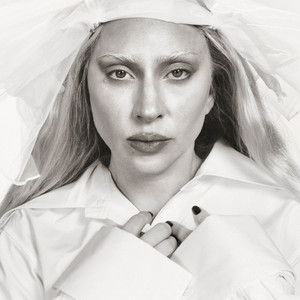
Lady Gaga is undoubtedly one of pop culture's great shapeshifters.
She's tried on with great success a whole range of different musical styles, from the dance pop of her earliest albums like The Fame, can't read my, can't read my, no, we can't read my poker face, to the country rock of Joanne, hear my sinner's prayer, I am what I am, And I don't want to break the heart of any other man But you, but you, oh To her albums of jazzy duets with the great crooner Tony Bennett.
Who's prepared to pay the price For a trip to paradise Love for sale So when I heard that Gaga's new album, Mayhem, was a return to the pop sounds of her early work, I wondered why a master of reinvention would be making that move.
Was it a back -to -the -basics turn, a nostalgia play?
Was Lady Gaga revisiting her own earlier style meant to be some sort of meta comment on what it means to be Lady Gaga?
But as she explained it, the answer, in a way, is all of the above.
She and I talked about that new album, as well as how her relationship with her fiancé helped shape its music.
And we talked, too, about the loneliness of fame and how it's taken her 20 years to learn how to be a boss.
Here's my conversation with Lady Gaga.
Hi. Hi, how are you?
I'm good. How are you?
Good. It's nice to meet you.
Thank you for taking the time to do this.
Yes, it's nice to meet you too.
I'm very happy to be doing this.
I'm just making sure all my devices are off.
Okay, everything's off.
So in an announcement that I saw for Mayhem, it must have been on social media somewhere, you referred to your fear of going back to the pop music that your earliest fans love.
Why is that something you were scared of?
You know, I lived in New York and grew up here my whole life.
And I made my artistic way living on the Lower East Side, starting around 17 years old.
and really kind of worked the New York music scene as much as I could.
Ultimately, that landed me into making The Fame, which was my first studio album.
And that music came out of the culture of people that I was sort of living with at the time.
Downtown, I was surrounded by musicians, photographers, artists, club promoters, people that lived and breathed art for a living.
It was a community of support.
And I think one of the reasons I was afraid is I was so far away now from that community and not having my community was, you know, was difficult.
And I also think I was afraid to return to something that my fans fell in love with early because it felt very far away and because it also felt like maybe I would be just like recycling something that I'd done before.
But ultimately I decided I really wanted to do it and that this sonic style and sonic aesthetic really did belong to me and it was something that I created and that was part of the joy of making the album.
How do you characterize that sound for people?
I think that my sound is like an amalgamation of all the music that helped me fall in love with music it's got classic rock in it it has disco in it it has electronic music in it 80s it's sort of like all of these memories of music something that we did on the album is like we We would take the bass, play it live, and then we would actually run it through the analog synths to see how it would sound after guitar parts that would be like indicative of the way Prince would play it or the way David Bowie would play it.
I would say it's sort of like picking and choosing my favorite fragments of songs that I loved throughout my childhood and so many different kinds of artists with so many different genres.
And to me, that is my music.
It's everything I love about music, but it's all in one place.
And I didn't always do that.
I sometimes in my records decided, okay, I'm going to make my version of a country record.
Like Joanne. Like Joanne, right.
And Neil Young was making a record right across the way from me in the same studio.
And then I would listen to Harvest Moon and Daydream and then I would write a song like Joanne.
But those records, I think the way that I was sort of like bridled to think about women in music, you know, they talk to you a lot about like your look and what the aesthetic is for the album and like the brand of the music.
And that at some point started to affect the way I made music.
Oh, yeah. How so? Well, you know, like with Joanne, I was like, okay, well, since I'm going to do this like country folk thing.
Now I'm going to make sure that each song fits into that theme.
Whereas with Mayhem, I didn't do that.
With Mayhem, I let each song speak its own language.
And that like chaos that I have maybe always felt criticized for, I celebrated instead.
And when you said there were ways in which you sort of felt bridled in the way that people thought about women in pop music what did you mean by that it's just the way they talk to you about you know who you are when I know I had my own kind of image when I moved to Hollywood and was playing my music for uh Interscope for the first time and you know they they have conversations with you about like what's your look going to be and you know you're sort of thinking like it's going to be me.
Well, how are you going to dress?
Well, I'm going to wear what I usually wear when I'm on stage performing.
And it's just the way they sort of introduce you to start thinking about it as a business as opposed to a performance.
So I think a lot of my career in a way was like a retaliation against that.
I mean, it's no secret that I loved to make waves with my stage performances and my fashion.
But yeah, I think what I was trying to say was that like that way of thinking kind of made its way at some point into the way I approached music and I had to kind of fight it.
Were there ways in which you felt like you were in an exploitative relationship?
You know, were there ever times that I felt like I was being exploited?
Or just treated as a commodity.
Yes. A hundred percent.
I mean, I think the, what's interesting is I always feel nervous to talk about this because I'm like, I always feel like I want to say that I'm extremely grateful for the career that I've had and all the blessings that have come into my life.
um and and i also can say with you know a lot of honesty and truth that being in the music industry since i was a teenager like some of it is what you can like how much you can stand it's like how much you are willing to give away of yourself um you know there were like years and years at a time when um the normal routine of daily life just goes away um things like eating at the dinner table with your family it just just never happens anymore and um being in a room by yourself never happens anymore being sort of carted around told where to go i'm sure that must sound like peculiar to people because they
see you on top of the world and they think you're the boss.
But as a woman in music, I would say it took me 20 years to become the boss.
And I am now. And that's thanks to having wonderful people around me and including my partner, Michael.
He really helped me become the boss.
But no, I was not always the boss, but I was the boss of my music.
I was the boss of my art.
And that was kind of the only thing, you know, because if you strike at the art, then no one gets what they want from you.
But yeah, it's interesting.
I like wrestle with this, how to talk about it, because yeah, I just, I want to want to acknowledge all the blessings in my life while also, you know, speaking up for women in this industry that, you know, women, when we're working in the music business when we're young, you know, that there's like no laws around like who can be a producer and like if they like they're not vetted by anyone so like when you're 17 years old um and you are invited into a studio like you have like no protection at all like you don't know where you're going there's you may not even have an adult in the room with you
other than the person that you're working with it's just it's it's not the safest industry i'm curious what you made of chapel roan's speech at the grammys where she talked about uh sort of the ways in which the record labels are not supporting the artists with you know health care or living wage i think she's a wonderful artists i think chapel ron is like speaking the truth and she is courageous to do so and i think we should for me i just want to be supportive of her and i look at what she's been doing and saying and think like man i should have i should have like stood up for myself more when i was younger
because i i hope that will bring more space for her and more boundaries for her in her career to have the career that she wants.
I think a woman speaking their mind is a powerful thing.
And I was really happy that she did that.
And your partner, Michael Polanski, he's an executive producer on the album.
Yes, he is. Can you just talk to me about how that role played out for him?
What impact does he have on on the music i mean michael was in the studio like every single day with me while i was working um he oversaw the whole process of making the record completing it you know helping me to shape the the sound of the record uh creatively to trust myself it was incredibly like kind and uh beautiful it's a like an amazing thing to do with your partner you know because when when i start to doubt myself like there is nobody that's gonna call me on it better than he is do you have an example yeah actually there was like one point where i almost turned the whole album into like
a grunge record and he talked you out of that i would listen to that album okay well there's enough there's like plenty of grunge on the album but it was right after i did um perfect celebrity that song and I was like oh like now everything should be this and he was like he said but there's so much other amazing music that you've made and it's all you like you don't have to try to be something I thought that was really astute and I was happy it happened because very often I will like run with my crazy idea and then look back on it and sometimes regret that change so So yeah, it was really cool.
I could imagine that relationships are tricky for someone in your position because you might have questions about someone else's, whether or not their feelings are genuine or if they have ulterior motives or just sort of if they really want to be with you or their idea of who you are.
How did you realize that Michael was genuine?
How did I know Michael was genuine?
i mean from the moment that i met michael he had the most warm and kind disposition of like mostly anyone that i had maybe met my whole life and yes he was impressive all he had like all these businesses that he was running and um but the thing i cared about the most was like he like wanted to know about my family I'm really sorry to cry no it's okay it's okay to cry on a podcast because no one can see you it is you he was he just he wanted to be my friend he wanted to be my friend and it was just it was really special I mean, I guess what I'm trying to say is I knew Michael was genuine because he
wanted to be my friend.
He wasn't asking to go to things with me or, like, I don't know how to explain it.
How do you explain the thing that people do that's hard?
He didn't want to do any of the things that the other people wanted to do.
He wanted to take walks with me.
He took me rock climbing.
Well, because I also had like a pain condition that I still have.
But, you know, he had this belief that I could get better and he really inspired me to have more hope about it.
So, and you know, the truth is Michael really is like not a fan of the spotlight.
He had a really hard time with the cameras when we first started dating.
and he kind of got comfortable with it for me so that we could do it together.
So yeah, I guess I know Michael's genuine because he's my friend.
I'm very, you know, I hope this doesn't sound trite.
I don't mean it tritely.
I'm very glad that you found that.
Yeah, thank you. I'm glad I found it too.
It was really hard not having it, you know?
It's like not a good feeling to have so much trouble making friends.
That was really hard for me over the course of my career.
You know, being actually friends with somebody is like, it's like a very specific thing, right?
It's like when you can sit in a room together and not talk and read, and you can take long walks and talk about, you know, your family.
You can obsess over a new recipe and go to the grocery store and go make it.
Like there's, there's, it's friendship is not about like, um, I don't think it should be transactional, but I think I just was around a lot of that all the time.
I was kind of like starved for it.
So, um, it was, it's a big blessing that I, you know, I met someone that was, you know, not like that and, um, and it's good for the music too, You know, I could imagine that the feeling of contentment might be a feeling that artists can mistrust because of the idea that, you know, great artists created under sort of tense circumstances.
Or I'm sure you you are aware of albums that people love.
And part of the legend of them is that they were recorded when the artist was struggling.
You're a David Bowie fan, right?
You know, it's like everyone knows he made Station to Station or whatever when he was like, thought he was being chased by witches because he was out of his mind on cocaine and only eating hot peppers and drinking milk and like his life was insane.
He was probably pretty unhappy, but he did make a great album.
But we don't have as many cultural legends about when happy artists make great art.
yeah I mean that's the lore right and on some of it's truth right that artists make people say artists make their best work when we're tortured but I would really like to do away with that actually I think it's super unhealthy for like the world and I think I've made some of my best work and I'm happy and healthy and because I have all my faculties as a musician I also think that like romanticizing sick artists, it like perpetuates this thing that's super negative and especially for women.
I want women to feel like they can be healthy and be happy, that we will celebrate them in their health.
But you're right. That is definitely a thing.
I feel really grateful that I'm like still here.
You know, I definitely think that my life could have been very different.
Maybe over five years ago, I think I was in a really dark place.
And I wouldn't say I made my best music during that time at all.
So for what it's worth coming from me, I'm not the only artist that ever lived.
But from my experience, the hardest times in my life were not the best music I ever made.
Were there times where you felt like you didn't make something that was authentic to yourself?
I don't know. Yeah, sometimes.
Maybe like a song here or there.
Maybe I was feeling deeply insecure.
I think Chromatica was really hard for me.
That was a very authentic dance record that I'm very proud of.
And I loved working on that, but it was just a hard time in my life.
I think it's hard to feel deeply authentic when you don't feel well.
cause like you can't like feel the wind at your back and I just wasn't feeling well so it was authentic to the time for sure I wrote all those songs, sang all those songs but I think that in terms of like being connected to my pure artistic source I think that there were times when I was feeling healthier that I would probably say those felt more authentic to me There are a lot of ways in which I think of your music as, in a way, sort of a comment on authenticity.
Have your ideas about what it means to be authentic changed over time?
I think I definitely was fascinated with Artifice when I first started my musical career.
And I thought the use of Artifice can be incredibly authentic, just the way that you do it.
I think my understanding of authenticity is that what's changed for me is it has to be on my own terms it has to be something that I decide because I think for myself over the years especially because I started out a career in commenting on artifice and then I sort of travelled into what some of my fans would even call like normcore with Joanne and a star is born.
I think there were some people that thought that that wasn't authentic.
So I think what I realized is I have to understand.
For me, I have to know my authenticity for myself and yeah, authenticity to me is a, is a committee of one.
You know, it's, if you, if you look at the history of pop music, like there's not a ton of people who don't end up becoming like, as they get older, don't end up becoming, you know, legacy acts or chasing trends or something like that.
Are there people you look to and say like, oh, they forged a trail that looks comfortable for me to go down?
I mean, I think Tony Bennett forged the trail that means the most to me.
I mean, you know, Tony always used to tell me, he used to say, just stick with quality, kid.
And that made me feel so happy and safe that if I leaned into my artistry, I didn't have to be afraid.
and um so that's like i mean that's a lot of what this album is for me is i just leaned into my musicianship hard like really hard and i told myself you know whatever happens over the next 20 years 30 years of your career you're always going to be a musician and you're always going to be an artist and you can always work at it you can always do more of it um but i i think i've definitely arrived at a place where achieving world domination into my 90s is not exactly what makes me tick.
And this idea of winning is, I don't know if that's synonymous necessarily always with great music.
Do you feel like you might have a different attitude about the idea of winning if you hadn't?
Already won, in a sense?
Maybe, yeah. I mean, I ask myself that question pretty often, actually.
Like, how would I look at this differently?
Am I thinking about this the right way?
And, you know, there's just noise sometimes and pressure.
But the person that puts the most pressure on me is me.
Sometimes I have to warn myself to do something at 70%.
percent like don't go 100 because 100 is gonna bang you up like I'm getting ready for Coachella and I'm so so excited but I've definitely lost sleep like a whole bunch of nights and it's just because I want to do a great job and I'm really hard on myself and you know but it's I love making people smile like if there's a time and a date where I've been slotted like you could make the public smile from, you know, 11 p .m.
until one in the morning.
I really want to make it happen.
You know, I think of your music as celebrating difference.
But I wouldn't say in the larger culture right now, it feels like difference is something that's being celebrated.
Do you think about how your music fits into the larger culture that you're putting it out into?
You know, I think that people that are different are part of what reminds us all how to love and how to be strong.
And it makes me really sad that we live in this world where it's acceptable to hurt other people, to be powerful.
But I think during times like these, we have to get louder.
and what I wish for people to know is that we can work together to be loud and we can work together to love each other and that just because dark people are winning it doesn't mean that we are invisible or that we are unimportant I'm thinking of the Grammys and when you accepted an award, I think you were the only artist who said something that was explicitly in support of trans rights.
Do you see your mission as an artist in 2025 is to, is there a political aspect to it?
I think there's just always been a political aspect to being in the public eye for me.
Like, I'm not interested in being famous famous to stand for nothing at all um it's a privilege to stand with people that are so amazing i'm in awe of the trans community and i'm in awe of the lgbtq plus community and i have been since i was really young and if you win an award like you have 45 seconds to speak while the world is listening i just wanted to say something that matters to people that i care about you know i'm not a trans person but i i know i try to imagine what it would feel like to wake up living in america and living in the world right now and i just think being being supportive
being kind and we can't just whisper about these things.
We have to say them out loud, I think.
You know, I think kindness is a hugely underrated value.
Do you have thoughts about how we might promote or embody?
Yeah, so that people see it as a valuable thing that it is?
Look, I'm like not an authority on kindness, but my thoughts are, it's not just about what you put on your Instagram.
It's about how you live your life.
It's about how you have conversations with people, who you make an effort to be friends with, to understand the stories of others.
It's about in your business, whatever your business is, how do you make sure that all these systems that are around you are operating in kind ways and inclusive ways, ways that celebrate people.
To me, that's where kindness has to live.
It can't just be something that's like when people are watching, I'll be kind.
You got to be kind all the time.
I want to go back to more like music -specific subjects for a second.
Is it harder with the amount of sort of options you have in the studio to know when to stop experimenting?
You know, there's one thing if you're sitting with like a little tape recorder on top of your piano and you can only do so much, but when you're actually in a professional studio and the possibilities are kind of endless, how do you figure out when something is ready?
Which takes to use.
Yeah. It's just like, I don't know, like when it sounds right.
I know that's like maybe not a great answer, but when it sounds right um i really do see music in my head when i'm working it like looks like a wall and of colors and so sometimes when you when i hear the right like take of something it just like feels like the wall is complete and i'm like that's the one sometimes it's visually like a but mostly in the studio it's it's a wall it's a wall of color do you have that experience when you're listening to other people's music um when i listen to i i think i do i think it's much stronger when i'm making my own um but yeah when i listen to other people's
music yeah i do see colors yeah i do like that made me instantly think of beck i'm like a huge beck fan i'm trying to think of all the colors i've seen listening to beck one of the greatest records ever made was um i think was morning phase oh yeah the beck album from I think it was like 2014.
Yeah, it was like really a special piece of music.
It was like that album to me was like medicine, like audio medicine.
In what way? Why did it affect you at that time?
I think just the way that he used those sounds.
I was going through a lot with my fibromyalgia and pain and I would listen to that album every day to like kind of soothe myself and I turned it on every single morning and I remember Rick Rubin was the first person that ever played it for me.
He played it for me before it came out.
And it was so interesting because I had made Art Pop and Art Pop was so noisy.
Rick was like, he loved Art Pop and he was like, he was like, let's listen to this record.
I want you to hear this.
And he played it for me and it was so easy to listen to.
And it was so beautiful.
And just like, the guitar sounded like bells and the strings.
It's just a very beautiful piece of music.
I like beautiful music.
It's funny, I don't know that I always make very easy listening music, but I like to listen to it.
What other beautiful music do you like?
I like Julian Lodge, the guitar player.
Oh, the guitar player?
Yeah. Oh, huh. Yeah.
And I loved Billie Eilish's album this year.
I thought Hit Me Hard and Soft was like a beautiful piece of music.
You made reference a couple of times to your fibromyalgia.
Yes. Is that something that's under control for you right now?
Like what is your relationship with the illness?
Yeah, I mean, I would say that like for the most part, I'm a lot better.
But I still have pain flares.
I have one today. I'm sorry.
It's okay. You know, I'm like fine.
I just, you know, it just still happens once in a while and it's like I'm really grateful that it's not all the time.
So, yeah, I'm okay.
You know, the music video for Abracadabra looks to me like a very physically intense music video.
Is that something you would have been able to do when the fibromyalgia was less under control?
Well, that was a very physically challenging video to do.
I loved every moment of learning the choreography.
Paris Goble's an amazing choreographer.
I'm definitely in a place where like, I'm in the place where like even today, if I went to the dance studio, I'd be fine.
But yeah, there were years ago where that would have been really, really hard.
so yeah I've just um I've just gotten a lot healthier um and but I mean so I mean not to be like too graphic but like years ago I used to get a lot more like pinched nerves all over my body so it would have been a lot harder to do a video like that I stopped dancing a lot for a while I think to make things more manageable for myself but I'm you know kind of back Feeling good.
Feeling good now. There's a great story.
Maybe it's apocryphal, that when you were very young, you were playing at some bar in Manhattan and there were some like loud frat boys there and they weren't paying attention.
Do you know where the story's going?
It feels, yes. And then the way you got them to pay attention was you basically stripped down to your underwear and performed, and that showed you new possibilities for the kind of artist that you could be.
There could be a performance art aspect to what you're going to do.
And I am just very curious to know if more recently you've had any other sort of similar artistic epiphanies or where your own perspective on what you're capable of opened up.
Yeah, I mean, I was like definitely somewhat of an exhibitionist as a young artist and I like loved it so much.
And I was also a big fan of shock art and studied it a lot when I was younger.
Like, I thought Spencer Tunick's art was really interesting.
I thought Sandy Skoglund's art was really interesting, Marina Abramovich's art.
But I think where I've arrived now in my career is I feel a lot more comfortable and at ease with my artistry.
And also I feel comfortable creating some boundaries around how to prioritize things.
Like I would definitely say for a while in my career, you know, prioritizing, you know, fashion and red carpets, like it feels like it's like a part of, it's a part of your art, but it's also a part of the job.
That's usually a part of the job that a lot of the people around you really like.
Um, and I would say now I've prioritized that less and that I'll spend much more of my day playing piano and singing, writing songs, producing.
Um, and I don't mean that in a disrespect to like the art of glam, because like, I know that my fans know this, that red carpets for me were a place to be artistic during my career.
Yeah, they were a canvas.
They really were a canvas.
And even though I sometimes like sort of resented the beauty pageantry of it all, because that's not really my thing, the competition of it, I think it's not really my thing.
But there is some freedom in going like, okay, I have a red carpet later, but instead of spending my entire day planning for this or weeks planning for this, I'm going to make another album or I'm going to work on a new project.
because the reason i'm bringing this up is because i think i felt pulled in so many different directions over the last 20 years but the place that i feel where i feel the most happy is working on my own art and like i think the yeah the the image piece of it i prefer that a lot more when it's about artistry and it's not about like just, just about beauty.
There's like lots of corsets and dieting and makeup and pressure.
And it's like this, you know, and then there's, you know, there's the best dress list and, you know, it's, it's like, it's, it's its own thing.
And I don't mean that to be like disrespectful of it like i partake in it um but it's that that definitely is more challenging that's like more challenging for me than making uh like my record it just feels um a little bit further away from like who i am i guess what i'm saying is these races that women are a part of it's like that's not really for me After the break, Lady Gaga and I sit down in person And talk about the kind of mom she'd like to be I think the thing that's the most important to me Is to not force my children to live a life that they are not choosing Because when they're kids,
you know There's no way for them to understand what fame is And how it will change their lives my name's hannah dreyer i'm an investigative reporter at the new york times so much of my process is challenging my own assumptions and trying to uncover new information that often goes against what i thought i would find all of my reporting comes from going out seeing something and realizing, oh, that's actually the story.
And that reporting helps readers challenge their own assumptions and come to new conclusions for themselves.
This kind of journalism takes resources.
It takes a lot of time.
It takes a lot of reporting trips.
If you believe that that kind of work is important, you can support it by subscribing to The New York Times.
This advertisement is paid for by the American Petroleum Institute.
U .S. energy production, especially from government -leased areas, benefits Americans.
This is Dolores' story.
We have oil and gas.
The royalties that we get helps our family, helps our children to go to school.
Sometimes I'll get emotional.
Our livelihood is at stake.
We just need to be heard.
Uplifting communities, providing prosperity.
That's the strength of America's oil and natural gas.
Learn more at lightsonenergy .org.
Hi. Hi. How are you?
How are you? Do you know the job to hear it, but you can get pretty close up on these microphones.
Do you have much experience with microphones?
No, actually. This is new for me.
But thank you for doing this in person.
It's so fun. Absolutely.
Of course. But we talked earlier about the idea of how there was a point in your career when you were particularly interested in sort of playing with artifice and sort of trying on different personas.
And I was wondering if there was any way in which that was ever psychologically destabilizing or hard to manage.
You're nodding. Yeah.
Sorry, I don't mean to laugh, but absolutely.
At a certain point, I just completely lost touch with reality.
I mean, I was falling so deeply into the fantasy of my artwork and my stage persona that I lost touch.
I wouldn't say that falling deeper into a life of being a tortured character actually was good for anything.
It worked, though. You know, I suppose in a way.
I suppose in a way.
But I do think there's some people that really liked that side of me.
But I didn't like that side of me.
And I was really unhappy.
And I do feel like I have myself in order now.
I went back downtown to a bar that I used to go to all the time last week.
Like I'd go in the middle of the day and I would order a whiskey and a beer.
That's where my friends were.
That's where my artist community was.
But I used to visit and feel really sad.
Like I was really far away from the person that I was when I was living down there.
But this last time that I went, it was, I don't know how to explain it any other way than I just felt like the old me.
Yeah. And losing yourself in your art is, I think, something that's romanticized for sure, but I don't know that it was actually good.
Let me ask you this, though.
Do you have any skepticism internally about whether the person you are now is just another persona that you're trying on?
No, not anymore. No. But I know, I know, I know why you're asking me that.
Because like the, I am authentic now is a thing that people do.
I'm sure that that does happen.
I think it has less to do with, well, okay, let's put it this way.
I was authentic before.
That was authentically me.
I just was authentically splitting off into different personalities all the time.
I would say that now, like who I would be at dinner with you is who I would be in this interview.
So I guess authenticity is subjective.
Like to say that performance isn't authentic is not really true.
I just feel like I more easily can hold it all.
and feel I feel confident in the idea that my artistry as a musician is like the most valuable thing about me after of course what I have to offer my family and my loved ones meaning I would not put artifice and fame as high on the list to go back to your question um and you you brought up a period five or so years ago when it seems like your mental health was not in a great place um are you able to tell me more about what was going on with you then yeah I mean well I I had psychosis so um I was not deeply in touch with reality for a while.
Um, and it like took me out of life in a big way.
And after like a lot of years of hard work, I like got myself back.
And, um, it was, it was a really hard time.
Um, and I, it was actually really, really special when I met my partner, because when I met Michael, I was like in a much better place when I met him.
But I remember him saying to me like pretty early on, you know, I know you could be a lot happier than you are.
And I just I was really hard for me to hear him say that because I didn't want him to think that of me.
You know, I wanted him to think I was like this happy, just totally together person.
And I wasn't really yet.
um so i i guess i mean to share that um as a way of saying that like i do think it can get better if you are going through a hard mental health time but it's also something that i have found increasingly harder to talk about um i think i hate feeling defined by it it's like a ghost of yourself that's what that's what it felt like to me like like something i felt ashamed of But I don't think that we should feel ashamed if we go through times like that.
And I mostly just wish to say if you have been through something like that or you are, it can get better.
And it did for me. I'm really grateful for that.
Were there turning points?
How did you turn it around?
I mean, it sort of goes back to what you were saying about playing characters earlier in my career.
I had to figure out a way to integrate myself fully with my stage persona and like kind of like inhabit Lady Gaga's boss energy in my everyday life.
But, you know, in an empowered way and make sense of like maybe two things that don't make a ton of sense.
You know, I'd like to think that I am a kind person.
but there's like a ferociousness and a hardness and an intensity that I have on stage as a performer so I think I had to learn how to hold those two things and have them not be at war with each other and that's actually one of the reasons I named my album Mayhem because to me that tension is chaotic I was thinking about the title Mayhem And I thought mayhem is, it can be an exciting feeling to visit, but not one you want to live in.
100%. That is a great way of saying it.
And yet I live in it.
Still? Well, it's part of my truth.
Yeah, it is like always a part of me.
It's just I've learned to hold it and not like pour gasoline on it.
you know, I used to like just like the more chaos, the better all the time, just living life on the edge constantly.
And I'm now proud to be like much more boring.
Before the interview officially started on Tuesday and we were just making small talk, I mentioned my kids and you in a very wistful way said like, you know, I would love to have kids one day.
Do you have any apprehension about having kids and still being able to be the Lady Gaga you need to be?
No, I don't. I'm really excited to be a mom.
I used to have a lot of apprehension about it.
I mean, I think the thing that's the most important to me is to not force my children to live a life that they are not choosing.
Because when they're kids, you know, there's no way, for me, there's no way for them to understand what fame is and how it will change their lives.
So I think the more that we can kind of give them space to discover who they are on their own, I think that's the thing that I believe in the most.
I sort of feel as though if our children only understand mommy's job, that's like a very narrow view of life.
But then, you know, I'm also kind of at war with myself sometimes as I get ready to hopefully become a mom soon that like you know today's wonderful but like the whole day has revolved around me you know like I've been in interviews like talking about myself all day and like there's an incredible amount of narcissism in this and I think as I grow up I'm kind of like more and more self -aware of that and figuring out how to like how do you like live a life where how do I live a life where I'm passionate about my art while like also removing that from the center of gravity at all times and like making
more space for other things that's something that's on my mind a lot about um like my place in the world I suspect the only answer is through living it.
Yeah, through living it.
And I think also like allowing there to be, you know, holidays, like mayhem coming out.
It's kind of like my birthday.
It's like a special day, you know, because I get to deliver all the music, but then maybe there's a time for it to be someone else's holiday.
okay any last words did i miss anything i don't think so this is this was great i've never done anything quite like this before i just mean that sometimes it can like lean in a direction or like i can be led into shaping shaping the whole thing like almost like someone has an idea of me before they talk to me and then they they want that to happen and right i don't feel like that happened with you, so that was really cool.
Thanks for being so cool.
Thank you for being cool, Lady Gaga.
Thank you very much.
I really appreciate you taking the time to do this.
Thank you. That's Lady Gaga.
Her new album, Mayhem, is out now.
This conversation was produced by Wyatt Orm.
It was edited by Annabelle Bacon, mixing by Afim Shapiro.
Original music by Dan Powell, Rowan Nemisto and Marian Lozano.
Photography by Philip Montgomery.
Our senior booker is Priya Mathieu and Seth Kelly is our senior producer.
Our executive producer is Alison Benedict.
Special thanks to Rory Walsh, Renan Borelli, Jeffrey Miranda, Nick Pittman, Matty Macielo, Jake Silverstein, Paula Schumann and Sam Dolnik.
If you like what you're hearing, follow or subscribe to The Interview wherever you get your podcasts.
To read or listen to any of our conversations, you can always go to nytimes .com slash The Interview.
and you can email us anytime at theinterviewatnytimes .com.
Next week, Lulu talks with Senator Chuck Schumer.
I'm David Marchese, and this is The Interview from The New York Times.
Thank you.