This BBC podcast is supported by ads outside the UK.
Brush away plaque, show tartar who's boss, and remove surface stains to naturally whiten.
Hello's thoughtful and flavor-forward products make brushing your teeth feel like a confetti-filled bathroom dance party.
So say hello to Hello with the always cruelty-free, never tested on animals toothpaste that's made to spread smiles.
Visit HelloProducts.com and let Hello add some everyday yay into your life.
It's finally happened.
Your kid could be part of the first generation to never suffer the rough touch of toilet paper on their tender tush.
All thanks to new flushable little dude wipes available in bubble bum, scent or fragrance free, because we know little butts can make a big mess.
But with little dude wipes, you can keep your kids keister clean.
This is the Happy Pod from the BBC World Service.
I'm Ankur Desai and in this edition, learning what really matters the hard way.
I thought my only regret really, if I die up here, is that I didn't spend more time with my wife and my family.
Life is so fragile and you've really got to appreciate the small things.
A hiker who nearly died in a fall on a glacier urges others not to repeat his mistakes.
Also a surprising new source of fresh drinking water and a vaccine to protect one of Australia's best loved animals against a disease that's threatening their survival.
Most of those populations have around 50 infection and disease rate.
That causes eye disease that can lead to blindness.
But of course the most important thing is in females, where it makes them infertile.
And?
The man helping couples find love at Europe's largest matchmaking festival.
We start with an amazing story of survival against the odds.
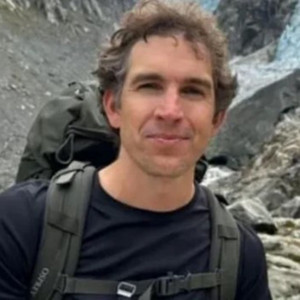
Just over a month ago, Alec Loon was in Bergen in Norway, when he decided to set off on a solo trek on a glacier in the Folgefone National Park.
Four days later Alec, who's an award-winning American journalist and an experienced hiker, failed to turn up for his flight home.
He'd fallen and seriously injured himself, losing his phone, food and water.
Even after the alarm was raised, the storm meant it took two more days to find him.
As Alec told my colleague James Kumrasami, the stunning scenery meant he'd been trying to continue his trek despite a broken shoe, which he'd repaired with tape.
It was just beautiful.
It was this lake of meltwater full of these tiny little kind of icebergy bits of ice.
The ice was obviously, you know, really blue, like you see in photos of glaciers.
After that, it was getting a bit late, but I wanted to try and make it over to the next valley.
When I was on this very steep slope, I don't remember exactly how it happened.
I remember taking a step and slipping.
And then I started sliding down the mountain.
And then I started rolling down the mountain.
And then I was really pinballing down the mountain.
When I was falling, I just remember having this thought that this is really bad.
I ended up crashing into a rock so hard that it broke my femur, fractured my pelvis and fractured a couple vertebrae in my back as well.
My only communication that I had was my phone, and my phone fell out of my pocket and it was just too hard to get up the slope.
The pain was just, you know, really intense.
So you then had several days there.
I mean, just how did you survive?
What did you have to survive on?
So I had my tent, my sleeping bag, my sleeping pad, which was really critical.
And then I had maybe a dozen granola bars that were in the pockets of my backpack for kind of snacking on, and a couple of peanuts.
I just knew that it was probably going to be four days until anybody realized that Something had gone wrong.
And I just kind of went into like robot mode where I just focused on what I needed to do next.
You know, I need to blow up my sleeping pad, need to get out my sleeping bag, and tried not to think about what ifs.
I realized that I might die up there.
And I thought about that and I thought.
My only regret really, if I die up here, is that I didn't spend more time with my wife and my family.
I just thought to myself.
You know I would do anything and I'm going to do anything to get back to my wife and family.
And it was thanks to a photo you sent to your wife that they were able to locate you.
Is that correct?
I had sent her a photo of me in front of the higher tongue of the glacier, so that helped a bit.
And then also my journal in my phone.
Once she got into my computer, she could see the notes that I had made all the way up to the point where I fell.
So that helped the police also understand where to start looking.
And the military, because in the end it was the military helicopter that rescued me.
What was that like?
What was that moment like?
You know, I was starting to really doubt, starting to really lose hope, starting to really really doubt my chances.
And then I heard the sound of a helicopter and it was getting closer and closer.
And finally, I saw this helicopter flying up the valley.
You know, my heart leapt and I just started waving to that helicopter and yelling at it.
But then after a while, the helicopter disappeared. didn't see me, and it just flew away.
I thought, okay, either the helicopter is going to go refuel or I just missed my one chance.
And luckily, half an hour 40 minutes later, the helicopter came back, started scanning the slope again and I was waving.
And finally, the door of the helicopter opened and somebody waved back at me.
And that's when I knew that it was finally all going to be over.
It lowered two rescuers down to me on a rope and they just started putting their clothing on me to try and warm me up.
And they put like a safety blanket around me as well.
The helicopter had to go back for more fuel before it could take me off the mountain.
One of the rescuers just hugged me for 40 minutes just to try and warm me up a little bit, so that that was kind of the shape that I was in.
What have you learned about yourself?
You know?
I'd say the main lesson I learned is just that life is so fragile and you've really got to appreciate the small things and appreciate your family.
That's just the most important thing.
You just don't think it's going to happen to you.
We're on this earth temporarily and it could happen to anyone at any time.
So safety first and don't be afraid to turn around.
Alec Loon speaking there.
Now to a rather unusual discovery, a huge reserve of drinking water deep under the Atlantic Ocean.
It's what's known as an aquifer, a naturally occurring underground area where fresh water accumulates.
But while they've been found in shallow seas before, this one is around 50 kilometres off the coast of Cape Cod in the north-eastern US.
The UN predicts that global demand for fresh water will exceed supplies by 40 in five years, so finding new sources could be hugely important.
It was discovered by Expedition 501, a $25 million global collaboration backed by the US.
The BBC's group of party spoke to one of the chief scientists, Brandon Dugan.
We started drilling down into the sediments, looking at the water in the pore space of those sediments, and we discovered and documented water that had salinity less than one part per thousand.
So meeting fresh drinking water criteria below the ocean and so significantly fresher than the ocean and significant volumes of it hundreds of meters of the sediments beneath the ocean had this freshened water in it.
And Brandon, how unusual is it for fresh aquifers to be located under the seabed?
Or is it simply the case that we've just not looked up until now?
Nobody studied it directly.
So we knew that it could exist.
But this far offshore, 30 kilometres, 40 kilometres, 60 kilometres offshore, we didn't know exactly how fresh that water was or how old it was.
And so the exciting thing here was we went out with the intention of really focusing on the water and how fresh it was.
And now we have data and information that we can figure out.
When did it get into the sediments and how is it going to be responding to sea level today, where it's bound by saltwater?
It's exciting in the fact that we've documented how far it goes offshore.
Near shore systems, so tens of meters or hundreds of meters are pretty well understood.
These systems that go offshore tens of kilometers or even more, 50 kilometers, are not well understood.
Now we have the information to really understand where that water came from and when it came there.
Paint us a picture.
What does it look like at source?
Imagine if you go to the beach and you start digging a hole and all of a sudden you get down into the wet sand and then you just left that hole sit there.
You'd see water flow in it.
And so we're looking at the water in the pores between all of those sand grains and clay grains.
If you wanted to put it, in sort of a volumetric system.
It's a large expanse through many different types of rocks and sediments, but it is filling up these pores between them, so it has a solid around it, like on the beach.
How urgently do we need new water sources?
And to that, how significant could this find be?
I think it's very significant in terms of it's a new alternative source for potential freshened water.
But I think we need to look at many solutions to address the water stresses that we see around the world.
You are gathering data, as you just highlighted, and there are still lots of questions to be answered.
And one of them is, is it drinkable?
How feasible might it be for human use?
We know from a salinity standpoint that some of the water has a low enough salt content that it could meet freshwater standards for drinking or human use.
But like any water that you would use for human use, it would have to go through treatments for any viruses or microbial activity that are out there.
So there would still have to be general water treatment for this water.
As we moved farther offshore, from our 30 kilometer offshore site to our 70 kilometer offshore site, the water started to get a little bit saltier.
And so that would also need treatment to remove some of the salt and to do general pathogenic and virus treatment for human consumption.
So it would require standard treatment, but it looks like it would be a viable source after treatment because it's similar to things that we see in near-shore environments or even onshore.
Brandon, have you tried any?
I have not tried any.
We all wanted to try it, but we all understood that the most important thing was to answer our science questions and make sure we're operating in a very sterile and safe environment.
Brandon Dugan from Expedition 501.
Thousands of single people from around the world have gathered in a small town in the west of Ireland in the hope of finding love the old-fashioned way.
Europe's biggest singles event takes place every September in Lis Dunvarna, a month-long gathering that's been going on for nearly 170 years and is thriving despite the plethora of modern options open to those seeking a soulmate.
Ireland's last traditional matchmaker is on hand to help.
Romance blossom, aided and abetted by music and dancing, in every bar in the village, as Bernadette Kehoe has been finding out.
Soon after midday on every day of the matchmaking festival in the normally quiet town of Listunvarna, couples take to the dance floor in huge numbers and carry on swinging around the floorboards until the early hours.
Willie Daly is at the heart of the action.
Every year, Willie sets up a makeshift office in one of the pubs where the unattached can come to seek out his services, and he claims to have matched 3000 couples.
It's a kind of a magic that things like you know that people walk around, people you know fellas walk up to girls that haven't met them before.
They don't say, how are you?
Are you enjoying any place or the music?
They just say, will you marry me?
It sounds all very impulsive, Willie.
It is.
But it's fantastic because in another town or another city, if you walk up to a friend and say, will you marry me?
They'd probably have you arrested.
Since 1857, crowds have descended on rural Istunvarna every September, traditionally the month that the harvest would be safely in and bachelor farmers in search of a wife might start to think about a companion for the cold winter nights ahead.
You know, the place is alive with romance.
They're always in a romantic mood and a happy mood.
You see the prospects of maybe finding love, finding the one.
That's a big trend for a lot of people in life, is finding the one, you know.
Willie, now in his advanced years, learned the art of matchmaking from his father and grandfather and is never far away from his precious lucky book, where generations of his ancestors tucked away profiles of those seeking love based on discreet conversations that once went on at horse fairs, cattle fairs, weddings and even funerals.
Willie believes the well-thumbed book can bring luck to those seeking love.
How the book works is you touch the book with both hands.
It draws your eyes between 7 and 14 seconds and you will be in love and married in six Irish months.
Now, if you're single, very single, don't want to maybe get married?
Be young, you touch the book with one hand and you'll be in love and happy forever.
And whilst romance may be Liston Varner's main theme, it's not all about lonely hearts colliding.
There's a very big connection of people meeting.
You know, maybe not panicking about marriage, maybe have been married, maybe widowed, but they come and they make a lot of friends and they come again and it's a very big part of it is dancing.
A lot of people come now from America.
They come from Germany.
Quite a substantial amount each year come from England as well.
Of course, modern dating apps now offer single people plenty of online opportunities to endlessly swipe right or left.
But the matchmaker-in-chief says nothing can replace a real-life encounter.
I do be shocked at the amount of interest thinned by young people who have tried other systems, you know, but they just find that they're not so real.
I suppose the matchmaking if you introduce someone to them.
You know it's an old saying a bird in your hand is walked through in the bush.
There's nothing wrong with the computer.
I think it's good where it's walked.
20000 people flock to Liston Varner every year, proving that an old-fashioned encounter on the dance floor can't be beaten even in the age of technology.
Bernadette Kehoe reporting.
Coming up in this podcast.
We weren't expecting that it was going to happen.
So obviously you can imagine our surprise when outcome eight healthy little very cute babies.
It just reminds us how amazing nature can be.
The iguana who's had eight babies all by herself.
Have you ever wiped with a piece of dry single-ply toilet paper and wondered is this as good as it gets?
Well, it's not.
It gets a lot better thanks to the wet, extra-large cleaning power of Dude Wipes.
They comfortably clean up whatever TP leaves behind on your behind.
It's time to stop being an a-hole to your b-hole and start experiencing the confident clean of Dude Wipes.
Available at Amazon and at major retailers nationwide.
Dude Wipes.
Best clean.
Pants down.
As America's most trusted movers, Mayflower has seen it all.
From big dreams and new beginnings.
All right.
Here we are.
Oh, it's perfect.
To first steps and fixer uppers.
From starter homes.
So guess what?
We're having another.
Another?
We definitely need more space.
To more practical homes.
Yes, Mayflower has been there for it all and will always have your back.
Every moment, every move, every step of the way.
Schedule your move now by going to Mayflower.com.
Now I'd like to introduce you to Meaningful Beauty, the famed skincare brand created by iconic supermodel Cindy Crawford.
It's her secret to absolutely gorgeous skin.
Meaningful Beauty makes powerful and effective skincare simple and it's loved by millions of women.
It's formulated for all ages and all skin tones and types, and it's designed to work as a complete skincare system, leaving your skin feeling soft, smooth and nourished.
I recommend starting with Cindy's Full Regiment, which contains all five of her best-selling products, including the amazing Youth Activating Melon Serum.
This next-generation serum has the power of melon leaf stem cell technology.
It's melon leaf stem cells encapsulated for freshness and released onto the skin to support a visible reduction in the appearance of wrinkles.
With thousands of glowing five-star reviews, why not give it a try?
Subscribe today and you can get the amazing Meaningful Beauty system for just $49.95.
That includes our introductory five-piece system free gifts, free shipping and a 60-day money-back guarantee.
All that available at MeaningfulBeauty.com.
We'll see you next time.
We'll be right back.
Symbiotica's clean, bioavailable supplements help your body actually use what you take, delivering real results.
And with a monthly subscription, it's easy to stay consistent.
Symbiotica makes wellness simple.
Ready to feel a difference?
Go to Symbiotica.com and use code IHEART for 20% off.
That's C-Y-M-B-I-O-T-I-K-A.com.
Code IHEART.
Of all Australia's amazing animals, few capture human affection in quite the same way as the fluffy eared, ever sleepy koala.
As well as bushfires and loss of habitat.
They've been under threat for decades from a serious outbreak of the sexually transmitted disease chlamydia, which is responsible for 50 of koala deaths.
Now, though, a new single-dose vaccine has been approved, which is hoped will make a big difference.
Rebecca Kesby spoke to Peter Timms, professor of microbiology at the University of the Sunshine Coast, who is behind the research.
Koalas are in the Queensland and New South Wales area.
And most of those populations have around 50% infection and disease rates.
So it's a pretty major challenge for them.
And therefore at that level populations or small or subpopulations are sort of going locally extinct.
So it's a pretty big deal and it's a pretty nasty disease as well.
It causes eye disease that can lead to blindness.
But of course the most important thing is in females, where it causes reproductive tract disease or it makes them infertile.
So if you put all that together, it can often be the tipping point in whether populations survive or don't.
So we've got this new vaccine.
How effective is this?
And also, how are you going to catch all these wild koalas to administer it?
We do know that the vaccine is safe.
We've done lots of work and that's obviously an important step.
But as well as that, it reduces infection levels.
But the most important thing it does is it stops or reduces at least it's not perfect infections becoming disease.
So disease is the thing we're trying to stop here.
Some fairly long studies now that show that across a 10-year period we've been lucky enough.
That shows that the number of koalas that are getting disease is reduced very significantly, more than 50 60.
The second part is how will we give the vaccine to koalas?
So we have a multi-stage approach here.
We'll certainly give the vaccine to animals that come into wildlife hospitals.
So unfortunately lots of koalas do come into wildlife hospitals and treatment places around the country, thousands and thousands of them actually.
That's because they're getting hit on the road by cars.
Unfortunately, or 50 of the animals that come into wildlife hospitals come in with disease.
So that's already an obvious group of animals we could help with vaccination.
But as well as that, there are wild koala population studies that are being done, because people build roads and houses unfortunately, and that requires animals being displaced.
So again, there are hundreds if not thousands of koalas in that.
So, to begin with, we'll be vaccinating those animals that I guess we've helped put at risk from chlamydia.
At one point though, why is chlamydia so prevalent among koalas?
I'm guessing from that that maybe they don't mate for life.
Why are they affected so badly?
We used to think that they were not very good at maintaining immune response, but we know now from our vaccines that that's not true.
They do breed pretty well with key male koalas that might be infected, so perhaps that's part of the study as well.
And also we do know the other thing is that stress is not good for quails.
It does affect disease.
And we know that drought and bushfires and also urbanization together combine to sort of put quails in a tipping point.
So it's a good question.
We only know half the answer to at this point.
Professor Peter Timms from the University of the Sunshine Coast in Australia.
Staying with wildlife.
A zoo here in England says it's witnessed one of the rarest events in the animal kingdom after the immaculate conception of eight baby iguanas –.
The hatchlings emerged from eggs laid by a female cask-headed iguana who had never had access to a mate.
The lizard species is native to Central and South America and zookeepers say there are few documented cases of this type of reproduction worldwide.
Phil Mackie went along to find out more.
Staff at the exotic zoo in Telford were surprised when Carol, a four-year-old cask-headed iguana, laid eight eggs, because they don't have any males in their collection.
They put the eggs in an incubator to see what would happen.
After three weeks, the eggs began to hatch.
Scott Baker is the zoo's director.
We weren't expecting that it was going to happen, so obviously you can imagine our surprise when Outcome ate healthy little, very cute babies.
It just reminds us how amazing nature can be.
Because the iguanas were born through parthenogenesis, a type of asexual reproduction.
They're exact clones of their mother.
What with it being midweek and the school's back, it's quiet at the zoo.
But there was still some excitement from the visitors who were able to come.
I thought it was interesting to see, wasn't it?
I hadn't seen one before.
Really fascinating how it can like clone itself almost.
The hatchlings are about the length of a typical smartphone and a lime green in colour with a black stripe along the length of their bodies.
They can live up to 10 years in captivity and will eventually be found new homes in other zoos.
Phil Mackie with that story.
Like many countries around the world, Malawi in southeastern Africa often struggles to produce enough food to feed itself.
Around 80 of the population is involved in farming, but climate change has contributed to famines and cyclones in recent years.
Now though, a new method has been allowing farmers to dramatically improve their yields with help from a special solar-powered tractor.
Myra Anubi reports from northern Malawi.
Driving across Malawi, there are green fields of maize as far as the eye can see.
It's a country's staple crop.
However, you can also see some of the maize is failing and that will be disastrous for those farmers.
But in one village called Eshekweni, they might have a solution.
As I arrive, I'm greeted by a group of farmers singing about a method they're using called deep bed farming and how they're not going back to their old ways.
Wilfred is a farmer who's been using deep bed farming in his maize fields for a few years now.
Can you tell me how much more crop you've gotten from deep bed farming?
On a small piece of land, very small piece of land.
I got about 10 bags, 50 kg bags which I wouldn't have before.
How much would you have gotten before from that small piece of land?
One bag.
No, one bag.
Really?
Yeah.
Wow.
So this kind of farming is good.
Deep bed farming is all about digging deeper than usual, breaking up the hard ground or hard pan that you typically find in Malawi.
Godfrey Kumwenda is from TNE, the organisation that's developed this method.
When there is a hard burn.
That means the water will not be infiltrating down the soil and even the root vomit will not be there.
So, when it comes to breaking the hard burn, we are encouraging farmers to break at 30 centimetres deep to allow water to infiltrate.
The hard pan is basically that hard ground before you get to 30 centimeters.
Yes.
So if you are broken below 30 centimeters, it is good in terms of now constructing a bed.
The beds the farmers can make now are deep.
This allows roots to grow properly and holds the rainwater in.
But digging deep is back-breaking work and there's precious little mechanisation on farms in Malawi.
So that's where an innovation from the UK could help.
This is Aftrac, a solar-powered tractor designed by engineers at Loughborough University.
So our tractor is a very small unit.
It's got only two wheels and you walk behind it and you lower the digging chain into the earth and then digs up the earth to a depth of about 400 to 500 millimetres.
Toby Williams is one of the designers behind this tractor.
So far it's just a prototype, but Toby and his team have won a million-dollar prize to develop it and hope to build the latest version in South Africa soon.
He believes that along with deep bed farming, it can make a big impact.
So by having this tractor you can increase food yields significantly, meaning you're moving people from food poverty, where they're below subsistence and they're just trying to grow food for themselves, to a point where they can grow enough food that they can also sell surplus.
Maybe they can try and take on cash crops in the future, which means they've now got an income.
Wilfred hasn't used a tractor yet on his farm, but he has felt the impact from deep bed farming.
When I harvested the maize from the deep beds, because I had many bags, I sold some of them.
The money that I got, I used for my rakishari things.
Like what?
Good food, like meat, rice and the other.
I changed my life.
Studies have shown deep-bed farming can improve yields by 40%.
The method is now being promoted by the Malawi government and so far, around 35000 farmers have been trained to do it.
And it's hoped that possibly, with a bit of help from the solar tractor, deep-fed farming can help the country be food and income secure.
Thank you.
Thank you.
Amber says, the photos he posts on social media showing the bags of rubbish he's collected always make her smile.
So we gave Tobias a call to find out why he does it.
You feel so powerless that you cannot do anything about it.
I was just thinking about it and not taking action, but with my journey I finally had the opportunity to take action on this problem.
Well, I'm just one human.
I cannot change the world, but one day in Portugal.
I started a beach cleanup, and I was pretty surprised how much one human can do.
I cleaned the whole beach alone.
One thing came to another.
I keep picking.
It's not always happiness.
Sometimes you get really, really frustrated.
But, of course, if you choose the right project And if you don't overwhelm yourself with the problem, then you have success.
Moment of success.
You save a place, you save a beach, you save a lake, you save a river.
Or you talk to many, many people.
They come spontaneously and help you.
This is a very positive feeling that makes me very optimistic that it's actually pretty easy to change the people's mind.
Tobias says he's already collected around five tons of plastic waste.
And if everyone in the world picked up just over two kilos a year, it would eliminate the problem.
You can follow his efforts under the hashtags litterpickingculture. or at The Collectors 2.2 KG.
And that's all from The Happy Pod for now, but if you have a happy or inspiring story you think we should cover, we'd love to hear from you.
Just send us a voice note or an email to globalpodcast at bbccouk and you can now watch some of our interviews on YouTube.
Just search for The Happy Pod.
This edition was mixed by Masood Ibrahim and the producers were Harry Bly and Rachel Bulkley.
The editor is Karen Martin and I'm Ankur Desai.
Until next time, goodbye.
We are a daily news podcast with a kind of transparent smart, yet tongue-in-cheek analysis you can only find at Slate.
Follow and listen to What Next wherever you get your podcasts.