This message comes from Capital One.
Say hello to stress -free subscription management.
Easily track, block, or cancel recurring charges right from the Capital One mobile app.
Simple as that. Learn more at capitalone .com, slash subscriptions.
Terms and conditions apply.
Hey, it's Amanda Aroncik.
The year is almost over.
You've heard a lot of pitches asking you to support NPR.
To the many of you who have given thank you.
Now if you are sick of these pitches, chances are, you are a heavy podcast listener.
That you get a lot out of NPR podcasts like Planet Money, The Indicator, Up First, the NPR Politics Podcast.
In order to make all our shows possible, NPR has sponsors.
Sponsors slop messages into podcast episodes.
You hear them every show unless you don't.
That is just one of the things we offer supporters who sign up for NPR+.
Sponsor -free episodes of more than 25 different NPR podcasts, including this one.
And those sponsor messages add up.
If you listen to two or three NPR podcasts each week, we could be talking about 12 hours worth of sponsor messages in a year.
So just consider what is 12 hours of your time worth?
And imagine spending that on something that matters.
And keeping those 12 hours.
Supporting public media is a public good, especially right now.
Information matters, facts matter, contacts and perspective matter.
We know you know this.
So please, take a few minutes to save hours of time in the coming year and support NPR.
Go to plus .npr .org, get sponsor -free episodes, as well as bonus episodes, merch discounts, and other perks across more than 25 NPR shows.
That's plus .npr .org.
The link is in our episode notes too.
And thanks. A warning, there is some cursing in Spanish in this episode.
It involves a man and a shrub.
This is Planet Money from NPR.
A few months ago, freelance reporter Stan Alcorn was in a crowded hotel lobby in Cali, Columbia.
Test, test, test. Okay.
Yeah, I was there to meet a 29 year old Colombian who was trying to sell a new financial instrument he thinks could help save the planet.
Good morning. What's the plan?
Plan is to talk to clients.
Mauricio Serna says the plan is to talk to clients.
He's got long, curly hair and untucked green shirt.
And on his phone, a list of these potential buyers.
They're standing all around the hotel lobby in lanyards and business casual.
I have sunny pictures, entertainment, I have PepsiCo, the Rockefeller Foundation.
Who's like top of the list?
Top of the list for me.
There's the head of sustainability of Unilever.
Unilever, the massive conglomerate that makes everything from Vaseline to Ben and Jerry's ice cream to Hacks Body Spread.
Okay, okay. So imagine I'm the head of sustainability of Unilever.
Like what are you gonna say?
What's your pitch? So my pitch is, so you have a big procurement process of palm oil here in Columbia and in other parts of the world.
I know that you've been doing - Mauricio is still pretty new to being a salesman, but in a nutshell, his pitch is Unilever.
You get oil from palm tree plantations in Columbia, which aren't exactly great for native plants and animals.
What if I told you there was an easy way to do something good for those ecosystems?
And do you think, is there a point in that conversation where you'll say the words biodiversity credits?
Maybe, I think at the end - Biodiversity credits.
This is the new product that Mauricio is here to sell.
And the idea is kind of a twist on carbon credits.
But instead of producing carbon emissions, biodiversity credits are aimed at saving some of the million plus species that are threatened with extinction.
He says a lot of people have no idea how they work.
Yeah, so a lot of people don't understand the biodiversity credit world yet.
Then all of a sudden, Mauricio spots his white whale walking across the road.
It's him. It's the head of sustainability of Unilever.
I see, I wish you could attach that to the road.
Can I follow you? I don't know if he wants, but yeah, you can follow me.
Mauricio makes a beeline across the lobby, taking big strides.
The Unilever guy gets in the elevator.
This is the moment every budding entrepreneur fever dreams about.
Mauricio's about to be able to give a literal elevator pitch.
But just as we are about to get there, the elevator doors close.
Mauricio didn't make it.
I didn't want to run it.
Mauricio didn't want to run.
Doesn't quite have that killer sales instinct yet.
Yeah, I mean, he really is new to all of this.
He studied biology.
What he cares about is protecting nature.
And it's honestly a little awkward for him to try and win over the companies that are destroying it.
So it's weird. And sometimes I'm like, what am I doing here?
Who am I talking to?
But in the other side, I'm like, this guy's need to chip in.
Hello, and welcome to Planet Money.
I'm Alexey Horowitz, Gazi.
And I'm Stan Althorn.
Our planet is in serious trouble.
And I'm not talking about global warming.
There are a million species of plants and animals in danger of extinction.
And the biggest cause is companies destroying their habitats to farm food, mine minerals, all to make the stuff that you and I consume.
Today on the show, we follow budding salesman Mauricio Serna on his quest to make a market for this newish financial instrument, the biodiversity credit.
And we peek under the hood to try to figure out how these credits actually work.
Is the hype around them a bunch of hot air?
Or could they be a critical tool for saving thousands of species around the world?
Including one of the most charismatic megafauna in the game, star of what has been called the greatest film of all time.
None other than Paddington Bear.
Bust out the marmalade sandwiches.
This message comes from Capital One.
Say hello to stress free subscription management.
Easily track, block or cancel recurring charges right from the Capital One mobile app.
Simple as that. Learn more at CapitalOne .com, slash subscriptions.
Terms and conditions apply.
This message comes from Grammarly.
231, that's the average number of apps used by many companies.
This leads to a lot of context and tab switching, which can drain employee focus costing your company.
Grammarly can help because it uses AI that works in over 500 ,000 apps and websites.
Join over 70 ,000 teams who save an average of $500 ,000 per employee per year using Grammarly.
Go to Grammarly .com, slash enterprise to learn more.
As any Planet Money listener will know, the way we often try to understand some obscure, newfangled financial instrument is to just buy one.
Get some skin in the game.
So my reporting partner, Toma Supremny and I, decided to do just that.
So let's go buy a biodiversity credit.
Okay. We get on the website for Mauricio's company and there they are.
For 25 bucks, we'll get a credit.
Basically a certificate saying we've protected a little piece of nature.
10 square meters of Andean cloud forest.
And they show some of the animals that we'll be saving.
The yellow weird parrot, the tree ocelot, and of course the threatened spectacle bear, the Paddington bear.
For listeners who haven't watched the Paddington movies, first, I'm sorry for your loss, what you need to know is that these bears are the only ones in South America.
They are dangerously cute with little white circles around their eyes, hence the name.
And some ecologists argue they're kind of an umbrella species.
If you protect them, you know you're protecting a bunch of other species.
A whole tropical Andean ecosystem.
Are you ready to own our own little piece of the cloud forest?
I'm ready to save Paddington.
I enter my credit card details and click buy.
We did it. Done. And we are now the proud owners of biodiversity credit number 0281.
But it still isn't clear what exactly we've bought.
So we decided to go see our 10 square meters for ourselves, see what these credits look like on the ground.
And the ground in this case is also the land that first turned Mauricio Serna into a conservationist.
It's a plot of land owned by Mauricio's family high up in the tropical Andes of Colombia.
They call the place El Globo or the balloon because they like to joke it was so remote that for a long time the only way to get there was by hot air balloon.
These days it takes a plane and a bus and a motorcycle to get there.
Are we in a global now like this is all part of.
This is a global right now.
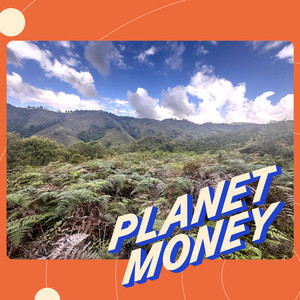
El Globo is a big plot of land, more than 800 acres situated on a mountain.
There are rivers and wetlands.
But Mauricio directs our attention up toward the mountain top.
You can see here there's like a patch of forest that has like white trees and a lot of like dark green colors.
That is one of the most like mature forest that we have.
He says a couple centuries ago this whole area was mature forest full of yellow -eared parrots and these super rare alma negra trees that translates to black soul trees kind of metal and of course plenty of Paddington's bear.
But over the 20th century more and more of the region was steadily cleared for cattle ranching.
That's what Mauricio's grandfather did back in the 60s when his family bought the land.
For a while they were some of the biggest landowners in the area and apparently they weren't super good at cutting down trees.
There was a saying that El Globo was the best land and the most beautiful land in the region because it's the most clean and clean means no trees, no shrubs and nothing but grass for cattle.
Nothing but grass. That's beauty to a cattle rancher.
The more land you clear, the more cattle you can graze and the more money you can make.
That simple economic logic has shaped this landscape for a century.
But one problem with that logic is that it's driven thousands of species to the brink of extinction because every acre cleared for cattle is one less for the Paddington's of the world.
They've been forced into smaller and smaller tracts of remaining land and their numbers have dwindled along with a bunch of other threatened species.
And this problem isn't just happening at El Globo, it's happening all over the world.
Mauricio says he really started thinking about all of this about a decade ago.
He was at the university studying biology when he started to fall in love with the natural world and understand just how much of it had been destroyed by things like cattle ranching.
And he says it was one class in particular that got him thinking about his family's land in the tropical Andes.
I was studying biology and I was actually studying how important tropical Andes is for conservation and how this was considered like a biodiversity hotspot.
And that means that it has a lot of species per square kilometer.
Mauricio started thinking about how his family land might actually hold the key to start pushing back against biodiversity loss because even though they'd cleared the land for cattle, even though they'd diminished the habitat for a bunch of vulnerable species, that was not irreversible.
Mauricio realized that he and his family could be sitting on a biodiversity gold mine if he could just figure out a way to turn the cattle farm back into forest, back into nature.
And I started pitching to my family, hey, let's build a nature reserve.
I'm a family being really traditional.
We're like, no way.
I mean, you're not getting any money from that.
This is not an economically viable project.
So we're not doing it.
Mauricio takes on this new challenge, how to restore the land to a more natural state while also generating a profit.
He looks into ecotourism, which could be lucrative in theory, but Alglobo is kind of remote.
He starts up a beekeeping operation to try to make that honey money, but it isn't quite enough.
Still, Mauricio's family is okay with it taking a few years to figure out how to restore the forest and find a way to monetize it along the way.
So he forges ahead.
Here Mauricio catches what seems like a little break.
He finds an organization that offers to plant 60 ,000 native trees on his land for free, doing a lot of the work he might otherwise have to pay for.
So he decides to sign up.
It was a good idea.
I mean, there were good intentions behind that project.
But we all know what they say about good intentions and the results here were kind of a disaster.
They planted the wrong trees in the wrong places, 70 % of them died, and among the ones that lived is an invasive species, a shrub that is notorious for crowding out native vegetation.
We actually ran into one as we were walking around Alglobo.
Oh, look at this. This is it.
Oh, this is it. And Mauricio got so mad, he started cursing at it.
It's very funny. Wait, puta.
Wait, puta. So the tree planting was a failure, but it was around this time that Mauricio stumbled on the company that would eventually help create the biodiversity credits that we bought.
I was looking at the internet, and I don't know how, and terazos pop out.
Terazos is a Colombian company that seemed to have found a way to not only pay for conservation, but maybe to even make it profitable.
It is a little controversial.
Terazos was pioneering a model for funding conservation in Colombia called habitat banks.
The way it works is there's a law in Colombia that says if you cut down trees for certain kinds of big projects, like dams and mines, you have to compensate for that.
So if you mess up an acre of Andean cloud forest, you need to conserve at least an acre of that same forest.
And one way you could do that is to pay terazos to protect some of the land in one of their habitat banks.
Mauricio understood this basically meant that you were conserving ecosystems by taking money from the very same companies that were destroying them.
Was there a part of you that was conflicted at all about the model?
Maybe a little bit, but not really.
I mean, many people were, and maybe we were like, okay, you're selling your soul to the capitalism.
But I think at the end of the day, what's important is that the money was well -planned, was well -used, and was delivering positive ecological outcomes.
Mauricio starts looking into Terazos' model and quickly realizes it won't immediately solve his problem at El Clobo.
There aren't any of those big projects destroying that particular part of the Andean cloud forest.
But he decides to take a job with Terazos to learn all about their habitat bank system.
And then one day, after a few years of working there, Mauricio and his colleagues are throwing around ideas for how to set up a habitat bank system in places like El Clobo, when they come up with a potential model.
It was kind of a mix between Terazos' old model and what others had done with carbon credits.
Now, there are two types of carbon credits.
There are credits that companies buy because they basically have to by law in places like Europe and California.
But then there are also voluntary carbon credits that companies buy because they want to.
Maybe in order to make some sort of PR claim like they're carbon neutral or net zero.
The new idea that Mauricio and others had was maybe they could do something like those voluntary carbon credits, but for biodiversity.
So they'd sell a credit that promises long -term protection of land rich with species and companies would buy them.
So they could make claims about being nature positive or something like that.
Mauricio says their theory was that companies wanted to make these kinds of claims.
They wanted to invest in biodiversity.
They just needed a way to do that that was easy and trustworthy.
What we thought is that maybe the private sector needs an instrument to report on what's happening on the ground.
And that's where biodiversity credits come along.
It was a shot. I mean, it was like, let's try to make it work.
And if they could make it work, Mauricio thought, instead of getting people to pay his family per head of cattle at El Globo, they could instead get companies to pay them per 10 square meters of restored cloud forest.
Next, they needed to figure out how much those companies should pay.
So how did you set the price?
So the price is really straightforward and simple.
Basically, they looked at how much it was gonna cost to run the Habitat Bank for the next 30 years.
So they were gonna need to buy and plant a bunch of trees and plants, put up fences, and also hire a ranger to prevent illegal logging or poaching.
So you need to understand how much you're gonna pay your ranger.
You need to understand how many trees do you need to plant?
And you need to understand the administrative cost, the sales cost, the marketing cost.
You need to understand all those costs.
They added up all these projected costs.
Then they looked at the price of things of sort of similar offerings, like an adopted Jaguar program.
But there was a big range, so they kind of arbitrarily picked a nice round number, $25 a credit.
With a total pool of more than 300 ,000 credits, that would cover their costs and maybe even make them a profit.
But in order to actually sell any of these credits, he knew he'd have to offer companies some tangible evidence they were helping biodiversity, that the companies could then flaunt to investors and customers.
So he needed data. First to show that El Global was already home to a bunch of threatened species.
And second, to prove that the work they were doing to restore more and more of the land was actually improving biodiversity.
For Mauricio, that meant doing a kind of wildlife census to get a baseline.
A lot of El Global is sort of barren from its cattle ranching past, but there was one super dense, biodiverse patch of forest that was never cut down.
And that is where the lion's share of El Global's biodiversity lives.
And so that's where he took us, to show what we'd actually bought with our biodiversity credit.
We start out hiking through what was recently ranch land.
There are shrubs and waist -high ferns.
And then as we get higher up the mountain, we cross into the thick dark tangle of the original jungle that used to cover everything.
This is how it should look like.
Like a really dense forest with a lot of plants growing in other plants.
Lots of palm trees growing.
And there's also some bird species or some insect species, also some leedards and frogs.
You will only see them in the growing old forest.
This is the biodiversity that the biodiversity credit is supposed to protect.
And it's the kernel that they're building on as they restore the rest of the land here to its former tropical Andean glory.
Using wildlife cameras and stakeouts, Mauricio's determined that El Global contains some 20 threatened species, including the ones we'd seen in the advertising when we bought our credit.
The tree ocelot, the yellow -eared parrot.
And most dangerously cute of all, the spectacled bear himself.
Mauricio had us play a little game of I spy in the forest.
So now I need you to look, I need you to find traces of the bear.
Is it these broken off?
No. Trees, no. What do birds eat?
People. Real ones know it's actually marmalade sandwiches.
So they eat mostly bromelades.
Bromelades are a family that includes spiky plants like the pineapple.
They usually live in the most jungly of jungles.
They're on the forest floor all around us and that's where I'm looking.
I'm failing the exam.
Until Mauricio tells me how the bears actually climb trees to get at the biggest, juiciest bromeliads.
So I should try looking up.
Oh, I see. I see them.
Wow. The scratch marks.
It's like a horror movie.
He climbed all up over there and you see scratches all over the tree.
Looking at these long claw marks in the bark, I felt like I was seeing evidence not just of bears, but that there's this whole rich web of life here.
But as we started our hike back down the mountain, I couldn't help but puzzle over the thing we actually bought that brought us here in the first place, that $25 biodiversity credit.
It wasn't a physical plot of land.
There wasn't some 10 square meter patch with our names on it.
We didn't get some fractional ownership of a spectacled bear.
Really the credit that we bought helped to cover the costs Mauricio says he'll need to protect and restore this place over the next 30 years.
We basically donated $25 to his crowdfunding campaign and the swag we got in return was just an email with a certificate attached that says biodiversity credit on it.
Which brings us to the existential question hanging over this whole project.
Mauricio has sold one credit to Planet Money, but can he sell thousands or tens of thousands of credits to actual companies?
And it just so happens that a few weeks after we visited Mauricio at El Global, he was gonna get a shot at some major potential buyers.
Some of the biggest players in the world of corporate sustainability were about to descend on nearby Cali, Colombia for the UN Global Summit on Biodiversity, the COP 16.
That was gonna be a big test for Mauricio and for biodiversity credits.
COP will be where we're gonna see if companies are really willing to buy these credits and claim these results and add value to their companies.
It's like the big like coming out party or like the big debut for biodiversity credits.
Yeah, that's it. After the break, Mauricio takes off his hiking boots, laces up his loafers and polishes up his pitch deck to see if companies are gonna buy what he's selling.
This message comes from NPR sponsor E -Trade from Morgan Stanley.
Take control of your financial future with E -Trade.
No matter what kind of investor you are, their tools and resources can help you be ready for what's next.
Now, when you open an account, you can get up to $1 ,000 with a qualifying deposit.
Terms apply. Learn more at eTrade .com slash NPR.
Investing involves risks.
Morgan Stanley Smith Barney LLC member SIPIC.
E -Trade is a business of Morgan Stanley.
This message comes from Capella University.
With Capella's FlexPath learning format, you can set your own deadlines and learn on your schedule.
A different future is closer than you think with Capella University.
Learn more at capella .edu.
This message comes from Capital One.
Banking with Capital One helps you keep more money in your wallet with no fees or minimums on checking accounts.
What's in your wallet?
Terms apply. See capitalone .com slash bank for details.
Capital One N .A. member FDIC.
Support for NPR comes from Google.
This year, Google is celebrating the breakout searches of 2024 that captured the world's attention and shaped our year in ways we never saw coming.
Watch the film at g .co slash year in search.
Google, search on. Every two years, diplomats from around the world descend on one city for a week or two in order to try to save the planet's plants and animals and fungus from mass extinction.
This year's summit, the COP 16, took place in Cali, Colombia.
And like every summit, there was also this sort of shadow conference filled with thousands of people who at least claim to be trying to tackle the same problem from the private sector.
And that's where I met up again with Mauricio Serna.
He was in that hotel lobby trying to pitch corporate executives on Terrazo's biodiversity credits.
I think they care because they're here and they're willing to listen.
Over the course of the last few years, Mauricio has gone from a biology student to a sort of evangelist for this new kind of financial instrument.
One that he hopes might turn his family cattle ranch into a permanent refuge for threatened species like the spectacled bear.
And he showed up at the COP 16 this year with a mission.
So my target was, okay, you need to go and sell this biodiversity credits mostly to anyone.
But Mauricio is not the only guy selling biodiversity credits at this conference.
It's kind of the hot new idea at the COP for how to incentivize the private sector to help protect the environment.
The World Economic Forum projected a couple billion dollar market by 2030.
And here at the conference, you can taste the hype.
There's a tequila company giving out free shots in honor of a jaguar based biodiversity credit.
Voila pachamama, salut.
There's a 20 foot Jenga tower of terrariums that turns out to be a promotional sculpture for a biodiversity credit to save the ocean.
Thank you so much. So beautiful.
Yeah, it is. And there are of course several biodiversity credit products touting themselves as compatible with the blockchain.
Including Mauricio's, in fact.
Now, it isn't totally clear whether all of this is just a circus of hot air or maybe the start of a new gold rush.
But Mauricio is hoping that all this marketing hype could mean more people will be willing to buy what he is selling.
For the first couple days of the conference, Mauricio's getting his bearings, going to panel discussions.
But by day three, he's starting to make some sales, one credit at a time.
That night, at a networking event at a bar, we get to see him in action.
He's talking to a guy with a website startup and Mauricio gives him the pitch.
You can click a few buttons, pay 25 bucks, and save 10 square meters of cloud forest.
He likes how Mauricio has made it so easy to do something good.
He says yes almost immediately.
We made it. Yeah, one more sale.
One more sale. You just gotta do not anymore.
I have no idea. Mauricio later tells us that Terasos's goal is to sell 10 ,000 biodiversity credits by the end of the year.
There'll eventually be more than 300 ,000 credits.
That's a big inventory.
That's why you need buyers that aren't just individuals you talk to.
Yeah, so we need corporate buyers who can buy a big bunch of these credits.
Later that week, a corporate buyer makes an announcement.
ESA, one of the largest electric transmission companies in Latin America, says they've bought over 1 ,000 of Mauricio's credits.
And when I talk to the guy who directs their main corporate sustainability program, Juan Fernando Patino, he tells me they're interested in biodiversity credits for a couple of reasons.
For one, it's a way to kind of buy good will from the communities where they work.
He calls it a social license.
Also, they hope the credits will be worth more in the future and companies like his could sell them at a profit later on.
But if not, that's okay too.
We have also the objective to learn.
So sometimes learning has a price and we're able to pay that price in this case.
ESA is willing to take the risk on this new untested product, but as the conference goes on, it seems like they may actually be the exception.
Other companies are a lot more reluctant.
Over the course of the week, Mauricio is talking to people from a food packaging company, representatives of the construction industry, avocado farmers, but he's enclosing any deals.
At one point, I watched him shoot his shot with two mining companies in a big four accounting firm, only to get a resounding, hmm, no thanks.
They're pretty skeptical, yeah, because they don't see an actual, how do you put it in English, they're just too new.
To try to understand what Mauricio was up against and also how to square that with all the hype, I caught up with Mark Opel.
He left a private equity firm to be a conservation finance watchdog at a group called Campaign for Nature.
What's going on with biodiversity credits?
Why are they getting this kind of attention and is that good?
We think they're a distraction.
Mark thinks these credits are a distraction.
He's worried that governments might use biodiversity credits as an excuse to not cough up the money they've already promised, to pawn off the biodiversity problem on the private sector.
He's also skeptical that these credits will actually be able to deliver on what they promise.
He points to what happened to carbon credits.
The voluntary ones companies buy to claim they're carbon neutral or net zero, much like with biodiversity credits, when voluntary carbon credits were first taking off, there were some really optimistic projections about how big and important the market could become.
But then in the last couple of years, there's just been a steady drumbeat of damning research and journalism.
Reports that consistently show the majority of those carbon credits didn't actually live up to those claims.
And a lot of them didn't actually end up reducing carbon emissions at all.
The voluntary carbon market has tanked as a result.
It's a fraction of what it used to be.
We think the biodiversity credits are gonna suffer from all the problems of the carbon market.
Mark thinks that some companies are gonna buy cheap, low quality credits and then make outsized and ambiguous claims about being nature positive.
Or they'll look at the example of the carbon market and just stay away.
We will never meet our goals by looking to the private sector to voluntarily make investments that don't maximize shareholder value.
At the end of the day, companies are in the business of generating shareholder value.
There is not a business case for biodiversity credits to generate shareholder value beyond a token amount of philanthropy and marketing that they may get.
And sure enough, a week or so into the COP conference, Mauricio seems to be learning firsthand some hard lessons about that lack of demand.
He's talked to 30 or 40 companies, but there haven't been any big corporate windfalls yet.
Terrasos was trying to sell 10 ,000 credits by the end of the year.
And they had sold about 6 ,000 before the conference.
But after two weeks with all the allegedly most biodiversity loving companies in the world, Mauricio says they'd only sold about 280 more.
So that's 2 ,800 square meters of land being protected for 30 years.
That's it, that's like a quarter of a hectare.
Or a little over half an acre, enough habitat for like a 10 ,000th of one spectacle bear.
We are in a tough scenario where we will not do anything if we have like tons of supply and no demand.
We all hoped this was the other way around and that there was a problem with supply, not of demand.
But it's just not. A recent report found that only about a million dollars have been spent so far on biodiversity credits.
That's way off track from the billions the World Economic Forum was projecting by the end of the decade.
Mauricio and his colleagues at Terrasos and a lot of other people in the world of biodiversity credits admit that the demand that they'd hoped for doesn't seem to exist right now.
And so they are coming around to something their critics have been saying.
The only way to get companies to pay is if governments or institutions like the World Bank get involved.
What they're hoping for is some kind of new regulations or tax incentives or favorable loan conditions that would change the math and make it so that buying these biodiversity credits would become a more attractive business decision.
Which is possible, even if at this point it still seems a long way off.
By the end of the COP 16 conference, the world's biodiversity problem didn't seem to be any closer to being solved.
The diplomats had not managed to come to an agreement on government spending on biodiversity.
And not much had fundamentally changed in the private sector either.
The biodiversity credit companies packed up their giant Jenga blocks and tequila offerings and the multinational executives jetted back to their corporate headquarters.
And I started thinking about what this all means on the ground in a place like El Global.
I thought back to this moment where I was standing with Mauricio, looking out over the surrounding land that straddles his family's ranch.
Wow, what do you see?
What I see is green rolling hills, what's actually called a green desert because there's almost no biodiversity here at all.
So those crop kind of thing that you were looking at are avocado.
Those big trees that look like a green carpet are pine trees and all the rest is for cattle ranching.
Avocado farms, pine plantations and cattle ranches.
Biodiversity credits haven't changed the fact that these are still the most profitable ways to use this land.
With a push from government, maybe that could change.
If not, Mauricio and his family will have a strong temptation to sell off the land or turn it back into a cattle ranch.
And I think we all know what that means for Paddington.
The The Today's episode was co -reported by Tomasu Primny.
It was produced by James Sneed, edited by Jess J, back checked by Sierra Juarez and engineered by Sina Lefredo.
Alex Goldmark is our executive producer.
This story was produced with support from the inter -news Earth Journalism Network.
I'm Stan Alcor. And I'm Alexi Horwitz -Gazi.
This is NPR. Thanks for listening.
This message comes from NPR sponsor, Merrill.
Whatever your financial goals are, you want a straightforward path there.
But the real world doesn't usually work that way.
Merrill understands that.
That's why with a dedicated Merrill advisor, you get a personalized plan and a clear path forward.
Go to ml .com slash bullish to learn more.
Merrill, a Bank of America company.
What would you like the power to do?
Investing involves risk.
Merrill Lynch, Pierce Fenner, and Smith, Incorporated, registered broker dealer, registered investment advisor, member, SIPC.
This message comes from PNC Private Bank, where brilliant wealth management decisions are being made using thoughtful analysis and unique insights to chart a path most investors miss.
It may not be exciting, but PNC believes that's how you build wealth over time.
At PNC Private Bank, their team of advisors takes a steady and calculated approach, which might sound boring, but the outcomes are anything but PNC Private Bank, brilliantly boring since 1865.
PNC Bank, National Association, member FDIC.