Every day at Sierra, you'll find top brand apparel, footwear and gear for 20 to 60 less than department and specialty store prices.
And during clearance time at Sierra those incredible prices are And when you shop clearance at Sierra you can save a whole lot more on everything you need to get active and outside.
That's a lot of saving.
Epic brands, fast selection, teeny tiny prices.
That's Sierra.
Visit your local Sierra store today or shop online at Sierra.com.
For Scientific American Science Quickly, I'm Kendra Pierre-Lewis, in for Rachel Feldman.
What do ready-to-bake cinnamon rolls, most French fries and many pre-made salad dressings have in common?
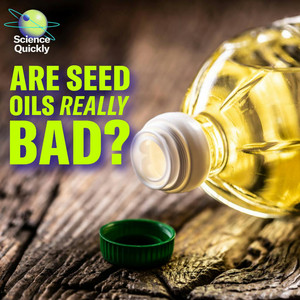
They're all made with seed oils.
Until fairly recently, many of us might have been concerned about how much oil those foods contained, rather than what kind
But these days, a lot of people seem to have a problem with seed oils.
Everyone, from so-called wellness influencers on social media to Robert F Kennedy Jr, the Secretary of Health and Human Services, wants us to believe that seed oils are uniquely bad for us.
The health secretary has gone so far as to say, without evidence, that seed oils are toxic.
And some restaurants, including the salad chain Sweetgreen, are increasingly boasting of seed oil-free options.
So today, we dig into seed oils.
What are they, and are they secretly killing us?
To answer these questions, we reached out to Eric Decker.
He's a professor at the Center for Agriculture, Food and the Environment at the University of Massachusetts, Amherst.
Hi.
Thanks for taking the time to speak with us today.
No problem.
It's my pleasure.
So one of the reasons we wanted to speak with you is you're something of an expert on seed oils, which have, in recent years, become the villain of, you know, quote unquote wellness social media.
For me, that raises a pretty natural question, which is what is a seed oil?
Basically, the fats we eat could come from animals.
So that would be things like lard and tallow and butter.
Or they can come from fruit, and that would be things like olive and avocado.
Or they can come from seeds, and those seeds could be soybean, corn, canola, sunflower.
So something like corn or soybean oil would be a seed oil.
Correct.
But something like olive oil or my personal nemesis because I'm allergic to it avocado oil.
That is not a seed oil.
Correct.
But when I'm looking in my kitchen cabinet, I'm seeing for the most part liquid oils that all look exactly the same.
Are seed oils different like on a chemical level from non-seed oils?
Yeah, they're going to have a couple differences.
So what makes olive oil unique is it's not a refined oil, extra virgin olive oil.
Avocado oil.
Sometimes it's refined, sometimes it's not refined.
Most of the seed oils that we would buy at the supermarket would be refined.
There are some cold pressed seed oils, but they're pretty uncommon.
So because they're refined or not refined can be one of the reasons that their composition will change.
But the other thing is is that the genetics of the plant dictates the type of fatty acids that are in the, And so olive and avocado oil very high in oleic acid, which is a monounsaturated fatty acid.
The seed oils, you can find a very broad range of fatty acid composition.
So canola oil would be very high in monounsaturated, like olive oil and avocado oil.
But then the others, like corn and soybean and safflower, sunflower.
These are high in polyunsaturated fatty acids.
And the most common one of those is linoleic acid, which has two double bonds, versus the monounsaturated, with one double bond.
Okay.
So for a regular person who's just trying to figure out what they should eat in the grocery store aisle, these fatty acids, do they matter?
Yeah.
So there's really good human clinical data that show that the polyunsaturated fatty acids will decrease the LDL cholesterol in your blood.
And this is important because LDL cholesterol has been associated with cardiovascular disease and heart attacks.
So people that, especially people that have high LDL, would benefit greatly by using a seed oil that has a high linoleic acid concentration.
Wait, what?
Because I have it on good authority from our human health secretary, Robert F Kennedy Jr, that Americans are being quote unknowingly poisoned by seed oils.
Here's what he said in an interview on Facts and Friends in 2024.
Seed oils are one of the most unhealthy ingredients that we have in foods.
And seed oils.
They are associated with all kinds of very, very serious illnesses, including body-wide inflammation.
Yeah, there's a lot of theories about this.
There's one theory called the omega-3, omega-6 ratio.
And this theory.
The omega-6, which is the polyunsaturated linoleic acid, is thought to increase inflammation, whereas the omega-3s, most of which we would get from fish oil, would decrease inflammation.
So even though this is a theory and it's been shown in animals...
When you actually look at human clinical trials.
The linoleic acid, the omega-6, has not been shown to increase inflammation.
So right now, the research shows that the benefit of the linoleic acid in decreasing your LDL cholesterol is much greater than the potential risk of that fatty acid increasing inflammation.
I mean.
The other controversy on the seed oil is they're extracted with hexane, which is a chemical solvent.
But there's pretty good data that shows that for the consumer, that's not really a high risk.
Almost all the hexane is removed from the oil when they process it.
And really the only time you ever see hexane being a problem is with workers in factories that are exposed to very high levels of hexane.
From the outside.
It often seems when I go to the grocery store and I look at these seed oils, they're often lower cost than some of the other oils that were being pushed to consume instead.
And I'm wondering.
It feels like there's a little bit of classism at play here and this idea that just because it's expensive, it must be better for us.
So the best example is extra virgin olive oil.
They just press out the fat.
And when they press out the fat, they don't get all the fat out of the olive.
So the yield is somewhat low.
Plus, olives can only be grown in warm climates.
So there's a limitation of how much that's out.
There's actually some shortages that are occurring right now because of climate change.
So they typically will be more expensive.
And when you think about olive oil, it really has a lot of flavor to it.
And that flavor is very desirable in the olive oil.
And so that's why you don't want to refine it, because it takes all the flavor out of it.
The seed oils, on the other hand, are extracted with hexane.
And when they're extracted with hexane, this gets all the oil out.
So it's very, very efficient.
But it takes out some other fats.
It takes out things like phospholipids and free fatty acids and fats that aren't desirable in the oil.
So the refining process removes these other lipid components from the oil.
And this makes the oil very bland in flavor.
It gives it a really good cooking properties like very high smoke point.
And so it makes these oils very, very versatile.
But because they are so efficient at extracting it, it also makes the costs much lower.
And isn't that also why people love deep frying in peanut oil?
Because it has a high smoke point?
Yeah, they're all pretty similar.
All the refined oils are pretty similar.
When you get into high saturated fats, they'll be a little bit higher.
But, you know, peanut oil is a good one.
Because in a lot of those applications, when you're cooking, you want bland, right?
You don't want to make your sugar cookies with olive oil.
So so you want you know, you want a bland or maybe in the case of a cookie, you want butter.
Right.
But in some applications, you don't want the oil to have flavor.
One thing about olive oil is actually not good.
High temperature cook olive oil because it's got a low smoke point and you'll lose a lot of the flavor that you're paying for.
So it's like you should use it in cold applications, or you can use it in a fry pan which doesn't get too hot.
I think a risk in all oils is if you heat them too high and they start to smoke.
You're now decomposing the oil into other compounds which have health risks.
So really managing your oil when you're cooking with it and not letting it get too high of temperature and start to smoke is also very important.
Right.
And that's where it comes into handy to know how to cook a little and to look for the smoke point.
But I guess it feels like there's a health halo around kind of the more expensive oils and we're vilifying sort of the cheaper, more accessible oils.
Yeah.
I mean extra virgin olive oil does have this halo and there's a lot of good research that shows that it has health benefits beyond just normal oils.
And A really good contrast is your favorite avocado oil.
Which to be clear, I'm only vilifying because it wants me dead.
So avocado oil doesn't really have any data that shows that it has major health benefits.
And actually its fatty acid composition, in terms of the amount of monounsaturated fatty acids, is very similar to canola oil.
So, and when you go to the store and you look at olive oil or avocado oil, you find that a lot of times it's refined.
It's not cold pressed.
And so if it's refined, then you're taking out other potential beneficial compounds in the oil and it becomes even more like canola oil, except it's probably four times more expensive.
So it's more that people are making these cold pressed oils into being these superfoods when there's really no evidence to show, especially with avocado oil, that that's true.
That's A, awesome to know.
And B, I hope the word gets out because people are putting avocado oil in everything for no reason.
As someone who's allergic.
But something I've noticed is that the people who really hate seed oils aren't just pushing like other plant-based oils like olive or palm oils.
They're really pushing for us to use animal fats like butter or rendered beef, aka tallow.
You've probably heard that the fast food chain Steak and Shake, for example, has said it's going to eliminate seed oils in favor of beef tallow.
And actually, if you go on the website, they're selling jars of beef tallow.
And this kind of makes me think Steak and Shake is just fundamentally processed fast foods.
And I can't imagine that even if you were to switch whatever oil they were using before for a quote-unquote healthier oil, it's going to make that much bigger of a difference in the health of ordinary people.
Yeah, there's two parts of this controversy.
One is that some people don't feel that saturated fats are that bad for you.
But again, there's pretty good clinical evidence to show that saturated fats increase your LDL cholesterol.
They do the opposite of the polyunsaturated fats.
So, especially if you were to replace polyunsaturated fats with saturated fats, you would decrease the benefit of the healthy polyunsaturated fats in your diet.
However, on the other side, there's an oxidation that occurs in oils.
And when those oils oxidize, they start to decompose into a whole variety of compounds, some of which, in animal studies, have shown to have some toxicity.
So if you do something like in food service operations and you deep fry foods with these highly polyunsaturated fatty acids, they can oxidize and produce these products where, if you use something like tallow which is saturated, it's much more stable against the oxidation and doesn't present again that risk.
Now, as long as you take care of the oil that you're using in the fryer, there's no real risk there.
The risk becomes when the oil is not used properly.
And what does used properly mean?
It just means you have to make sure that you maintain the oil in the freshest state possible.
Good food service operations will actually filter and clean their oil on a regular basis.
And then you have to monitor the oil.
And when it gets to be older, you need to discard and start with fresh oil.
In a way, you're saying that using beef tallow gives fast food restaurants an easier margin.
So they're able to essentially use older oil than they would if they were using...
Yeah, the tallow would last a lot longer.
And it costs a lot of money to fill up that fryer with oil, as you can imagine.
So the longer you can make your oil last, the more money you'll save.
Now, another part of beef tallow is that beef tallow can have very positive flavors to it.
So for many years, McDonald's used beef tallow.
And then what happened is people were concerned about the cholesterol in the beef tallow.
So McDonald's stopped using the beef tallow.
But many times, if you go to fancy restaurants...
You can get fries that are cooked in beef tallow or even duck fat.
Sometimes you see duck fat fries.
And that's part of the advantage of that is, you're getting a flavor change in addition to the stability of the fat.
And it also just sort of seems like for your everyday, you're not looking for a flavor.
Maybe you're making a stir fry, a seed oil is fine.
If you really want like a strong, like maybe you're making a pasta dish or a salad, that's a really good place to use your extra virgin olive oil, because it has a really good flavor profile.
Exactly.
And to be clear, I love a good duck fat french fry.
They are very tasty.
But I'm also not under the belief system that a potato deep fried in duck fat is heart healthy.
I'm not making a health claim.
And I think the thing that, with seed oils in particular, is many of the people who are vilifying them is they're making an explicit health claim and telling people to eat diets that are really heavy in these saturated fats and to really pivot away from eating, you know, canola oil or oils that are, for many people, lower cost, more accessible.
And it seems to be, based on the available evidence, better for our health.
Yeah, I mean I would say that the influencers who have had so many negative comments about seed oil, those aren't really based on strong scientific evidence.
And, you know, like you said, the recommendation should really be eat less fried food, right?
Because fried foods can be generally very high in calories.
If it's potatoes or chicken nuggets, it's not going to be very high in positive nutrients.
So the messaging seems to be all messed up.
We shouldn't worry about is seed oil better than tallow.
We should be worried about people that eat so much fried food in their diet.
That's our show.
Join us on Friday when we'll dig into Venezuela's oil reserves and why the U.S. seems to want it.
Science Quickly is produced by me, Kendra Pierre-Lewis, along with Fonda Mwangi, Shushmita Patek and Jeff DelVecchio.
This episode was edited by Alex Suguiera.
Shana Poses and Aaron Shattuck fact-check our show.
Our theme music was composed by Dominic Smith.
Subscribe to Scientific American for more up-to-date and in-depth science news.
For Scientific American, this is Kendra Pierre-Lewis.
See you next time.
Thank you.