I'm Aishah Roscoe and this is a Sunday Story where we go beyond the news of the day to bring you one big story.
You're probably familiar with the baby boom.
After World War II there was a huge spike in fertility rates.
But not all of those babies were wanted.
At the time, abortion was mostly illegal in the US.
And so that baby boom, it also led to something that people have called the Baby Scoop era.
Yes, that's actually what they called it.
Before Roe V. Wade, there was a period from 1943 to 1973 when many unmarried women and girls were forced to give birth and put their babies up for adoption.
The exact numbers are hard to know because these births often happened in secret in places called maternity homes.
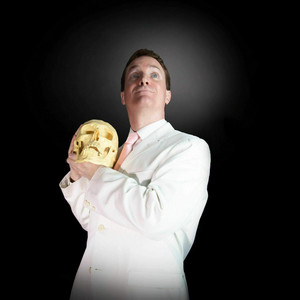
Brady Hendricks is an acclaimed horror writer, and he made this tragic history the setting of his latest novel, Witchcraft for Wayward Girls.
It's a book that, in some ways, reverberates with the present.
Today, things are obviously different from the years before Roe v.
Wade. Abortion is still a protected right in 21 states and the District of Columbia.
And there are abortion pills now that can cross state lines.
But with the fall of Roe and the resulting abortion restrictions, some of this history, it echoes.
Hendrix's novel is a spellbinding work that explores what happens when people who have been stripped of power suddenly gain it.
My conversation with Grady Hendrix when we come back, stay with us.
farmers using regenerative models of agriculture that could balance the climate, save people's health and stabilize America's economy.
Streaming April 22nd, Earth Day, only on Prime.
This message comes from Bombas.
Socks underwear and t -shirts are the top three requested clothing items by people experiencing homelessness.
Bombas makes all three, and donates one item for every item purchased.
Go to Bombas .com slash NPR and use code NPR for 20 % off.
This message comes from Mint Mobile.
If you're tired of spending hundreds on big wireless bills, bogus fees, and free perks, Mint Mobile might be right for you with plans starting from 15 bucks a month.
Shop plans today at mintmobile .com slash switch. Upfront payment of $45 for 3 -month 5 -gigabyte plan required.
New customer offer for first three months only, then full price plan options available.
Taxes and fees extra.
See Mint Mobile for details.
Raydy, thanks for joining this.
Thanks for having me.
Okay, so set this up for us.
The story starts in the early 1970s with a pregnant 15 year old girl, her very angry father at the wheel.
They're speeding from Alabama to Florida.
And there is so much judgment at this time for unwed mothers in general, but especially for teenage unwed mothers.
tell us who the girl is and where her father is taking her.
Her name is Neva, she's 15, and she's pregnant, and she's being taken to a maternity home in Florida.
And there were about 190 of these across America.
You know, they were around for a long time, but their peak was really from about 1940, 45 to 1973 when Roe v.
Wade passed. And this is where if your daughter got pregnant and didn't have a ring on her finger, you would send her.
She'd spend the last trimester usually of her pregnancy in hiding, have her baby, her baby would be taken from her and put up for adoption, and she'd return home with some kind of cover story you tell the family or the neighbors.
Oh, she, you know, visited her aunt this summer, or she went to work on her French in Chicago.
And she would be expected to never talk about or think about her baby again.
And the girls were kept under very tight control.
Like, the woman running the place where it never ends up, she instructs the girls they are not to talk about their real identities, they're given fake names, and they are also kept in the dark about what exactly is going to happen to them when it's time to give birth.
They're told, oh, there's no pain, you'll just go on to sleep, you won't remember anything.
And that's not true.
Even back then, I mean, they had some stuff going on, but that's not true.
Yeah, well, you know, the homes were run by, you know, the Catholic charities ran homes, the Florence -Criton homes, the Salvation Army, they were independent homes, and they all varied in how they treated the girls.
I mean, you had homes that had nutritionists and obstetricians on staff who gave them classroom teaching, who had social workers, and then you had homes that were almost like prisons.
Money was taken from them.
They were kept indoors all day.
But the few common things between the homes is, yes, you never used a real name, you never said where you were from, and you were kept ignorant.
You know, all these girls had these due dates bearing down on them like freight trains, and they were dying to know what's gonna happen.
And people say, oh, don't worry about it.
That's none of your business when, you know, it's kind of entirely their business.
You know, the novel's going along, it's all very realistic because there's just, you know, these homes existed.
But then here comes this bookmobile and a mysterious librarian and this spell book for Groovy witches.
Yes. Talk to me about Fern, Rose, Holly and Zinnia.
That's the kinda the group.
Or should I say coven that comes together and they're first foray into the dark arts.
Yes, well, you know, these girls are so hungry for information and who gives people information but librarians.
And in the late 60s and early 70s, there was a glut of these sort of supermarket paperbacks of, you know, everyday spells and how to cast charms and how to be a sensual witch. And I thought, well, what if a librarian gave them one of these books that actually gave them what they want, which is some power and control over their lives?
What if one of these books really did teach them how to do witchcraft?
And, you know, as they say, be careful what you wish for.
Exactly. So, they get a little into it, they do a little spell and someone feels the effects of it.
But you know, things do get rough.
Witches are witches, they're going to do witchy things.
And there's always a price to pay for power.
But it really seems here that more of the horror in this book is the reality that the girls are living in, where they just have zero agency over their bodies, their babies, their kids.
And they're put in this position where they have to make these horrible decisions and they're just children.
Like what kind of led you to write this kind of story?
Well, two things really.
I mean, one was, so when I was in my 20s, I found out that either two members of my family had been sent away to maternity homes and they were both in their 60s or 70s.
I would have never talked about it.
And it kind of blew my mind.
The idea that these women I loved very much had children and were expected not to know them or see them or think about them.
And for all they knew their kids were dead or maybe they were alive or everywhere, maybe they hated them or maybe they had forgiven them, but they had no idea.
And so I was sort of thinking about that for a while and really wrestling with it and trying to figure out what was that like?
Why was this okay? And I read a book by a woman named Anne Fessler called The Girls Who Went Away, which is...
There's very few books written about the homes.
I mean, Anne's book and Ricky Sollinger's Wake Up Little Susie are kind of the only two.
And Anne Fessler's book is an oral history of the homes and she lets the mothers talk about their experiences.
And I was really blown away.
I mean, the fact that millions of kids were born in these homes And that these were kids, you know, these were girls, and they were 14 and 15 and 13 years old.
And we were telling them, give up your baby, never think about it again.
I mean, that's impossible for a mother to do.
And just the cruelty of it really sort of made me think there's something here.
And it took me years until I was sort of like, okay, I'm gonna try this book.
And then it took me two years to write it while my editor and I fought over a lot of it and I failed to write it several times and things just sort of went off the rails.
But yeah, so that's what I was thinking to get me here.
Well, I'm glad you stuck with it.
And that's interesting about, you know, failing to write it, but then getting to this work, so that should give some people hope because you kept at it and you succeeded, right?
Yeah, I mean, you know, and also I need to say, you know, I am a childless middle -aged man.
I have no place writing a book in which every character is a pregnant teenage girl.
And so I had about 12 moms who really shared their birth stories.
I mean, they let me ask stupid questions.
I had about four OBs and laborists who worked with me, both men and women, who I would just keep coming back to okay, what's the, and, you know, they really guided me through this.
And so a lot of the time writing this book was trying to get that part of it right.
Well, cause, so, because there are obviously birth scenes in this book and they are, they're not for the squeamish, we should say.
Not for the squeamish.
But isn't birth not for the squeamish?
It's not, no, I've done it, and I have to tell you.
It can, it is the best thing in the world, but it's also extremely terrifying.
And so you talked about researching, were you surprised or shocked by some of the things you learned about hospital births, especially back then, and what they were like?
Oh, sure. I mean, listen, giving birth in 1970, my hat is off to any woman who did that because they should get a medal of honor.
You know, I had OBs telling me stories about doctors who would induce labor if their patient came in on Friday, cause they didn't wanna mess up their weekend waiting around for her to give birth.
You know, women, you know, were regularly tied down at that point when they gave birth.
Girls like this who gave birth, as one OB pointed out to me, would probably just be knocked out because the doctor really didn't want to mess around with them too much and have to, quote, unquote, deal with them.
So even reading things like the Williams Obstetrics manual, Guttmacher's Family Planning, which was sort of the go -to's at the time, the attitude towards things like morning sickness, that's all in a woman's mind, that's just a made up problem because a woman is uncomfortable with giving birth and so she's nauseated by it.
And as she gets comfortable with the idea of her pregnancy, it'll just go away.
I mean, it really was eye -opening in all the worst ways.
But one doctor said something to me that really informed how I wanted to approach the birth scenes in this.
It was a doctor I'd known for a long time.
And she was telling you about her OB rotations and the 90s and really harrowing stories.
The kind of war stories that just left my jaw on the floor.
And at the end of our interview, She said something that really stuck with me.
She said, you know, I've been in the room for, I don't know, close to 90 live births.
And she said, and every single one of them is a goddamn miracle.
Something happens there that we don't have words for.
And that really stuck with me and was kind of what I wanted to capture.
Yes, it's horrifying.
Yes, it's painful. Yes, it's intense.
But this is everything.
You know what I mean?
This is where we all start, you know, There are two people in a room and then there are three.
When we come back, Grady and I talk magic.
This message is from Synchrony Bank who wants to remind you to stay flexible.
Not the 10 ,000 steps before breakfast, yoga bending, circus performing, wish I hadn't done that kind of flexible.
It's about staying financially flexible like with our high -yield savings account.
You'll earn a great rate without monthly fees or minimums that can slow your progress.
Go to synchrony .com slash NPR, member FDIC.
This message comes from Carvana.
Carvana makes financing your next car easy.
Buy 100 % online with customizable terms good for 30 days.
Buy your car the convenient way with Carvana.
Terms may apply. This message comes from Mint Mobile.
Mint Mobile took what's wrong with wireless and made it right.
They offer premium wireless plans for less, and all plans include high -speed data, unlimited talk and text, and nationwide coverage.
See for yourself at mintmobile .com switch. We're back with author Grady Hendrix.
It's not giving anything away to say that this book involves magic, but you you deal with different types of magic, right, or witchcraft, like a certain type from the spell book.
But you also have rootwork, hoodoo, that comes out of the African spiritual traditions.
How did you learn about that?
Yeah, so I'm from Charleston, South Carolina.
I've done some research down in the sea islands.
I helped someone write a book many years ago that had some hoodoo in it.
I just kept researching because it was this amazing tradition.
You know, voodoo and hoodoo often get confused, but they're very different.
I mean, voodoo has gods involved in the Loa, and hoodoo is very much about medicine and root work and charms and healing.
And so it was this tradition that I worry is gonna get lost, and it's a really intense part of that Sea Island, you know, South Carolina going into Georgia tradition.
It's so regional and so of those islands.
And it's also in North Carolina.
I don't wanna give away my family business, but we had some root workers in there.
It was a form of resistance, you know.
Dr. Buzzard, who was a really famous root doctor, when someone's son got drafted, he would mix up a tea for them and have them drink it.
And what people figured later is the tea had gunpowder in it that would give them some cardiac arrhythmia.
And so they'd go into their physicals and flunk their physicals and not be sent to usually Vietnam or Korea.
So there was this really amazing other element to it where there was a really real world political edge to it.
One thing that this book obviously deals with is the misogyny that these girls face.
They're all shamed for becoming pregnant.
The boys really face no consequences at all.
But they're also told that if they just go along with the plan, willingly sign their rights away to their babies or unwillingly, then they can just go back to their lives like nothing ever happened.
and how damaging do you think that sort of lie is?
Oh, I mean, I think that's something that haunts a lot of these women for the rest of their lives.
You know, reading Ann Fessler's book, talking to a few people, you know, you're a kid, you can barely make decisions about what to wear and suddenly you're being told you need to sign these papers and you have no choice, And these girls were not told their options.
They were not told, you know, their legal rights.
And I think a lot of them...
I mean, I know a lot of them are haunted by guilt for the rest of their lives.
And I've seen people reunite with their kids after being sent to maternity home, and it's incredible.
It is really incredible.
The healing that's there and how something feels completed is mind -blowing.
And I've seen on the other hand, women who never saw their kids again.
It didn't necessarily ruin their lives but it was always a shadow that hung over them for decades.
And the fact that we did this on such a wholesale level as a society.
And like you said, what made my jaw drop was how much we hated these girls.
I mean, newspaper editorials about how alcatraz should be turned into a home for unwed mothers.
Newspaper columnists calling these girls sick and unnatural And no consequences for the men.
I read a lot of books of resources.
I found one social worker manual, a handbook from 1974 that mentions unwed fathers in one sentence, and that's it.
And obviously, you look at this and you think about, like, what is the evil in this book?
These teenage girls, they're put into these positions to make these impossible decisions without all the information, without any real adult guidance.
Like, is that the real evil in the story?
You know, it's funny, I thought about this a lot, right?
I write horror novels.
I mean, I write entertainment.
And in writing this, I was like, well, who are my bad guys?
Who are my bad guys?
I was like, well, it can't be the witches.
I mean, the witches are scary, but the witches are also offering knowledge and liberation.
And then I thought, well, is it the people running the homes?
And I thought, no, you know, the people running the homes were really convinced they were doing what was best for these girls.
Is it the girl who's got pregnant?
No, of course, it's not these girls who got pregnant.
Some of them were date raped.
Some of them were molested.
Some of them just didn't even know what birth control was or have access to it.
It's one of those stories where there isn't a villain.
There are just a lot of people who were really convinced that they were right and that conviction did so much damage to so many millions of people.
Well, it seems like there is a lot of grey in this world that you've created because there is this possibility of freedom in the path of quote -unquote darkness with the witches, and then there's the possibility of that lie that the girls are being fed.
That if they just go along with giving up their babies, everything will go back to normal.
But you show that both of those paths are messy.
Like, is that how you think about this?
Yeah, I mean, I think we're all told as teenagers, even as adults to some extent, here's the path, follow the path and everything will be fine.
You won't have to worry about anything.
And I think most of us know that that's just not true.
And then I looked at these witches who were sort of the counterpoint to that and what really inspired my witches was less sort of Wicca or paganism and much more, I sort of found the voice of the witches in political action literature of the late 60s and early 70s.
which was a group known as Women's International Terrorist Conspiracy from Hell, the Black Panthers, the Weather Underground, all these groups that said, we are at war with the mainstream because the mainstream is leading us down a path of destruction.
And all these groups had the same internal debates.
What is violence justified?
How far can we push things?
If we're at war with the mainstream society, what does that look like?
What are we allowed to do?
and i think it's one thing to say hey I'm going off to join the liberation army I think it's another thing to say I'm never going home again and I will live under an assumed name and I will be on the run for the rest of my life you know it's uh it's scary so I mean I think these girls are presented with two choices and one looks very scary and the other looks very safe and they're both equally dangerous and you know I wanted to add obviously you know um you are a horror writer entertainment writer, you've written books like How to Sell a Haunted House, The Southern Book Club's Guide to Slaying
Vampires and My Best Friend's exorcism.
How do you come up with your ideas?
Man, they're everywhere.
I mean, the world is and one of the reasons I write horror is because it's about the world around us.
It's not about space or another planet or a fantasy world or the far future.
It's usually about the here and now and people around us.
And good God there's so many stories, you know, if you're just willing to listen.
And then once you add in that, like, you can make it not boring by throwing in a vampire or some witches or a werewolf or two, I mean, I wish I could keep up with how many books I want to write.
This episode of The Sunday Story was produced by Kim Naderfang -Petersa and edited by Jenny Schmitt and Liana Simstrom.
It was engineered by James Willets.
Big thanks also to the team at Weekend Edition Sunday, which produced the original interview with Brady Hendricks.
The Sunday Story team includes Andrew Mambo and Justine Yan.
Our executive producer is Irene Noguchi.
Up first, we'll be back tomorrow with all the news you need to start your week.
Until then, have a great rest of your weekend.
This message is from NPR sponsor Total Wine & More.
With so many bottles to choose from, it's easy to find your favorite cabernet or a new single barrel bourbon to try.
Find what you love and love what you find at Total Wine & More, spirits not sold in Virginia and North Carolina.
Drink responsibly. Be 21.
This message comes from Lisa.
Lisa makes exceptionally comfortable mattresses designed for everybody and budget.
Elevate your sleep with Lisa.
Go to lisa .com for 20 percent off their award -winning mattresses, plus an extra $50 off with promo code NPR.