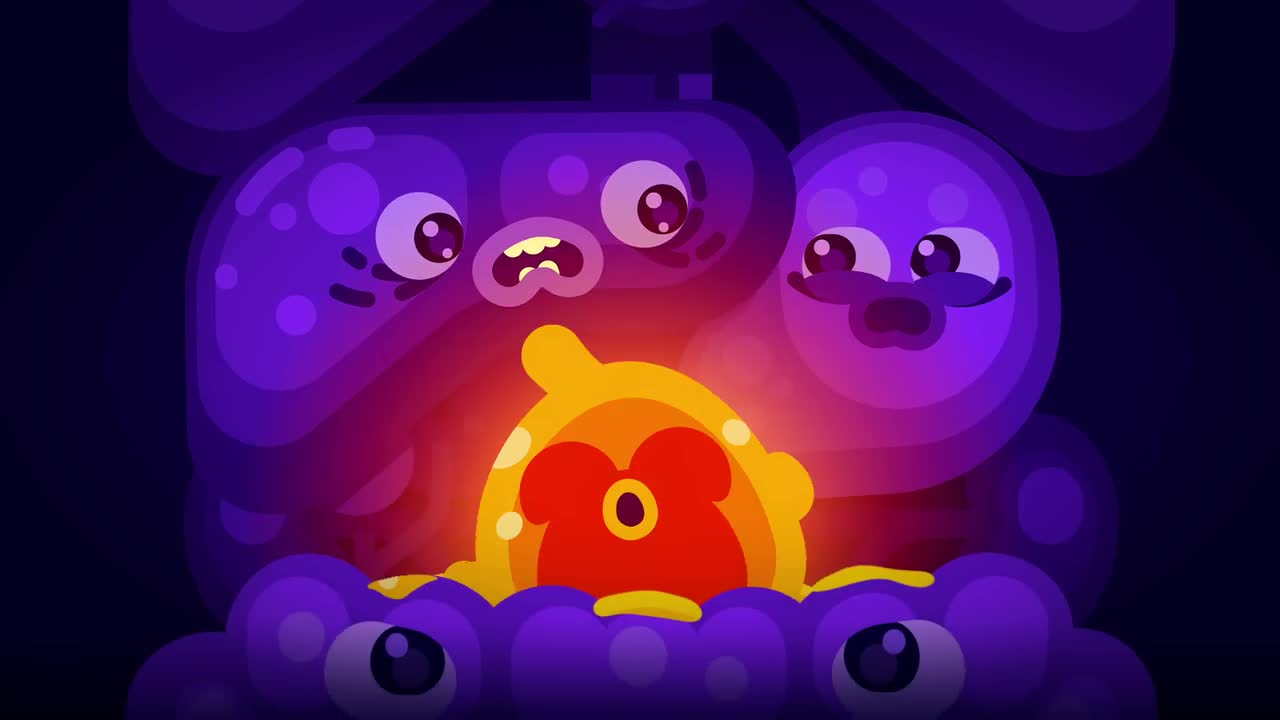
Fat is your most dangerous organ.
Yes, organ.
While it's often falsely described as a mere expression of laziness or gluttony, fat is essential for health, controlling and guiding crucial processes in your body.
But if you have too much fat, it starts to disrupt your metabolism, becoming one of the most deadly things that can happen to your body.
Today, more people are obese than starving, which is a huge victory.
There are all sorts of ideas about the cause of the obesity epidemic, but it really comes down to one thing.
For millions of years, humans had to expend a lot of effort to get food and often faced hunger.
Our bodies evolved to hold on to every bit of energy.
And then suddenly, we had an overabundance of food we didn't need to move much for.
We made food hyperpalatable and ultra-processed, with loads of unhealthy fats, salt and sugar.
Our brains love this, so our food is extremely hard to resist, to the point of being addictive.
It's also extremely convenient, cheap and you get a lot of energy per volume, so it's not very satiating.
This leads to most of us regularly overeating without realizing it.
And food is aggressively marketed, especially to children.
Fat comes with a lot of shame and blame, which is pretty unfair in a world full of things that make you feel nice and are available within minutes.
Body fat is also often unfairly villainized, but it's crucially important for your health.
And if you don't have enough, you can suffer problems from infertility to a weak immune system fatigue, mental health issues and osteoporosis.
Still, none of this changes how bad excess fat is for us.
So how does our fat organ become so destructive and can we help ourselves?
What is fat?
If you consume more energy than you burn, you store it as triglycerides, an organic battery bustling with energy collected in a large drop of fat inside a white fat cell.
Gain weight and white fat cells expand with fat, lose weight and they shrink.
Only in the last few decades have we learned fat's most important job.
Fat is an endocrine organ, part of the system that makes and regulates your hormones, chemical signals for your brain liver muscles, digestive tract and immune system, making them work correctly together.
Unfortunately, if you become overweight and obese, your fat organ and the many hormones it releases turn insane.
In adults, fat comes in two types of white fat depots.
Most of it is subcutaneous fat, the gooey soft stuff under your skin that insulates against the cold and serves as energy storage.
The other one is visceral fat nestled between your organs, providing a soft cushion for your sensitive insides.
But it also happens to be more dangerous.
These fat cells are super sensitive to stress hormones like cortisol or adrenaline.
When they pick up a surge of stress, they release fatty acids directly into your blood and are picked up by your liver as a rapid source of energy.
On top of that, your visceral fat is very metabolically active, in a constant hormonal dialogue with the rest of your body.
This is also why the health of two people with the same weight and amount of fat can be totally different.
If you're pear-shaped and your fat is mostly in your hips or limbs, you're much less at risk than someone apple-shaped with a lot of fat in their torso.
Bite by Bite, As you gain unhealthy weight.
Excess visceral fat triggers a cascade of negative changes all at once.
Fat cells bloat up to their limit until they outgrow their blood supply and get starved of oxygen.
They become critically stressed or even die.
This is bad.
If you're overweight or obese, your fat is basically a wounded organ leaking stress and poison into your system.
Especially your visceral fat, even more triggered by the extra stress hormones, makes your blood more fatty.
This overfeeds your organs, like your liver or your muscles, who can't keep up anymore and begin to take damage.
The cellular stress and dead fat cells are emergency signals that call your immune system to a fight.
Armies of macrophages invade your fat tissue, creating clusters, trying to eliminate the cause of the stress, but can't.
So they stay and call for more help.
In a lean person's fat, immune cells make up about 5% of cells.
In an obese person's fat, up to 40%.
Active immune cells cause inflammation, bloating up your tissue and releasing even more alarm signals, which is good for a short amount of time when you're sick.
But if it becomes chronic, it's like your entire body is under friendly fire.
The inflammation, molecules and fatty acids rip countless tiny wounds into the insides of your blood vessels, which leads to plaques that desperately try to close them.
This narrows your blood vessels and reduces the flow of oxygen-rich blood.
Inflammation also causes your blood pressure to rise, so your heart has to work harder and your risk of heart attacks or strokes increases massively.
To make things worse, your fat organ's hormone production gets out of whack.
Like leptin, the satiety hormone.
With a healthy amount of fat.
Leptin tells your brain, when you have enough energy storage, can eat less and spend more energy.
But if you have too much fat, instead of becoming less hungry, your brain becomes resistant against the constant flood of leptin.
This breaks your internal food thermostat, which is one of the reasons why many people who are overweight feel intense hunger.
Their fat is screaming at their brain that they have enough, but the brain is not hearing the message anymore.
Your sex hormones also get out of whack, testosterone is lowered, while estrogen is overproduced.
In women, this increases the risk of breast cancer significantly.
Most people are not aware how much the risk of cancer rises with excess fat.
In the US, almost 10% of all cancers are directly related to being overweight or obese.
And, to top this off, obese cancer patients have much worse outcomes, succumbing to the disease more often and sooner.
None of this is great, but even worse is what happens to one of your most important hormones, insulin when the hormone world explodes.
Insulin is a hormone produced by your pancreas that tells your cells to open their tiny mouths and eat up glucose from your blood.
It's your body's way of screaming, dinner time.
Disastrously bombarded by the stress from your excess fat, cells all over your body become insulin resistant, worse at eating glucose and taking up energy.
Your body tries to compensate by pumping out more insulin, screaming louder.
This can go on silently for many years and progress to prediabetes with no or only subtle symptoms like fatigue or hunger.
But as the damage accumulates, eventually your body just can't keep up anymore.
Something breaks and you get type 2 diabetes.
The cells responsible for insulin production are so overworked that they stop functioning properly and eventually give in.
Your insulin crashes drastically and your body can't compensate.
While the blood is now saturated with glucose, yet you're starving and feel exhausted and unwell.
Imagine this as trillions of tiny sharp shards floating through you, damaging your blood vessels, nerves and organs, causing slow but constant damage everywhere.
At this point, your body is so chronically inflamed that almost all organ systems are affected.
The kidneys are overwhelmed, making you pee way more.
Your vision gets blurry.
Your immune system is severely weakened.
Wounds heal slower.
Dying nerves lead to numbness and pain.
You may experience shortness of breath, chest discomfort, erectile dysfunction and high blood pressure, problems with your memory focus, mood and even depression.
Your risk of developing just about every possible deadly disease goes through the roof.
On average, type 2 diabetes shaves 10 years off your life and reduces your health span massively, arguably as much as smoking.
If current obesity trends continue, up to 1 in 3 Americans will have diabetes by 2050.
There is no nice way to put this.
Excessive fat strains nearly every organ system in your body, ages you much quicker and often leads to multi-system damage and dysfunction.
And yet, fat is still mostly discussed through the lens of aesthetics first and health second.
Which is kind of baffling, considering that most, if not all, of the toxic effects of your excess fat basically go away as soon as you lose it and start eating a healthy-ish diet.
Once your fat cells contract again, they stop being stressed and your immune system calms down.
The excess blood fat and sugar drops to normal levels and your body recovers.
Even if you already have full-blown diabetes type 2.
By losing weight, you can reverse many of the negative effects and drastically improve your health and lifespan.
So, if you've been waiting for a push to get started, now is the time.
Feeding your body nutritious food keeps it healthy.
The same goes for what you feed your mind.
When you swap mental junk food for a power-packed diet of ideas and problem solving, you can finally unlock its potential.
That's where our friends at Brilliant come in.
Brilliant is like a superfood for your mind.
Its visual, interactive approach helps you unleash your inner maths person, bring your ideas to life with code and become a better thinker and problem solver.
On Brilliant you learn by doing, experimenting, exploring and making discoveries for yourself.
This isn't just a lot of fun, it really works.
An analysis of over 200 studies showed that active learning is far more effective than lectures and other passive methods.
Because each learner is different.
Brilliant personalizes your experience, starting you at the right level and ramping you up step by step.
And with new topics and fresh challenges added.
Constantly Brilliant keeps your mental metabolism running strong.
To learn for free on Brilliant, go to brilliantorg.
Slash nutshell.
Scan the QR code on screen or click on the link in the description.
Brilliant's also given our viewers 20 off an annual premium subscription which gives you unlimited daily access to everything on Brilliant.
Taking care of your health can feel very overwhelming.
We know exactly how this feels.
That's why we created a health journal.
We've developed a framework to help you figure out what actually works for your life, without pressure or guilt.
Want to focus on your diet?
Start with the food and nutrition chapter.
Or dive into physical fitness or mental health.
Each chapter is packed with real science, lots of examples and inspiration to get you started.
But you can make it completely your own to fit your individual needs.
We also made it as beautiful and fun as possible. as taking care of your health should always be.
After the gratitude journal and the habit journal, this is the third part in our best-selling journal series.
Just give yourself one month.
Try it.
See where it takes you.