Support for NPR and the following message come from SAPConcur, a leading brand for integrated travel expense and invoice managementsolutions, with SAP ConcurSolutions.
You'll be ready to take on whatever the market throws at younext.
Learn more atConcur.com.
This is Planet Money fromNPR.
There is a kind of tax that a lot of people have imagined and dreamed of really for yearsnow.
A wealthtax. A way to tax people not just on what theyearn, but on what theyown.
Houses,stocks,Picasso's,superyots, thoroughbredhorses,whatever.
Supporters of this idea tend to be pretty progressive and they say a wealth tax would be this powerful way of fightinginequality.
But the legality of a wealthtax, that has been in question for a longtime.
And thisterm, the Supreme Court had a chance to weighin.
The case that gave him thatchance, it's called more versus the UnitedStates.
So the Moors are an American couple named Charles and KathleenMoore.
And in themid-2000s, they invested in this business in India that provides equipment to low-incomefarmers.
Overtime, this businessgrew.
It made profits and the profits got reinvested in thecompany.
Now, usually when thathappens, the company'sinvestors, they can defer taxes on those profits if they're made outside theU.S.
But in2017, Congress passed a new law thatsaid, for foreigncorporations, Americans like the Moors would have to pay a one-time tax on thoseprofits.
Even if the profits never actually reached their ownpockets.
The Moors argued they were being taxed on what investors call unrealizedgains.
Where the money is there onpaper, but it's stillinvested.
It not yet turned intocash.
In otherwords, it's notincome.
It's like basicallywealth.
And the federal tax system doesn't really taxwealth.
So the Moors joined up with a conservative group that opposes a wealth tax and theysued.
And when their suit made it to the highest court in all of theland, it gave the justices an opportunity to decide somethingbigger.
Not just whether the Moors should have been taxed on their unrealizedgains, but also whether the government can tax other assets that people holdonto, that grow in value overtime.
Like land or rare vinyl from the clash or like anti-carsor, youknow, thoroughbredhorses.
Butinstead, the court made a very narrowdecision.
They said to theMoors,sorry, but those taxes youpaid, they arelegal.
Those profits that were madeoverseas, they count as a form ofincome.
And that is where they leftit.
So these bigger questions about changing the whole scope of what the government can or cannottax, they said thosewere,quote, potential issues for anotherday.
And so those legal questions around taxingwealth, they stillstand.
Which brings us to today'sstory.
It's an episode from2019.
An episode I reported that looks at this famous early proposal for taxing wealth in the UnitedStates.
It turns out we've been living with this idea for a longtime, since basically they start of ournation.
Here's theepisode.Craig, youback?
Yes, Iam. I was just in MountVernon, the historic home of GeorgeWashington.
Wow. And I had a greattour.
George Washington said there was no estate in all of UnitedAmerica, so pleasantlysituated.
That's BettyBrown. She gave a really great tour of MountVernon.
Yeah, the river is about a mile widehere.
And she taught me a lot about GeorgeWashington.
He was a greatleader, also a slaveowner.
And he was a militarygenius.
His teeth were notwood, but his housewas.
That's commonthough,right?
Or I guess it could have beenbrick.
Well,yeah, he wanted you to think it was made ofstone.
I was interested in all of those things about GeorgeWashington, but I actually went down there to see onething.
Now,Craig, I was told that you were especially interested in thecarriage.
Acarriage? Like a horse-drawncarriage, superold, super fancycarriage.
So here's acarriage.Oh,wow.
This isreally, reallynice.
There's an insignia on the side and thefront.
There's alight. This looks like the Rolls Royce ofCarriages.
Absolutely. Carriages like the one in MountVernon, they are surprisingly important to a debate about a wealthtax.
Right. And it's a debate that's actually been going on since about1794.
Because thatyear, GeorgeWashington, he wanted to raise money and he decided a good way to do that would be to tax therich.
And youknow, it's a good way to tell if a person is rich back in1794?
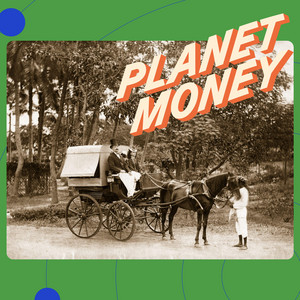
If you have aglistening, majesticcarriage.
And Washington decided to place a tax on thesecarriages.
So this carriage tax is kind of like the first federal wealthtax.
Some attacks on sales orincome, it's a tax on stuff youown.
And this tax opened up this huge debate about what kind of taxes are constitutional and which ones arenot.
Hello and welcome to PlanetMoney.
I'm BrianDurstat. And I'm GregRzalski.
Today in theshow, what a wealth tax today has to do with a tax on horse-drawn carriages all the way back in the1790s.
There will be constitutionallaw.
Uh-oh. Support for this podcast and the following message come fromWise.
The app that makes managing your money in different currencieseasy.
WithWise, you can send and spend money internationally at the mid-market exchangerate.
No guesswork and no hiddenfees.
Learn more about how Wise could work for you atWise.com.
This message comes from NPR Sponsor Morgan Stanley with theirpodcast, What should I do with mymoney?
Smart people don't always feel smart aboutmoney.
Listen to what should I do with my money to hear real people getting real help from experienced financialadvisors.
In thiscountry, some truths aren'tself-evident.
An NPR's Black Stories BlackTruth.
So, collection of stories is wide-ranging andreal.
As the people who tellthem, we celebrate the Black experience for all its soul andrichness.
Search NPR Black Stories Black Truths wherever you getpodcasts.
What are we talking aboutagain?
Ohyeah,carriages. Let'sroll.
Allright, so fulldisclosure.
Yeah, the carriage Betty showed me that was not George Washington'scarriage.
I was so disappointed because George Washington's actual carriage was apparentlyamazing, like the perfectcarriage.
He had this incredibly ornate cream-colored coach with goldtrim.
That's LindsayTrevinsky, a historian at the White House HistoricalAssociation.
And I asked her to tell me all about George Washington's sparkling whitecarriage.
Right, and think aboutthat.
A white carriage in those days was just this unbelievably ostentatious thing to drive aroundin, because the roads weren'tpaved.
There are no sewagesystems.
Every time you take your carriageout, it's going to getdisgusting.
Andso, having a cream-colored coach demonstrated your wealth that you had enough money to pay for labor to basically clean your carriage every time you wentout.
So, the storystarts.Washington, incrediblyrich, he's got a beautifulcarriage, is helping get a new government up andrunning, and they needmoney.
There's no income taxyet, sales tax isn't really bringing inenough.
Andso,he, along with AlexanderHamilton, his TreasurySecretary, decided to tax thewealthy.
So, theysay, in1794, it'sperfect.
Let's doit. Let's pass a national tax oncarriages.
And theydid. I looked into thisbill, and it's weirdlyspecific, because they're actually taxing many different kinds ofcarriages.
And all these differentcarriages, they're all taxed at differentrates.
Yeah, we looked at thesetogether, and I kind of love the different kinds of carriages you gotthere.
It begins witha, what's called a two-wheel topcoach, that's taxed at two dollars ayear.
Yeah, fighttons. There's like a sportscarriage.
You can get that for your midlife crisis, $6 peryear.
Also, there's acoachy, which is like a convertiblecoach.
It's my favoritepersonally.
It's taxed at $6 peryear.
Cherry, I don't know what that was all about, $8 peryear.
So, there are all thesetaxes, and you knowwhat, richpeople, or likeupper, upper middle class people with coaches don'tlike, they don't like beingtaxed.
There's a growing political party called the JeffersonianRepublicans, or the DemocraticRepublicans, depending on who was talking aboutit.
But they were sort of the anti-governmentparty.
Andso, they really opposed thesetaxes, and it was very much sort of a Virginia-ledeffort.
One of the leaders of this group was none other than JamesMadison.
He's a five foot four ofVirginia, he was raised on aplantation, and he's known as the architect of the AmericanConstitution.
Madison hated the carriagetax, and he decided he was going to stop Washington and Hamilton from ever getting a dime in carriage taxrevenues.
And, because he played a big part in writingit, Madison knew that hidden inside the Constitution was a clause that could make the carriage tax really hard todefend.
And we have here our trusty planet money copy of theConstitution.
It's just a printout I got off theinternet.
Yes.Greg, why don't you read the clause that Madison's going to use to try to strike down the carriagetax?
Okay, so it's right at the tophere, and itbegins,quote, representatives and direct taxes shall be apportioned among the severalstates.
Lock on on inthere, so I'm just going to read itagain.
Representatives and direct taxes shall be apportioned among the severalstates.
We're going to go through that line reallyslowly.
Firstup,apportioned.
It's just kind of like an old word that basically means divided up according topopulation.
Like, forexample, we apportioned representation inCongress.
Everydecade, we count the number of people in eachstate, and we divvy up the House of Representatives based onpopulation.
Here's BeverlyMoran. She's a professor at Vanderbilt LawSchool.
Under theConstitution, we know that representatives in the House of Representatives are apportioned bypopulation, which is why youhave, youknow,what, 40 Congress people in are representatives inCalifornia, and one inWyoming.
Okay, so that's the first part of the clause that representatives shall be apportioned among the severalstates.
But this line in the Constitution also says direct taxes shall be apportioned among the severalstates.
In otherwords, if the federal government imposes a directtax, each state has to pay in proportion to itspopulation.
So think aboutthat. If a state has10% of thepopulation, it then has to pay10% of the total tax collectednationally.
Now, not all federal taxes fall under this weirdrule, only directtaxes.
AndGreg, you have been so deep in the weeds onthis.
What is a directtax? Just sayit.
Okay, so it's a littlecomplicated, but supersimplistically, it's a tax onproperty, not a tax ontransactions.
Solike, not a salestax, but maybe a tax on a house or like a silvercollection.
But Beverly Moran says that line was not about taxinghouses.
It's talking about enslavedpeople.
Yeah, Beverly says this line was written into the Constitution to protectslavery.
So1787,Madison, all the otherfounders, they are writing theConstitution, trying to form aunion.
And the South didn't want tojoin.
Thatis, unless they got someassurances.
The southerners demanded protections within theConstitution.
Protections basically for their Southerneconomy, which was based on owning land andslaves.
And Moran says that's what this line in the Constitution about a portionment of direct taxes is reallyabout.
Because the Southern states had more land and they had moreslaves.
This line in the Constitution meant that if there were ever a tax onslaves, the states in the North would also have to pay a huge chunk of thattax, just because they had a huge chunk of thepopulation.
So it was basically a trip wire to prevent the North from ever passing a direct tax on enslavedpeople.
So you'll remember that James Madison and all his carriage tax hating friends are looking for a way to strike down George Washington and Alexander Hamilton's carriagetax.
And so the anti-carriage tax gang makes aplan.
Let's fight it in thecourts.
Here's Lindsey Trevinskyagain.
A group of Virginians decide that they need to find a way to bring it to this SupremeCourt.
To test its constitutionalvalidity.
But there's ahitch. Basically the courts had a rule that preventedsmall, unimportant cases from clogging up the judicialsystem.
And the rule was that there had to be at least $2,000 at stake in anycase, which was a lot in thosedays.
Way more than any regular upper class person was going to be taxed undercarriages.
So the anti-tax gang needed to find someone with enough carriages to meet thethreshold.
So they had to find someone who was so insanely wealthy that they were going to be paying all of this money oncarriages.
And they settled on Daniel Lawrence Hilton who had 125carriages.
And when I first read that Ithought, surely that must be atypo.
How do you have 125carriages?
Legal scholars havedecided,yeah, it was atypo.
Or like a special kind oftypo?
Yeah, alie. Alipo. I'll be at the tavern all weekGreg.
You're killingit,Brian.
Too tankeredminimum.Anyways, it was true that Daniel Lawrence Hilton was a prominent person inRichmond,Virginia.
But it was not true that he owned 125carriages.
He owned just onechariot.
Oh, I know thatguy. Ohboy.
Daniel LawrenceHilton.
Both sides apparently agreed to bend the facts of the case so that the Supreme Court could make a decision about the carriagetax.
Like basically both sides wanted this tohappen.
So they come up withthis, Iguess, this legalfiction.
And it's going to go to the SupremeCourt.
And that day comes in1796.
So on one team is Daniel Lawrence Hilton and hislawyer, Pennsylvania's attorneygeneral.
And they trot 125 imaginary carriages all the way to the Supreme Court inPhiladelphia.
What's a shorttrot? And on the otherside, AlexanderHamilton, he had there we can only assume by real carriage to represent George Washington and the carriagetax.
And the room was absolutely packed with congressmen and visiting dignitaries who wanted to see Hamilton give his arguments and wanted to see the outcome of thiscase.
It must have been quitetheatrical.
So firstup, Pennsylvania's attorneygeneral.
And here's what his argumentis.
He brings up that one line in the Constitution and hesays, a tax on carriages is a directtax.
So ifMr. Hamilton and his bunch of tax crazy cronies want a taxcarriages, they can't just say it's six dollars a chariot and five dollars a coachy orwhatever.
You're going to have to have everyone chip in according to the population of theirstate.
So the carriagetax, as itstands, dearsir, violates theConstitution.
Then it was time for the mainevent.
AlexanderHamilton, he stands up and even though he had a cold at thetime, he argues for three wholehours.
Now there isn't a good record of hisspeech.
And a lot of what he said was apparently confusing maybe because of thesniffle.
And ofcourse, none of it is in themusical, but it didn'tmatter.
Yeah, because the Supreme Court decided in favor ofHamilton, they uphold the carriagetax.
Mostly because the justices werelike, that line in theConstitution, it's amess.
They literally say apportioning a carriage tax would be absurd and radicallywrong.
The justicessay,look, we know what this is about and we should treat it thatway.
This line in the Constitution should only apply to what the compromise between the North and the South wasabout.
Taxes on land and taxes onslaves.
Those are the only two clear directtaxes.
And we should only apply this rule when it reasonablyapplies.
And the story ends likethat.
With AlexanderHamilton, the world's most handsome person as far as American money isconcerned, trotting off into thesunset, in hiscarriage, happy to pay his carriage tax of $8 peryear.
Coming up after thebreak,carriages, what again does this have to do with the wealthtax?
Black perspectives haven't always been centered in the telling of America'sstory.
Now, we're taking centerstage.
Introducing NPR's Black Stories BlackTruths, a collection of Black-led stories from NPR'spodcasts.
Search NPR Black Stories Black Truths wherever you get yourpodcasts.
This is myvoice. It can tell you a lot about me and I'm not changing it foranyone.
In NPR's Black Stories BlackTruths, you'll find a collection of NPR episodes centered on the Blackexperience.
Search NPR Black Stories Black Truths wherever you getpodcasts.
This election season you can expect to hear a lot ofnews.
Some of itmeaningful, much of itnot.
Give the up first podcast 15minutes, sometimes littleless, and we'll help you sort itout.
What's going on around the world and athome?
Threestories, 15minutes, up first everyday.
Listen every morning wherever you get yourpodcasts.
When voters talk during an electionseason, welisten.
We ask questions we followup, and we bring you along to hear what welearn.
Get closer to the issues that people and your vote at the NPR electionshave.
Visit npr.org slashelections.
The Wealth Tax idea has not goneaway.
And it seems like each electioncycle, there's like a new push from progressives to considerone.
Here's Senator Elizabeth Warren making the case during the 2020 electioncycle.
The rich are not like you andme.
Thereally, really billionaires are making their money off their accumulatedwealth.
And it just keepsgrowing.
We need a Wealth Tax in order to make investments in the nextgeneration.
We've talked about a Wealth Tax before in theshow.
Quickrefresher. It taxes rich people on everything theyown, all theirproperty, bighouses, Teslas andporches, yachts andhelicopters.
All thatstuff.Tigers.
Why taxwealth? Because a lot of really richpeople, they don't actually have hugeincomes.
They don't needthem, which makes an income tax a pretty weak tax onthem.
And if a Wealth Tax is ever somehowpassed, it seems pretty clear that rich people are going to fightit.
And Beverly Moran says they're going to use similar arguments to the ones that were used against cash taxes all the way back in the1790s.
Every billionaire is going to make thisargument.
And they're going to be able to hire half the lawyers in the United Statesto, youknow, argue it forthem,right?
And those billionaires and the Democrats who want to taxthem, they're all going to go back and fight over that line in theConstitution.
And Beverly Moran says that is ashame.
There might be many reasons not to have a WealthTax.
But one reason should not be that there's a provision in the Constitution that was placed there in order to protect and supportslavery.
That's basically the argument that the justices in the Carriage Tax Casemade.
There are a lot ofscholars, mostly Wealth TaxSupporters, who say this Constitutionalityquestion, we've solved it already all the way back in the1790s.
We should listen to those justices from the Carriage TaxCase.
And we should only pay attention to this clause about direct taxes when it reasonablyapplies.
They say it was written about slavery and applying it to a Wealth Tax isunreasonable.
Beverly Moran and a lot of other people say that is not a slam dunkargument.
Supporters of the Wealth Tax are going to face an uphill battle in thecourts.
But she says there's one surefire way to make sure it'sconstitutional.
We can amend theConstitution.
Oh,absolutely. Imean, I've written articles that have advocated for WealthTax.
But I've always said this is something that would require a constitutionalamendment.
All it's going to take is two thirds of Congress and three quarters of thestates.
Or I guess we could just call a constitutionalconvention.
That has happened since1787.
Greg writes a newsletter for planet money everyweek.
It isamazing. We loveit.
He's done a bunch of reporting for us about what a Wealth Tax could look like and a bunch of other piecestoo.
Greg, what have been some of your favorite newslettersrecently?
Yeah, I've been writing about the effect that AI is having or not having on theeconomy.
I've been writing about this startup boom that we're seeing in thiscountry.
And I'm really excitedto, youknow, follow the money in the campaignseason.
This episode was originally produced by Nick Vountain and Liza Yeager with help from Saracan'sAlice.
The update was produced by Willa Rubin and fact checked by SierraHuatis.
It was edited by Mali Messek and AlexGoldbach, who is also our executiveproducer.
Special thanks to the constitutional scholars Bruce Ackerman and EricJensen.
I'm GregRizalski. I'm JeffGuowe.
This isNPR. Thanks forlistening.
It's a high stakes electionyear.
So it's not enough to just followalong.
You need to understand what's happening so you are fully informed onNovember.
Every weekday on the end for our politics podcast are political reporters break down important stories and back stories from the campaigntrail.
Do you understand why it matters toyou?
Listen to the NPR politics podcast wherever you get yourpodcasts.
Lastyear, over 20,000 people joined the body electric study to change their sedentary screen-filledlives.
And guesswhat? We saw amazingeffects.
Now you can try NPR's body electric challengeyourself.
Listen to updated and new episodes wherever you get yourpodcasts.
All that sitting and swiping your body is adapting to yourtechnology.
Learn how and what you can do aboutit.
I really felt like the cloud in my brain kind ofdissipated.
Once I started realizing what a difference these little breaks weremaking, there's no turning back forme.
Take NPR's Body ElectricChallenge.