
[A Literary Overview of 'The Call of the Wild': Nature, Instinct, and Transformation]-[The Call of the Wild - Part 01]
📋 Summary
Introduction to the Retelling
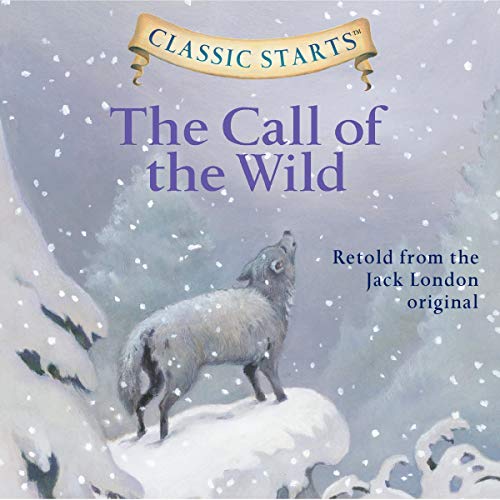
This presentation, brought to us by Oasis Audio’s Classic Stars series, offers a concise and reimagined version of Jack London’s literary masterpiece, The Call of the Wild. Retold by Oliver Ho and narrated by Rebecca K. Reynolds, this audio production invites listeners to revisit the brutal yet transformative journey of Buck, a dog whose life shifts from domestic comfort to the raw, unforgiving wilderness of the Klondike.
The Shift from Civilization to Primal Life
At the heart of the narrative is Buck’s transition from a life of "domestic comfort" to one dictated by the "law of club and fang." The central theme explores how an animal, once accustomed to the refined surroundings of Judge Miller’s estate in the Santa Clara Valley, is forcibly thrust into a world where survival is the only currency. This transition is not merely physical; it is a psychological awakening. As Buck encounters the harsh realities of the Yukon, he begins to shed his civilized veneer. The "call" mentioned in the title serves as a metaphor for the ancestral echoes that begin to stir within him, pulling him away from the service of man and toward the autonomy of the wild.
The Law of Club and Fang
Oliver Ho’s retelling emphasizes the stark contrast between human morality and the "law of club and fang." In the wild, there is no room for sentimentality. Buck learns that power is not granted by status, but by strength, cunning, and the ability to adapt. His encounters with other sled dogs, the grueling labor of the trail, and the constant threat of starvation force him to tap into his "primordial" instincts. The text highlights that Buck’s development is a survival mechanism; he must become as ruthless as his environment to persist. This brutal education is essential for his ultimate transformation from a domesticated pet into a legendary figure of the North.
The Awakening of Ancestral Memory
As the narrative progresses, Buck experiences visions and impulses that he cannot explain through his past experiences. These are the "ghosts of his ancestors," manifesting as a deep-seated instinctual drive. The wilderness does not just challenge his body; it speaks to his soul. The recurring motif of the "call" represents the beckoning of the forest, the wolves, and the ancient, untamed ways of life that exist outside the boundaries of human society. Buck’s eventual departure from the human world is not a defeat, but a homecoming to his true, wild nature.
Conclusion: The Enduring Legacy of Buck
Through Rebecca K. Reynolds’ evocative narration, the listener is taken on an emotional and visceral ride. The retelling successfully captures the essence of Jack London’s original vision—a story that questions the nature of domestication and celebrates the indomitable spirit of life. By the end of the journey, Buck is no longer a possession of man; he is a creature of the wild, a "hairy man-like" figure who has found his place in the great, silent expanse of the North. This production serves as a poignant reminder of the thin line between civilization and the beast within, leaving the audience to reflect on the primal forces that still reside within all living things.
Deep Learning with ListenLeap


