This message comes from U.S.
Bank.
Simplify how you do business with Business.
Essentials a powerful combination of no monthly maintenance fee checking and card payment processing.
Deposit products are offered by U.S.
Bank National Association, member FDIC.
This is Planet Money from NPR.
The other day I saw an item of clothing I was very tempted to buy possibly the most I would have ever paid for an item of clothing.
It was a Montreal Metros hockey jersey, $150.
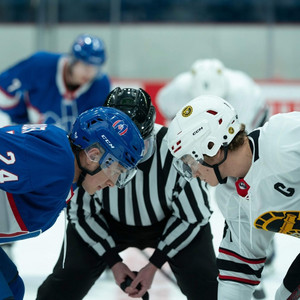
The Metros are a made up hockey team from the TV show Heated Rivalry.
Official replica jerseys were on sale for $150, but... totally sold out.
In fact, every single item on the official heated rivalry merch site is sold out.
A sign, I suspect, that the TV show's creators were not expecting this level of success.
Heated Rivalry is a Canadian television show based on a Canadian romance book series.
It's streamed in the U.S. by HBO.
It's about a pair of professional men's hockey players, rising superstars, star-crossed lovers, very steamy, TVMA rated and it has been a giant hit.
I started watching it with my wife.
I think we did it in two tranches and we loved it.
I love that in your house you refer to binges as tranches.
I feel like... Tranches, thank you.
Yes, we're very fancy people.
That's the perfect Kara Swisher, yes.
Kara Swisher, journalist, podcaster, media icon, I dare say.
And Kara has sort of owned the subject area of technology and business for the last 25 years.
But today she is here to talk heated rivalry and business.
I think one of the things that really struck me of a couple of things is it costs somewhere between 2 and 36 million per episode to make, which is really low.
Yeah, on average the show was made for a little under 3 million per episode Canadian, so like 22 million US.
And what struck Cara was the way that this scrappy little production in Canada was able to stretch that budget without the show looking cheap, getting way more bang for its buck than what she's seen on American productions.
If you've ever been on a Hollywood set, and I've been on a couple, I was on The Morning Show.
I'm in an upcoming movie with someone named Meryl Streep coming up.
But there's a lot going on, right?
And they film in this way that, to me, seems somewhat inefficient.
So you know, directors may want lots of takes of the same scene, lots of coverage from different angles, reactions from everybody in the scene.
Heated rivalry, on the other hand, will often stay on one character's face as a scene plays out.
Meaning they need fewer takes fewer extras in the background.
And the reason we're talking about all of this is because I have not been able to stop telling people what I've learned from a recent episode of Kara's podcast.
That show is called Pivot.
It's co-hosted by NYU business professor Scott Galloway.
Typically, the show is about technology and business and antitrust, lots of antitrust lately.
But Cara took a break from that to talk to the creators of Heated Rivalry about the business of getting that show made.
Because it's not just that I learned Heated Rivalry was made very cleverly.
What I learned was that the Canadian economic system of making TV and movies is completely different from how we do it in the US, something I asked Cara about.
I guess naively, it hadn't occurred to me to even think of an American business model versus a Canadian business model.
Sure.
Were you aware of this?
No, I've covered Hollywood a lot because of the impact of digital.
So I understand their economics quite well.
And one of the things that had been a constant theme was the costs are so high in this country and there's got to be different economic systems that they could do really well.
So today we are giving the episode over to Cara and her interview with Jacob Tierney and Brendan Brady, creators of Heated Rivalry.
The Canadian business of entertainment lives in contrast to the US business, and I learned so much about the current state of both industries from this conversation.
Oh, and also, all that merch I mentioned at the beginning?
Turns out it is a way bigger deal for Canadian creators.
Cara's interview with Heated Rivalry's creators after the break.
This message comes from Capital One.
Capital One offers checking accounts with no fees or minimums.
What's in your wallet?
Terms apply.
See CapitalOne.com slash bank for details.
Capital One N.A., member FDIC.
This message comes from Wix.
Nothing beats seeing your ideas turn into cold, hard cash.
Well, if you use Wix Harmony, you better get used to it.
Wix Harmony makes it unbelievably easy to create a fancy new website that's built to sell.
Get the perfect blend of AI and drag-and-drop tools that puts you in control of every detail, plus an AI agent to help you every step of the way.
Try it for free at wix.com slash harmony.
So, hi, everyone.
I'm Kara Swisher.
Today, we've got a special bonus episode, and it's not about anything terrifying or depressing.
It's about the most addictive delightful, surprise cultural phenomena of the decade heated rivalry.
I'm joined today by the show's creator, Jacob Tierney, and executive producer, Brendan Brady.
Welcome, you two.
Thank you.
Thanks, Kara.
We've been beset by some tech issues, but nonetheless, the gays will prevail.
The success of the show is about so many things, queer joy, sex, inclusion.
It's an amazing business story, and that's really what I wanted to talk about.
So one thing, this show has been a giant PR boost in your entire country.
Here's Prime Minister Mark Carney at a recent media event.
The world knows that Shane and Ilya are rising hockey stars who fall for each other as they face off in one of the greatest rivalries the game has ever known.
A fundamental Canadian value is that people should be able to be whoever they want to be, to love whoever they want to love.
So the narrative has become that it was a little show out of Canada, obviously made in Canada, because American distributors were afraid of the sex content.
But he sort of articulates it rather well, is that people are upset and divided.
And this brings a respite, but I think it's more than that.
Why don't you start, Jacob?
I mean, I think that there's, I think that what the show did in a kind of an un-preachy, un-trying-to-teach-you-a-lesson way is just present queer joy And I think that that's its soft power.
You know, that's the thing that I think people are surprised by.
And, you know, there are obviously, our queer lives are filled with trauma and I get that.
And we, I think we all know that.
But I think that this shows desire to not focus on that, to focus on other parts of the queer experience As fantasy, and I fully admit
Right, it's a romance.
It's from a romance novel.
I think that that's partly the reaction to it.
Right.
Brendan?
Yeah, so I think the other part of this, which Jacob has talked about a lot and it was kind of how we were pitching this when we were going out to people which is this is a story written by women and it's consumed primarily by women
Right.
And we don't take female desire and stories seriously in media a lot of the times.
There's so many readers of all types of romance novels.
They're there and they are yearning for these stories to be told.
When we were pitching it, we were really crossing our fingers hoping that we were right.
We were like, there is a built-in audience there.
So I think that was the other like secret sauce in this is just like this is a massive fan base that have not had their stories taken seriously and they got to see it taken seriously and they loved it.
Talk about this, but getting it made.
Like we talk on this success, on what it symbolizes, the difference between Canada and the US though, even how these productions are funded.
And let me play very quickly a part of Mark Carney's speech about that and how it was funded.
Look, I'm a politician.
I'm not above taking credit for the Canadian funding that helped you share this story with the world.
I might not have been here when the decision was made, but I'm here now.
So, yeah, I made, I greenlit this thing.
I stood up to the Americans.
That's amazing.
So I think that our show was made in the Canadian system, and it is very different from the US.
Explain it for people who don't understand.
So basically, the Canadian film and TV system has subsidies and equity and grant systems that are propped up by the Canadian government.
So we...
You know, when you go to a broadcaster, like we did with Crave, which is the streaming platform in Canada that commissioned the show, they go and say okay, great.
Here is a license fee.
Typically it'll run between 20 to 30% of the budget.
Then we have a tax credit, both provincial and federal, and that brings another 20 to 30 of the budget.
And then it's always that last little piece that you're looking for, right?
So The benefit to us in Canada as producers is it's unfortunate that we don't get necessarily the whole budget out of our broadcasters, but we as the producers own all the underlying IP.
So that is a big difference.
So you don't sell it to a studio.
Exactly.
We are the studio in this system.
But the limitations on that are you have to go then raise money.
So how we did this with our show is we ended up talking to a couple of studios, some of them American, some of them Canadian.
And ultimately, it wasn't the right fit from a creative perspective.
And we've...
We understand where everybody was coming from.
It is a, this was, you know, on paper didn't seem like an amazing massive hit right out the gate.
And so luckily when we were going through this process, Crave's parent company, which is Bell Media.
Bell Media is like if Comcast and Disney were merged into one.
In our country they own everything from telecommunications to internet, to sports.
Right.
And they have divisions like Craig, which is a streaming platform.
Is it their only streaming platform?
They have others, right?
Yes, it's their only streaming platform.
And they had just acquired a distribution company called Sphere Abacus out of the UK.
And so we were looking for that last 30 of the budget and they came in for 20 more percent on a distribution advance.
So the last 10 was Jacob and I putting our producer fees and we put in almost all of our producer fees.
So what you would have earned for this, the fees that are standard, right?
That's exactly right.
What was the total budget here?
So we were just under 3 million Canadian an episode.
For people who don't know, it's very low for a wreck.
Television shows, I mean, the salary... It's low for a sitcom.
It's deeply low for a one-hour drama.
It's deeply low for... Those are the salaries of certain people, depending.
So you know, obviously these were not well-known people, but still, it's still an expensive thing, I think.
Most US ones, I feel like $10 million is the lowest they make, right?
It depends.
It's like between $4 to $10 million an episode US is typical, depending on what your level is.
But yeah, I mean, costs have really skyrocketed over the last decade.
Is it less expensive to make this in Canada from a production perspective?
No, we have an efficient model.
And I mean, yes, it is because we don't have the same level of money that is being thrown around.
So we, by necessity, have to spend less.
But we also did something here where we shot all six episodes in 36 days.
Jacob directed all six of them.
We block shot them like one giant movie.
We talk about this when studios, especially US studios, come and say, how do you guys do this?
And we go, it's crazy.
You have all of your episodes written before you go into prep.
And that's typically when we lose people and they don't understand.
Right, because they write it through.
Yeah, exactly.
Although that's changing in the US.
It is.
It has to.
It's crazy to do it the other way.
Especially when you're not doing 22 episodes anymore.
Like back in the old model when you're doing this volume of episodes where it's not possible to have them all.
Well, you have writers on staff.
Well, you have to just be writing all the time.
But if you're doing, if the new model is eight to 10 episodes, there's almost no reason why this can't be accomplished before you start shooting.
So you start shooting.
Go ahead.
Yeah, we start shooting and then we do 10-hour shoot days primarily.
I'm not going to say it's not every day, but we try to keep our hours low.
And there's a couple of reasons for this.
A.
As soon as you get into 12 13 hours with crews, you end up paying for an additional day by virtue of the overtime.
You do.
But we also just feel that like, you know, my wife is an assistant costume designer.
She was the assistant costume designer on this show.
She's five months pregnant.
The departments, thank you.
The departments that get hooped are hair makeup wardrobe, with these pre-calls a lot of the time.
Who are those departments run by?
Primarily women.
And so we also just feel that, like in our business, we need to change this mentality of endlessly shooting 15-, 16-hour days, which is where the costs balloon.
Right, right.
What, are you a lesbian?
What's happening here?
Anyway, so, Jacob, talk about your production style.
Besides being, you know truncated, like making it tight, keep it tight kind of thing, you call it anti-fascist.
Explain what you mean by that.
Well, I mean...
I guess what I mean about that is there's a desire often for perfection that is, I think, not only unachievable but also insane and cruel to be even attempting.
There's no reason to do – if you're doing 25 takes of a scene because you don't like the performance of the actor –.
I'm an actor.
I've been doing this since I was four years old.
The problem is the scene.
It's not the actor.
You haven't written it properly.
If you're not accomplishing what you need to accomplish, there's a fundamental issue.
And by torturing people into repeating and repeating and repeating, I don't know what you're gaining.
And so that's kind of.
I just did.
I just did.
It was all day.
I was like, why?
I kept saying, why?
Why is it all day? to do nine different sizes on a close-up is insane.
All of this stuff is crazy.
I do believe fundamentally that film and TV is an ensemble process.
It is.
Otherwise, go write a book, you know, go paint a picture.
There's lots of ways to be in total control.
So, you know, anti-fascist might be a big statement, but it is kind of.
It's a rejection of an idea that everything has to come from one person and like what you know, the brilliant man idea.
It's very top-down.
So when you talk about owning this intellectual property, what does that mean now for you all?
Because I own all my intellectual property, just so you know, and I think it's important.
Explain why it is for you, especially in this space, because that's something that's been an anathema to the industry.
Well, I'll tell you what it means.
Jacob and I worked on a show called Letterkenny and Shorzy, and the producers of that show made it in Canada as well.
And they had a robust merchandise business.
And when we were in post-production we decided because we retained all the intellectual property behind the series that we wanted to take advantage of that and make a line of merchandise, which we're doing which is now incredibly like.
It's become this amazing part of our business that we're super excited about.
But it also means that ultimately, like when we made the decision to reinvest our fees, it was because we knew that if this goes really well, we're going to benefit for the next 25 years off of this.
And that is the difference.
And I think, like what you know, People always ask about, I guess you look at the Canadian system versus the American system.
The Canadian system, you as the producers, if you want to take advantage of being a really truly Canadian show.
Part of the offering is the broadcasters can't own the IP.
The producers get to.
Some people will look at that, but the flip side in the US is you're making way more money up front.
I don't think that either is right or the other is wrong.
I just think that our system is something to protect.
For 100 years, this business was run on the idea that creators and the people who made it got to own and benefit from what they did for their entire lives.
I think that that's something worth fighting for?
I think so completely.
At some point, I wasn't going to make something for someone.
And I said, you just have to give me IP.
And they said, why do you have to have it?
I said, it's none of your business.
Cause I want it.
Cause it's mine.
It's not yours.
It's like the old musician, right?
It was like own your own publishing, right?
Because why would you let somebody else administer your work and take all the profit from it?
And like, we're gonna, we have opportunities and we will work in this system that doesn't have that.
And it'll be fine as well.
But I just think that, like When we talk about you know, there's so many reasons why budgets have exploded.
You know, the economy of scale on TV has just completely fallen out because we don't make enough episodes.
We don't contain them into certain locations.
But also...
It doesn't matter if you have a massive hit or kind of a middling hit.
You seem to win no matter what at that level.
So I think that there is something to look at as we move forward in these systems of giving people back end again.
These old ideas should be new.
After the break, more from Kara Swisher's conversation with the creators of Heated Rivalry how streaming is changing the way directors are asked to tell their stories, and what Paramount's bid to buy Warner Brothers and HBO might mean for Heated Rivalry.
Support for NPR and the following message comes from Rippling.
Tired of using HR systems that feel fragmented and manual?
Rippling unifies HR, IT, and finance into a single platform to run your business.
In as little as 90 seconds, Rippling can onboard a new employee, automatically setting up payroll benefits devices and corporate cards all from one place.
It's a simpler way to run your business.
Head to Rippling.com slash money and sign up today.
That's R-I-P-P-L-I-N-G dot com slash money.
Support for this podcast and the following message come from E-Trade from Morgan Stanley.
Simplify your finances and discover the convenience of investing and banking all in one place.
Plus get up to $1,500 when you open a brokerage account with a qualifying deposit today.
Learn more at etrade.com slash offer.
Banking products and services are provided by Morgan Stanley Private Bank National Association.
Member FDIC.
Terms and other fees apply.
Investing involves risks.
Morgan Stanley, Smith Barney, LLC, member SIPC.
This message comes from Odoo.
If you are currently overpaying on software to run your business, remember this number, 10,000.
That's the number of new businesses that join Odoo per month.
Join Odoo today at Odoo.com.
That's O-D-O-O dot com.
We're back with executive producers Jacob Tierney and Brendan Brady, who are the people behind this huge hit Heated Rivalry.
I want to play something Matt Damon said on Joe Rogan last month about how streaming has impacted the creative process.
Because a lot of it, part of it are people breaking free, right?
Like myself many years ago, or I have a lot of people coming to me.
I'm like, it's great out here.
Like you don't need all that stuff.
But let's talk, let's hear what he had to say.
And this is a very successful actor and producer.
Sorry, you said Matt Damon?
Matt Damon.
Oh, okay.
Yeah.
He's talking about the business.
I've heard of him.
I think I've heard of him.
You've heard of him.
Yeah, like for instance, netflix.
Um, you know, standard way to make an action movie that we learned was you know, you usually have like three set pieces one in the first act, one in the second, one in the third, and you know you kind, they kind of ramp up and the big one with all the explosions, and you spend most of your money on that one in the third act.
That's your kind of finale.
And now they're like can we get a big one in the first five minutes?
We want people to stay tuned in.
And it wouldn't be terrible if you reiterated the plot three or four times in the dialogue, because people are on their phones while they're watching.
You know what I mean?
So talk about that.
He would, by the way, make an excellent gay hockey player.
Too old.
An old gay hockey player.
A retired one.
Listen, I should be clear.
I love Matt Damon.
I've always loved Matt Damon.
So talk about that, what's happening now in the creation.
Do either of you feel pressure?
We've yet to really experience that, if I'm being perfectly honest.
Crave was not like that.
And I will say that part of what the reaction to the show that has been so kind of interesting to me is people saying like this is a show you have to pay attention to.
If you're on your phone, you're not going to get it because it's so much about what is not being said, about catching looks between people.
It is dialogue as avoidance and obfuscation.
And the storyline is actually really simple.
They're in love, they can't admit it.
So it's actually not a super complicated plot in that way.
But so much of it is about the ways in which they're avoiding each other, the ways in which they cannot speak.
That's why the sex is so important, because that's when they're being honest.
And so I think there is definitely a move towards oversimplification.
That being said, you know, I don't, I wouldn't want to be too much of a big deal about this.
Like everybody wants an opening that captures you.
Like that's not new.
Like that's been a note since the dawn of time with stories.
Like what, Let me in.
What's the first scene?
Why are you capturing my attention?
I don't think that's insane.
And I think that this thing you can see it, I think, in a lot of streamers where you're like, oh boy, you've just explained a thing to me that I already know.
I get that that can be frustrating.
But I would also add I am on my phone when I look up and realize you've said it to me this for the third time.
And I'm like, yeah, you're not wrong.
I did drift.
But like and I think that there can be room for both, you know, entertainment and popcorny fun stuff, that like, I kind of don't care.
And then every once in a while, something comes along and you need to pay attention, and that's okay too.
And then, and then it's up to you to choose.
Do you, is that too much for you?
That's okay.
Move it along.
Yeah.
I actually didn't look at my phone.
I have a rule, like how many, how many texts looks Is it in a movie?
How good is it if I don't pick it up at all?
We have shows in my household with my boyfriend that we put on to be on our phones with.
We're aware of this.
And we think of them as like visual podcasts.
So when you have the acquisition of Warner, does that affect it?
Not to our knowledge, but we have no idea.
Go ahead.
I think we don't, you know, we have no actual information on that.
I would say, again...
We just want more competition in the marketplace.
Because in Canada what we have.
The reason why we ended up on HBO around the world is because Crave and Bell Media have the exclusive rights to all of HBO's catalog in Canada.
We don't have HBO.
We don't have HBO.
You have Crave, and that has HBO on it.
And so if we... don't have that on Crave, does that affect Crave?
What happens to them?
That's a big part of why people go there.
I mean, now in heated rivalry, obviously.
But yeah, I think that it's a scary time as we see more and more mergers happening.
And I for one would love to see just more competition, because I think it's way better when we have more.
But what I would say, too, is just that because we're an acquisition...
You know, HBO is not actually creatively involved in this show.
I think they say nice things about it.
They're a distributor.
Exactly.
So we're not like.
I think that that part is not really going to change, at least in the foreseeable future.
But now that the show's blown up, they're not suddenly have an opinion about it.
No, because they're still getting it for the same price.
I think it's worked out great for them.
It's worked out really well for them.
Like this is a very successful acquisition.
And I mean it's clearly working well enough that I don't think they feel the you know.
Yeah, I think that this is just like keep going.
But it can go elsewhere, right?
Around the world.
So it's been sold territory by territory, or chunk of territory by territory in general picked up by HBO outlets, Sky in the UK and Ireland and in New Zealand a couple of other exceptions to that rule.
But basically what they do is they buy it and then they have an option on the second season and potentially third season.
So they get it's like a kind of a right of first refusal.
So with an increase, they get it.
So it's not really even to be renegotiated.
It's just kind of like you either want this or you don't.
There's no input into the content.
Right, right.
I have a couple more quick questions.
One is about.
Obviously everyone here in the entertainment industry in LA seems to be in despair in many ways in terms of what's happening, including with competition with AI and stuff.
Is there a big fear from you all about AI?
Because some of the big hits this year have been the most non-AI type of content.
Like sinners, weapons yours.
And will continue to be.
Listen, there is going to be a place for AI in how we work in this business.
I actually think that there are a lot of opportunities.
But I think it is in that tool for creators, not as the creative engine behind things.
Costuming.
I think like even scheduling and budgeting and prepping, like those kinds of things where you take an immense amount of time trying to just input data.
So much of our jobs are data driven, like just trying to get information.
Totally.
Exactly.
I think that those are the opportunities right away that we will see and where I would love for people to focus their attention, because we were experiencing this and I'm sure Cara, you have had this with your team.
Those moments of friction when you're trying to explain something to someone and they don't get it.
That is hard to replicate.
That is hard to do with AI in a way that actually gets you to a place where you're like, okay, cool.
We have now communicated together.
I think we underestimate the importance of friction in the creative experience.
Yep, I would agree.
That's exactly how I say it.
I talk about it.
The words tech people use are always seamless, frictionless, convenient.
They're always using those words.
I'm like, no, friction's critical for you being here.
Yeah.
Yeah.
What about you, Jacob?
Do you think about it at all?
Confuses me.
No, is the answer.
Like I don't think, like I again like the way that the way that Brendan speaks about it is like that makes sense to me.
I'm like, I can imagine it helping me with some stuff, but like, it's not going to write for me.
Like, I don't, I don't want that either.
I love what I do.
I don't want to, I don't want someone, I don't need that kind of help is the way I would say.
Yeah.
So before we go, what would you wanna do if you could do anything?
Like you guys are now the world is your oyster kind of thing.
Like you can do, obviously you're gonna do another season of this, maybe two, three, whatever.
What would you wanna make?
Um, you know, we are being I'm certainly being offered a lot of things and yeah, they are, one of which, in particular, is a dream come true.
So yeah, I'm excited to be able to eventually talk about it, but I can't at this point.
We've got, yeah.
And we also.
We have a whole productions company that we're running with a like a lot in development.
So it's about getting these projects, the projects that I, you know from a producer standpoint.
What we really want to get made um are we have a number of shows.
The one that is about to go out is called the King is dead and I'm going to plug it right here.
Cause it's an amazing show. amazing Indigenous writer out of Canada named Tim Fontaine.
Crave is already signed on for development.
We're looking for that other partner because it's basically an action-adventure comedy set in the 1700s.
I know.
Bear with us.
No, no, hello, outlander.
Yeah, 100%.
But it's a comedy about a group of Indigenous folks tired of all these white people coming to North America.
They... take a boat, traverse back to England in an attempt to kill King George III.
So it's a revisionist history.
It's like Monty Python energy.
It's very funny, and we're very excited about that show.
Yeah, so that's in development with Crave right now, and we're very excited about that one.
All right.
Well, everybody loves you.
The boys are getting a lot of attention, which they must be having a ball, it looks like.
But you guys deserve equal amounts of attention.
Yeah, we really appreciate it.
Thank you, Kara.
Thank you, Jacob.
Thank you.
And thank you, Brendan.
That original episode of Pivot from New York Magazine and the Vox Media Podcast Network was produced by Lara Naiman, Zoe Marcus and Taylor Griffin and engineered by Brandon McFarland.
Nishat Kurwa is Vox Media's executive producer of podcasts.
And a very, very special thanks this week to the whole team at Pivot for working with us on this episode.
This episode of Planet Money was produced by James Sneed, edited by Jess Jang and fact-checked by Lara Naiman.
Alex Goldmark is our executive producer.
I'm Kenny Malone.
This is NPR, and meet us at the