This message comes from Silversea.
What if there was another world out there?
What if traveling further brings you closer?
Explore the earth with Silversea on intimate ships that show you what most miss.
To learn more, visit Silversea .com.
This is the TED Radio Hour.
Each week, groundbreaking TED Talks.
Our job now is to dream big.
Delivered at TED conferences.
To bring about the future we want to see.
around the world. To understand who we are.
From those talks, we bring you speakers and ideas that will surprise you.
You just don't know what you're going to find.
Challenge you. We truly have to ask ourselves, like, why is it noteworthy?
And even change you.
I literally feel like I'm a different person.
Yes. Do you feel that way?
Ideas worth spreading.
From TED and NPR. I'm Manoush Zomorodi.
I see bees. Hello, friend.
Hello. And today on the show...
Oh, one just landed on me.
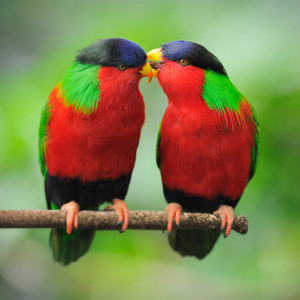
The birds and the bees.
Oh my goodness, we have just come up a very steep ladder into paradise.
This is amazing. A few weeks ago, I visited biologist and beekeeper Noah Wilson -Rich on a rooftop covered with wildflowers and trees right in the middle of Manhattan.
Okay, so where do we go to find the hives?
OK, so we are going to walk past these bronze sculptures and there are four beehives in the corner, so follow me.
We're going to make our own pathway as this is growing up.
Can I just see how odd it is to be talking to you surrounded by a cloud of bees and not being fearful or running?
I feel like we've got, like, a bee soup swimming around our heads.
You said it was going to be calming and it kind of is.
There you go. You have to vibe with it.
But, you know, everything we do in Manhattan...
I mean, okay, so Noah, we had to come up, we had to take the subway, and then we had to come up this flight of, you know, steep ladder.
We're in Manhattan.
Somebody who maybe doesn't know you might think, why go through all this trouble?
Why not just put these hives in a beautiful field in New Jersey?
You know, Manoush, I did not set out to become an urban beekeeper at all.
I was living in the city of Boston, going to graduate school nearby, when I needed to get more beehives for our research at the time developing vaccines for bees.
And I just began to notice that bees were dying outside of the city and they were thriving inside the city and on the higher -up rooftops as well.
They were doing better.
So we need to have beehives here on a rooftop in Manhattan instead of the fields of New Jersey because they're dying there.
This is where they're thriving.
You've likely heard that bees are in trouble for many reasons, including climate change and pesticides.
Noah's company, Best Bees, collects data from hundreds of honeybee hives that they install and maintain in cities across the U .S.
This research, he says, is helping biologists better understand how to protect all kinds of bee species.
We can start to see which beehives are thriving, which beehives are not on this network, and then ask questions about the habitat, which so far seem to really converge around the habitat hypothesis that as with this rooftop, the more plant diversity around a beehive, that seems to be the leading explanation for why beehives
are thriving. Yeah, I'm just wondering, as an expert in bees, as you look around, what are you looking for?
What are the indicators that you want to see?
So what I'm looking for in a healthy bee population is safety, first and foremost.
Are these bees just doing their own thing?
Are they ignoring humans as they should?
Bees are vegan. They should go to flowers and come back.
That's really it. So far, does it look good?
It looks amazing so far.
These four beehives are thriving.
I know from our database also when our beekeepers visited recently that we've done everything to make sure that the bees have a healthy queen.
She's laying eggs. They're starting to make honey.
And we're working with bees that are already in the environment, and that's a beautiful thing for sustainability.
Multiply and survive.
That is the goal of every organism.
Yes. The goal of bees is to make more bees.
In an evolutionary biology perspective, the goal of humans is to make more humans.
And that's what organisms do.
We pass our genes to the next generation.
Maybe as a child, you first heard reproduction referred to as the birds and the bees.
But your parents probably didn't teach you about pollination or insect intercourse or eggs hatching.
So today on the show, we investigate the birds and bees quite literally.
We'll learn how feathered creatures and various insects breed, what can get in their way, and if linking their mating rituals to ours is ever a fair comparison.
Which brings us back to biologist Noah Wilson -Rich, who says humans have made honeybees essential to their own survival.
So bees are this universal pollinator.
They bring over 70 fruit and vegetable crops that we humans rely upon for healthy, nutritious food.
They bring nuts, you know, crunchy almonds, sour lemons, tart apples.
They are responsible for over $100 billion to the global economy every year through this pollination service.
They even support the cattle and dairy and cheese industries through their role of pollinating hay and alfalfa.
And there are 20 ,000 species of bees worldwide, hard at work, pollinating not just crops but also plants.
And so whether they're pollinating crops or plants around the world, they're providing a really important ecosystem service that we rely upon every day in our daily activities.
So we started the show visiting beehives right here in New York City, and you have said that these honeybees are doing better in urban areas because of the habitat.
Talk me through how you came to that conclusion because it's a bit surprising.
Yeah. So we were looking at the three main hypotheses for what's killing bees.
That's the starting point and understanding what's saving them.
So the main three killers of bees are agricultural chemicals.
So that includes pesticides, herbicides, fungicides, anything that's designed to kill off some intricate part of this relationship between plants and pollinators.
So that's one. The second is diseases of which bees are affected by many pests and pathogens.
So two was disease, and three is habitat loss, meaning there just aren't enough flowers out there to facilitate good nutrition for pollinators.
Now, nutrition is just as important for bees as it is for humans.
For bees, it helps them to better metabolize pesticides, which they can do, and also to better withstand disease.
So that's how habitat loss relates to the first two, the leading killers of bees.
Now, flipping those a little bit, what's saving bees?
We were looking at the areas where bees were thriving and where they weren't on our network of beehives here.
So these were beehives at home gardens, at business rooftops across the United States.
And we wanted to test to see if the areas where bees were doing great had less pesticides.
Did they have less disease, or was the habitat better?
And we found that in urban areas, there are up to eight times more plant species for bees to pollinate compared to their nearby rural and suburban areas.
here's Noah Wilson Rich on the TED stage so we're finding out now that in rural areas there are 150 plants on average in a sample of honey that's a measure for rural suburban areas what might you think do they have less or more plants in suburban areas with lawns that look nice for people but they're
terrible for pollinators suburbs have very low plant diversity so if you have a beautiful lawn, well good for you, but you can do more.
You can have a patch of your lawn that's a wildflower meadow to diversify your habitat, to improve pollinator health.
Anybody can do this.
Urban areas have the most habitat, best habitat, over 200 different plants.
We have for the first time ever support for the habitat hypothesis.
Spring honey in Provincetown is from privet.
What's privet? Hedges.
What's the message?
Don't trim your hedges to save the bees.
Right? Move to the summer honey, which is water lily honey.
If you have honey from Provincetown right here in the summer, you're eating water lily juice.
In the fall, sumac honey.
We're learning about our food for the first time ever, and now we're able to report if you need to do any city planning, what are good things to plant?
What do we know the bees are going to that's good for your garden I think we should taste some honey so we look at all these little nuances but this is a great time Manoush if you're comfortable yeah taking off a glove we're gonna taste some honey fresh out of the hive with our fingers my hunger overcomes
all fear there's no wrong way to do it I'll do it first I'm just gonna take my finger and I'm smushing it right into the wax comb and it just squeezes out it's so beautiful there's beautiful honey Honey just pouring out.
What you'll notice, too.
Look at them. They're like, what are you doing, man?
Yeah, these bees will come up right away and say, ugh, we've got to clean up your mess.
And I'm just going to taste it.
Ugh. Wow. This flavor is unlike anything that you can find in a store.
Oh, my gosh. I was going to say it's nectar, but it's nectar.
You know, and we don't have the vocabulary still, at this modern day, to put towards this.
We call it all honey.
It's flower juice and it's entirely different all around the world.
So here's what I'm wondering.
Can you give me a pitch?
Let's say I am a commercial landlord and I'm like, hey, no, I've heard about you and B's and I've got this huge rooftop in Midtown, Manhattan.
What's the deal? What do you do?
Why should I join you?
So when you think about real estate companies and when you're entering New York City for anybody who's ever taken a train or a plane in there, and you look out onto the landscape of the city and you see gray.
You see, wow, there must have been habitat before these buildings went up.
What was there? There's nothing there in its place.
And this is part of what's now called the gray to green movement.
And so for companies that have under -leveraged assets, what more could you do when you're thinking about how to compete for business, for people to lease an office or an apartment space, think about what they're making those decisions based on.
Green space is now the new mandate.
Having a green rooftop, having the ability to go outside and to experience the feeling of wellness, to be able to see some butterflies and some bees or even pick some carrots from a roof, that's the future that we see and we're seeing spending patterns going towards companies that have a more sustainable
brand and reputation.
Okay, this has been a pretty exciting, optimistic conversation.
But let's say, Noah, what happens if we don't succeed here?
If we don't succeed, then I believe that bees are going to die off much faster than anybody realizes.
We already have places around the world where there are humans doing the pollinating with little wands and cotton swabs going from flower to flower to transfer that pollen to create fruit.
This is very unsustainable.
Those people could be doing other things to benefit society if If only we had the pollinators to do that service for us.
And so how do we know the health of the other 200 ,000 species of pollinators if we don't even know what they are?
And that's where honeybees help us so much.
We know so much about them.
And if they're not doing well and they have human help to create more hives, then we're really in trouble.
And some people call this the great insect apocalypse.
we need to understand the identities of these pollinators so we know how to save them so that they can bring us healthy fruits vegetables nuts all the foods that we want for ourselves and for our kids as well as to help promote all the plants that are out there bringing in carbon dioxide as part of their
photosynthesis and then producing oxygen without all of these plants that are pollinated by pollinators like bees, we are not going to be able to move the needle on our carbon goals and to really have a healthy future as humans.
That's biologist Noah Wilson -Rich.
He's the CEO of The Best Bees Company, and you can see all of his talks at ted .com.
On the show today, the birds and the bees.
I'm Manoush Zomorodi, and you're listening to the Ted Radio Hour from NPR.
We'll be right back.
Support for this podcast and the following message comes from Lumen.
When your metabolism is working properly, you will feel the benefits.
With the Lumen device, you can measure your metabolism through your breath.
And on the app, it lets you know if you're burning fat or carbs and gives you tailored guidance to improve your nutrition, workouts, sleep, and even stress management.
Take the next step to improving your health.
Go to lumen .me slash radio hour to get 20 % off your Lumen.
This message comes from Charles Schwab.
When it comes to managing your wealth schwab gives you more choices like full service wealth management and advice when you need it you can also invest on your own and trade on think or swim visit schwab .com to learn more this message comes from capital one with the venture x card earn unlimited double
miles on everything you buy plus get premium benefits at a collection of hotels when booking through Capital One Travel.
What's in your wallet?
Terms apply. Details at CapitalOne .com.
This message comes from Silversea.
If you could travel deeper and linger longer, where would your curiosity take you?
From the Arctic to the South Pacific, Silversea opens up a world of discovery, bringing you closer to the remote, the rare, and the remarkable, on spacious, intimate ships where all -inclusive luxury is just the beginning.
To learn more, visit Silversea .com.
It's the TED Radio Hour from NPR.
I'm Manoush Zomorodi.
And on the show today, birds and bees.
The buzzy, busy, amazing cycle of reproduction that keeps all life clucking along.
So eggs are amazing.
This is Karen Bondar.
We just think about scrambling them for our breakfast.
And fair enough, because there is a great source of protein.
But the thing about eggs is they enable a couple of really spectacular things.
Karen is a biologist, science writer, and very excited about eggs and the birds who lay them.
Moms make these little beautiful packages of, you know, there's certainly the DNA is in there.
Okay, we've got the embryo, but what else we got in there?
We've got food. We've got nutrition.
We've got hormones.
We've got immune factors.
And each one of those factors can be individualized for each egg.
Tweaked, refined, and personalized.
Karen says that bird moms are the micromanagers of the animal kingdom, and they can tailor their eggs in ways you would never imagine.
For example, if a mother is experiencing a resource shortage, if times are really tough, if food is not plentiful, This will make its way into the eggs that she lays.
In a lot of cases, mummy birds will lay just a few extra eggs.
And those will be almost insurance eggs that will almost certainly, you know, if they develop at all, they will develop into runts of the litter that won't make it.
Oh, OK. So these mummy birds are hedging their bets.
Like, she has to weigh all the factors around her as she determines where or which egg she should invest her time and energy in.
Yeah, that's right.
It's like, and those decisions have to be made quite early.
But, you know, there's other things that are to be taken into consideration, too.
And a really interesting example of this comes from the Galapagos Islands, the blue -footed boobie.
Now, these ladies or mothers also base their egg contents on the identity of dad.
In the Blue -Footed Boobie, you have these males who have blue, gorgeous feet.
And this is an indicator of health.
And this is something that a female would use as a proxy by which to say, okay, yeah, this is a good male.
I like this male. I want to reproduce with this male.
Therefore, I'm going to invest a lot into these eggs.
So, researchers manipulated the system of the blue -footed booby.
Females will lay two eggs.
So, they'll mate with a male, and then about 36 hours later, they'll lay the first egg.
Then, another three days later, they'll lay the second one.
It almost always works out this way.
And so, researchers, during that interval, they painted a male's feet a dark gray, right?
As if to say, okay, hang on, we're taking his health away, we're taking away his beauty.
lo and behold the second egg came along uh with fewer nutrients fewer hormones mom provisioned the egg according to the fact that dad was no longer a high quality and isn't that just an incredible demonstration of the ability that she has to allocate at such an early level of development.
It blows my mind. It is bananas.
So another thing about bird eggs that you talk about in your book is size.