Public media counts on your support to ensure that the reporting and programs you depend on thrive.
Make a recurring donation today to get special access to more than 20 NPR podcasts.
Perks like sponsor free listening, bonus episodes, early access and more.
So start supporting what you love today at plus.npr.org.
Beyonce once said, pretty hurts.
And the latest series from TV titan Ryan Murphy takes that axiom and dials it up to infinity.
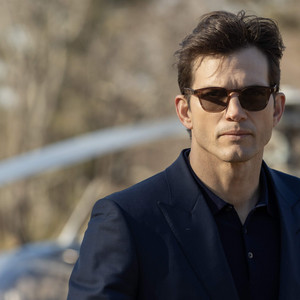
It's a lavish body horror called The Beauty, in which conventionally ugly people are transformed into conventionally hot people thanks to a new fountain of youth drug.
The consequences are messy.
It stars familiar faces from the Murphyverse, including Evan Peters, as well as new collaborators like Ashton Kutcher.
Is it astute commentary, crass exploitation, maybe a bit of both?
Well, it's definitely a Ryan Murphy production through and through.
I'm Aisha Harris, and today we're talking about The Beauty on Pop Culture Happy Hour from NPR.
Support for NPR and the following message come from Nutrafol.
Nutrafol is a physician formulated, clinically tested supplement to help support hair issues like thinning or shedding.
Nutrafol is the first and only hair growth supplement to be NSF certified for sport.
For a limited time, Nutrafol is offering listeners 10 off your first month subscription and free shipping when you go to Nutrafolcom and enter the promo code happy hour.
This message comes from BetterHelp.
The new year isn't about doing more.
It's about carrying less.
Therapy can help you unpack what's been heavy and bring more clarity, calm and perspective into 2026.
It's a small act that can lead to big relief and real perspective for the year ahead.
You can't step into a lighter version of yourself without leaving behind what's been weighing you down.
Visit BetterHelp.com for 10% off.
Do that with Acrobat.
Need to level up your presentation design?
Do that with Acrobat.
Have 30-plus documents that need to be simplified into a proposal?
Do that with Acrobat.
Learn more at adobe.com slash do that with Acrobat.
Support for this podcast and the following message come from Strawberry.me.
Be honest.
Are you happy with your job?
Are you stuck in a job you've outgrown or never wanted in the first place?
Are your reasons for staying really just excuses for not leaving?
Let a career coach from Strawberry.me help you get unstuck.
Discover the benefits of having a dedicated career coach in your corner and get 50 off your first coaching session at strawberryme slash, NPR.
Joining me today is Vulture TV critic Roxanna Haddadi.
Welcome.
Thank you.
Thank you for having me.
Great to have you.
Also with us is journalist and host of the movie review podcast Seated, Traebell Anderson.
Hey, Traebell.
Hello, hello.
So lovely to have you here.
So the beauty is kind of like Demi Moore's movie The Substance, but with way more characters and lore.
A genetic biotech serum has been engineered to transform people into ridiculously good looking supermodels.
But there's at least one problem.
Eventually, those supermodels are dying suddenly, horrifically and spectacularly.
And the FBI is now involved.
Evan Peters and Rebecca Hall play Cooper and Jordan, agents who are work spouses and friends with benefits.
The other problem is that the drug comes with a bug.
Once taken, it's transmittable through sex, which cuts into the market for the serum and, in turn, affects the bottom line of the tech billionaire played by Ashton Kutcher and who's known as the corporation.
He sets out a ruthless assassin to protect his interests.
He's played by Anthony Ramos.
Highly experimental envelope.
Pushing gene therapy using viral RNA technology.
To put it more simply, a near-complete, ground-up turbocharged remodel of your physical self on a cellular level.
Experimental.
One dose.
One dose of this is the closest thing to the fountain of youth any human's ever going to get.
So much pseudoscience.
There's a lot going on.
So much of that kind of talk.
And that's only the beginning.
The Beauty is created by Ryan Murphy and Matthew Hodgson and it's airing now on FX and streaming on Hulu.
Roxanna, did you take The Beauty and did it work for you?
I would not take the beauty.
I'm perfectly fine with my aggressive features.
Did it work for me?
This is like always a loaded question with a Ryan Murphy show.
What I will say is that I found myself thinking about it and wrestling with it for a long time after watching it, which is like more than I could say for a lot of Ryan Murphy sort of shows.
I think if you're like on their wavelength, usually they are very candy like, right?
Like you binge them, you feel sick, you forget about it.
But I do think that the beauty is throwing out so many ideas about, like beauty standards, big pharma, the suggestion that we are like kept away unwell because it makes other people wealthy.
I think interestingly a lot about like male loneliness and like misogyny and violence and how those are tied to attractiveness.
It has a lot.
So I will say that I was compelled by some things, repulsed by other things, but largely impressed that it felt atypical within murphy's world and really, really gross.
I think as a body horror it's very effective.
I say that as praise the credit sequence alone.
After the first time i was like okay skip, don't need to see ligaments and body parts.
It was a bit much for me.
But yes yes okay treyvel, how are we feeling about the beauty?
I think Ryan Murphy should be held accountable for his crimes.
Okay?
I think that, to your point, Roxana, there is so much here.
But I think it's too much.
I think he read, you know, an Atlantic article or a New Yorker article and was like oh, let me put this in here.
And then he added a little of this on top.
It's just too much for me.
Mm-hmm.
I also think and maybe this is just like a byproduct of us, you know, being able to watch more episodes at one time than the audience, you know when it comes out.
But the body horror aspect after those first few episodes, I was bored.
You know, like I was initially grossed out and it did what it needed to do.
But over 11 episodes.
I'm not sure that that concept, that idea and what he's trying to do in terms of the form kept me in the same way that it did in those first few episodes.
By episode five, six, I was like, okay, we get it.
Yes, yes.
I think I fall somewhere in between both of you, which is that you know Rexana, you were actually on our episode where we talked about Ryan Murphy's previous project, All's Fair.
The depths could not be lower for me with that show.
Like, that was where I was just like, oh, I don't know.
I mean, I've been able to tolerate a lot of Ryan Murphy stuff and this is just a bridge too far, too far, too bad.
And so...
My expectations were skeptical, especially given that this is sort of his very blatant attempt to wrestle with the Ozempic world, the social media, the Mar-a-Lago face, like all those things.
And like Trayvon said, there's so much.
There's so much going on.
It's too much.
Let me start with the things that I do love.
I love Jeremy Pope in this show.
And Jeremy Pope is playing a character named Jeremy who Originally, at the beginning of the show, he starts off as being played by Jaquel Spivey, who you may recognize from Broadway.
He was also in the remake of Mean Girls.
But his character eventually takes the beauty and becomes Jeremy Pope.
And Jeremy Pope, he's playing in the world the way that I think he should be.
He can dial it up to 10, 11, but he can also bring it back down.
And he kind of teams up.
With the Anthony Ramos character becomes sort of his protege in a way that I found very interesting.
That's the best part of this whole thing.
It's the best part.
It's the most interesting part, that relationship.
Where I tripped over this show a lot was, and to sort of build on what Trevelle was saying is like I think this show has a very big structural problem.
The substance had a similar problem, where it made its point immediately and then it kept banging you over the head with it and just dialing things up to 110.
But at least the substance was like a two-ish hour movie and not 11 episodes.
And not every episode is the same length.
There's a lot of varying lengths.
But even that to me signals I'm not sure this show knew where it wanted to go.
It will often sidetrack to show a different character, being affected by this giant web of the beauty, but not in a different way.
We see these transformations happen so many times and they always happen the same way until there's a little bit of variation towards the end.
But I wish that had come sooner.
So I don't know if people will necessarily want to stick with this through 11 episodes, but the first few I found were very compelling.
But yeah, the structure is what kind of throws me off and makes you like wish that he had an editor, like this whole show had like an editor.
I feel like the least interesting parts of the show is the relationship between the two leads.
For me,
Evan Peters' character and Rebecca Hall's character.
I don't care.
It just did not.
That felt like it was supposed to be the through line that really keeps us, you know, intrigued.
The through line, the heart.
Yeah.
I was just like, boring.
Move on.
Yeah.
Compared to the relationship we see Jeremy Pope and Anthony Ramos forge over a number of episodes.
I was like, I actually want to see a little bit more of what's going on over there.
There's some interesting things right there.
I think it's hard because I don't think the show actually really has anything larger to say than just.
Isn't it unfortunate that social media has made it so plentiful that we all hate ourselves?
Like that's like the baseline point, which I think we all know. new yes then the ways that they try to communicate it are yeah this like romance storyline between these two fbi agents it's very clear that they wanted to do like an x files type of like workplace romance it's not necessarily compelling or interesting although i love evan peters and i think he's fun in like daddy detective mode after mayor of east town it just doesn't it's not enough necessarily i But yeah, when you get to these characters who are very like emotionally, internally ugly, I think it's more interesting to figure out like why were they drawn to this?
What are their motivations?
What are their regrets?
As you said, Aisha, I don't know that we get enough like variation within motivation, right?
So this isn't hopefully a spoiler, but I will say that, like the last third of this show goes in like a very different direction to set up a season two.
But for now, I think the thing that was most interesting to me is like this, focus on like incels and like what does beauty mean for men?
I did actually think that I hadn't really... seen as much of since like American Psycho.
Yeah.
To that very point.
The fact that Jeremy Pope slash Jaquel's character is an incel, but they're Black.
We don't talk about the Black incels.
And so that was something- But not enough, right?
That was something that I thought was different and fresh and something, you know, unique.
But to your point, there are so many characters here who are all ultimately motivated by the same thing.
There's some trans representation that slides up on in there, you know, later in the season as well.
But it's all for the same, you know, kind of impulse.
And I do think that that gets a little tired at a point, until that moment you mentioned where there is a little extra razzle dazzle thrown in.
Yeah.
I mean, obviously this is meant to be critiquing a lot of things we haven't even really talked about.
Like it's also very clearly trying to critique the billionaire class with the Ashton Kutcher character.
But like, we agree that there's not really anything new being said, like from Beyonce to TLC doing Unpretty.
Like, we know that people have body image issues like that is what it is.
But.
I guess does this show also end up ultimately reinforcing some of those structures that they're critiquing?
Because I guess I kept coming up against the fact that A all of these characters are turning into supermodels.
And some of these characters you could argue are conventionally unattractive.
Like by regular standards, they would be considered unattractive.
But then you have someone like Rebecca Hall, who is not, I would say, conventionally unattractive.
And it kind of seems like it's all over the place with what it wants to do.
You know, Isabella Rossellini also shows up here to sort of be one of the rare people who does not want to change who she is.
And so I guess I'm just wondering, like is it even possible for a show like this, whether it's Ryan Murphy or not, to address these issues without also kind of reinforcing them in a way?
Because I felt like that's sort of about the substance to some extent, just because of the fact that Demi Moore, by anyone's standards for how old she is, is still very, very attractive.
Fair.
Something about it just doesn't necessarily sit right with me.
And I'm not sure if it's a Ryan Murphy issue or if it's just it's hard to bring these up without still reinforcing those issues.
I personally think it's hard to do regardless.
I will say that I laughed at the premiere suggesting that Evan Peters is not attractive.
That really cracked me up because I've been online and I've seen the fans.
But yeah, I think it's hard because you know, after these like grotesque transformation sequences and like the new versions of these characters emerge from these like pulsing egg sacks or whatever the show always switches into a slow motion panning reveal of their body, right?
Like the show itself is fetishizing what they look like now, which I think you could argue is an implicit like they look better.
The show is telling you they look better.
So I do think it's really hard.
It's like a limitation built into the show, which is that they want you to think these people are attractive, but the show is not equipped enough to really say what is the lived experience of this person now.
We get like a very light gesture at someone post-transformation, saying hey, They were ogled and then they were harassed, and then they were like groped right against their will.
So then it became this like being beautiful is also really hard, which we saw on Nip Tuck and Popular and other Ryan Murphy shows.
You know, I think it's very lightly there.
Mm-hmm.
And what could actually be said about this fall to the wayside.
Mm-hmm.
I just think that the story itself, because it's trying to hold so much, it's not doing much of anything effective.
You know, including this, I guess, societal interrogation that we're supposed to be doing about, you know, beauty being pain, and why should it be pain?
You know all of those phrases that we just throw around, beauty's only skin deep, etc.
But ultimately I just kept saying to myself I wish there was like an editor, like a story editor.
And I'm sure they had one, no shade.
But I wish there was somebody who was like, take this out, put that in a different show.
Take this out, put that over there and give us a nice, you know, targeted, limited series.
I think perhaps things might have resolved themselves in a way that made this viewing experience, you know, worth it, at least to me.
Yeah.
And it is interesting.
I mean, yes, there's the drug aspect of it.
But then of course, as I mentioned at the top, there's also this sort of AIDS allegory, where some people are getting it not knowing that they're getting it.
They're just like, oh, a hot person wants to have sex with me.
Oh, OK.
And then you know, they wake up the next morning and all of a sudden they are also very, very ridiculously hot.
And again, this is like, that's an interesting thing.
Is Murphy the person to be able to connect all of those dots in a way that feels satisfying?
Yeah, it's a lot of interesting ideas.
Like, I also love the idea of the way that that cuts into the market and how it mimics the way we think about drugs generally speaking and how, once everyone can get it, then is it really that special.
And also, how does this affect an empire?
But as a whole it just does feel Like this could have been a tight five, six episodes and it would have been way way more effective.
But also, you know, to some extent I admire that this does feel very of the moment, even if it doesn't feel like it's doing much more than scratching the surface of the moment.
I agree with that.
Yeah.
I think I found it at least entertaining.
Yeah.
Like I at least found it absurd and kitschy and gross enough that, episode to episode, I was like at least each episode has something that I am provoked by.
For better or for worse, there's something.
Yeah.
And especially like toward the end, when the show is sort of becoming something else.
I do think that it is sliding from one sci-fi mode to another.
And it does at least make me slightly curious for season two.
Not enough to forgive the fact that we end on this like ludicrous cliffhanger, but at least enough to maybe check out The season premiere of season two whenever that arrives.
Yeah, agree.
And we should say that as of this taping, a second season hasn't yet been officially announced.
But that cliffhanger at least hints there could be more to come.
We'll see.
Y'all will be watching by yourself, okay?
I respect that, Dravel.
Yes.
But Ashton Kutcher...
I don't know if he's doing it for me here.
He's just not who I want to see playing an eccentric billionaire.
Sometimes with Ryan Murphy projects, it's like it really does come down to who you cast.
And I'm not saying that he's as bad of a performer as Kim Kardashian.
Yeah.
But it's not that much better.
Yeah.
I think that the problem here in general and we keep going back to the Pope and Ramos pairing is they are just really understanding the tone of the project.
And I think that's always key to a Murphy.
Who is getting whatever tone that they're going for?
Because it is comedic, but also serious, but also horror, but also sometimes a romance.
Bless him.
I don't think ashton kutcher can hold all of that and i still think that he was cast just because his ex demi more was the lead of the substance.
That's my conspiracy theory and you can't make me unthink it.
Oh, i share that.
I have my tinfoil hat on as well, because why else would you call him up to be in this?
No shame.
Yeah, he hasn't been acting that much recently.
No, the only other thing i can think is that in real life he is like a big tech guy yes, and like a lot of his early coverage was like look at this actor who's making all these savvy tech finance choices.
And again it's like, oh god, i can't believe we're maybe approving of those with this casting.
Look, Ryan Murphy likes to cast close to the best sometimes.
4D chess.
Yeah.
4D chess.
Kim Kardashian may not be a lawyer in real life yet, but she will play one on TV.
Well, it sounds like Reksana and I are going to maybe try and tap into a potential season two, if and when that comes.
Travelle is not, and we respect that because we can contain multitudes.
Absolutely.
Just like this show.
Tell us what you think about the beauty.
Find us on Facebook at facebook.com slash bchh.
And just a reminder.
We are pulling back the curtain and letting Pop Culture Happier Plus supporters sit in virtually on a live episode taping.
I'm so excited.
They'll get to see how the show is made and experience this episode before everyone else.
And we'll be talking about something Oscars related, which is one of our favorite topics.
It's all happening over Zoom on Friday, February 13th at 3 p.m.
Eastern, noon Pacific.
And if you're not a Plus supporter, go to plus.npr.org slash happy.
Again, that's plus.npr.org slash happy.
If you're already a Plus supporter, thank you.
And scroll back in your feed to January 22nd to learn how to register for the taping.
That brings us to the end of our show.
Roxanna Haddadi, Trevelle Anderson, thanks so much for being here.
Thank you.
Thank you.
This episode was produced by Carly Rubin, Kayla Lattimore, Mike Katzeff and edited by our showrunner, Jessica Reedy.
Hello, Come In provides our theme music.
And thank you for listening to Pop Culture Happy Hour from NPR.
I'm Aisha Harris.
We'll see you all next time.
Forty years ago, the space shuttle Challenger exploded shortly after liftoff.
The nation was shocked, but the night before, engineers had pleaded for a launch delay.
He said the Challenger's going to blow up, everyone's going to die.
An NPR investigation into why last-minute warnings about the launch were dismissed.
Listen now on the NPR app to the Sunday story from the Up First podcast.
For 47 years, Iranians have lived under a dictatorship many no longer want.
Now the country may have reached a breaking point.
Iranians have recognized that they need to take matters into their own hands, pushing back against authority.
We ask three central questions about how Iran got here and what comes next.
Listen to ThruLine on the NPR app or wherever you get your podcasts.