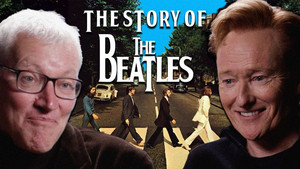
If you want more from the show, join the Rest Is History Club.
And with Christmas coming, you can also gift a whole year of access to the history lover in your life.
Just head to therestishistorycom and click gifts.
This episode is sponsored by hive.
Britain revolutionized the future with the might of industrial power, but now you can transform your own energy future and take control with the power of hive.
Hive makes the most of the sun with solar panels, turning sunlight into greener electricity and enabling you to sell excess back to the grid.
And Hive's thermostats make it possible for you to heat your home without lifting anything more than a thumb and an impressed brow.
Their heat pumps draw warmth from the air and they keep it exactly where you want it.
No smoke, No waste.
Hive's EV charger lets your car charge quietly overnight, recharging while you do too.
Hive brings it all together.
Heating, charging and solar.
Managed from one simple app in a quiet revolution.
In the long history of power, Hive helps you finally know yours.
Head to hivehome.com to find out more.
Subject to survey and suitability.
Hive app compatible with selected technology.
Paid for surplus requires SEG tariff.
Hello everyone and welcome back to a Rest Is History Beatles themed special and this is Part two.
It's the blue album to the red album of part one.
We left you on an absolute cliffhanger.
John Lennon has made unwise comments about Jesus and provoked outrage in the Bible Belt in the United States, and the problem for him is that the Beatles are due to go on a tour to the United States, so Conan O'Brien, who has replaced Dominic on this show, because Dominic refuses to talk about the Beatles because Conan, what we didn't perhaps go into in great detail in the first episode was the actual music, and Before the Beatles go on the tour that will bring them to America and all the Jesus kerfuffle, they have recorded an album that many now see as their greatest album Revolver.
Are you a particular fan of Revolver?
Huge fan of Revolver.
Revolver is very interesting because the Beatles are now recording music that would be very difficult to perform live.
And live performance is a huge part of the Beatles' engine.
Eleanor Rigby.
Tomorrow Never Knows.
Tomorrow Never Knows.
Which is kind of playing things backwards.
These are all very difficult, if not impossible.
Now it could be done with modern technology, but they've become real, recording geniuses and artists and it's taking them in this other direction.
So they finish Revolver, and enough time has gone by because I think people used to say, well, Sgt.
Pepper or Abbey Road is their greatest, and those are obviously fantastic.
But Revolver.
I think if you asked one of the Beatles they might have the greatest fondness for Revolver.
And there's a kind of tension between now what they can do in a studio but not reproduce on a stage and the fact that they are starting to get a bit fed up with touring.
Because it's not only that they can't reproduce.
You know the musical effects that they've got on Revolver on stage.
It's also the fact that they can't barely hear themselves play.
And they know that most people in their audience, because they're all screaming, they can't really hear them either.
So that's frustrating.
We just became like lip syncing.
You know miming, and uh, we didn't.
We almost sometimes things would break down and nobody would know, and so it was wasn't doing the music any good.
And then, after they finish revolver, they go on a world tour and they go to japan, and then they go to the philippines and they have a kind of awful run-in with emelda marcos yes, famous for her shoe collection.
Yes, i was just there, i was just in the philippines, And I went to the Manila Hotel, which is where the Beatles stayed.
But you didn't turn down an invitation to tea with the head of the Philippines.
I did.
I did.
And I was bullied at the airport.
Like the Beatles were.
Like the Beatles were.
No, that was totally not the Beatles' fault.
The Marcoses announced that the Beatles will be appearing at the palace and having tea and then greeting a bunch of children, but no one asked the Beatles.
And they're, as you guys would say, knackered.
Yeah, they were knackered.
They were knackered.
They just wanted to use the loo and then take a lift.
I'll never be invited again.
But they were tired.
They didn't want to do that.
They said, no, we're not going to do that.
And then, of course, the Marcos family said, this is a terrible snub.
And they were in their hotel room watching this all unfold.
And then they were hated throughout the philippines and there was a kind of real physical threat of of danger yeah, and they kind of, you know, they made it out to their flight and it was all really traumatic and they left.
The philippines said we're never going back, and i don't think they ever did actually, but kind of, in a sense, worse was to come, because we now come to the way that uh, john lennon's comments on christianity was playing out in america yeah, And there's kind of escalating outrage in the Bible Belt.
DJs there are inviting people to bring their records and their Beatles wigs and to kind of burn them.
Don't forget to take your Beatle records and your Beatle paraphernalia to any one of our 14 pickup points in Birmingham Alabama.
And lots of people are kind of carrying around placards saying you know, Jesus died for your sins.
John Lennon and the Ku Klux Klan are getting in on the act.
And it's a pretty menacing environment, isn't it?
And when the Beatles land in America and they are asked about this.
You can see when John is speaking at the press conference.
I mean, he looks traumatized.
Yeah.
Well, apparently he's a tough guy and he speaks his mind and he's not afraid to back down.
But this was traumatic for him.
And he realizes that he's put the whole thing in jeopardy.
And at one point he cries apparently, breaks down crying just with the group and Brian and says I'll do what I have to do to fix this.
He does.
He gives an apology.
It's a it's a bit of a non-apology apology.
You know, i'm not saying that we're better or greater or comparing us with jesus christ as a person or god as a thing or whatever it is.
You know, i just said what i said and it was wrong or was taken wrong, and now it's all this.
But he clarifies his remarks And of course people that don't like the Beatles won't be satisfied, but it feels like it's enough for them to get to move on.
And so they decide after this that they have had enough of touring.
And so, from this point on, they essentially are going to be meeting in the studio and developing albums of increasing complexity, technological and musical.
But there is also a sense, isn't there?
I think, that what that imbroglio is in America in 1966 had kind of revealed was the scale of the cultural rupture that is going on in the 60s between an increasingly kind of countercultural take on religion and the vietnam war and kind of host of issues and a kind of a conservatism that is still very much there and there is a real kind of cultural divide starting to widen.
Yeah, and as you go from 1966 into 1967,
This will become very apparent because 1967 will be famous for the Summer of Love.
And it is the Beatles who provide in a sense the soundtrack for that, with two massive, massive kind of musical monuments.
The first double A side.
Strawberry Fields Forever and Penny Lane.
Penny Lane there is a barber showing photographs Of every head he's had the pleasure to know And all the people that come and go Stop and say hello.
On the corner is a banker with a motorcar, The little children having him behind his back.
And the bankernet wears a mack.
In the pouring rain.
Very strange.
Penny Lane is in my ears and in my eyes.
There beneath the blue suburban skies I sit and eat.
And then their album, Sergeant Pepper.
Yeah.
I mean it's important to remember that 66.
We're just two years away from Nixon being elected president.
And what Nixon reveals and his campaign is that there is a huge part of the United States that isn't down with the kids and wants no part of it.
And through the Beatles we're starting to see this showing up and we're going to see it very clearly in two years.
But it's one of the reasons they stopped touring.
They can't hear themselves.
The technology for touring on the Beatles scale was terrible.
They're still using these relatively small Vox amps.
When they play giant stadiums, they're piping it through the public announce address system.
So they can't hear themselves.
People can't hear them.
And I think I mean John Lennon always said they were a terrific live band and they got something from that.
But now there's no communicating with an audience that size.
There's no give and take.
So they've got to move on.
They take a break after they stop touring.
John goes off and makes How I Won the War.
That's where he starts wearing his round glasses.
I guess it was a government issue.
Granny glasses.
NHS glasses, yeah.
And then Paul does the score for the family way, I think.
Everyone takes a little bit of a breather.
A little bit of a breather.
And then they get back together.
Paul has an idea.
And they start working on Sergeant Pepper.
But you mentioned that...
They have this incredible single.
They put out an A-side and a B-side, which is Strawberry Fields Forever, and then Penny Lane.
They were meant to be part of the new album but because of this demand that there always be new singles, two of the greatest songs the beatles would ever make are put on an a and a b side and put out and now can't be on the album, which today people would say well, that's silly.
Put it on the album too.
Yeah, but they were very strict about that.
You mentioned how nixon in america is lurking in the wings and it would be remiss of me at this point not to ventriloquize dominic, whose great point is that sergeant pepper will be outsold by the sound of music in 1967 penny lane and strawberry fields, which lots of critics have said is the kind of cultural pinnacle of post-war british achievement, i think, without a doubt the greatest single the beatles ever released.
It's their first one, for you know eons not to become number one and it's kept off the the top spot by engelbert humperdinck.
Yeah, so they're not having it all their way, But it is a transcendent achievement, isn't it?
And it takes them back to Liverpool.
So both of both Penny Lane and Strawberry Fields locations in Liverpool.
Yeah, I think Strawberry Fields Forever might be my favorite Beatles song.
Penny Lane for me with the trumpet.
But yeah, they're both so incredible.
They also show you both sides of this incredible songwriting team and their perfection.
Misunderstanding all.
You see, It's getting hard to be someone, But it all works out.
It doesn't matter much to me.
Let me take you down, Cause I'm going to Strawberry Field, And so this is how good the Beatles have become.
You take these two songs and you don't even put them on the Watershed album, Sergeant Pepper.
You take them off. and issue them as a single that would be unheard of today.
I mean the only track I think that transcends it is a day in the life, which is the last song on Sergeant pepper and perfectly fuses the best of John and Paul.
Yeah.
Um, and is designed to be a kind of overwhelming symphonic experience.
They, here we are in Abbey road.
They invited you know vast orchestra to come in and play all kinds of mad tunes and you know it crashes out and you're left with this incredible silence which continues on the album.
And it's all very groovy and it's all very counter-cultural.
And you do get the sense with sergeant pepper that the beatles are starting to as the queen put it go a bit odd.
So it's not just that the music is more radical and edgy and kind of exploring new ways of of developing, but But they're all you know.
The facial hair is starting to develop and the hair is getting even longer.
Yes, I know that you and Dominic have beard obsessions and the beard start to show up, the mustaches and soon, beards.
But it's a concept album.
It really isn't.
Paul had this idea that it would be a whole album done by a fictional band called Sargent Peppers, but they stick with that idea for maybe one or two songs.
And then they give up.
And then they give up, but it doesn't matter.
It's really about that amazing cover.
It's called the first concept album.
It doesn't go anywhere.
Mr Kite, all my contributions have absolutely nothing to do with this idea of Sargent Pepper and his band.
But it works because we said it worked and that's how it appeared.
They're dealing now with their work as real art.
To own that album is to own a piece of art and it's seen as exemplifying the summer of love and this kind of this radical developments that are taking place in san francisco particularly hate ashbury, as well as in kind of carnaby street and swinging london, And there is a track on Sgt.
Pepper called Lucy in the Sky with Diamonds, which people point out.
Well, the initials of that song, LSD.
And this is the time when the Beatles, even Paul, who'd been very reluctant to take it starts taking LSD.
I mean, they always denied that it was, but it's kind of hovering in the atmosphere.
And that sense of drugs is opening the mind.
You know, you can tune in.
And discover new things about yourself.
That is also part of the excitement for people who are listening to Sergeant Pepper of what is going on, isn't it?
The sense that new opportunities are opening up.
There's this new idea that drugs can provide all these positive benefits.
And this is a number of years before we start losing people to drugs.
And John tends to overdo things.
So he goes, he's all in.
He's all in on LSD to the point where he's positively green from it.
I was aware of them smoking pot.
I wasn't aware that they did anything really serious.
In fact I was so innocent that I actually took John up into the roof when he was having a, an LSD trip, not knowing what it was.
Paul takes LSD because John is out, you know, off his face and he wants to kind of, you know, accompany john in his yeah, you know, this terrible kind of experience which i was finding kind of very touching, moving illustration of their yeah he, he felt the need to.
I've got to do this too so that i can know what he knows.
But he never goes as far yes, as john.
But this opens up a lot in their music and, of course, john is so influenced already by Alice in Wonderland imagery.
So that's the other thing, isn't it?
That, even as they are kind of pushing at the limits in a kind of Timothy Leary kind of way, they are still drawing on the traditions of their childhood.
So you meant Alice in Wonderland, but even Sergeant Pepper.
They're kind of dressing up in Edwardian style uniforms and there's the fairground noises in The Benefit of Mr Kite, which was a kind of fairground poster.
There's a kind of Edwardian vibe there, even as the hippies are crowding in.
I have a theory that many artists get lost in the 60s because you start to think if I think of it and I do it, it must be good.
There are many terrible songs written in the 60s and there are many terrible movies made in the 60s, especially in the later 60s.
People can tend to lose their way because there's this concept that We just made it.
It's wacky.
It's what happened.
It doesn't make sense, but it doesn't have to.
I think the Beatles survive it really well because they're rooted in this discipline, the musical music, structure production, fine production.
They're rooted in all these things that help.
Give them ballast, even though, yes, they're taking LSD.
They've been smoking a lot of pot.
They always have that ballast of there's work to be done and it needs to be good.
And I think also they consistently have a sense of the ridiculous.
They can recognize when people are making idiots of themselves.
So it's interesting that George goes to San Francisco and he hangs out and hate Ashby and he wants to see the flower power revolution and hang out with hippies and stuff.
And actually, he thinks there's quite a lot of casualties here and decides it's not really for him.
I mean, everywhere we went, people were smiling and sitting on lawns drinking tea.
You know festivals of music and stuff.
I mean, you know, that summer of love, a lot of that was bullshit, really.
It was all what the press was saying.
And so he wants to explore alternative ways of life. attaining enlightenment.
And by great good fortune, he is put in touch with a guy called the Maharishi Mahesh Yogi who has just turned up in London.
And George persuades the other Beatles and Mick Jagger and Marianne Faithfull to get on a train with the Maharishi and go to Bangor in Wales.
So what's your take on the Maharishi?
Well, I think the Beatles are very curious people.
And they always want to advance to the next level and learn more.
And so when they hear about this Maharishi, they think, let's give it a try.
Let's hear him out.
So that's what the trip, I think, to Bangor is about.
It's a getaway.
It's a happening.
Yeah.
They all go together.
Of course, Cynthia misses the train, which is very symbolic.
And also symbolic is the fact that while they're in Bangor, they get terrible news, which is that Brian Epstein, their manager the guy who had shaped their career and kind of kept them on track has died of an overdose back in London.
Yeah, and there's footage right after they hear they walk out.
They're in Wales, they've listened to the Maharishi, they get the news that Brian's died and bright, bright lights and a camera and you can watch this footage.
They are... completely traumatized.
Well, I don't know what to say, you know.
We've only just heard, and it's hard to think of things to say.
But he was just a beautiful fella, you know.
And it's terrible.
What are your plans now?
Well, we haven't made any.
I mean, we've only just heard.
That was kind of stunning because we were off on this sort of finding the meaning of life and there he was dead.
And much later, John said, I knew then we'd had it.
This was the guy who kept Everything together and he's gone.
And particularly traumatic, I think, for John, and probably Paul too, because they had both lost key figures of their life as kids.
They had lost their moms.
You can see in that footage that they are dumbstruck.
The interviewer says to them, you know, what did the Maharishi say?
And John's way, he basically gave us these platitudes.
And John at this level isn't saying they're platitudes.
I understand that this afternoon Maharishi conferred with you all.
Could I ask you what advice he offered you?
He told us not to get overwhelmed by grief and to whatever thoughts we have of Brian to keep them happy.
Because any thoughts we have of him will travel to him wherever he is.
But you can see that already.
John is not the kind of person probably, who's going to think that the Maharishi is the guy to replace Brian in his life.
I mean, you said that John will ultimately say this is where it all ends.
Let's explore that a bit further after a break.
MUSIC PLAYS
Hello everyone and welcome back to The Rest is History our Beatles-themed extravaganza with Conan O'Brien and Conan.
We left the Beatles traumatized by the loss of Brian Epstein, their manager for so long, and kind of asking themselves well, what does the future hold?
Yeah, they're at a crossroads now.
And it's funny.
There's always been probably some chafing against Brian and his suits and they had probably at times chafed at some of his ideas and concepts.
But then when he's gone, I think they probably realized how much he had held them all together.
And you said in the first half that the Beatles are very good at not going off on kind of mad, lunatic journeys that turn out to be disasters.
But actually, that is what they do in the wake of Brian's death.
Because Paul, who almost by default... is kind of stepping up to play the managerial role.
Says, well, why don't we go on a kind of groovy road trip around Britain?
It could be a magical mystery tour.
And again, it's this kind of idea of traditional British culture that you get on a bus and you go off to Blackpool or something, combined with people claiming to be walruses and such like.
So it's a kind of fusion of the psychedelic and the kind of seaside, but it's an absolute disaster.
Well, I think one of the problems is that the Beatles are very confident people because when they've had to try things and do things, they're extremely highly competent.
They haven't had a failure yet.
But now they extend it to how hard could it be to direct and make a cohesive film?
And I think Paul gets on the floor and he has a giant sheet of paper and he draws a circle and then His way of creating the movie is, I think, to just section off parts of the circle and arrows.
I mean, I like it.
Yeah, he would say it has great moments in it.
He would say, look, it was shot in color.
It was aired by the BBC on Boxing Day and in black and white on little screens.
That's not the way it was meant to be seen.
And it holds up if you really look at it.
And there are a bunch of good things in it.
But at the time, it's seen as...
It gets panned by the critics.
People think the Beatles have lost their minds.
It's another big bump in the road for them.
But I shouldn't say that.
In no way terminal.
Not at all.
I think the I Am a Walrus sequence one of John's great songs kind of ends up with King Lear muttering in the background.
They're all goo-goo-goo-jooing in the background.
And it's, I think, one of their great moments.
I love the video they made in Magical Mystery Tour for I Am the Walrus.
They seem to be at some kind of military complex.
And it looks like they spent all of seven minutes setting up the scene with a piano and impromptu goofy masks and bald cap wigs that are just applied with no glue.
But it's fun and it's them having fun and goofing around, which is infectious.
So the goofing around has you know that's been fundamental to the Beatles right from the very beginning, you know, right back to the days of the Quarrymen or whatever.
What is slightly newer is the idea of very earnestly going off and getting enlightenment in the Himalayas, which is what then happens early in 1968.
And the Maharishi reappears because he's got a kind of a big place out in Rishikesh.
And he says, come on, you know, come on out and sit at my feet, learn wisdom.
When the Maharishi died several years ago, someone wrote a really thoughtful piece which said he's an important part of the Beatles story because
After Brian's death, they've all had it.
They're fraying.
Their lives are chaotic.
And they do a very unusual thing for the biggest stars on earth.
They go to a retreat.
They don't bring electric guitars.
They bring these acoustic guitars.
I think these Martin guitars.
And they sit around and there's quiet and peace.
And there's nothing to do except chant.
And they start writing songs.
And essentially most of the White Album... was written during that period.
Like anything else, they take a moment and they make it work to their advantage.
So, even though they didn't find enlightenment and spirituality, they wrote a ton of songs.
They might not have written otherwise.
Well, they kind of respond in different ways, don't they?
Say Ringo has gone out with baked beans.
He has a suitcase filled with Heinz baked beans.
Yeah, because of his stomach.
He's worried about his stomach.
Paul is, I mean, he's kind of into it and kind of not really.
John has a massive bust up.
I feel.
And he writes an excoriation of the Maharishi which he titles Sexy Sadie because he's worried about whether the Maharishi will be too cross with him or whatever.
For George, Indian spirituality opens up entire know portals through which he goes and will never come back.
I mean, it's a massive, massive experience for him, a life-changing experience.
Yeah yeah, a lot of people don't know sexy sadie.
The original title was maharishi.
They made it a song.
It's almost as if lawyers showed up and said you have to change that, you'll get yours yet.
Yeah, it was originally, it was maharishi, you'll get yours yet.
And it was the other beatles saying let's Think of another title.
Yeah, he didn't want to look like anyone had made a fool of him.
So he's very angry and rejects it completely.
Yet another of the many songs that emerges from that period.
And as you say, it goes on to the White Album.
And I suppose two things to say about the White Album.
First is it's white.
I mean, it's not actually called the White Album, is it?
It's called The Beatles.
But it's such a deliberate contrast with the kind of technicolor of Sgt.
Pepper.
Just this white album.
And the other thing is that it's a double album because they kind of feel we've got so many songs, we want to put it all on.
I know that George Martin later regretted that.
What do you think?
Do you think it should have been just a brilliant single album?
Or do you have room for Revolution 9?
I... say, let the Beatles be the Beatles.
And so I know George Martin thought oh, it should just be one perfectly produced album, not a double album.
But I'm on the Paul side of that.
He says this in the anthology.
He says, you know, people say maybe it could have been this or it could have been that.
And maybe there's some songs in there that are too many.
And he said, oh, come on, it's the Beatles.
It's the White Album.
You know, I'm not a great one for that.
You know, maybe it was too many of that.
What do you mean?
It was great.
It sold.
It's the bloody Beatles.
Why is album shut up?
The Beatles still have so many great songs left in them, and particularly, I guess, Paul does, because by this point John is starting to become increasingly disenchanted with his identity as a Beatle.
And it's kind of fueled, I guess, by a couple of things.
One is that he's starting to get seriously into heroin, which is obviously quite a drag on one's creativity.
But the other thing is that he's got a new woman in his life, hasn't he?
So he was married to Cynthia, but by 1968, no longer.
Yeah, John has met this artist, Yoko Ono, and he's infatuated with her.
And this is obviously many people say, well, this is what ended up breaking up the Beatles.
But I think that's not true.
People always want to blame somebody. or something that I think would have happened anyway.
And so, no, I don't think Yoko broke up with Beatles.
She certainly creates strain in some of the recording sessions.
So I've actually been in a bag.
The Tate Modern here in London did a show of Yoko's art two or three years ago.
There's an opportunity to get in a bag, and we went in a bag and did a happening.
Okay.
I hate to top you.
I've been in a bag with Yoko.
Yoko came on the show and she surprised me with a bag and she thought that i'd be too uptight to get into it with her but of course, being a terrible ham, I said absolutely, we both got in the bag.
And you're quite tall.
Was the bag big enough to contain you?
It was big enough.
It was an extra large bag.
I take an XXL in the bag.
But I got into the bag with Yoko.
And then we were inside.
And there's a live studio audience.
And she said, what do we do now?
She said, well, that's it.
Now we just get out of the bag and go to commercial.
And I said, no, Yoko, we have to do something because that's the comedy rule.
So I start handing my clothes out of the bag.
And then we emerged from the bag.
I didn't take everything off, but I think I took an article of her clothing and put it on, which looked absurd.
Because Yoko had a thing where people would cut her clothing off, didn't she?
I mean, it's quite something to have been in a bag with Yoko.
I mean, do you feel one of the great moments of your life?
It's the greatest moment of my life, and I have...
I've been at the birth of both of my children, so I'm a sociopath.
You're a fan of Yoko's art.
Yeah.
The saddest thing to me about this period are the clips I see where you can tell John is impaired.
He's on heroin or trying to come off heroin, and it makes me sad.
The kind of being I think, a kind of gentleman's agreement among the police that it was fine to arrest the Rolling Stones for drug offenses, but you leave the Beatles alone.
That sense is starting to fade by now, and John and Yoko are arrested, and George is arrested.
So there's a sense that the Beatles are becoming fair game now.
There was a hierarchy in the pop world.
Beatles are on top, then the Rolling Stones, then the Who Kinks way at the bottom Herman's Hermits.
But now things are changing.
You can arrest a Beatle.
You can arrest a Beatle and charge them.
So Paul, meanwhile...
He is still very keen on being a Beatle, keeping the Beatles on track.
And his response to John's breakup with Cynthia is to drive down to Weybridge from London to see Cynthia and John and Cynthia's son together, julian.
And he writes one of the great beatles singles yeah, hey jude, hey jude, yeah.
They play it live on david frost show and that's their kind of first live performance for a very long while.
My pleasure to introduce now, in their first live appearance for goodness knows how long in front of an audience, the beatles hey jude, don't make it bad, take a side, Remember to let her into your heart.
Then you can start to make it better.
Hey Jude, don't be afraid.
The minute you let her under your skin, Then you begin to make it better.
And also, it's inordinately long, isn't it?
So that's another kind of Beatles first.
It breaks all these rules.
No track has been that long.
And at the time, someone said by that point, people thought, well, the Beatles have had it.
And then Hey Jude comes out.
And it's a massive, massive hit.
And there's this amazing account of how Paul has the tapes and he's kind of driving through the English countryside.
And they're going back to London.
They want to take a break.
And they arrive in this picture-perfect village.
And there's a pub and the pub is open.
And Paul goes in there and he plays Hey Jude on the piano for people there.
And then he plays the track.
And people will always remember it as one of the kind of examples of Beatles magic that you're just sitting in a pub and suddenly Paul McCartney walks in and plays Hey Jude for you.
That sense that that magic is still there, is obviously a kind of powerful motivator for Paul, but but also for the other beetles as well, and so they are prepared to listen to him when he proposes that they get back yeah, that they they get back to kind of be, you know, doing live shows.
The footage that got taken of the of those sessions yeah, which were kind of often seen as being very difficult and and troubled, peter jackson kind of took the footage, didn't he, and made it into this incredible film yeah, where you can actually witness the process of songs being made.
I mean a lot of things I loved about Get Back.
Just, I'm a geek, so getting to see all the equipment how it really worked is fascinating.
But basically the greatest thing is seeing these guys together and they're still making each other laugh.
You get glimpses of the process.
There are so many bits in it I loved.
But I loved the bit where, say, Paul by now is with Linda, who he will end up marrying.
The most eligible bachelor in the world will get hitched to Linda.
And Linda and Yoko were talking.
And in the background, Paul is composing Get Back.
And it's like kind of watching I don't know.
Michelangelo think oh, I don't know, should I have Adam and God and their fingers tied?
Maybe, I don't know.
He's in the background.
It's so brilliant.
But also it's the fact that all of them look so cool.
I mean, George just looks brilliantly cool in it.
They're all so just little things.
Little fun things.
I don't know what time of day it is, but Mal will say, does anyone want anything?
And they'll all want some wine or beer.
Cup of tea.
Yeah.
There's always a lot of toast.
You're like, this is the biggest band in the world.
And they've got, you know, there's not a bowl of cocaine.
It's toast.
Yeah.
It's all very British.
Although you can see that John is really not well.
Of the four of them, John is the one who's most kind of faded at that point.
Although they were very keen to have a kind of spectacular climax to this process of filming.
And so there was talk about doing them on a cruise ship or doing it in a Roman amphitheater in Africa.
But then they haven't really got the energy for any of this.
And so they decide that they will have a rooftop concert on the Apple building in Savile Row.
But there's hemming and hawing up until the moment.
This is where Peter Jackson's documentary is so great.
He lets you know that they're still in a back room, as the equipment's all set up and they're ready to go on the rooftop.
They're still deciding whether or not they're going to come out.
Yeah.
Because at this point they have so many wounds from traveling and knowing what the spectacle was all about.
They've been just living in a hobbit hole, engineering these great sounds.
Why go out there and expose ourselves?
So it's amazing when they come out.
Don't let me down.
Don't let me down.
Nobody ever loved me like she does.
Ooh, she does Yes, she does Here, she does.
Here she does.
And, you know, all of London gathers on the streets below and then the police come and stop the fun.
And actually, that's kind of, you know, a perfect way for the film to end.
Yeah, there was some disappointment.
I think Paul really wanted them or George or Ringo.
They really wanted the police to grab them and physically roll them off, because that would be a better ending to the film.
There's a part in it that's very sad to me, which is they're all they're sitting in four chairs.
And Peter Sellers comes in.
Do you remember this part?
Peter Sellers comes in and says, hello, fellas.
Five years before they had met Peter Sellers.
And it was one of the biggest thrills of their life.
And they're young and they're excited.
Now it's the number of years later and John's on heroin and they're tired.
Yeah.
And they're all sitting in four chairs like mannequins.
Separate.
For some reason, that segment I think John makes a joke about watch out for the needles on the floor.
He makes a heroin joke to Peter Sellers.
Yeah.
Yeah, it's just starting to milk is starting to curdle a little.
Yeah.
And adding to the stress is the fact that they're now supposed to be a business.
So I mentioned the Apple building in Savile Row.
This is the headquarters for a groovy new company.
The Beatles have set up as a kind of tax dodge.
And they've set it up in a very 1960s hope that you get rid of the pigs and the man and the capitalists and just let groovy people like Magic Alex, a Greek engineer, come up with lunatic schemes and everything will be great.
He can make a studio that levitates.
Hello, I'm Alexis from Apple Electronics.
I would like to say hello to all my brothers around the world and to all the girls around the world and to all the electronic people around the world.
Apple, basically, they're saying, come in and rip us off.
And so loads of people do come and rip them off.
And so they've got money problems as well as all the other issues that are going on.
Tensions over music, tensions over drugs, tension over...
You know their respective spouses, and now money, and money is probably the kind of the biggest thing.
Yeah, because Paul wants his father in law.
So Linda's father to run their finances for them.
And the other three want a guy called Alan Klein.
I mean, he seems quite a kind of New York figure, quite a New York character.
Yeah.
I think thuggish is one word people might use.
I think the Rolling Stones felt they had had a good experience with him.
John hears about this tough guy who can come in and get you a better royalty rate.
He's all down.
It's actually in Get Back.
John's had a meeting with him.
And he goes and he says to George I mean I feel I think he knows me as well as you do, or better, George.
I mean, can you imagine George hearing this?
He's been with John since 1957, 58.
And now John's had one meeting.
Yeah, when I went to George walks out.
I'll see you in the clubs.
Yeah.
And he walks out.
They get him back in.
But there's a lot of bad feeling now.
And again, this is all part and parcel of...
Magical Mystery Tour, hey, how hard could it be to make a movie?
The Apple Boutique, how hard could it be to make a shop and sell groovy clothes?
Apple Music, how hard could it be to just get rid of the obstacles and let groovy people be groovy?
Stick it to the man.
Yeah, and without accepting that maybe what made the Beatles great were hurdles and obstacles and or added to their greatness so there's a lot of naivete at this point yeah it all seems kind of fun now but i think they're pretty miserable so um john has gone off and he's got married to yoko in gibraltar near spain He's recorded Give Peace a Chance with the Plastic Ono Band.
So there's a sense there of John looking to a musical future after the Beatles.
And with Yoko he is now very into taking kind of radical positions on Vietnam because I think he had recorded a track called Revolution.
And he'd sung two versions of it.
And he said, count me out.
You count me in.
And he decided to go with you can count me out and felt embarrassed about that.
And so he political activism is something that he's getting increasingly into.
You can see kind of a new career direction for him with Yoko.
And they've got all these money issues and arguments.
And so it looks as if it's all over.
But then there is one last glorious hurrah, isn't there?
And we are sat here in Abbey Road.
I embarrassed you, but I also embarrassed myself.
By getting you to pose on the zebra crossing outside which, of course, is the cover of the album Abbey Road.
Yeah, I only objected because I'm the last person alive to not pose.
And now you made me do it.
I'm so sorry.
It's OK.
Sorry.
It's OK.
Abbey Road.
Are you a fan of course?
Yeah.
Abbey Road is fantastic.
And again, I don't think Let It Be should have been the last album.
And it's such a downer, isn't it?
Compared to.
Yeah, and look, there's great songs on Let It Be, and Let It Be was again the Beatles being part of something that was really happening, which is there was music like The Band and Creedence Clearwater Revival that were stripping it all back, stripping it down, going the other way.
So that's what they're doing.
They're playing very stripped down.
Well, they're getting back, aren't they?
They're getting back, as it were.
Yeah, they're getting back.
And so that's great, but it's not the heroic ending they should have.
Well, it kind of muddies the water, doesn't it?
Because it...
The songs on Get Back are recorded during the Get Back sessions and it's then released as their final album.
But actually the last time that they're in the studio creating an album is with Abbey Road.
I think the moment on Abbey Road that I find the most moving and well, it's sad, but it's also triumphantly moving is You Never Give Me Your Money, which is Paul singing about?
You only give me your funny papers.
It's a sense I'm bogged down in paperwork and arguments over finance and cash and And you see there the kind of the horror of the Beatles breakup.
And then it's such a kind of classic Paul moment where he suddenly you know oh, hang this, we're off.
And the kind of music soars and they're off on a kind of journey.
It's a move that Paul does again and again in his songs, where you're down and then you free yourself.
That, for me, is the moment in Abbey Road that it's an album that is taking wing, after you thought that the feathers were tarred forever.
I was lucky enough to be in the audience for the Saturday Night Live 50th and I had seats that were way off to the side.
So for all the live sketches, I had a pretty good view, but not the best.
And then I realized oh, wait a minute, here comes Paul McCartney to close the show with the final track on Abbey Road.
And I'm sitting right there.
I'm in the perfect spot.
Her Majesty.
No, not Her Majesty.
Yes, not them.
Okay, you're going to be literal.
Where they're trading guitar solos.
Yeah.
I got to watch Paul McCartney do that.
Yeah.
Out of body experience to see him do that and also know that they ended on a perfect note.
And I think there are people that moan about how the Beatles could have gone on into the 70s.
But I think one of the things that makes them a true rarity in show business is their timing was impeccable always.
And they ended on this beautiful note and then Never came back.
And that's one of the reasons that we are still talking about them today.
I intend to hang around show business.
I already have long after I've served my purpose to an embarrassing degree.
They timed it perfectly.
Do you think also that the news that the Beatles are breaking up comes out in 1970?
So, in a sense...
The association of the Beatles with the 1960s is absolutely cemented by the fact that they don't survive into the next decade.
And do you think that's kind of important part in framing the memory of them, the understanding of them, that they're associated so indelibly with everything that made the 60s kind of vivid and technicolor?
I brought up this concept of luck early on.
None of this is planned.
Think about how short a decade is to us now. this stage in my life, a decade is so quick.
They are in 1960, 61, just really getting started.
And in 1969, at the end of the year, they're finishing it up.
And that wasn't planned.
But like so many things with them, it's what happened.
And it was perfect.
Yes.
In history books, 500 years from now, if there's a section on the 60s, And there are only three photographs.
One of them is going to be of the Beatles.
So do you think that people will still be listening to the Beatles in 500 years?
Yeah, I do.
You know, this is with the caveat that we're all still here in 500 years. to be a downer but one never knows so unless we're destroyed in a nuclear holocaust yeah probably or i i'm tending more towards alien invasion oh the aliens will love the music but we won't be there anymore yeah well ship us off to a colony on ryzak 7 so this episode is spiraling off in a direction that i hadn't anticipated no that's my favorite thing is to take something Unlike the Beatles, I like to take something that is pretty perfect and then ruin it.
Not at all.
With my mad babblings.
It's starting to get a bit plastic-o-no-band.
That can be good, too.
That is, I think, the perfect way to end this episode.
The 60s are over.
The 70s are dawning.
Plastic-o-no-band is waiting.
Wings are waiting.
All things must pass are waiting. photograph Ringo's great hit is waiting.
So it's certainly not over for the constituent parts of the Beatles, but the Beatles as a band are over.
And I think on that note Conan, I should thank you very, very much for joining me here in Abbey road to talk about the Beatles.
Well, I think I've made it clear.
Rest is history is my favorite podcast.
So when I got the call, would you, would you be on rest is history?
And at the studio where your favorite band and your obsession recorded their songs?
That's a trip i had to make.
And you said um, that you were quite keen to to, to be on the rest of history, but only with one of us, because you wanted to make the other one jealous.
Well, next time it'll be just dominic and we'll be doing beards of the civil war.
Yeah and uh, you will have to stew alone on your estate while we two yuck it up.
Dominic is left to reflect on the error of his ways.
Yeah.
If only he'd been a little more enthusiastic about the Beatles, he could have been here too.
Or if he had understood anything about music.
Yeah, that's true.
And on that tremendous Dominic oriented note, thank you everyone for watching or for listening.
Goodbye.
Goodbye.
And in the end, the love you take is equal to THE END