
[The Vital Role of the Ancient Horseshoe Crab in Modern Medicine]-[The Amazing Horseshoe Crab]
📋 Summary
The Amazing Horseshoe Crab: An Ancient Guardian of Human Health
A Living Fossil
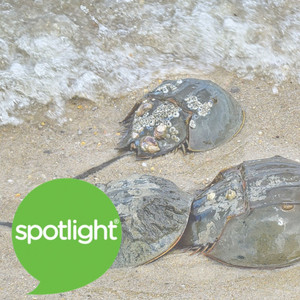
The horseshoe crab is a creature that seems to emerge from a prehistoric era. Often mistaken for rocks due to their appearance, these animals are characterized by a long tail and nine eyes. Remarkably, scientists have discovered fossils suggesting these creatures have existed for 450 million years, remaining largely unchanged throughout history. Despite spending most of their lives underwater, they emerge to the surface to mate and bury their eggs, a behavior that makes them vulnerable to human interaction.
The Critical Role of Blue Blood
While their appearance is strange, the horseshoe crab is arguably one of the most important animals to the medical industry. Their unique blue blood contains a special chemical known as limulus amabocite lysate (LAL). This chemical is essential because it reacts in the presence of gram-negative bacteria, which are notoriously difficult to eliminate. Unlike other bacteria, these pathogens are resistant to high heat and standard cleaning methods, and they contain toxins that remain harmful even after the bacteria themselves are destroyed.
Before the discovery of LAL by scientists Fred Bang and Jack Levin in 1965, medical companies relied on testing vaccines and medicines on rabbits. This process was not only slow and unreliable but also ethically questionable. The LAL test revolutionized the field, providing a safer, faster, and more accurate method to ensure that every batch of medication is free of dangerous bacteria. As Barbara Brummer of the Nature Conservancy noted, the world depends heavily on this "ancient creature" for the safety of medical treatments and vaccines.
The Cost of Harvesting
Despite their importance, the practice of harvesting horseshoe crab blood poses a significant threat to their population. Companies capture thousands of crabs annually, transporting them to laboratories to extract roughly one-third of their blood before releasing them back into the sea. While initially thought to be harmless, recent research by scientists like Winn Watson suggests this process is causing long-term damage.
Watson points out that horseshoe crabs are incredibly resilient, able to survive on land for days—a trait that ironically contributes to their decline because they are often kept in poor conditions without water or cooling during the harvesting process. Studies indicate that crabs returned to the sea after harvesting exhibit lower reproductive success, and nearly a third perish shortly after their laboratory experience. This, combined with habitat destruction, their use as fishing bait, and their status as a food source in some regions, has pushed these ancient animals toward a population crisis.
A Hopeful Future for Sustainability
The tide may be turning, however. In 2000, scientist Dingjie Ling developed a new test derived from horseshoe crab genes that can identify gram-negative bacteria without requiring the harvest of live crabs. This synthetic method has proven to be just as safe as the traditional LAL test. Notably, companies like Lonza utilized this recombinant method during the development of the COVID-19 vaccine with Moderna.
While some industry stakeholders remain hesitant to transition due to financial interests or skepticism regarding the efficacy of new methods, the shift toward synthetic testing represents a path toward conservation. As the production of these new tests becomes more efficient, the reliance on harvesting horseshoe crabs may eventually cease. This would allow these resilient, ancient survivors to return to the ocean floor and continue their existence in peace, just as they have for hundreds of millions of years.

Deep Learning with ListenLeap


