Hey, I'm Tracy Mumford. There is a lot happening right now.
The Headlines podcast from The New York Times will catch you up on the latest in 10 minutes or less.
We'll take you inside breaking news and big investigations from The Times newsroom.
Plus, bring you the stories that make you go, huh, whoa, I didn't know that.
Listen to our show, The Headlines, every weekday morning, wherever you get your podcasts.
From The New York Times, I'm Natalie Kitro -Eff.
This is The Daily. A little over a week after the flooding in central Texas, the death toll has reached more than 130, with the search continuing for the missing.
In the aftermath of the disaster, there have been mounting questions about how local officials handled the critical hours before and during the storm.
Today, we look at what we now know about the missed opportunities that may have contributed to the growing tragedy and whether anything more could have been done to save lives.
It's Tuesday, July 15th.
Now, we're going to show you radar here in just a second.
I do want to get you caught up on the flood watch in case you are just now joining us here.
On July 3rd, the National Weather Service and local meteorologists started tracking the possibility of an evening storm developing over the Texas Hill Country.
We look out west. Doesn't look like much, these tiny little specks on radar.
But to me, that's really pretty telling.
This is the potential seeds, if you will, for thunderstorms to fill in this evening.
The conditions looked ripe for the chance of overnight flooding.
And then notice the tendency to just sort of sit and train over the same area, if you will.
Bandera, Medina County, maybe Kerr County, right into tomorrow morning.
That is a signal of localized flash flooding in parts of our area.
But in a river corridor long known as Flash Flood Alley, the weather reports didn't prompt people to change their plans.
Hands. Hundreds of campers were in session at Camp Mystic, a Christian girls camp, and families gathered along the Guadalupe River to celebrate the July 4th weekend.
Those days were beautiful.
Weather was nice, a little bit of rain, the sun, you know how it is in Texas.
Beautiful weather, and you get to walk along the river with my sister and enjoy the atmosphere, and she's like, oh my God.
My colleagues Ang Lee and Thomas Fuller interviewed a 57 -year -old man named Nicholas Panayiotou who had just moved his new RV to the Blue Oak RV Park near the river.
The rain's coming down pretty hard and I was familiar that this place has a tendency to flood a little bit but I wasn't aware of what was coming.
Nicholas started to notice that the rain was coming down really hard around midnight.
The rain was coming down and when it hits the top of the RV it is loud.
It is a nightmare storm.
And at 1 .14 a .m. the National Weather Service sent out its first flash flood warning to residents' cell phones.
The alert called the flood risk, quote, considerable.
But the area's remote, with spotty cell service.
And Nicholas said the first time he noticed an alert was a little after 4 a .m. It was saying that there's a flood warning.
Don't leave your situation unless you're being flooded.
And there's a flood warning until 7 a .m. By then, the river was already rising.
Nicholas opened the door of his RV, shined a flashlight toward the Guadalupe, and saw a father holding a child under each arm.
His wife was nearby.
I hear the mom screaming.
What did they say? Oh my God, please help.
Please help. As soon as I saw them, I started screaming out loud.
Help, people are dying.
I knew immediately, I knew immediately, people are dying out here, please help.
People are dying and nobody can hear anything.
Nothing. The river had more than doubled in height and was moving fast. It was fast. It was powerful.
It was rising and it was in motion.
It was an entity onto its own.
As the water rushed around him, Nicholas said he couldn't reach the family.
I collapsed into the water.
He said he watched the man and his two children disappear into the river.
Yes. When I was looking at that baby, the other baby was under his other arm underwater.
I saw his shoulder.
I didn't see him anymore.
I just saw the baby, but his arm was around the baby.
He didn't let go. The baby was the last thing I saw.
Nicholas himself was then swept into the water, where he eventually caught hold of a metal pole and found his way to higher ground.
So the river is completely swollen, and there's a car with occupants in it floating down the river, ma 'am.
At 4 .22 a .m., a firefighter down the river in Hunt, near Camp Mystic, asked on an emergency channel to send an alert out to local residents on Code Red, a private security alert system.
Is there any way we can send a Code Red out to our Hunt residents asking them to find higher ground or stay home?
10 -4, standby. We have to get that approved with our supervisor.
But it was at least an hour before anyone received the first code red warning.
By morning, Nicholas had lost at least 28 of his neighbors.
27 people were killed at Camp Mystic, including many campers and their director.
Everyone here, if we could have warned them, we would have done so.
And we didn't even have a warning.
We did not know. In their first interviews with the press, as crews searched the flood zone for survivors, local officials answered questions about what they knew and when they knew it.
I individually did not receive a warning.
The mayor of Kerrville was asleep for much of the storm.
When I woke up, when I got a call from the city manager, I got up.
What time was that?
Oh, goodness, 5 .30 -ish.
I can look on my phone, but about 5 .30 -ish.
The sheriff said he was alerted hours after the storm began.
The city manager was also unaware, and was in fact out for a jog around the time the flooding began to intensify.
I was running the river trail at 3 a .m. this morning just because I'm that guy, and there was no signs of it.
The rain was here on the river trail, which is down below at the water's edge at 3 .30 and 4 o 'clock when I left. There was no signs of it rising at that point.
The Texas Department of Works just managed to pull out an all -call and said, there's going to be a fall.
We knew there was gonna be a problem.
Why were these camps evacuated?
I can't answer that.
Well, you're the judge.
I mean, you're the top official here in this county.
Why can't you answer that?
There are kids missing.
These camps were in harm's way.
We knew this flood was coming.
We didn't know this flood was coming.
Rest assured no one knew this kind of flood was coming.
We have floods all the time.
This is the most dangerous river valley in United States.
I agree. And we deal with floods on a regular basis.
When it rains, we get water.
We had no reason to believe that this was going to be independent.
None whatsoever. The local officials all talked about how little time they had to respond.
And the county judge said there needed to be better communication in the valley.
Can you talk to us about what kind of warning system might have been in place last night just to make sure that everybody got out safely?
We do not have voiceless.
Thank you, everybody, for being here.
But during his own press conference, Texas Governor Greg Abbott rejected questions about accountability.
And he cast doubt on the idea that anything officials could have done would have led to a different outcome.
I'm going to use your words.
Who's to blame? Know this.
That's the word choice of losers.
The way winners talk is not to point fingers.
They talk about solutions.
That same message was echoed by President Trump on his visit to the area.
All families we've heard from are obviously upset because they say that those warnings, those alerts, didn't go out in time.
And they also say that people could have been saved.
What do you say to those families?
Well, I think everyone did an incredible job under the circumstances.
This was, I guess Christy said, a one in 500, one in 1 ,000 years.
And I just have admiration for the job that everybody did.
There was just admiration.
The only bad person would ask a question like that, to be honest with you.
I don't know who you are, but only a very evil person would ask a question like that.
After the break, we speak to my colleague, Christopher Flavelle, about the missteps that led up to the tragedy and why it matters.
to figure out what went wrong.
We'll be right back.
This podcast is supported by MyMochi ice cream.
We all have those moments.
Midday, late night, and we want something cool and sweet.
But not just anything.
Something better. Like MyMochi ice cream.
MyMochi is scoops of rich, creamy ice cream wrapped in soft, chewy dough.
It's like a sweet little ice cream dumpling that will curb your cravings and keep you feeling joyfully chill.
My Mochi comes in tons of amazing flavors, like strawberry.
It's bursting with real berry flavor that's deliciously refreshing.
And mango. Talk about rich and tropical.
It tastes like a mini vacation in your mouth.
Feeling extra indulgent?
Try My Mochi Cookies and Cream.
It's everything you love about the classic with a fun handheld twist. My Mochi ice cream is gluten -free and only around 70 calories per piece.
It's made for mindful snacking.
For a bite -sized treat that's a little different and a lot satisfying, look for the purple box of MyMochi ice cream at Walmart or go to MyMochi .com to find a store near you.
Chris, we just heard local officials essentially say that the timing and the force of this storm overwhelmed them, that nothing could have been done given the tools that they had.
We want to talk to you about why that is.
Why, in a place that is known as Flash Flood Alley, were officials not prepared to deal with an event like this?
Tell us what you found.
We should start by acknowledging there's a lot of truth to that.
These are really intense flood events, right?
And even in a perfect scenario, with perfect planning, with great policies, with lots of funding, even if everything goes perfectly, protecting people from this kind of really intense flooding is very difficult.
But at the same time, there are a range of actions that American officials at all levels of government have developed over decades that don't seem to have been applied very well in this situation.
And it's at least worth talking about the things in the lead up to this event that don't seem to have gone as well as they could have have. And might have made a difference.
Okay. Let's talk about those things.
Where should we start?
You know, every disaster, as FEMA is fond of saying, is first and foremost, a local issue.
Let's start locally.
This is an area of the country famously prone to flooding.
And the first thing, the most important thing with flooding is, where are the people to start with?
Where are the people you're worried about?
In this case, the kids who are in Camp Mystic.
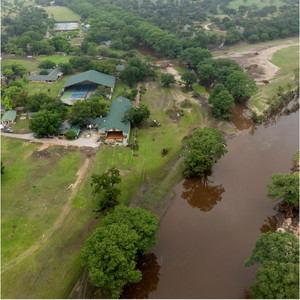
And as we now know, a lot of those structures were in what FEMA calls not just the floodplain, but the floodway.
And by structures, Chris, you mean the cabins where the kids were sleeping?
Right. The first time I became aware of some of these cabins being in the floodway was just a few days after the flood.
When I started reporting this story, and I was on the phone with a former FEMA official who knows his stuff really well, and he said, you know, Chris, before we go on, let me just pause.
I want to look at the flood map.
I want to see where these structures were.
I said, okay. And he went silent for a bit.
And he said, I can't believe what I'm seeing.
This is wild. I said, what is it?
He said, it looks like some of these buildings were in the floodway.
That is so dangerous.
Hmm. And hearing it in his voice made me realize this isn't some sort of technical issue that just flood nerds care about.
That was when I realized there's something really remarkable about the level of exposure that these buildings faced.
You're saying that this isn't like a borderline issue, that these cabins were in a really dangerous area.
It's just like plainly obvious to this expert you're talking to.
Right. A fundamental rule of flood mitigation is you don't want people living and sleeping in the floodway.
And if you do, it's pretty dangerous.
So what do we know about how these buildings wind up being constructed in a floodway?
So a lot of the buildings around the U .S. predate these flood maps entering these really high -risk areas.
So my guess is a lot of these buildings would have predated the maps and so people just didn't know at the time.
And the result is buildings that existed before the flood maps are called grandfathered.
They sort of get to sidestep the rules.
But my colleague Mike Baker also noted that stuff happened since those flood maps, including renovations.
So it's not clear whether and to what degree the camp had sort of the opportunity to try to relocate some of these structures out of the floodplain.
Also, we now know that a little more than a decade ago, the camp and the county asked FEMA for a change to these maps that would withdraw or remove some of these buildings from the flood map.
Sometimes it's the case that property owners or local officials will say to FEMA, hey, there's a mistake here.
We think that you've identified this flood risk that isn't actually there.
But as we know, these properties face a really high flood risk.
So it does raise the question, among many questions that have to be investigated, why did FEMA remove some of these structures from the floodplain and did that cause the camp or local officials to sort of reduce the level of risk that they thought applied to these properties?
And we asked FEMA over the weekend why they would do that, what the case was for changing the flood maps.
FEMA did not answer that question in any direct or meaningful way.
So until we get more information about why FEMA agreed to do that, it's hard to conclude what really happened there.
there. Wow. So despite this area being known, as we said, as Flash Flood Alley, FEMA removed some of the Camp Mystic buildings here from the official flood maps, which may have reduced the level of risk being considered.
Right. The why behind that does seem like a pretty critical piece of missing information.
But beyond the question of why these structures were here in the first place, I want to turn to why people weren't aware of how much danger they were in in the moment.
as the flood was happening.
What did you find out about that?
There's two answers there, right?
The first answer to that question is climate change.
You just defined climate change, right?
An area that's always had a flooding problem all of a sudden, seemingly out of nowhere, gets a flood that is worse than people anticipated, worse than they remember happening before, and people struggle to even understand even once it's happened, right?
That is what climate change looks like.
But we have systems to deal with that.
And arguably the most important is the National Weather Service.
And in my reporting on this storm, one of the first things I looked at was, well, what was their staffing like?
The National Weather Service, like so many federal agencies, has lost a lot of people since President Trump came back into office.
And I want to know, did that affect their performance?
And the answer to that is actually a little bit complicated.
What do you mean? The Weather Service has one core job, right?
That's the one everyone thinks about, which is their job is to track, forecast, and predict weather events so people can make plans and react to them.
By every count, the Weather Service did well on that count with these storms. They began issuing warnings at a reasonable amount of time in advance and began issuing evacuation notices saying get to high ground once the weather data substantiated those warnings.
But what I think people don't appreciate is that isn't all the Weather Service does.
They also have positions designed to coordinate with local emergency staff and make plans for what to do really for precisely this kind of scenario.
Right. When you get a life threatening storm and flash flooding developing overnight, starting at sort of 11 p .m. at midnight, you really want to have plans in place beforehand that are tightly rehearsed.
And make sure that there's people on the ground who have some idea of what to do if that happens.
Those are some of the positions that were vacant in the two weather offices that had responsibility for this storm.
Now, look, these offices had some vacancies six months ago before this current administration, but the number of vacancies roughly doubled since then.
Wow. Just give me an example of some of the positions that were missing so we understand what we're talking about here.
Yeah. For example, the Weather Service's San Angelo office was missing a senior hydrologist, a staff forecaster and a meteorologist in charge, sort of a senior official.
In the San Antonio office, which also had jurisdiction over some of these floods, they were missing a warning coordination meteorologist and a science officer.
Sounds important. Really important jobs.
And that warning coordination meteorologist, it turns out, took the early retirement offer that had been pushed by the Trump administration.
So having all those positions vacant in what turned out to be these crucial offices at this crucial moment, would it have made a difference otherwise?
We don't know, but it definitely didn't help.
The other issue that officials pointed to when they're asked about their response that night was that there was no siren system in place.
They said the mayor of Kerrville, for example, said he first learned about the storm when he's woken up at 530 with a phone call.
So what do we know about that?
Why does an area with this high risk of flooding and with spotty cell service not have some kind of early warning system in place?
You know, you put your finger on what struck me initially as a real mystery.
These systems aren't that expensive.
The county estimated they could have gotten one for less than a million dollars.
They're in use and they seem to have made a difference elsewhere.
And this is in a state that has lots of grant money for projects like this.
And in fact, Texas has gotten more of that federal money for disaster preparation than almost any other state.
We checked the federal data on this.
Texas has gotten about $1 .9 billion over the last decade in just one FEMA disaster reduction program.
So it wasn't immediately clear why the county wouldn't have been able to get money to pay for that.
So what happened here?
I mean, it sounds like there is a pot of money to be had.
Why doesn't any of it end up in Kerr County?
Yeah, in hindsight, it seems like a series of missed opportunities.
The county went to the Texas Division of Emergency Management in 2017 seeking money.
And at the time, the state said that this application didn't meet federal requirements, including a requirement to have a plan for addressing natural disasters, which the county, I guess, didn't at the time.
They tried again a year later, trying to get some of the money that rushed into Texas after Hurricane Harvey, and they were told no. And then finally, last year, a different body within the county called the Upper Guadalupe River Authority went to yet another Texas state body, the Texas Water Development Board, again seeking a grant for about a million dollars to do this.
and this time they were told we can give you a grant for five percent of the cost and we can loan you the rest of the money with zero percent interest but the river authority said we can't make that work that's not enough for us so three times they tried and three times it didn't work out it's remarkable to hear obviously in the aftermath of what happened that the county was trying to do this they've identified a risk and they're actively pursuing the avenues that are available to address Yeah, there's an element of foresight here that struck me as almost chilling.
Last fall, the county released a very, very detailed plan, 220 pages, looking at all the risks the county could face and what to do about it.
And one of them was indeed noting that they faced a very significant flood risk and even predicting that there was, in their view, a likely chance of flooding within the next year.
And they noted that one thing to do about it was install a warning system.
So the county was remarkably prescient at gauging the risk they faced, so they did their job.
They correctly thought through their risks.
They gauged those risks.
They came up with plans to address those risks.
They tried to get money to pay for those plans, and none of it worked.
Just to step back for a moment, Chris, how do you diagnose what's at the root of what went wrong here?
Because we're talking about these well -intentioned efforts to prevent something like this from happening.
We have a federal government that makes a bunch of money available to the state, a county that applies for it, that says outright we're at risk of a huge flood.
But somehow all of these things don't align in a way that actually leads to the things that need to be done to mitigate the kind of tragedy that we saw.
How do you make sense of that?
So I think the most satisfying thing would be to say, this person or this office or this level of government screwed up, and it's on them.
And the reality is both more complicated and more frustrating, right?
Right. So you've got this incredibly diffuse system where really everyone has some degree of responsibility.
But as you learn covering government, when everyone is responsible, really no one is responsible.
So it seems like things failed across the board. How do you think about fixing that issue?
Chris, you've covered this a long time.
It seems like everybody would want taxpayer dollars to be flowing to the right places.
But it's not totally working.
So what would work?
So FEMA is aware that though they've been putting more and more money in these programs, it hasn't always gotten to the communities that need it the most. Part of that is the way the programs are built.
They tend to be competitive grant programs where if you're a county or a city and you've got a risk, you've got to write an application and hope that application is scored highly enough that you win the money.
And it tends to be places with lots of risk are also often rural communities that might not have the money to hire lots of grant writers or the staff to think through what grants to apply for in the first place.
FEMA in the last administration under Joe Biden began trying to sort of more proactively go out to communities and say, hey, you've identified this problem.
You haven't been able to get some money.
We want to help. We'll try to guide you through the process.
That was moving slowly, but it seemed like a promising idea.
The Trump administration seems to have backed away from that and they've eliminated one of the main programs that made this money available and they've cut back on the staff to help play that role.
Hmm. So absent that sort of proactive outreach from FEMA to go around the country and look for places with the highest risk, it isn't clear how you fix it.
Right. President Trump has talked about making FEMA different in some way and giving these functions back to the state and local community.
I haven't heard anyone with this administration explain what their approach is to making sure that money better gets the people who need it.
But it's a longstanding problem, and FEMA has not nailed it yet.
You're describing this system where responsibility is so spread out among many people.
And we heard Governor Abbott of Texas say that blaming people, pointing the finger is just unhelpful.
That's not what winning teams do.
But I know there are families asking this question and searching for answers to just how this could have happened.
Like, it's a natural thing to do when you've lost so much, right?
right? Right. The overwhelming takeaway from my reporting on disasters like this for the last decade or so is the system that's designed to protect people doesn't work that well.
And so you could accept the notion that the blame game isn't useful.
Okay. But what probably is useful and probably doesn't happen enough in this country is asking about the systematic failures that go behind this that cause a place like kirk county with really clearly defined risks that has taken the trouble to figure out what the solution could be has sought money for that solution couldn't get it and then this happened right that seems like it ought to be an occasion to say well what do we do about the other places like this right and if you don't talk about why this happened you can't We can't figure out how to make the system work better.
So the bigger question I think for my reporting is, are there systematic things that went wrong here and can be improved so that this kind of thing happens less often in other parts of the country?
Chris, thanks for being here.
Sure thing. We'll be right back.
Here's what else you need to know today.
We've made a deal today where we are going to be sending them weapons and they're going to be paying for them.
At an Oval Office meeting with NATO Secretary General, President Trump said he would send top -of -the -line weapons to Ukraine through NATO countries, which would foot the bill.
And I'm disappointed in President Putin, because I thought we would have had a deal two months ago, but it doesn't seem to get there.
He also said he would slap very severe tariffs on Russia if there was no peace deal with Ukraine within 50 days, and threatened to impose levies on countries that did business with Russia.
The announcement was an escalation in Trump's response to Russia over its invasion of Ukraine, and was a sign of how frustrated the president has become with Russian President Vladimir Putin.
And, in a significant victory for Trump, on Monday, the Supreme Court said the administration could proceed with its plans to fire more than 1 ,000 workers at the Education Department.
The decision paves the way for the dismantling of the Education Department, which manages federal loans for college, tracks student achievement, and enforces civil rights laws in schools.
The administration has announced its intention to fire more than 1 ,300 workers from the department, which, along with other cuts, would leave it with a workforce half as big as it was when Trump took office.
The court's order comes after a decision by the justices last week that cleared the way for the administration to move forward with cutting thousands of jobs across a number of federal agencies, including the Departments of Housing and Urban Development, State and Treasury.
Today's episode was produced by Astha Chaturvedi, Alex Stern and Diana Nguyen with help from Caitlin O 'Keefe and Mary Wilson.
It was edited by Mike Benoit, Patricia Willans and Lizzo Balin.
Fact Check by Susan Lee contains original music by Dan Powell and Alisha Ba 'eetoop and was engineered by Alyssa Moxley.
Our theme music is by Jim Brunberg and Ben Landsberg of Wonderly.
Special thanks to Aung Lee, Thomas Fuller, Mike Baker, Emily Cochran, Edgar Sandoval, Danny Hakem, and Ruth Graham.
That's it for The Daily.
I'm Natalie Kitroweth.
See you tomorrow. you