At Sierra, discover top workout gear at incredible prices, which might lead to another discovery.
Your headphones haven't been connected this whole time.
Awkward.
Discover top brands at unexpectedly low prices.
Sierra, let's get moving.
Hi, listeners.
This is Kendra Pierre-Lewis.
Before we get started with today's episode, I want to let you in on a little secret about Scientific American.
As the holiday season rolls around, Scientific American offers some of our best deals of the year on digital or print magazine subscriptions.
It's a meaningful gift for the science lover in your life, or a great way to treat yourself to endless stories about the wonders of our world.
Here's how you can get in on it.
Head to scientificamerican.com slash getsiam and sign up for our marketing emails.
This way, you won't miss any of our exclusive holiday offers.
You can also click the subscribe button if you're ready to treat yourself or someone special.
Again, that's scientificamerican.com slash getsiam.
I truly believe SIAM has some of the best science reporting out there, and I love a good discount.
So I thought you might too.
Enjoy today's episode and happy holidays.
For Scientific American Science Quickly, I'm Kendra Pierre-Lewis, in for Rachel Deltman.
You're listening to our weekly science news roundup.
Let's kick things off with some climate news.
Last week, the 30th United Nations Climate Change Conference, better known as COP, wrapped up in Brazil.
I talked to Zoya Tierstein, a senior staff writer at Grist, who was on the scene to catch up on all things COP30.
Welcome, Zoya.
Oh, what a pleasure to be here.
Going into COP, can you tell me what people were sort of hoping to expect out of this conference?
Yes.
So Lula and the president of Brazil and Dolago, the president of COP, set high expectations for this conference.
They want it to be sort of negotiations starts turning into implementation.
And that's been a goal for these international climate summits.
I think the word conference doesn't really get at the stakes of this summit.
It's really.
Most of the world's nations are here talking about how to solve the greatest threat that humanity faces climate change.
And what happens here really sets the tone for whether or not the emissions causing the climate crisis get reduced or not.
And you said most of the world is there.
Who's not there?
Well, notably, the United States is not here this year.
That is because President Donald Trump has for a second time withdrawn the United States from the Paris Climate Agreement.
The Paris Climate Agreement is an international treaty that aims to keep global warming at 15 degrees Celsius compared to pre-industrial levels and well below 2 degrees Celsius of warming.
The news there is that we are on track to surpass that target and potentially even surpass 2 degrees Celsius of warming.
And that is bad news because you know, right now, with the planet at 12, 13 degrees roughly of warming,
We're already seeing catastrophic climate impacts.
And that's really been a topic of discussion here at COP as well is how do you prepare nations for those impacts now that it's super clear that they are in fact happening, and at a rapid pace?
It's been, what, 10 years exactly since the Paris Climate Agreement?
Yep, that's right.
A critic might say nothing's been accomplished in these past 10 years.
Every year, people gather together at a COP and nothing gets done.
What would you say to that person?
Well, that's not true.
Without the Paris Climate Agreement, we would be on track for even more catastrophic warming.
There have been significant steps taken by many nations around the world to reduce their emissions, to preserve forests, to take a variety of different steps.
All is not lost, but I think that someone looking at this conference and wondering has there been enough progress to really achieve what the Paris Agreement set out to do?
The answer is, hell no, there has been not enough progress at all on this subject.
And that's not really the fault of technological advancements or our capacity to actually adapt climate change and mitigate climate change.
It has to do with the fact that the political will to do those things is simply not there.
One of the things that's come up quite frequently is that the poorer countries, especially low-lying island states, are some of the most at risk in terms of climate, but also some of the least contributors to it.
Has that come up again this year?
Certainly.
That is a huge topic of conversation to hear.
With small island states that needs funds to both mitigate climate change.
So these low lying island states are being inundated by sea level rise, by cyclones and typhoons.
And so the question is, will that money come through?
And the answer is, you know, it's not really coming through.
And there's many reasons why that is.
And part of it is that many other states are sort of cash strapped right now.
They're trying to bolster their military operations in light of Russia's war with Ukraine.
For example, inflation is still high after the COVID-19 pandemic.
And the US, one of the wealthiest countries in the world, is no longer engaging in international climate diplomacy.
It's a tricky place to be in right now.
What are we seeing coming out of the conference?
Germany just put a billion euros, $1.1 billion, to the Tropical Forest Fund.
The Indigenous presence at COP30 has been very strong.
The aim of having this COP sort of at the mouth of the Amazon was to better include marginalized groups, such as Indigenous groups that live in the Amazon, in COP negotiations.
And they showed up in a pretty forceful way.
They sort of pushed their way into the conference grounds past the barriers and really made their voices heard.
And that led to new discussions with the Brazilian government around how to better protect indigenous regions and territories from deforestation and industry and that kind of thing.
So in that sense there's been sort of progress in terms of really hearing from groups that are normally sidelined in these conversations.
That seems like a positive note to end this conversation on.
Thank you so much for taking the time to speak with us, Zoya.
Great to be here.
Thanks, Kendra.
Now for some health news.
A massive study published last week in Science Advances found no link between consuming fluoride at recommended levels and cognitive decline.
Although water fluoridation has long been a contentious issue, in recent months it has gained new scrutiny.
U.S.
Health and Human Services Secretary, Robert F Kennedy Jr, has been an outspoken critic of adding fluoride to public drinking water.
He claims that exposure to the mineral has been linked to quote-unquote IQ loss, especially in children.
To investigate if there's such a link.
Researchers analyzed data from a group of Americans who were involved in long-term studies by the National Center for Educational Statistics between 1980 and 2021.
This new study took the data of more than 58000 individuals who were part of the initial NCES sample in 1980 and estimated the amount of fluoride exposure the participants had experienced.
They then compared that data with their standardized tests from high school.
The research found that young people exposed to the recommended levels of fluoride performed slightly better on all academic measures than those who were not.
Of that initial group, the NCES study also followed a smaller subset of roughly 27000 from 1982 through 2021, with roughly half of the subset still participating in the study in 2021.
In adulthood.
Researchers detected no measurable differences in memory, attention or other cognitive skills between those with the suggested amount of fluoride exposure and their peers.
Though the study did not look into why kids exposed to fluoride might have performed better on tests, study co-author John Robert Warren hypothesized that those students might have been less likely to miss school because of illness.
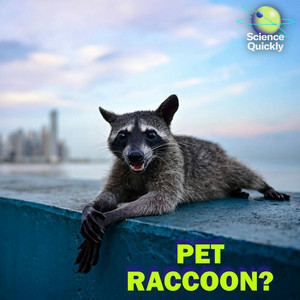
And finally, if you've ever looked at a raccoon and wondered, if not pet, why pet shaped?
You may be in luck.
Researchers have found evidence suggesting that urban raccoons might be becoming more tame.
A recent study suggests that raccoons in cities are undergoing physical changes in response to living around humans.
Scientists have long noticed a connection between tameness and traits such as a shorter face, a smaller head, floppy ears and white patches on an animal's fur.
But it wasn't until 2014 that a team of evolutionary biologists realized many of these traits are tied to a group of cells known as neural crest cells.
These cells form during embryonic development and play a role in the development of different kinds of cells in the body.
The scientist's theory is that these cells lead animals to have a dampened fear response and are also linked to physical changes such as a shorter muzzle.
This new research examined the snout lengths of city-dwelling raccoons and their rural counterparts to determine whether they could actually see signs of the animals taking on traits associated with tameness.
It turns out that the urban raccoons had snouts that were 35 shorter than their more pastoral peers.
There's still more to learn about the process of domestication.
In the meantime, no matter how cute your local trash panda is, do not bring it home.
That's all for today's episode.
Tune in on Wednesday when we get wild with turkeys.
Science Quickly is produced by me, Kendra Peer-Lewis, along with Fonda Mwangi and Jeff DelVisio.
This episode was edited by Alex Siguiera, Shaina Poses, and Aaron Shadek.
Fact check our show.
Our theme music was composed by Dominic Smith.
Subscribe to Scientific American for more up to date and in-depth science news.
For Scientific American, this is Kendra Pierre-Lewis.
Have a great week.