This is the Sunday Special.
I'm Gilbert Cruz.
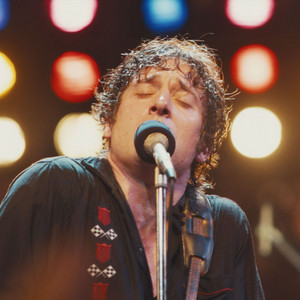
It's possible you've seen, somewhere on the internet or somewhere in your social media feeds, images of the actor Jeremy Allen White looking a lot like Bruce Springsteen.
That's because this Friday, the film Springsteen, Deliver Me From Nowhere, is coming out.
And it's a movie about a brief and dark and very specific period of Springsteen's life.
And that's what we're going to talk about today.
Not just that upcoming movie, but we're going to be talking generally about the music biopic.
It's a genre that Hollywood loves to dip into, and it's a genre that the Academy really loves to reward with lots and lots of Oscar nominations.
Today I'm here with two of my colleagues Lindsay Zoladz, a pop music critic here at The Times and author of our Amplifier newsletter.
Welcome, Lindsay.
Hi.
And Joe Coscarelli, a culture reporter and one of the co-hosts of PopCast.
Thanks for being here, Joe.
Hey, Gilbert.
So let's start off by talking about the Springsteen movie.
So Deliver Me From Nowhere is about the making of his album Nebraska.
It's the early 80s.
He's just come off several hit records, a hit tour.
And, as we all know now, he was driven to record and release this very stripped down, extremely lo-fi album without the E Street Band.
I saw this movie a couple months ago at the Telluride Film Festival.
Joe, you recently saw this movie.
What sort of expectations did you have going in?
What were you curious about?
I was curious about a music biopic that was about a rock star watching Terrence Malick's Badlands.
Yes.
Being inspired.
Great taste.
Yeah, very, very solitary movie.
And it's trying to do this thing where it's a zoom in instead of a cradle to grave movie.
I think this one seems to be trying to potentially have it both ways, in that it is a very narrow story about a critically beloved Springsteen album, but not the biggest Springsteen album, and yet it has these black and white flashbacks over and over again to his semi-traumatic childhood.
Not that traumatic, at least in this film, which is an interesting wrinkle.
And then it has big hits both from before he started recording Nebraska and the songs like Born in the USA that he started writing while recording Nebraska.
So you get a little bit of both where it is...
A little bit more quiet and direct and specific.
But you still have all these Springsteen trappings and Easter eggs for the real fans.
You want to know why I did what I did?
Sir, I guess it's just a meanness in this world.
The album Nebraska.
It is a, as I said, it's dark music.
It's lo-fi, pretty quiet, pretty interior which the film sort of mirrors in its own way, the vibe of that album.
A very quiet film.
Yeah.
I think we got that.
Oh, yeah, we got that one.
So this song got a name?
I was going to call it Starkweather, but now I'm thinking Nebraska.
Lindsay, are you a Nebraska person?
I am.
I'm a Bruce person generally.
I'm a dirtbag from New Jersey.
And you've interviewed Bruce.
I have interviewed Bruce.
Which not a lot of people on earth can say, I think.
That's true.
I have interviewed Bruce.
I think that for all of these reasons, I'm keeping my expectations sort of low.
I haven't seen the film yet.
But generally with biopics I think the bigger a fan you are and the closer you are to that artist, the more potential there is for disappointment, for sort of having too precious a relationship to that artist and you're kind of only seeing what's not there.
You're fact-checking it in real time.
You're taking, you know...
So I think the less familiar you are often with an artist, the more successful a biopic can be, for just like telling a story.
I think you know I can see myself getting a little caught up in the details of this and, you know, just going a little too Bruce nerd about it.
It's an interesting choice to focus the film on you know the creation of this album rather than something like Born in the USA or Born to Run.
Absolutely.
I mean, it is definitely a counterintuitive choice and I'm very curious to see how fans receive it, to see how the general public receives it.
As an Oscar nerd, I'm certainly curious to see whether or not Jeremy Allen White's performance as Bruce Springsteen or Jeremy Strong's performance as John Landau, his manager, whether or not those get any nods from the Academy.
Joe, what did you think of Jeremy Allen White?
Yeah, that's a guy who did some singing that sounds like Bruce Springsteen.
You know, I think there is a real authenticity play with these movies in general, but specifically in something like this which, again with the choice of focusing on Nebraska, is sort of saying we're doing a little bit of an arthouse thing with this.
And I think Jeremy Allen White, a professional brooder...
Whether he's cooking or wearing Calvin Klein's on the top of a skyscraper.
Like, what he does is brood.
And I think that allows... him to inhabit Bruce.
I think the Jeremy Strong character has a little bit more potential because, unless you're like Lindsay and I and have spent a lot of time writing and reporting on music and focus on the lore of the background, figures like John Landau doesn't have this sort of mythic omnipresence that Bruce Springsteen does.
I mean one of the things again.
I feel like with this one and the Bob Dylan movie from last year, A Complete Unknown.
I remember talking to the director of that movie, James Mangold, and he was talking about how he was attempting to not make this your typical biopic.
And he would know, because he made Walk, the Line in which Joaquin Phoenix plays Johnny Cash many, many years ago.
And I was sort of want to talk about What we think characterizes your classic, your classical music biopic, because you have to have a form to divert from.
Lindsay, tell me about the beats that a music biopic has to hit.
Well, we need to know where the artist comes from, both a sense of place and, you know, as we're talking with Bruce, a sense of perhaps, familial trauma, a core memory that sets them on the path to expressing themselves in music.
You know, we need to see sort of the early artistic awakening happening.
Prodigiousness?
Yeah, yeah.
The early...
Inklings of, you know, they're becoming a musician in some way.
And then there's arguably the most exciting and fun part, like the, sometimes it's a great montage, you know, but the rise to success, you know you can really have fun with that beat.
Yeah.
I think.
Shooting up the charts.
You see the camera pan over the billboard chart.
We need an arrow going up.
It's like the version of a spinning newspaper telling you the headline.
Yeah.
And then perhaps success is not all it's cracked up to be.
There's that beat.
Sometimes that involves some sort of substance abuse, other sort of problems.
A muse getting left behind, perhaps.
Yeah.
A big third act conflict.
And then I think we land either...
With death, if the person is no longer around, and posthumous canonization.
Or you have to figure out some sort of moment of triumph where they get back on the stage after they've been kicked down and, you know, show that they are a true musician and a worthy subject of a triumphant biopic.
Good God, that was perfect.
Yeah.
Thank you.
Someone hiring me to read your script and provide notes, I would be happy to do that.
You were also just doing Walk Hard beat for beat.
Oh, yeah.
Well.
You were reading the script of Walk Hard, the ur-parody of a musician biopic.
Yes.
Which many thought had invalidated the need for any future biopics, and yet here we are.
No, that capitalism returns to the mean, you know, like we we don't acknowledge that anymore.
That movie came after Walk the Line, which was the biopic about Johnny Cash and June Carter, Cash and Ray, which was the movie in which Jamie Foxx played Ray Charles, in which both of them lost siblings when they were a child.
Which is why, in the movie Walk Hard, in which John C Reilly plays an up-and-coming rock and roll star, he accidentally cuts his brother in half with a machete.
Dewey, I'm cutting in half pretty bad.
In case y'all don't like it, then you have to be double great for the both of us.
It is the trauma that haunts him for the rest of his life.
Yes.
The music biopic has been around for quite a while.
I do a little research, and there was a period in the 50s in which you had...
The Glenn Miller story, the Gene Krupa story.
The Hank Williams story.
And the Betty Goodman story.
So this was a thing which I think Jimmy Stewart played.
All of them.
All of them, yes.
So we've had these forever.
But it really, I think, hit— this moment where we can easily sort of rattle off the beats, like you just did so wonderfully Lindsay, with those two movies Ray, which came out in 2004, and Walk the Line, which followed in 2005.
And I'm wondering...
You know, what do you think?
It is about that very predictable outline, beat for beat, movie experience that seems to continue to appeal to people.
Because we're going to talk about some movies that did not work, but there are a lot of these movies that people just go to.
They know what they're getting and they still want to see it.
I have an economic argument, which is that I think these movies that you're talking about came in a fallow period for the record business.
This was like the sort of end of the CD era, right?
Music sales peak in 1999, 2000.
File sharing comes, you know, everything is very...
Now, now, now.
And these movies are always a good way for the people who own this music to point back to the catalog, especially for a new generation and say, hey, like, ever heard of this guy, Johnny Cash, like Ray Charles, like pretty cool cats, you know, go buy these boxes.
Yeah, they got some greatest hits albums too.
If you need a primer and estates of dead musicians, combine with the rights holders or licensors in the record business, can sort of come together as a you know a conglomerate and say how do we best sell this icon both to super fans, people who already love them, and introduce their music to new audiences.
So you know Ray Charles end of his life.
He was winning Grammy Awards that were controversial.
And I remember as a teenager at that time, when Ray Charles was being fetid in this way, that felt very manufactured to.
You know, a cynical teenager.
And I was rejecting all of this stuff out of hand.
And I was saying, like...
Sure, Ray Charles might be an amazing musician, but stop trying to shove this IP down my throat, though I did not yet know the term.
You did not call it that.
I did not yet know the term that would come to define culture in our lifetimes.
Right.
Because this is musical intellectual property, right?
We think of IP in terms of...
Superhero movies in terms of franchises, but you are selling Bob Dylan IP to an audience essentially.
Sure.
And one thing I'll add on sort of the more film industry side of it, is that you know, Walk the Line and Ray both produced Oscar-winning performances.
Yeah.
Reese Witherspoon wins for playing June Carter Cash, and Jamie Foxx wins for playing Ray Charles.
So, you know, you get this added level of prestige too if you're, you know, an actor looking for an Oscar-worthy role, a studio that wants to, you know, have a Best Picture contender.
It also has that appeal to the film industry, too.
Absolutely.
I mean, the Academy loves to award actors playing real people just in general.
Right.
If you look from Oppenheimer to Churchill to Lincoln to Margaret Thatcher to whoever.
Right.
Get you at least nominated.
You're not always going to win.
But if Bob Dylan, Leonard Bernstein, Elvis Presley, Freddie Mercury, Johnny Cash, Ray Charles.
Loretta Lynn.
Yeah.
And then going back.
Billie Holiday.
Yeah.
Before.
The real life composer Lydia Tarr.
Most importantly.
Most importantly.
Lydia Tarr robbed for her Oscar.
But it is.
It sort of feels like a shortcut in a way.
Sure.
Yeah.
And there is also a way in which it allows actors to do a thing, right?
Which is maybe sing.
Maybe they're not.
But if you are singing like Timothee Chalamet did, like Jeremy Allen White did, you can sort of like sell that, as I worked hard for this performance.
Right.
Learning to play an instrument, just any sort of stunt that then becomes the driving force of the campaign, right?
It's sort of like losing an extreme amount of weight or putting on some crazy prosthetics.
Like, if you can learn to mimic the magical skills of a legendary musician, then you are somehow like transcending the craft of acting.
Sure.
Yeah.
I think to go back to the question of why these movies appeal, though you know they're aspirational stories which always, you know, are always going to have an audience.
They're especially the sort of showing the birth to success story.
You know a lot of these are people transcending, you know, pretty modest roots and finding their talent that you know allows them to.
It's a classic.
Pull yourself up by your bootstraps.
Yeah, the hero's journey of music stories.
And you know this applies outside of biopics, fictionalized music stories, the sort of behind-the-music run again where everyone knows the shape of the arc.
And that familiarity, I think, works twofold in these cases, when it's about very famous musicians and the –.
In that the songs themselves are familiar, the people are familiar, and the beats are familiar.
And then put that together and you get a crowd pleaser.
I do think it's not a coincidence that even in the streaming era, the most documentaries we see are also about music or sports.
Two things that follow these very set paths and have built-in fan bases to sort of flock to the content about pulling back the current.
How much of the appeal is just going to see the songs that you remember or like in a movie theater?
That's certainly the appeal for me, right?
Maybe I was always going to see last year's Bob Dylan movie, but I went.
I was like oh, thank you for reminding me the most obvious thing in the world, which is that there are many Bob Dylan songs that are amazing and it's wonderful to hear them loud in a very good movie theater.
I mean, when I saw Bohemian Rhapsody, the woman next to me sang the whole time.
Oh, no.
And it was actually an awful experience.
It was worse than the movie itself, in my opinion.
I'm very sorry for that.
But I think that's like not a terribly uncommon experience.
In some of these games biopics with more like musical numbers and things like that like there is this communal aspect.
It's almost like going to a concert, you know, and I think Bohemian Rhapsody in particular.
The real set piece of that is the really like just verisimilitude of restaging the Live Aid performance.
You know.
So an artist who is maybe someone you can't see in concert anymore because they're not around anymore, you know, in the case of Freddie Mercury, in a way like going to a biopic in a theater, is the closest you can come to having that live communal concert experience.
Don't erase Adam Lambert's queen.
He'll get his own biopic someday, I hope.
You're absolutely right.
Bohemian Rhapsody 2, the Adam Lambert story.
Yes.
I think you're right because I again back to the Bob Dylan movie from last year.
I was not nearly alive when he went electric and whether or not everything that happened in the depiction of that moment in the movie at the Newport Folk Festival is actually accurate.
I don't know that that many people punched each other.
There's still something to wow.
I am seeing something that looks great, sounds great, and I feel like I am in the moment.
Sure, and in that case you know Dylan infamously, does not play his songs straightforward in concert anymore.
Or ever.
I was just talking about this with someone this weekend.
Why I never want to see Bob Dylan live for this.
I mean, there's many other reasons to see Bob Dylan live now.
It is awesome but you're not going to get.
You know the album familiar arrangement of Flowing in the Wind.
I actually thought that the real win for A Complete Unknown was exactly that how crowd-pleasing it was.
It did a really expert job of taking this mythic figure who has a ton of music, not all of which is equally beloved, and it really boiled down not only the greatest hits and picking the most obvious stuff, but deploying it pretty well.
Like when he plays Blown in the Wind, like you can get chills because it feels new, even though you've probably heard this song a million different times.
How many roads must a man walk down before you call him?
But both the songs they focused on, usually the best ones, the crowd-pleasiest ones, the ones agreed upon to be the classics, and then even which sections of those songs they used.
I'm really fixated on the editing of the songs in A Complete Unknown.
It's just like the best parts of the best songs, and I thought that was a really good way to to both remind people that hey, I know there's a lot of noise around this guy, but like at the core of it, like it's just bangers.
Yeah.
And also introducing those songs to a Timothee Chalamet audience.
Right.
Have you found, whether yourselves or anecdotally, people in your lives?
Do you feel like these movies send people back to the music?
I...
Definitely found like I went through a month of just going back and listening to early Dylan after watching this movie.
Not songs I was unfamiliar with, but I hadn't really sort of dug down on them in a while.
And the movie just compelled me in that direction.
Well, yeah, I think that goes back to Joe's point about, you know, the estate thanks you.
I don't think we would continue getting as many of these as we do if it didn't work in that way.
I'm sure streams go up, especially when these movies become successful.
I think we're focusing a lot on Complete Unknown, because that was a real win, I think, for the genre, after something like Rocketman and Bohemian Rhapsody, which were successful in various ways but, I think, a bit more polarizing.
Mm-hmm.
But the Dylan thing, I think, really broke through.
And one of the reasons I knew it did was when there started to be like TikToks about like, oh my God, this guy, Bob Dylan.
Or how about this situationship between Joan Baez and Bob Dylan?
And I actually, after the movie, made a playlist called Bobby and Joanie.
That's just all of their songs about each other, one after the other.
I'm going to need you to share that.
Is that a public playlist?
I can make it public for this podcast.
That also gets to the point that there's something generation bridging about these two.
It's a way, you know, at its best for parents to share their music with their kids and, you know, show that like once, I and this person whose music I admire were young too.
And you know there was something a little youthful and rebellious about that.
You know this person that you think of as just this old, established figure now.
And I think it helps that.
Like, I've definitely watched some of these movies with my parents.
And then and I'm sure that's a common experience or people showing them to their children and stuff.
And then sharing that music in a way that feels like a bonding experience.
And it can go in the inverse, too.
I'm thinking of when 8 Mile or Get Rich or Die Tryin', the 50 Cent film came out in the early 2000s, at the peak of Eminem and 50s powers.
And that sort of worked in a legitimizing sense where you could say oh, you think Eminem is making little white kids too rebellious, but look at this movie.
He comes from a factory town and he really made it out.
I think that...
There's probably a lot of parents from that era who learned something about rap music from these commercial endeavors.
Yeah.
I want to talk about performances, because it feels like many of these movies sort of live or die, based on who is playing the person in the title.
And I watched this week in a movie that I had avoided, to be honest, which was Elvis.
Mm-hmm.
Telling you about the life of Elvis Presley, but also telling you about his relationship with his longtime manager, Colonel Tom Parker, played by a man who I love.
And out of his mind, Tom Hanks.
But who I think is...
Absolutely terrible at this movie.
No offense to Tom Hanks.
Well, some offense to Tom Hanks.
He made some choices.
The accents.
The many accents.
Makeup.
So I watched this movie, Elvis, and I don't really want to see it.
I actually am sort of grappling with turning it off.
But Austin Butler as Elvis was so compelling that I pushed through to the end of this extremely long involved movie.
This long and not very good movie.
Austin Butler.
Half good.
Half great.
You watched it.
If it's good, it's because of Austin Butler, who I think at one point I may have mentioned this before I said to myself at 11 o'clock at night, Is this the most beautiful person that's ever been on screen?
Which is what you're supposed to feel when you watch Elvis.
Sure.
So, mission accomplished.
And I think that's an interesting casting one, because it's, you know, with the casting of these films, it's the tension between do we get the person that looks uncannily like the person they're playing, or do we take some liberties but, you know, find the person that can most project the aura.
And I think that was something that worked for me about Austin Butler playing Elvis.
He doesn't look anything like Elvis and you're not sitting there doing the thing you're doing.
You know in say A Complete Unknown where you're like I.
You know I'm seeing an overlay of Timothee Chalamet and Bob Dylan.
You kind of you just are focused on the performance of Austin Butler playing this incredibly charismatic, beautiful person.
And it, you know, that film...
Because it's so stylized and so over the top in all it's doing, there is a lot of artifice about it.
And it's not going for that authenticity in the way that say.
So I think that's something that works.
That's a choice where they didn't get the guy that looks the most like Elvis, but that's okay.
And in some ways, that actually even makes the performance more convincing.
Yeah.
And I think it helped that people didn't have a ton of baggage with Austin Butler.
I like when an unknown plays a very well-known person.
And that allows the sort of entrance of them and their starlight turning on to really land.
Because there's that early scene in the film Austin Butler's first performance as Elvis in an auditorium full of young women.
And he comes out and he has the crazy eyeliner on, you know.
The incredible pink suit.
Yes.
And he's really, really, really making his debut, both as Elvis, but also like for the world.
Yeah.
And when the women's heads are like almost literally exploding and they're like turning into puddles and they're screaming and like tearing each other apart to get closer to him and his mom is just like, oh my God, what is going to happen to my boy?
And you're like, yeah, like, yes, the aura is off the charts.
It doesn't matter that the rest of the movie is completely ridiculous, because it nails the heart of the thing that made Elvis good, which is not just looking and sounding like Elvis.
It's embodying the vibes of Elvis.
So there is that type of performance in which you're trying to convey to the audience the spirit of the person, and then there are performances in which the person really tries to go for more of a mimic-type performance.
I don't know if we would consider Joaquin Phoenix in Walk the Line to fall into that category, but you know, particularly because Johnny Cash has such a distinct voice.
Hello.
I'm Johnny Cash, really trying to hit that voice, really trying to hit, you know, the clothes, the hair, everything.
Definitely Ray Charles, the Jamie Foxx performance.
Well, I got a woman way over town that's good to me.
Oh, yeah.
I'm thinking, like, Val Kilmer in The Doors, really, really, really trying to nail Morrison.
They go out on stage and howl for people.
Me, they see exactly what they want to see.
You know, Jennifer Lopez as Selena.
First of all, I would like to thank my family.
I think that's a big one, where it's like I'm both making my debut and I'm really looking and sounding like this person.
Like that sort of has the best of both, I think, in that sense.
And I'd especially like to thank the fans themselves.
Because without you, we'd be nothing.
Thank you.
And then you have the really weird twists where the person plays themselves.
You know, I mentioned 8 Mile, Eminem playing a version of himself.
Purple Rain, which we've gone this far without talking about, in which Prince plays a version of himself.
Well, for starters, you have to purify yourself in the waters of Lake Minnetonka.
What?
You have to purify yourself in Lake Minnetonka.
And that can really work if it's done at the right moment.
I think a recent version of that that I really liked was the kneecap movie.
I don't know if anyone saw that.
Okay.
The Irish rap group.
Yeah.
Tell us about that one.
Kneecap, the imperiled, shall we say, Irish rap group.
Yeah, played themselves in this movie that came out, I think, last year and it's sort of they're a dramatization of their origin story.
But they're really good at being themselves.
Yeah, when I said I booked as a gig, what I meant was my uncle Potter said we could play in his bar if I sorted some old folks smoke for his gout.
JJ only agreed that DJ, if he could set up his dax in the store cupboard just in case he was spotted by any pupils.
My boyfriend thought that at least one of them was like a hired actor afterwards.
We were talking about it and it was like, no, that guy, like, he's actually the DJ in the band.
And so I think that was one where that was a group that I didn't know much about.
I didn't know them their sort of backstory, but them playing themselves and sort of presenting their story to a new audience.
For me, like it worked.
Yeah.
You also have something that is, for obvious reasons, pretty rare, but a relative of the person playing one of the people most famously in the past few years O'Shea Jackson playing his father in the movie Straight Out of Compton.
Yeah.
If America's Most Wanted blew up, you'd pay me the advance for the follow-up.
Now, is that not what the f*** you said?
That is what I said, but it is more complicated than that, Cube.
Come on, Brian.
I got a baby on the way and a house I just paid for off the strength of what you told me.
I mean, you gave me your word.
Cube, would you just calm down?
Calm down.
The movie that spawned a million t-shirts.
A million.
Parodies.
Straight out of blank.
Yeah.
And you know, that's one where you get a little bit of Easter egg out of the son and obviously the resemblance which is there, the voice, helps also.
But that I don't know that you can really get a ton of mileage out of that if the movie itself isn't working.
People liked Shaded at Compton.
It made a lot of money, I think, because there wasn't that much like it.
You don't often get these sort of serious, recent-ish history rap biopics.
They come in clumps.
There was a Notorious, BIG one that flopped in the late aughts, came out a little bit before Shade Outta Compton, which then became this big hit, and then immediately after you have something like the Tupac one, which again just came and went.
Yeah.
We've really focused on rock biopics, country biopics.
Do you think that there is a reason that more hip-hop biopics are not made or not successful?
I think it's probably the obvious answer, which is that hip-hop has long been underrated for its uh commercial abilities.
Uh, and you know, there's white executives uh, in charge of largely white companies, and i think that the you know, that's just uh, there's just, there's just less um appetite uh, you know, i think the reason we get a lot of movies about boomer icons is because a lot of boomers are making these decisions of what gets made.
And it stems all the way back to publishing.
A lot of these movies are based on books.
There are way more books about Bob Dylan than there are probably about all rappers put together.
So, you know, the source material is also severely lacking.
All right, we're going to take a quick break.
And when we come back, we're going to talk about some biopics that really mess with the form.
We'll be right back.
All right.
I'd love to get into a few biopics that are unexpected, that are not what we have been talking about, which is the sort of cradle to grave depiction of a musician's life.
I would love to start with one that I saw at this point so many years ago.
It is Superstar, The Karen Carpenter Story, which was directed by Todd Haynes.
And this tells the story of Karen Carpenter essentially through Barbies.
Like it's just a bunch of Barbies showing how difficult her life was, how she dealt with Incredible movie.
I remember pirating this as a younger person.
Yeah, exactly.
It is how she dealt with anorexia and other issues.
And it was a movie that the Carpenter estate, of course, was not interested in approving because of how negatively it depicted all the people around her.
As a result, it uses all the Carpenter's music but it is not.
It's not something I could really legally watch, but it was a fascinating, certainly for me as a I don't know a 19 year old college student, to think that there are.
You know, after having seen La Bamba and Selena when I was growing up and movies that were very stereotypical biopics, that you could actually just be completely wild and do something like this.
It's amazing.
What are some other movies, some music biopics that have been surprising to either of you?
Well, I think you really put your finger on the fulcrum here, which is is the musician or the musician's estate participating in the film?
Yeah.
You need the big songs.
To have the big songs, you need the participation of whoever wrote and performed them.
And that often means they're going to have approval over the script.
They're going to have approval over the marketing.
Someone is going to be keeping a very close eye on this IP.
The workaround is to sort of fudge it.
Either you don't use the music.
There's a little scene Jimi Hendrix biopic in which Andre 3000 of Outkast plays him, with no Jimi Hendrix music.
Instead it has him covering the Beatles in front of the Beatles, which is something that really happened, but that's the sort of climactic moment, because they don't have access to any actual Jimi songs.
I think movies that are really inspired by musicians or their stories but can composite a bunch of different acts from that same era and sort of skirt the rules of authorization, with the understanding that that means they won't have the songs you know and love can be really successful.
You know I'm thinking of Last Days, which is the Gus Van Sant movie that is very obviously about Kurt Cobain and his suicide.
What's going on at the house anyway?
Who's all over there?
What do you guys do all the time?
Are you going to play the tour?
It's going to be a shame if you don't make these days.
It's this very, very eerie quiet, dark sort of arthouse.
Look at one of the biggest rock stars of the 1990s.
On the flip side of that, Alex Ross Perry made a movie called Her Smell a handful of years ago.
How can I be expected to grow up?
That is sort of a cobbled together version of a lot of female 90s rock stars, both from the grunge era and Riot Grrrl.
You know, you might see some Courtney Love in there.
You might see a little bit of Kathleen Hanna in there.
But it is a fictional version that feels truer to that world or that life, or even those characters, than someone actually trying to impersonate them.
Lindsay, do you have a couple suggestions on movies, that sort of mess around with what we expect from a biopic?
Yeah, I mean, my favorite movie about Bob Dylan is not about Bob Dylan at all.
It's Inside Llewyn Davis, the Coen Brothers movie from about a decade ago.
I rewatched that after seeing A Complete Unknown and...
It actually made me appreciate Inside Llewyn Davis that much more.
It's the story essentially of not the winner of music history, Bob Dylan, but a loser.
Someone.
You know, this made-up musician who essentially represents the many, many people in the Greenwich Village folk scene who did not become Bob Dylan, who did not, you know, find the success that he did.
So how's the music going?
Pretty good.
Pretty good.
Oh, good.
So you don't need to borrow money.
Actually, I was wondering...
And in telling the story of you know the loser, it's a much more compelling and kind of unfamiliar narrative.
It also has a great performance by Oscar Isaac.
But you're not the fact that he's playing a fictional musician.
You're not again doing that thing where it's like oh, does he look enough like him?
You're just fully in the story.
And I think it's a really beautiful film and there is kind of you know, not to spoil the ending, but Bob Dylan himself, you know, A fictionalized version of Bob Dylan.
He's in the post-credits sequence to tease the sequel.
Yeah, exactly.
Marvel style.
Outside the window.
But you know, I think that's one where sometimes telling the story around the more familiar story is a more satisfying film.
And I think another sort of fictionalized one that does that in a more crowd-pleasing way is That Thing You Do, which is a movie you know not about the Beatles.
At all.
Yeah.
About a band with a song better than a Beatles song.
I'll leave that there.
Half joking.
If Tom Hanks did it wrong in Elvis, he certainly did it right with That Thing You Do, which he starred in and he wrote and he directed.
He did it so right in That Thing You Do.
And yeah, that twist, that sort of trick of following the loser is, I think, a great frame for a biopic.
That can be about a legend, but not get bogged down in the details.
I'm thinking also of Amadeus, which tells the Mozart story through Salieri, his peer, who's obsessed with him and hates him because he's a mediocrity, as he calls it, and can't believe what it's like to be in the presence of this idiot genius.
The only trouble is no one will hire me.
They all want to hear me play, but they won't let me teach their daughters, as if I was some kind of a fiend.
Like it takes the air out of Mozart in this way where you know you're expecting this looming sort of all-knowing genius and instead you get this pervert with an annoying giggle and you have Salieri being like I can't believe that this work is coming from this guy for almost three hours.
Following The Loser.
Also one of my favorite music movies Eden, a French film by Mia Hansen Love which sort of tells the story of somebody on the periphery of Daft Punk of the 90s French electronic music scene.
And, you know, you get flashes of them, but you're following a guy who doesn't make it.
And that, I think, can tell you more about the world that these people are coming from and just sort of frees up the storytelling and the filmmaking.
Does this need to exist?
Does it have any artistic value outside of the art that already we already have?
Even the Elvis movie, the choice to make Colonel Parker the sort of vantage of the film and Elvis as this sort of specter in the background.
That's cool to me.
Yeah, I think that was the part of Elvis that I actually thought didn't work.
But I think it gets at another tension that, like in trying to narrativize these stories, you have to have a love story.
You have to have a... some, like, interpersonal thing.
And I think the problem with the Elvis movie was that it overestimated how much people care about Colonel Tom Parker.
Well, especially in the way that Tom Hanks chose to play him.
So, like, triple down on that.
And then I think, you know, that's not necessarily the most...
Interesting emotional arc of his life.
But you know, trying to find that foil, like you mentioned Amadeus and the kind of unconventional use of, you know, a rather poor salieri.
Yeah.
He's just a pathetic guy.
Yeah, that movie did him dirty.
But having to find that foil, is it a love story?
Is it, you know, me against the label?
But finding that antagonist, that not necessarily a villain, but what's the sort of core?
You know, love story.
Did you like Priscilla, the Sofia Coppola movie about Priscilla Presley?
I was mixed on that, but I was fascinated by, you know, did that come out the same year as Elvis?
Yeah, or soon after.
It was very close to the different choices.
So Austin Butler is Elvis in Elvis.
Pure sex.
Yes.
And then Jacob Elordi plays him like a total himbo.
Yeah.
Even more so than Austin Butler.
Pure blank brute.
Yeah, which was like a fascinating choice.
And I think I understand, again, why the Elvis estate was not as happy with that film, perhaps.
But, you know, I like the plurality of that.
I, like you know, sort of coming at the story from different vantage points and obviously you know telling Elvis's story through the eyes of his audience, very young at the time wife, was a refreshing choice, that you know.
I think those two movies in conversation are, you know, present some interesting tension.
Well, you talk about different vantage points.
There's I'm Not There.
This is another way to come at Dylan.
And it's to come at Dylan from a bunch of different directions as little vignettes.
You have Cate Blanchett playing the most literal version of him.
But, of course, Cate Blanchett is a woman.
So that's a little bit of a twist.
Is it true you no longer sing protest songs?
Who said that?
I didn't say that.
I read somewhere that you no longer do the protest thing.
Well, that's all I ever do is protest.
Do you?
Do you?
And then you have Bob Dylan as small black child.
You have Bob Dylan as outlaw Richard Gere.
Like, what do you think of the sort of abstract take on a legend like that?
I think this is one of the great music biopics.
It's certainly not for everyone.
It is also directed by Todd Haynes, an art house director.
And it is a fractured portrait of of a man and a musician who purposefully, has tried to make himself unknowable to his fans and to the world at large.
And so the strategy of picking Cate Blanchett, as you say, sort of depicting him during those years that we saw in the black and white documentary that was made about Bob Dylan.
You have Christian Bale doing a version of Bob Dylan, Heath Ledger, Ben Whishaw, Richard Gere.
It's one of the smartest, if not always totally legible or crowd-pleasing decisions that I've ever seen in terms of how to make a different sort of story about a musician.
It makes you understand the guy, which is like, it's a very impressive feat.
Like it's a real tightrope walk that he does, where you don't exactly you're not learning plot points in his life but you're sort of understanding who he is and where he comes from.
Spiritually, dare I say?
We cannot leave this topic without talking about some of the parodies that have been made.
We touched briefly on Walk Hard, the Dewey Cox story, which stars John C Reilly and is just so funny.
But there's another movie I know that we are all fans of.
Yes, I did rewatch Popstar, Never Stop Stopping.
Never Stop Never.
No.
It's pop star never stop, never stop.
Never stop, never stop.
Never stop, never stopping.
This is Andy Samberg, Connor for real.
Justin Bieber, you know, basically a rap influenced white pop star who starts in like a Beastie Boys-ish group and goes solo.
This is a mockumentary.
I think that we've sort of skirted around this the other elephant in this room, which is that there are a ton of really amazing music documentaries about basically all of the people we've talked about.
Obviously Don't Look Back the canonical Bob Dylan film.
And then No Direction Home, the later one by Martin Scorsese.
Et cetera, et cetera.
So I do think it's interesting that one of the best music biopics ever made is a fake documentary about a fake musician.
But just nails.
Yes.
Like in the tradition.
Of course.
You know.
Yes. and many, many others along the way.
But there's something so both specific about Popstar.
It's really nailing the mid-2010s version of pop culture featuring real musicians doing talking head interviews about a made-up musician.
The industry parody is just such a fine point on it.
It's a really, really... but also loving and just knowledgeable and accurate.
What can we even say?
Are we allowed to play a little bit of one of these songs, or are we just going to have to bleep the whole thing?
Incredible thoughts.
We made a new song at the farm.
We found Lawrence's journals and they were just amazing.
Amazing, just full of incredible thoughts.
Just like ideas and poems and stuff, nothing special.
Yo, and then Connor had the idea to take a piano line for my solo shit.
Connor put it all together.
And the poppies paired us with the craziest special guest to perform with.
Incredible thoughts, incredible mind.
I'm so overwhelmed.
How did my brain conceive them?
But the songs are so funny.
That's the main thing.
It's the Lonely Island guys.
So you get the satisfaction of the sort of Spinal Tap narrative arc, but then you get some Lonely Island digital shorts in the middle with star-studded musical cameos as well.
It's great.
I think we should talk very quickly about a few biopics that are on the way.
Again, this is a tried-and-true source of story for Hollywood.
There's a Michael Jackson movie coming.
There's a Britney Spears movie that is in development.
Based on her memoir.
Based on the memoir, The Woman in Me.
There's a Joni Mitchell biopic directed by Cameron Crowe or that he is working on.
And then there is also...
The most fascinating biopic experiment possibly ever that's coming in several years.
The Ur-biopic.
Yes.
Do you want to tell us about this?
The Ur-biopics.
The biopics, yes.
So we're talking about Sam Mendes, Beatles.
What's – not a trilogy.
What's the four –
What's the four word?
Quadrilogy?
Quadrilogy.
We're going to learn when these movies come out.
It's the BCU, the Beatles Cinematic Universe.
There we go.
Peter Jackson started it.
Sam Mendes is continuing it.
Yes.
So this is four different biopics.
One for each Beatle.
And the casting is pretty brilliant, I would say.
It's incredible.
I think they got it right.
Paul Mescal is playing Paul McCartney.
Joseph Quinn is George Harrison.
Barry Keoghan playing Ringo Starr.
Love that.
And Harris Dickinson as John Lennon.
So, not to...
I'm not trying to name drop.
No, go.
But, like, I did interview Ringo Starr this summer.
Yes.
Congratulations.
Thank you.
And when I was talking to my dear friend Ringo about this actually, and he was saying like even having read the script of at least his film and given some notes on it, He was like I don't know how they're going to do this.
He's like, so many things.
Like, we're all in the same room.
This happened to all of us.
So he's like, are we going to get the same scene from my perspective?
Like the Rashomon version.
Yeah, it's going to be weapons, but about the Beatles.
I do think there will be, at some point, some weaved together cut.
There's going to be a four-hour cut of this movie that you're going to be able to see, whether soon after the four are released individually, or 20 years later, when some film student makes it work.
The get-back scene. of its time.
You know.
But I think it's a brilliant idea, both economically, because they get to make four times the profit.
If you're gonna, you know, gotta see them all.
Oh, but it's gonna be so sad when the Ringo movie makes less than all the rest of them.
No, the Ringo movie's gonna be the highest grossing of all.
You're calling it now?
Or is he just gonna go ten times?
I'll see you back here.
Yeah.
No, for real.
I think they're actually all going to be released theatrically the same month.
That's a lot of Beatles in one month.
But, you know, I think there's a huge market, obviously, for Beatles biopics.
And this will really be a test of that.
We are going to take a break.
And when we come back, as we always do, we're going to play a game.
Let's go.
Yay.
We are approaching the end of the show, and that means, as always, it is time for our weekly quiz.
We've talked about a lot of biopics today, but Hollywood really, really loves to make these kind of movies.
There are many, many more that we didn't even get to talk about today.
So I'm going to test your knowledge on the wider world of musician biopics.
There are three rounds.
Please put your fingers on your buzzers.
Round one is called Appetital for Destruction.
I'm going to give you the name of a biopic, and you tell me what musician it's about.
Behind the Candelabra.
Lindsay.
Um...
Oh my God, I'm blanking.
No, the pressure got to me.
Oh, Liberace.
Liberace, that is correct.
I would be so bad on Jeopardy.
You just did the Mozart giggle.
I know, I did.
Okay.
Born to be blue.
Joe for real.
I don't know, but I'm guessing Miles Davis.
Incorrect.
This is Chet Baker.
This movie stars Ethan Hawke.
Oh, wow.
Okay.
Next.
Control.
Joe.
Joy Division.
Who in Joy Division?
Ian Curtis.
Ian Curtis.
Correct.
The lead singer of Joy Division.
Next.
Get on up.
Joe.
James Brown.
James Brown.
This stars Chadwick Boseman as the Godfather of Soul.
Correct.
Next, Till the Clouds Roll By.
Ooh, deep cut.
I don't know it.
Pass.
This is the composer Jerome Kern.
Ah.
All right.
And you got a biopic?
Good for him.
You know what?
Good for him.
Final question in this category.
Bound for Glory.
Oh, I know this.
Sorry, you guys should not study.
This is Woody Guthrie.
David Carradine, right?
I don't know.
Round two, Sergeant Pepper's Clonely Hearts Club Band.
I'm going to give you the names.
What was the pun there?
Clonely Hearts Club Band.
I still don't have it.
I'm going to explain it to you, and then you will get the pun.
I'm going to give you the names of two actors.
Got it.
And you tell me what musician they have both portrayed on screen.
Good.
Jack White and Jacob Elordi.
Lindsay.
Elvis.
Elvis Presley.
Jack White played him in Walk Hard.
Jacob Elordi in Priscilla.
Next, David Carradine and Scoot McNary.
Joe.
Woody Guthrie.
Woody Guthrie.
Thanks, Lindsay.
Carradine in Bound for Glory, which we just mentioned, and Scoot McNary in A Complete Unknown, in which he did not speak once.
Next, Jennifer Hudson and Cynthia Erivo.
Oh, who is it?
Oh, Lindsay.
Aretha Franklin.
Aretha Franklin.
Oh, my gosh.
Hudson in Respect and Erivo in Genius, colon Aretha.
Diana Ross and Andra Day.
Lindsay.
Billie Holiday.
Billie Holiday.
Diana Ross in Lady Sings the Blues and Day in the United States versus Billie Holiday.
Final question in this category.
John Cusack and Paul Dano.
Joe.
Joe.
What?
You rang in about knowing it.
I knew it, and then I lost it.
You lost it.
I lost it.
Can I steal?
Yeah, steal it.
Brian Wilson.
Brian Wilson.
They both played Brian Wilson in the film Love and Mercy.
Paul Dano was young Wilson.
John Cusack was old Wilson.
Not a good movie.
All right.
I'd say half of it.
You're just bitter.
I am bitter.
Round three, Me and My Shadow.
Me and my shadow.
All right.
I'm going to play you a clip of a famous song.
You tell me if it's the actual artist singing it or an actor playing the artist.
Oh, this is fun.
First one.
We're caught on a trap.
I can't walk around.
Lindsay.
It's not the artist.
It is the artist.
This is Elvis singing Suspicious Minds from a live show in Honolulu in 1973.
Could have sworn it was Austin Butler.
That is the point of the game.
Next song.
Lindsay.
That's Joaquin Phoenix.
That is Joaquin Phoenix playing Johnny Cash, performing at Folsom in the 2005 movie Walk the Line.
Next song.
Joe.
That's the real one.
Incorrect.
That's Kristen Stewart and Dakota Fanning from the 2010 movie The Runaways.
Good movie.
It is not Joan Chet and Sherry Curry.
Next song.
Joe.
Fake.
That is actually Judy Garland.
Not Renee Zellweger.
Man.
This is a clip from Judy Garland's last public performance.
I was going to say, is Renee Zellweger a better singer than Judy Garland?
But it's just that it's her last performance ever.
This was just before she died.
Have some respect for Judy Garland.
All right.
All right.
All right.
You guys are real.
These are tricky.
All right.
A couple more.
Once upon a time, you're just so fine.
That's Timmy.
Joe.
Yes.
That is Timmy Chalamet from the film A Complete Thunder.
I would know that voice anywhere.
Yeah.
Next song.
Lindsay.
That's J-Lo.
No, that's Selena.
That is not J-Lo.
That is Selena.
Selena.
From a live concert at the Houston Astrodome in 1995.
That is recreated.
The concert that is portrayed at the beginning of the film Selena.
All right.
Next song.
You know that it would be untrue.
Lindsay.
That's The Doors.
Correct.
Live on The Ed Sullivan Show.
Next song.
Lindsay.
That's Not Amy.
Correct.
That is Marissa Abella.
That ain't Amy Winehouse.
That sounded all right, though.
All right, but Amy Winehouse didn't sound all right.
Final question of this round.
Final question of the quiz.
Lindsay.
I don't know the guy's name, but it's not Elton John.
That is not Elton John.
I don't know how we're going to score this.
That is Taron Egerton.
Okay.
Playing Elton John in 2019's Rocketman.
All right.
Lindsay won.
Lindsay's OLEDs.
Oh, wow.
You won the quiz.
Congratulations.
I've never been prouder.
I have something for you.
Yeah?
I have a thing for you in this bag here.
Wow.
It's an Oscar nomination.
It is the eighth one of these that we have awarded.
We call it the Gilby.
It is a small golden plastic trophy that we bought in bulk and then pasted my face on.
This will have pride of place in my home.
Congratulations, Lindsay.
It's beautiful.
Congratulations, Lindsay.
And thank you for coming on this week's episode of the Sunday Special.
Thanks for having me.
Joe Coscarelli, wonderful, wonderful to see you here.
Thank you so much.
It was fun.
I will be back to redeem myself in the game.
You will.
If it's the last thing I do.
This episode was produced by Tina Antolini with help from Kate Lepresti, Luke Vanderploeg and Alex Barron.
We had production assistance from Dalia Haddad.
It was edited by Wendy Doerr and engineered by Sophia Landman.
Original music by Dan Powell, Marion Lozano, Alishaba Etup, and Diane Wong.
Special thanks to Paula Schumann.
Thanks for listening.
See you next week.