Welcome, everyone, to the Daily Sunday Special.
I'm Gilbert Cruz, editor of the New York Times Book Review, and every Sunday I'm here talking with my colleagues about culture of all sorts, which often means movies and TV and books and stuff like that.
But this week, wonderfully, deliciously, we're talking about food.
So this month, The Times released a list of the 50 best restaurants in America.
And it's an amazing thing that the reporters and critics and editors in our food department did.
They crisscrossed the country and wrote about all sorts of places.
Casual, fancy, big, small.
And somehow they came up with this list that represents the state of modern dining in America.
Luckily, today, I have two of those people here with me to talk about that list.
Priya Krishna, who wrote a lot about Texas for this project.
It's where she's from.
Hello, Priya.
Hi.
And then Brett Anderson, who is based in New Orleans, one of my favorite food cities.
Brett, happy to have you here.
It's great to be here.
Okay, so you all on the food desk have been doing this list for...
I don't know.
Five years now?
Five years.
Really?
Is this the fifth one?
2001, 21, 22, 23, 24, 25.
I have to do the math.
So you've been doing this list for five years now.
In addition to smaller but equally impactful sort of city lists.
You know, New Orleans Portland Oregon, New York City.
How the hell do you actually do this?
Something this big?
Are you splitting this country up by region?
How long does this take?
I want to know all the details.
Well, it started five years ago when we were coming out of the pandemic.
Brian Gallagher, who's one of our editors, who's also my editor, had this idea that we should do a restaurant list, which we'd never done before a nationwide restaurant list, as far as I recall it.
I remember he told – I did not hear this from him, but I heard this from one of our colleagues, Kim Severson, who said that Brian explained what the purpose of the list was to her as – this is where you would tell a friend to go if they're coming to the country for the weekend.
Okay.
Or something like that, which I don't know.
Yeah, no, I do remember that.
Which I get feels right.
And I don't.
You know, I think Priya and I have always have kind of different ideas about how we approach things.
I mean, I see the list as being a...
You know, a list of what we think are the 50 best places, the 50 places we're most excited about right now.
I mean, that was the original sort of framing, and it's what I sort of think of it as being.
But I also see it as a story.
It's a mosaic of what's great about dying in America.
You know, at this given time, as best as we can assess it.
What I remember of that first year is Brett and I.
We were both coming out of the pandemic freshly vaccinated.
And Brian was like, we're doing this list.
Who wants to travel?
And Brett and I were like, we put our hands up and everyone else on the desk was like...
Yeah, we're good.
So that first year.
The first year was a little bit like, you know.
Brett and I were like running around.
You needed to get out there.
The United States.
Like I was Oklahoma to Ohio to Illinois.
I was like to Santa Fe.
It's a little bit more formalized now, but yeah, that first year was just.
Like you know, you build the plane once you're in the air, kind of thing.
But now we, you know, we do sort of divide.
Most writers have their regions and their cities that we ask you know that we're in charge of, so to speak.
And it sort of flows from that in terms of the reporting, right?
Yeah.
Yeah, yeah.
I feel like we've done a much better job dividing it up.
I remember the first few years.
What I did not realize is that scouting Texas is like scouting five different states, essentially.
I mean, like to scout Houston alone requires me to be there for at least a week, if not 10 days.
Get into this.
When you say scouting, what is that?
Even for, you know, a major metropolis like Houston, what does that look like?
For the average person, it might mean eating at one restaurant a day for dinner.
For me, and I think for Brett as well, it's like you are cramming in as many meals as you possibly can every day.
And so even before we get to these places Brett, I'm curious what your process is, but I basically spend the entire year with a spreadsheet where I have every major Texas city listed out other cities.
This year I was also serving as the restaurant critic in New York, so I had a separate spreadsheet for New York.
And I am talking to local food writers, talking to people, I trust, on the ground, reading all the local newspapers and noting down anything that feels remotely interesting.
And you're just spending the year refining and refining and refining that list until you land in the place.
I land in Houston.
And when you land there you need to have mapped out.
You know I'm going here on this day, here on this day.
Now restaurants are often closed on Mondays and Tuesdays.
You got to figure out what you're going to do on Monday and Tuesday.
Stay home is usually the...
The answer.
Cleanse yourself.
But, like I'm of the opinion that, like you know, every meal that I'm not eating out is like a wasted opportunity to do discovery.
Why would I go eat a sweet green salad when I can go check out that classic barbecue joint, you know, 10 minutes away?
And once you get there, like, once I get to Houston...
Oftentimes you're eating with locals, you're telling them where else you're going and you're kind of refining your itinerary as you go.
Like I've literally like canceled a reservation for like the next few hours while I'm at my first dinner and changed it to something else.
And so like you just have to be like incredibly nimble.
So you're eating two dinners a night.
Usually it's two dinners.
Two dinners, two lunches.
Yeah.
What are you?
I mean, I do this like what you described is because this is interesting because we haven't really.
Yeah.
I've never heard about your process.
You know, I'm making the list all year long.
My list, my personal list for every city.
I, when I go to a place, I have this, this sort of framework in my head, where each day I think of it as three and a half meals, which most people would call four.
Yeah, what's the half meal?
And incidentally, doesn't include breakfast, which I also eat.
But you know, basically I try to do like, start with thinking if I can do a day where I'm having two full lunches and one dinner, or one full lunch and two full dinners.
And then the half is like, I always like to try to visit a place, kind of do a toe touch.
If it's just like grabbing a taco.
I do that too.
Or you know, sitting at the bar and have, and then that's the meal.
That might cause me to adjust my schedule.
Yeah, that's happened to me before.
It'll be like you know.
Let's say, I'm coming into town on a Tuesday and I'm going to be going to this one place on a Friday, and I have a certain sense about it.
And so I want to visit it I'll visit them on Tuesday.
And sometimes I'll cancel my Friday reservation based on what happens on my toe touch what I call a toe touch.
But sometimes you go to the toe touch place and you're like, I'm only going to get...
One taco.
The one taco is incredible.
Suddenly the toe touch becomes a full meal.
Yes.
How often are you able to hold yourself back?
Like, well, I just thought I was going to have that delicious salad I had last time.
Like most, most often for me, the toe touch is a toe touch.
But I would say like two out of the ten.
I really like that term, toe touch, by the way.
Yeah, I just want to breathe the air.
Totally.
You just want to get the vibe.
Is there any promise to what this place is doing?
But every so often I will go somewhere speculatively, order a few dishes, and those few dishes just rock.
And I'm like, all right.
I'm in.
Yeah, we're coming back.
Yeah.
And that's how I do it.
And then often, sometimes every once in a while, I'll be like, oh no, I need to do five meals if I want to make this trip worthwhile.
But I really try not to do that because I don't, you know, the last meal is getting, I feel sorry for the restaurant.
Okay.
Yes.
Yes, Brett.
That is the fifth place.
Okay, yes, but.
I really try to prevent that from happening. to the converse of that is you're at your fifth meal.
You're like, I could not possibly eat anything more.
I'm so disgustingly full.
And that meal makes you want to create additional space in your stomach.
Like it's also a great tell.
It's like the meal is so good.
You don't even mind that this is, you know, your fifth meal of the day.
And that can be an amazing, you're right.
It's sort of like, whoa, I was like the opposite of hungry, you know?
Yeah.
When I got here.
I don't understand how either of you have so much space in your stomach.
I want to ask you about the actual, you sit down and what are you looking for?
I feel like that has to start before you even get to the restaurant.
Like I feel like I've now developed a pretty good sense of I can look at a menu and know like I can do some, the initial line of cutting based off of like all right, this menu kind of feels like I've seen it before.
I don't really see anything that's jumping out at me.
And what so what jumps out at you?
Let me let's dig into that a little bit.
Is it just a lack of, or as you say, this looks like three other places I've been to.
When you see something that is truly different and new.
Yeah, when I see dishes I haven't seen before.
When I don't see the kind of filler dishes that I know restaurants put on the menu, because they're like a burrata salad.
Okay.
Same, same.
Yeah.
And I love a burrata salad, I should say.
And I love a cacio e pepe.
It's not like if you have burrata, it's not like you're done.
It's over.
But it's like you can kind of tell like oh, is this restaurant pandering or they're trying to go lowest common denominator, or do they actually have something to say?
Yeah.
You guys are laughing the laughter of people who have to look at hundreds of menus a year.
No, I mean, we really do.
I just constantly... I also really like to go on Instagram and see what the food looks like.
Like, I feel like I can just get a good sense seeing, like, what's the vibe of the place?
How are they plating the food?
Does it...
Are they trying to do some crazy plating that looks really silly and goofy?
I don't know.
I feel like there's just a lot of.
We now have access to so much information about a restaurant before we even go there.
I actually find even those stupid little TikToks that are like...
Come with me to have breakfast at Emma in Houston.
Like, I find it very helpful to have like a video of the place to look at, too.
So you start maybe in a way now that if you were doing this 20 years ago, you would not have been able to.
You have a sense of the menu.
You have a sense of what it looks like, what some of the plates look like.
You make the decision to go there.
You get there.
What next?
What do you do, Brett?
Well, the way I think about it is, first of all, is the restaurant succeeding on its own terms?
You know, like is it delivering what it is promising through its aesthetics, through its price point?
You know, through the style.
Like a barbecue place.
Obviously, you're going to expect something different of it than you are a fine French restaurant, right?
And...
And then I, you know, I run the experience through what I call my algorithm.
This is, this is, I want to hear about this.
Yeah, tell me about your algorithm.
I mean, it's sort of like you know every meal you eat creates this like, adds to the context to which you sort of experience every subsequent meal, right?
I mean, that's the way it is with books.
That's the way it is with music.
And so I run it through that.
You know, how good is this compared to restaurants that are vaguely similar or very similar to this?
How much does it succeed in those terms?
And then I also think you need to factor in stuff, particularly—I'm like a child of flyover country.
I've always—I've never lived here.
Here being New York.
Being New York.
And—
I think that you need to be reasonable about there's this idea in food journalism that restaurants that aren't in New York or California are graded on a quote unquote curve.
Right.
And maybe they are.
But I think that another way that that's a little bit coastally elitist.
Yeah, I disagree.
I disagree with that entirely.
Kind of bumps me out.
And I think you can just be reasonable about how the reality of how trends travel and where they travel and how fast they travel, and be realistic about the idea that something can be fresh in one location that might feel derivative in another.
And you know I mean we mentioned these dishes that you sort of like.
You know I get people eye rolling, and burrata salads in New York and stuff like there's a lot of places where you know that's not redundant.
It's not omnipresent.
Right.
And and I think you need to factor that in.
And then there's one other thing when I'm thinking about whether or not I'm going to like, try to recommend a restaurant for this list.
And sometimes, you know, you don't succeed.
But if I'm going to make a push for it.
When I'm in the restaurant, I try to think about.
What would it be like if I was from here and I already loved it? why would I love it?
Right?
Like that's a way to think about.
I think you know restaurants mean something to smaller communities than they do to bigger communities.
And I try to see it through that frame to see if that blows off any of my biases, you know, or makes me think differently about the place that I'm in.
You know, writ large the town, the region, the state.
You know, what does this, if I lived here, how would this restaurant fit into my life?
And and that's the way I've like learned to, to sort of teach myself to also be able to judge restaurants.
That might not be totally my cup of tea, you know, but like, but there's someone's cup of tea, you know, and I feel like it's our job to, you know, be to be able to evaluate all sorts of different things that maybe also might not be the kind of place that we would go in our free time.
I actually feel that as food writers, we are not allowed to have dietary restrictions.
Truly, I think we're not allowed to say like I don't, like I won't eat X, because it is truly our job to like understand why people find things delicious.
So when I sit down at a restaurant and I am ordering, if I see something that I don't usually gravitate towards, if I'm like ordering for myself, I will order it.
If I see something that... What's an example of something that falls into this category recently?
I am not... on, like, the giant smothered pork chop.
Okay.
But like if I, But if I like.
It's 10 am when we're recording this and I'm already, But if I like, see it.
My friend Chris always says a food you don't love is just a language you haven't learned yet.
So now, when I like see a giant smothered pork chop on a menu, i will order it because i'm like i want to learn the language of that giant smothered pork chop.
And i felt the same way.
I didn't like martinis.
I just like subjected myself to tons of martinis until i learned the language of martinis.
But, like hard work, I truly feel that like, when you go to a restaurant, it is your job to understand exactly what Brett said.
Why did they choose to put these things on the menu?
And, you know, what are they trying to communicate here?
And you want to like give the restaurant the best shot to possibly do that.
So when I arrive at a restaurant, I've already done a bunch of research.
I already kind of have a, I've like, you know, read write-ups.
I already have a sense of like, all right, have signature dishes emerge that people really like.
Um, i will get those, you know.
Um, there are certain like touch points i'll always order.
Like, i'll always order the, the bread service.
Always very curious, like how a restaurant does um, does bread um, i will always.
If there's a pasta on the menu, i will always order it, just because i'm curious and i i'm so sorry, you're gluten-free, i just love pasta.
So much pasta is great.
I would eat it every day if i could.
I am not the gluten-free person, just to be clear sorry.
And then like, I never ask the server what do you like or what's popular?
Because I usually like I don't really care about one person's opinion and I don't want the lowest common denominator dishes.
Usually what's most popular are those lowest common denominator dishes.
I'll ask, like, What is the chef really excited about right now?
Like what?
And usually that will cause a completely different response.
Like they'll start to say what's popular and then they'll be like oh well, chef actually just added this like hamachi color.
And it's kind of crazy.
It's got this crazy story.
And here's what happened.
And then you kind of start the conversation.
But I have genuinely found that, after like a dozen years of doing this, like what I'm excited about and what the chef's excited about, I feel like often, you know, it's often like the things that are not like the things you've seen everywhere.
Should we be asking servers different questions?
I feel like they probably...
I think we should.
I don't think we should be asking servers, what's popular?
What do you like?
Yeah.
Like, I just don't think those are useful questions.
Yeah.
So let me, I'm curious about all the non-food things because I feel like we could talk about food all day.
But Brett, we could.
You know, when you talk about walking into that place in Algiers in a In New Orleans and having the journey there, be part of the experience.
Or, you know, you talk about like, the idea inherent in this particular South Asian cuisine.
Or you know, one of your other colleagues talked about the fact that like, flowers are in a ketchup bucket or something.
Like what are all the non-food elements that you are taking into account and how do you balance those against each other?
Well, you know, you mentioned a place called St.
Clair in New Orleans, which is...
I really care about atmosphere.
You know.
I mean, there is this idea.
I think it's like you know the food is paramount, like it can overcome everything, including like a boring space.
And that is true.
But you know, when I think about where I'm going to eat when I'm not on the job, I think about two things.
I think about how much do I want to spend?
And I think about where do I want to be?
You know, like where do I want to spend two hours?
What space do I want to spend that time in?
Who do I want to be with that are not just my guests, right?
Like that's what I think about when I'm making my own personal decisions about dining out that aren't on the expense account.
And so in that regard, I think space really does matter.
And I think that I really care about – restaurants where it looks like there's some craft has been devoted into transforming whatever that space is into a place to dine.
St.
Clair in New Orleans is a beautiful example of it.
It's, you know, it's near the levee.
It's on the other side of the river from the French Quarter.
It feels like you've gone into the country.
It's very sort of tasteful in a way that's not alienating.
You know, it feels welcoming and homey and all that kind of thing.
And you know I can't say there's like 50 atmosphere, 50 food.
But atmosphere can overcome a B-minus dish or two.
If there's A dishes, you know what I'm saying?
And the atmosphere is not just the design.
The atmosphere is also what...
How the restaurant carries itself, how the staff carries itself.
Yeah.
Are they scripted, or are they sort of just confident enough in what they do and what they're serving to just be themselves?
Yeah.
I think it's important to note here that atmosphere is not just like a fancy dining room.
Like a like tiny taqueria off the side of the road can have atmosphere.
You know, I went to like a kebab shop in the suburbs of Phoenix and Kebab grill and go.
And it's just I think it was smaller than this room that we are in now.
But the servers were just so excited for for every customer.
And then there were just these swords of kebabs everywhere.
In the front, really, just, like, that you could just ogle at as soon as you walk in.
These, like, swords of meat and peppers and onions.
And between that and just like how excited this man was to grill you a kebab, I was like this is.
This is my favorite restaurant in America.
I've been jealous of that restaurant ever since you found it.
You got it.
But like no, but really like.
I feel like you know the stuff beyond the food are It's not like we're looking for specific things?
You know, we live in an era now of the like multi-million dollar restaurant with the design budget, where everything is branded, where the cocktails come with ice imprinted with the restaurant's logo.
That's all nice, but that's not what we mean when we say atmosphere.
It's like yeah, it's like a place you want to be, a place where you feel welcomed, a place that has a really distinctive style, that's not trying to follow trends.
And you know, increasingly I am so attracted to.
It is so, so expensive to run a restaurant right now, not just in the coastal cities but, like you know, scouting in Texas, like the cost of living in Texas has skyrocketed in places like Austin and Dallas and Houston.
And so...
The restaurants this year that some of the restaurants I felt most charmed by were sort of the scrappy restaurants.
The restaurants with this like DIY attitude and spirit that were just kind of like making it work.
But it was like in that scrappy attitude that it just felt like such a like spirited and energized restaurant.
Um, an example of that is ha's snack bar in new york.
I mean that restaurant, tiny place it's so.
It's so small.
Um anthony, the chef, is cooking off of like two portable stovetops and a combi oven.
That's pretty much it.
Um sadie, who is his partner is, is baking a pie from scratch for dessert and then just running around pouring wine.
That's all just in this small bucket.
And there is something about that tiny scrappy, chaotic spirit that makes the restaurant come alive.
And in a big dining room with sumptuous banquets, I don't think it would be as effective.
So I have to say, after reading your list, I wanted to try one and I was able to go to lunch at one of the 50 best restaurants in America.
And I have to say, it was fine.
And it made me think.
When you put together a list like this, what do you think about the fact that you're raising people's expectations in your mind?
They're going to go into one of these restaurants just thinking, this is one of the best.
I need to have an amazing experience here.
Like, I mean, the lists are subjective, but you're absolutely right.
When a place goes on the list, people have all sorts of expectations.
Every single time this list comes out, my DMs are filled.
I don't know if this is true of you.
My DMs are just filled with people going to these restaurants and saying I will never hear any in between.
It's either this was the best meal I ever had changed my life.
Thank you for recommending X place or like so and so was so mediocre.
Why would you put it on this list?
Like, I do feel like we're sort of creating these really sky high expectations of a place.
But like, that's sort of something I try to keep in mind when I'm working on the list.
Like what are actually the places that I'm like, breathlessly excited to tell people about where I'm like?
Oh my God, this restaurant is so awesome.
I like need to tell you about it.
If you're going to Houston, if you're going to Austin, like I can't stop thinking about this place.
And you know, sometimes the place that I love and I can't stop thinking about that, I'm obsessed with like someone else goes to and they're like It was just fine.
But like, I do think we live in a world where like the best, we're obsessed with the best.
I mean, we live in the age of the internet.
You need to put best on a list, even if, as Brett said, it is the restaurants that you're most excited about, which may be more directly reflects the sort of the spirit of it.
But we all understand that best is currency.
Yeah.
Yeah.
And it's subjective.
And, you know, that that person who you sort of describe in the form of you.
But there's a you know that's.
That is something you get when you write about restaurants for a living, is people saying like you know, I didn't agree with you at all.
Like my you know, my experience was like I thought that was super meh.
And, you know, I always just say it's like, well, I'm sorry.
It sounds like we had different experiences.
Totally.
You know, on this national list, because we've been doing it five years now and we return to markets again and again.
I feel a little better about it.
I'm writing a lot about places that I've been to more than once now.
Got it.
Because I've returned to markets and because I've developed this system of like the toe touch and the.
You know like you can get.
The Brett algorithm.
Yeah. you can get to them more.
And like, but it's not, you know, and I try to explain that to people when they confront me.
It's like you know.
Look, I wrote about What I loved about that restaurant in as clear terms as I possibly could have and I'm sorry that, like you know, we had different experiences, that we disagree and that's going to happen all the time.
I will say that there was like there's a different pressure doing the NYC 100 and naming a number one restaurant.
I feel like that's where I feel it the most and where I get the most heat.
When something is numbered.
People will literally come up to me and be like how could Sema possibly be the number one restaurant in New York?
And I'm like, okay, well, what would your number one restaurant be?
And they're just like...
It's like a minute full silence.
Yeah, it's hard, isn't it?
Yeah, it's hard.
Not so easy.
We're going to take a brief break.
And, when we return, Priya and Brett are going to talk about some of the trends that they're most excited about, as well as a couple of the things they would like to see less of.
We'll be right back.
Okay, so we have talked a lot about how this list comes together, came together.
I think it's time to switch gears.
And I want to hear a little bit about what the two of you are excited about, some trends that you have noticed as you've traveled across the country.
I let's start with the positive and then we'll talk about some stuff that maybe is a little bit played out.
Brett, you live in New Orleans.
You've been a food critic there for quite a while for us before that for the Times-Picayune.
One of the places that you wrote about was emeralds.
I saw you sort of respond kindly to someone in the comments of this piece who said how can you put emeralds on there?
This is a place that all the tourists go to.
This is ridiculous.
And you pointed out, as you sort of wrote about in your write-up, that it has a new owner, someone in the family, but a new owner.
They've really tried to reinvent it.
Love for you to talk about that place and what it means about.
You know the potential for older restaurants to still be new.
Well, Emeril's is.
You know.
I think a lot of people probably know who Emeril Lagasse is, at least people of my generation.
You know he was, I would argue, really the first true celebrity chef out of a restaurant.
You know who got big on cable, had his you know multi-platform media star.
And Emeril's was his first restaurant in New Orleans, which he opened 35 years ago.
And in that case it's like a very kind of important historically, culturally historical restaurant in the United States and always has been in New Orleans.
It has been a place that attracts a lot of tourists which, in New Orleans, isn't evidence that it's bad.
I mean, every restaurant attracts tourists in New Orleans if they stay open.
Yeah.
Like, we're in the tourism business down there.
I mean, it's just how it is, right?
But in any event, what changed at Emeril's recently is that his son, who goes by EJ, took it over a couple of years ago and he turned it into a very much more expensive tasting menu restaurant with like, a lot more ambitious food, much less seating.
It's a much more sedate place than it used to be.
And, you know, I went there...
I have to say, with sort of suspicious, mainly because I should point out that EJ is 22 years old.
You know, that's a lot.
He's big on social media.
He's a young guy.
And I'm an old guy.
You know, it's like that's a lot of responsibility for an inexperienced restaurant professional.
And I, you know, I made sure to go there twice to make sure that it, you know, I believed what I believe about it, which is that it's an exceptional restaurant.
They're cooking at a really, really high level.
If you are someone who travels the country and world and really likes a tasting menu meal, a sort of a Michelin-starred style meal, they will satisfy your expectations for what you would expect to get at a restaurant like that.
And I just think that's a really interesting new development.
And you know, and furthermore I think that it is, I think, an early example of what we might start to see in the culture.
You know, Emeril was part of this generation that really helped define what restaurants are in the United States.
The sort of auteur-occupied places, the chefs with a personality, who you know I'm not saying just famous people, but chefs as sort of the anchor and brand of the restaurant, which could be a small farm-to-table place in a very small place, right.
But they all sort of are modeled on this sort of Chez Panisse era.
Mm-hmm.
Well, those guys are all still around and they're not getting any younger.
And we don't really know what the model is for for succession with restaurants like this.
Right.
We don't know what happens to Danielle here when Daniel Ballou goes away.
Yeah.
Right?
Like, there's no path to follow.
And I think this, you know, Emeralds is sort of you know, the obvious thing is to pass it along if you have someone with the ability to pick up that mantle.
I mean, it's very convenient that EJ is quite talented and also named Emerald.
Yeah.
It's like Emeril thought about this.
Yes.
That is helpful from a branding perspective.
And I really look forward to frankly seeing how his career develops and to seeing kind of what they do next.
Can I ask you just to describe one dish from this place?
I'd love for listeners to just sort of picture it in their mind.
Well, meals there start with this spread of canapes.
You know little small, little bites of things that you get on the.
You know the idea is that you're getting something for free, but of course you're not going to eat it.
But it's, you know, it's sort of part of the aesthetic of a certain kind of restaurant, you know, fancy sort of French derived place.
And there they do, this spread of very, very small signature New Orleans dishes you know, including like a po' boy.
And I'm holding up, I know this is radio.
Yeah.
But, you know, about the size of my thumb, you know.
You have a normal size thumb.
And I have a normal size thumb.
I'm a bigger person, but I have a normal size thumb.
How do you make a po' boy that small?
Well, you know, they have a joke they tell at the side of the table.
It's like, you should see the size of the people that make them.
Wow.
Which I like a joke.
Yes, you.
I like a joke.
But it's an absolutely delicious one bite of a po' boy.
You know, it gives you every little bit of crunch you get with a real po' boy.
It gives you a little bit of mayo, a little bit of tomato, you know.
And it's this, you know, it's this beginning of the meal that sort of tells you, like, all right.
You know, like you guys got some game and you're having fun and you know they do something that might seem a little obvious and then really kind of stick a, you know they set the hook there.
And, you know, and it stays that good through the whole meal.
Priya, what are you seeing that you are particularly excited about?
One big thing and Brett and I have talked about this a lot is the return triumphantly, of the all-day cafe.
The restaurant that can be one thing at one time, an entirely different thing at another time.
A restaurant that I think so perfectly encompasses this is Chop and Block in Houston.
It is a West African restaurant and it's You know.
I went on a Sunday around brunch time and it was like church ladies in fascinators having, you know, suya and fried plantains.
And then you go at night and it's just like big groups of friends having frozen drinks and also skewers of suya.
Their suya is incredible.
He brings it from a club in Lagos.
He literally packs it in his suitcase.
What suya?
Suya is a spice.
It's got red chilies.
It has nuts.
It is just it electrifies whatever it touches when done really well.
And just like having good suya is it's like being like, it's like being dead and being like jolted back to life.
The experience of having really good suya, I would say.
Yeah.
And so I just like, I love restaurants that are sort of shapeshifters.
Restaurants that can be different things for different people with different forms of the day.
I also think this is a much more economically sustainable model for many places, because it's counter service.
So it requires less labor because it's not, you know, servers touching every table.
You know, you...
You can make money on alcohol, whereas if you were just a regular cafe, you might not be serving alcohol during the day.
But you're also making margins on like coffee drinks in the morning.
Like, I think it makes a lot of sense.
It kind of disappeared during the pandemic.
I'm really happy to have it back.
And also just like to normalize this idea that just because you're ordering from a counter doesn't mean the service isn't going to be exceptional and the food isn't going to be super special.
Yeah.
Not to make this into a conversation about finance, but you've brought up a couple times the economic factors that either you know can force a restaurant to be a certain type of place or take a certain stance, and how the lack of those can sort of give a restaurant freedom.
How...
When you are going out there, how are you taking those things into account?
It just seems like it's always been hard to open a restaurant, but it feels like it is harder than ever before.
Money-wise, real estate-wise.
I think it just gives you context.
It's not like I'm going, I'm grading on a curve because it's more expensive.
But it's just like when you're going into a city.
It just like really helps create a frame of mind for the restaurants that you're going to be eating at.
But like what I find is it sort of has created this interesting stratification where you either have very high end, very well funded kind of lavishly designed places.
And then, like the really scrappy, we're making it work.
You know, making Laotian food out of a garage, types of spots.
And I think And at one point it was like you know that was happening mostly in New York and California.
And now, I mean, that's the story of many major cities.
I mean, if you go to Austin, the cost of eating out in Austin is just about the same in New York.
And you'll see the exact same trends of like the super fancy.
Like you can tell, they had a million dollar design budget places.
And then... you know, the shack serving Hainanese chicken rice.
And it's like there's nothing to say, that like one is better than the other, but it just like kind of informs.
It informs things, but we also travel, we're also reporters.
Yeah.
Right?
Like, you know, we notice trends that inform our other writing.
That's a good point, yeah.
And that's the way too, I think, about the economic piece of it is.
You're always kind of very aware of the struggles that restauranters have to make to make money right.
I mean, and there are restaurants that are clearly solutions for real estate conundrums, right?
And they're branded within an inch of their life.
And you know I judge them by a different standard than I do places that are clearly undercapitalized and are solving those economic problems in really creative ways that often don't, That often we register as soulful, frankly.
And sometimes they work and sometimes they don't work.
Yeah, and then sometimes they don't work.
You know, when you were talking about Austin, I said what's the name of that coffee place with the Twinkie and the masa Twinkie?
Oh, Mercados y Nombre.
Oh, my God, that place is good.
Yeah, it's so good.
That's not even on our list.
Tell us about it.
Um, it is this place that, um... And you order at the counter is one of the reasons I thought.
I said they don't even have an inside.
It's literally in.
It's like in a residential neighborhood, in an alleyway, like an alleyway between two neighborhoods.
Uh-huh.
There's like a little awning and the little menu has like coffee and then a bunch of things made with masa.
Masa Twinkies, masa pancakes um.
You know burritos where they're.
You know nixtamalizing the corn for the tortillas.
And it is this tiny tiny, tiny place that is just punching, so above its weight class, for a place in an alleyway.
And there's like just such a distinct charm to it.
Like it is just... They're giving you little pieces of shade.
You know, we were both in Austin.
And I went there because Priya told me about it.
Famously, I went there with my cousin Neha, who was like nine months pregnant.
And she went into labor maybe the day after.
And I was like, oh, my God.
And she was like, it was because of the masa Twinkie.
It was because of Mercado Sin Nombre.
That Twinkie is good.
It's like how they tell you to have, you know, hot sauce if you want to.
If you want to induce labor, you should just have one of these Twinkies.
And in that part of Austin, it's sort of like that's East Austin, I believe.
And which is a very like I mean, talk about gentrification.
Yeah.
You know, and it's also I like it.
You know, I mean I have to say as a visitor, I mean I like the restaurants in East Austin or whatever.
But I, you know, when you're at that place, it's sort of like this is the answer to how you can still do something in East Austin.
100%. without giving your entire business plan over to a banker, right?
You just take a little block of a building and you put a window in there and you do your cool stuff and you be as hospitable as you possibly can.
Sometimes it feels like you see Priya, as I think you have noticed, you know smaller places that were a food truck, that were a stall, that existed in an alley, that all of a sudden are sort of fully formed and realize restaurants.
And it is the biggest disappointment when you ate an amazing pop-up and then you go to the brick and mortar and it doesn't deliver the energy and scrappy creativity of the pop-up.
But this year, I think we had a lot of places that went from stall or truck to full-fledged restaurants that really, I mean, just... like some of my favorite meals, the place that comes to mind as there's this place called P-Ti's, Khao Man Gai and Noodles in Austin.
This is like I have been quietly following this chef's career since I worked at a food magazine called Lucky Peach.
And then I went to Austin in 2014 and he had a truck called Tycoon.
And I had never had Hainanese chicken and rice.
He was doing sort of a Thai version, inspired by the population of Chinese people who lived in Thailand, which is his background.
And it was like one of the most amazing things I'd ever had.
Just like the slippery pieces of chicken skin.
This like chicken, you could kind of cut through.
Like it was, It was a block of butter.
And then this just like fat enriched rice.
It was so simple, but it was so perfect.
And I had this perfect vision from 2014 of this man's cooking.
Never got to have it again because he just couldn't.
He couldn't raise the money to get a brick and mortar space.
He did pop ups.
I always missed his pop-ups.
Finally, he opens a brick-and-mortar space in Austin last year.
I went, I ordered it, and it was like, this never happens.
It lived up to every memory of his chicken and rice.
For an entire decade, I'd been thinking about this guy's chicken and rice.
And like, you know, this is like part of our job.
It's like you have chefs in the back of your mind that you're kind of just following their career.
Like, are they going to open a restaurant?
What are they doing next?
Like, I had something really good.
I wonder what that guy's going to do.
He is one of those people.
And it was the best feeling in the world to eat the same dish and be like he has met and exceeded expectations, my expectations, now that he has this, this big chicken.
And then i called him to ask him how he made it and he described the process it just like it like thrilled me all over again hearing he was like now with this big chicken, you know, i can, i can keep the broth going.
He kept the same broth going for two years that he cooks this chicken and i saw you write that two years.
I i slightly thought that was a misprint.
No no, two year old broth, That's a finely aged broth.
That's what that is.
Well, it's like it's like stone soup.
You just kind of keep replenishing and adding.
And I mean, it was just it's it's so exciting when a restaurant makes the transition.
And with those additional resources they're able to sort of create something even better and more ambitious.
But doesn't always happen.
Brett, does this place in Kansas City fall into that category?
It does.
KC Turkey Leg Man?
KC Turkey Leg Man.
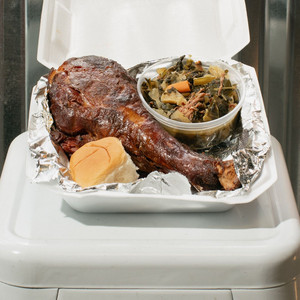
We have a picture of it as part of our list.
It looks like something I would have eaten at medieval times when I was a kid.
It is...
Casey Turkey Leg Man did begin its life as a truck serving turkey legs and but opened in a brick and mortar space in Kansas City in the Kandaro neighborhood, which is like this historic part of Kansas City that used to be on the Underground Railroad.
Railroad.
Kansas City, Kansas.
Kansas City, Kansas.
KCK, as I believe the locals say.
At least I've heard some locals say.
In any event, it is now technically a brick-and-mortar restaurant, right?
Not a lot of places to eat still.
It does still, I think, function mainly as a takeout place.
But it was a really interesting example of how hospitality and atmosphere can be established in ways you don't quite expect.
I mean, I went there with my friend, my friend Michael Palmer, who sometimes meets me in cities, a buddy of mine, to eat around with me.
I know Priya does that too.
I ran into Priya with her friends on the road.
And we went there and, you know, we ate the food on the hood of our car, right?
But I left there, like, feeling this really intense sense of hospitality.
First, when we were there, the greeting we got from the guys you know behind the window they were.
You know they were.
You know it was like you guys aren't from around here, are you?
Kind of, right?
And it was like, turns out we're not, you know?
But, and, you know, we had that sort of interaction.
And then there was once we started eating and these turkey legs.
Just sort of I'm like wow, this is like you spend time thinking about a really good turkey leg.
This is like, this is a good meal.
This is delicious, right?
And turkey is a part of barbecue that I think is a little bit underappreciated to, particularly in Texas.
So I was bringing all that with me.
And at one point while we were eating, I was like, you know, I need to use the bathroom.
And you're in the parking lot and you're next door to the laundromat.
And so I'm like, I'm going to sneak into the laundromat.
I think I'm going to the laundromat.
I don't want anyone to see because I'm not really doing any business with the laundromat.
And the people in the laundromat were like, hey!
Yeah!
They were like super nice, you know, and they didn't care that I was peeing and not paying.
And then when I got back out to the car, I'm like, Michael, you got to go to the laundromat.
Yeah.
So it was just this entire experience that was like, not just with the place but with the neighborhood.
Right.
Totally.
Yeah.
Yeah.
And and I just loved it, you know, and we had other good food in Kansas City.
And it was but that was the one that just in my memory was that I kept thinking about.
And so, yeah, it's it is now a real restaurant, but it's still like not table service.
Right.
In fact, I don't recall tables.
Yeah.
I'd love to hear one thing that each of you maybe want to see a little bit less of over the next year in restaurants.
I really wish that restaurants would let us call them.
What do you mean?
It is impossible to call a restaurant.
On the phone.
Like, pick up, like, the phone.
He's saying.
They just, nobody picks up?
Well, often they're not even, don't even have a phone number.
Yeah.
You know, and, like, I get that that.
What do you want to talk to them about?
I mean, you know, we went to a restaurant last night actually, Priya and I, and we were going to be going with a friend who was in a wheelchair.
Mm-hmm.
And then it was a reservation for three.
So we needed to communicate that.
Yeah.
And...
You know, when you only can do it on the Resi app or whatever it is, I don't know if they saw it.
Yeah, yeah.
You know, and then like also.
I had a question about like.
Okay, so we had a reservation for three.
Is it okay if we add a fourth person?
You know, because often that's a four-top.
But maybe it's different when it's a wheelchair.
You know, it's just, like, stuff you can't really ask.
And when I'm traveling, too, I don't know.
I think that it's something that restaurants –
It mystifies me because I feel like it's abandoning this competitive advantage that restaurants have, you know, is that it's one of the few businesses left that That we can interact with someone with.
That we can call and not, like, dial zero to get the menu.
You know?
And then when you get... And I feel like that service can start on the phone.
And that when you're not, When you're abandoning that particular point of contact, you are creating this barrier between you and your customer, that that makes it feel like the rest of the alienating way in which we consume.
Now, that is not representative of what you get when you go to the place.
And I think that you can start the experience of hospitality on the phone.
Okay.
So I'd like to see less no phone numbers.
Invest in landlines, restaurants.
Yes.
Priya.
I feel like I see this now every single place that I go.
But it's like the Epcot restaurant, where it's like not serving the food but it's serving like the Epcotified simulacra of the food.
You find this with French restaurants, sort of like the Epcot French Bistro that you know has the candles and the you know the bistro seats and serves the same menu of steak frites and gnocchi Parisienne and you know natural wine.
Um, And it's sort of like they're following from a playbook.
I feel like the same thing happens with Italian restaurants too.
I see actually the same thing happen also with Indian restaurants like Epcot.
Indian restaurants that sort of like are sort of fancy and a little like vaguely colonialist.
Like sort of it's giving like British Raj version of India.
Like I'm seeing a lot of that style of restaurant.
Yeah.
And I don't know, I'm just sort of tired of it.
Just like, give me the thing.
Don't give me like the simulacra of the thing.
I just feel like there is such a monoculture with restaurants.
And I think a lot of it is because of social media.
So you'll start to see like the same dishes, the same types of restaurants, restaurants that are sort of derivative of each other.
And...
I understand why restaurants do it, because they're like it worked for here, so we should just do it.
But I wish that there was less of it, sort of more originality, less derivative-ness.
I love that phrase, the codification of restaurants.
Thank you for such a robust conversation about great restaurants, best restaurants, restaurants you're excited about.
I'm excited about the game that we're going to play.
At the end of every episode of the Daily Sunday Special, we play a game.
Are we in competition?
It's a game.
What are you saying?
I'm saying you are playing each other and one of you will win.
But it's fine.
It's okay for someone to win and someone not to win.
You both will walk away feeling okay.
We'll do that after the break.
Okay, Brett, Priya, I promise we're going to play a game.
It is time to play that game.
That means, Brett, that the two of you are competing against each other.
Are you okay with that?
Do I have a choice?
No, you do not have a choice.
So, yeah, you don't care.
You don't have a choice.
Okay, we are calling this game Dish or Debt.
Okay?
I'm going to give you the name of a well-known restaurant.
Then I'm going to describe two menu items from that restaurant.
One is real.
The other is not.
If you can tell me which is the real one, you get a point.
I feel like, Brett, you're going to kick me out of this game.
We're not going to include any of the 50 best restaurants from this year's list, because that would have been too easy, perhaps.
I ask one thing.
Let me finish the question first before you buzz in.
Okay.
Let us begin.
Alinea, the Chicago restaurant that some people might remember from the Netflix series Chef's Table.
It's renowned for molecular gastronomy.
Has Alinea served a dish called Nostalgia, which is a candy bar, a balloon...
There's helium involved in grape.
Or antiquity, which is artichoke, potato, parchment, olive, and cream.
Brent, which one is real?
The first one is real.
Nostalgia?
The one with the balloon, nostalgia.
Nostalgia is real.
Correct.
This dish is an edible helium-filled balloon.
You can suck the helium out of it, and then you eat the entire balloon.
It's like... It's weird.
It's like what happens... I think we've both eaten that dish.
After a concert with food.
Okay, next.
Spago.
Wolfgang Puck's Beverly Hills restaurant dedicated to fusion cuisine.
Which one of these two dishes is real?
Wasabi macaroni and cheese with miso and nori dressing, or Applewood smoked salmon pizza with dill creme fraiche, chives and salmon roe.
Priya.
The smoked salmon pizza.
It's one of our most famous dishes.
Smoked salmon pizza.
That is correct.
It has been on the menu at Spago since it opened in 1982.
I believe the score is 1-1.
All right.
Next restaurant.
McKean's, the classic old school steakhouse right here in New York City, not too far from where we're sitting now.
Which one of these two dishes is real?
The legendary mutton chop or the famous venison loin?
Brett.
Mutton chop.
You are correct.
Mutton chop.
It is quite large.
Yes.
It's enormous, I would say.
It costs $73, I believe.
Does it really?
Yeah, it's huge.
I've had it.
I've never had mutton chop.
And it's really expensive.
Yeah.
It's the place to get mutton chop if you're going to get mutton chop.
All right, let's go after this.
Next restaurant, Uchiko.
This is a sushi restaurant in Austin, Texas.
Which one of these two dishes is real?
Hot Rock.
Wagyu beef, Japanese river rock, and ponzu, or green stream, trout, shiso, and yuzu.
Priya.
Hot Rock.
The Hot Rock, which is...
A great movie starring the recently deceased Robert Redford.
Also, a wonderful dish at Uchiko.
It's thinly sliced beef that you can cook yourself at the table.
You place the meat on a very hot stone.
You guys are doing great.
I just want you to know.
Priya buzzed way too early that time, I just have to say.
Okay.
We were told to wait until the question was over.
All right.
I knew the hot rock thing.
Just saying.
All right.
I'm glad you guys are self-regulating.
Next restaurant.
She's cheating.
Okay.
Those are big accusations.
That is a big accusation.
Matt's Bar, a locally beloved burger restaurant in Minneapolis, Minnesota.
Which of these two dishes is real?
Wait until I say both dishes.
Number one, Saucy Sally.
Number two, Juicy Lucy.
Brett.
Juicy Lucy.
The Juicy Lucy is the real dish.
It is a burger made of two beef patties.
They are sealed together and filled with very hot cheese.
Sounds amazing.
It's awesome.
It's really good.
All right.
Next.
Fleur.
A fine dining restaurant at the Mandalay Bay Resort and Casino in Las Vegas.
Which of these two dishes is real?
The Fleur Foie Gras Filet Mignon or the Fleur Burger 5000?
I have no, like, have you been to this restaurant?
I'm going to say the second one.
You're saying the Fleur Burger 5000.
Oh, wait a minute.
Excuse me.
I think it's the first one.
No, the first one is real.
The first one is real.
The Fleur Foie Gras Filet Mignon?
Yeah.
You're both incorrect.
I'm sorry.
Okay.
It's the Fleur Burger 5000.
It's made with Wagyu beef.
It's topped with foie gras, shaved black truffles.
It costs $5,000.
Wow.
I feel like you guys really have a lot of problems with this quiz, but we're going to keep going.
Union Oyster House.
It's rigged.
Union Oyster House, one of Boston's oldest restaurants.
Which of these two is the real dish?
The broiled fresh Boston scrod or the whoopie pie?
I don't know.
My guess is going to be the scrod.
Can you buzz?
Brent.
I'm going to guess the scrod.
The scrod.
That is correct.
That feels very Boston.
It is actually not a kind of fish, but it's the way that you prepare it.
You're preparing a cod or a haddock.
It's a New England term for a fish that's been split and deboned.
I feel like scrot is an onomatopoeia.
It's kind of what it is.
Yeah, you're scrotting and you scrot something.
Okay, we're almost done here.
Matt's El Rancho, a classic Tex-Mex restaurant in Austin that's been around since the 1950s.
Which of these two is real?
Bob Armstrong dip or the Davy Crockett dip?
Priya.
I think it's the Bob Armstrong dip.
You are correct.
Yeah.
It's a dip that is named for a former Texas land commissioner, who is apparently bored with what they had here.
It's queso with a scoop of beef taco meat and then a scoop of guacamole added.
There is like no food association with Davy Crockett, but we do love Davy Crockett in Texas.
He's the king of the wild frontiers.
I was taught a different song about Davy.
Wait, there's another Davy Crockett song?
It's like with different verses.
It's like a kid-friendly version.
I had to sing it in our second grade play.
Come on.
I don't know.
You got to do it now.
Let's keep going.
Let's keep going.
Let's keep going.
Last one.
Wendy's, the fast food giant that, this is a hint, loves to do collabs.
Wendy's was all I ate for like three years in my teenage years.
Which of these is real?
The rest in 10 piece chicken nuggets and dips of dread or the Raven's blood frosty?
Brett.
I'm going to guess here.
Okay.
Raven's Blood Frosty.
Sorry, it's a trick question.
They're both on the menu.
They are both collabs with the Netflix series Wednesday, which just finished its second season.
The dips of dread are mystery sauces with the names.
This Will Sting Great Mistake, Nowhere to Woe.
And You Can't Hide.
Hide spelled like Jekyll and Hyde.
Who won?
Wonderful producer.
Brett.
Brett won.
Do you feel better?
I feel a little better about it.
Brett, I have a prize for you.
You can take this back to New Orleans.
We've awarded.
Oh, my God.
This will be the fourth one that we are awarding.
It is called the Gilby.
It has my face on it.
Incredible.
Gilbert.
I'm at a loss for words.
I'm holding it above my head with both hands like it's the Stanley Cup.
Great job, Brett.
Great job, Priya.
Thank you, both of you, for being on the Daily Sunday Special.
This was just a pure delight.
Thank you so much.
Thanks so much for having us.
It was fun.
I'm willing to sing us out with a Davy Crockett song.
Do it.
Do it.
They did not win at the Alamo, but with Santa and Texas did show.
Sam Houston led the battle, you know.
Texas was freed at San Jacinto.
Houston, Sam Houston remembered the Alamo.
Texas was free.
That's the secret last verse of the David Crockett song.
Wow, never heard it.
Fabulous.
That was fantastic.
Bring a banjo next time.
Well, that's our show, everyone.
This episode was produced by Tina Antolini with help from Luke Vander Ploeg, Kate Lepresti and Alex Barron.
We had production assistance from Dalia Haddad.
It was edited by Wendy Doerr and engineered by Sophia Landman.
Original music by Dan Powell, Elisheba Etup, and Diane Wong.
Special thanks to Paula Schumann.
Next week, I'll be talking about fashion with my colleagues from the Styles Desk.
I plan to ask them what else I should wear to work other than a white button-down shirt.
It's going to be fun.
See you here.
Thanks for listening.