Hello, lovely, I'm Maria.
And my name is Rory.
And in this episode, we're going to talk about idioms.
Rory, have you ever met people who use idioms in every sentence?
Yeah, it's weird.
What's the weather like today?
It's raining cats and dogs.
Did you enjoy the concert last night?
Nah, it wasn't my cup of tea.
How often do you drink whiskey?
Not very often.
I'd say once in a blue moon.
How did you manage to finish all these essays?
I had to burn the midnight oil.
Why do you get up at 5am in the morning?
Because the early bird catches the worm.
It sounds really strange, right?
It does.
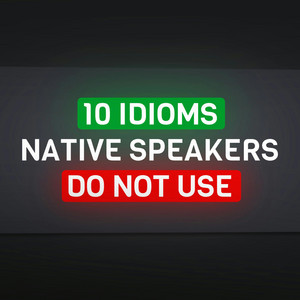
So for this episode, we picked 10 idioms that everyone seems to be using poorly or incorrectly.
We're gonna show you how to use them naturally.
Okay?
Ready?
Yes!
And to do that we have a very special guest.
Jessica is the Director of Curriculum Development at All Ears English.
And she's also one of the co-hosts for the IELTS Energy podcast as well.
And she's an ex-examiner of 14 years.
Hey, hello, Jessica.
Hi.
Hi, everyone.
So you have All Ears podcast and IELTS Energy, right?
Tell us about your shows.
Yeah.
So the All Ears English podcast.
I'm on there sometimes.
And it's Lindsay and Michelle and Aubrey.
And they talk about fluency.
They dig deep into grammar and vocabulary and even culture.
We actually have another podcast now, the Business English podcast from All Ears English, which is also amazing.
And the one that...
I'm on that I think your listeners will dig the most is the IELTS Energy Podcast.
So me and Aubrey have two new episodes every single week.
We talk about all the skills of IELTS.
You know how to master everything listening reading writing, speaking and lots of fun vocabulary episodes.
Thank you.
So, Jessica, you heard our introduction, right?
How was it for you?
Was it natural?
Were you okay with that?
I mean no, a lot of those idioms are cliche at this point and native speakers don't use them a lot.
If this is an idiom like raining cats and dogs, you know that is the great example, because that is one idiom I tell my students like never to use.
Really?
Because like nobody says that.
But if it's an idiom that you learned in your first year of English or you've seen it on three or more idiom lists online, then like, don't say it.
So, it's raining cats and dogs is an old idiom.
Nobody uses it, right?
Rory, would you use it?
Well, I would.
But not to convey the meaning about the weather.
Which is a use for English, but it's not something general.
That's a very specific use.
It's like the irony, I think.
It's not the real meaning that you want to convey to people.
I mean, that's when we use any cliche, right?
Because we're using it in a sarcastic way.
So we let the other person know, like, I'm making a joke.
This is cheesy.
And then everybody laughs.
What would you say?
How can we make it more natural?
So if it's raining heavily, just like...
Like, what can you say?
I say like it's raining buckets or it's pouring outside.
Right.
So pouring isn't exactly an idiom.
I guess it's used idiomatically in that sense.
Right.
Because the water is pouring. pouring from the sky or gushing from the sky, right?
But I would say, yeah, it's like raining buckets.
I say that a lot.
So the neutral option is like it's pouring down.
It's British and American, right?
Yeah.
I wouldn't say bucketing.
We don't say that here.
Our next idiom is it's not my cup of tea.
For example, I did yoga yesterday and it wasn't my cup of tea.
Jessica, would you say that?
Again, like Rory noted earlier, I would say it to be funny.
And guys, like when you're doing that, I know this is hard to convey as a non-native, like sarcasm.
How do I do that?
That's a really difficult language skill in another language.
And it's all about the intonation.
You know what I mean?
It has to be like... high and extreme.
Not my cup of tea.
Like, it's really just like high descending intonation.
And then I know that, or they know that I'm joking.
I would just say like, that's not really my thing.
Yeah, that's not my thing.
You see, dear listener?
Oh, I did yoga yesterday.
That wasn't my thing.
Isn't that a British English, like, idiom instead of, like, would you like some tea?
Like, do you want a cuppa?
I've seen it in movies.
Rory, is that a thing?
Is it an idiom?
Or is it just like one of these weird expressions that has a name that I've forgotten right now?
But it is a British thing, yes.
For tea specifically, you don't ask someone if they want a cup of bourbon.
That'd be a lot of bourbon.
Why not?
Would you like a cup?
Oh, God.
Maybe I would.
And then go blind afterwards.
If we talk about it's not my cup of tea, then I would.
It's like Jessica said it's not my thing.
It's not really my thing, or it wasn't really my thing, although you could maybe take the edge off it's not my cup of tea by saying it's not really my cup of tea, like adding in the.
Really there might take like break it up a little bit, but it's not the first thing I would reach for.
And here's the thing listeners, sometimes I think students hear an episode like this and they think well, why are you telling me what people don't use?
You know what I mean?
Movies from all the years, about all the years, TV shows, music, books.
You're going to see and hear these idioms all over the place.
They are cliche for a reason.
You know what I mean?
Because they're used all the time.
They have been.
So it is useful totally to know what they mean and recognize them.
But it's better to say these other alternatives that we're giving you.
Our next idiom is it's a piece of cake.
Something that is very easy, for example, making pancakes.
Pancakes, you know, pancakes.
Making pancakes is a piece of cake.
Rory, what would you say?
Do you ever use it?
It's not in the full form, no.
But I've heard people say just like piece of cake in media.
But that's not the whole thing.
Not it's a piece of cake, just piece of cake to describe something easy.
But it's not in huge numbers in the media that I've seen or talking to real people.
So we don't say the full thing.
It's a piece of cake.
No.
Piece of cake.
And we say, like, piece of cake.
No, no, no.
Piece of cake.
Piece of cake.
Piece of cake.
Yeah.
Do you ever say it?
Sometimes.
I mean, yeah, I...
I have been known to say that.
I think normally, though, I just say easy peasy.
Or if you want to like make it longer, like easy peasy, lemon squeezy, whatever you want to like rhyme with that.
But I like that note that sometimes we don't use the whole idiom, though.
There's.
I did a YouTube video a couple years ago on IELTS Energy TV about the half idioms that natives use, like when in Rome.
Like we never say the whole thing, when in Rome, do as the Romans do.
Like that takes forever.
So instead we just say, when in Rome.
And so there's these like half idioms that you can convey to sound more natural.
But yeah, like I do comment like that piece of cake.
Yeah, I've said that sometimes, but my favorite is easy peasy.
And Rory, you don't use, like, piece of cake, but you heard it.
I've heard it, yes.
It's not something that I would say, though.
I usually just say it's easy, and that's about it.
But then I'm not very imaginative sometimes.
It sounds like pizza cake.
But no, that's not what we're saying.
Pizza cake.
That's important.
Our next idiom is once in a blue moon, which means not very often.
For example, Rory lives in Scotland, I'm in Moscow, I see him once in a blue moon.
Rory, do you ever say this?
This I have, again, heard before, but it's not something that I've said more than once or twice.
It's not something you would use regularly.
It's usually in response to a question like, how often do you do something?
You say like, oh, once in a blue moon and then move on to the next thing.
But that's not with any regularity.
I don't think there's.
I don't think it's something that people use to describe their situation very often.
What about you, Jessica?
I actually love the phrase that you just used.
Instead of once in a blue moon being like not with any regularity, like that, like that's.
Such a smart sounding phrase.
Oh, you like that one.
Then you're going to love the other one, which is not with any degree of any regularity, or not with any great degree of regularity.
That's the other one as well.
That's exhausting.
Why would you say that many words if you don't have to?
Come to Britain.
We have excessive numbers of words for everything.
Okay, the next one is interesting.
Burn the midnight oil.
Rory, could you tell us what it means?
Burn the midnight oil.
It is my favorite one because I'm trying to lead a revival for people to start using it.
However, to burn the midnight oil is to work through the night on something.
Jessica, is it used today or is it a cliche?
Should we learn it?
Should we use it?
Yeah, I mean, use it if you want to.
I, you know, honestly, like it.
Any of these idioms guys, if they like, click with you.
If they resonate with you, if they are fun for you to say, then say it.
Like it's not going to ruin communication.
It's not going to like... you know, stop a connection from happening.
The thing, like idioms and slang, guys, if they're fun for you to say, then say it.
Like, have fun with words that you're using.
Use English that you enjoy.
Do I say this?
Sometimes.
Yeah.
I mean, honestly...
There's not a lot of context for me to say this at this point.
You know, I'm 43.
I don't burn the midnight oil anymore.
I mean, maybe when I was like a university or maybe in my 20s or something.
But, you know, now I go to sleep at a proper time and I sleep.
Well, and I wake up early, so I don't have the opportunity to use it that much.
But yeah, like I do hear people say it sometimes.
If you talk about your university years, any other synonym that you would use?
Like to say that you stayed up late?
No, I can't think of any like idiomatic or slangy synonym.
It would just be in like the intonation and describing how little I slept.
I could be like, oh, like I did not sleep at all.
Maybe just throwing in a double negative in there to emphasize, like, didn't sleep at all.
I worked through the night.
There's a good phrasal verb we can put in there, as I said, worked through the night.
Our phrasal verbs, of course, dear listener, you see, phrasal verbs are better than idioms.
Work through the night.
The click is in the description.
Okay, what about, like, I pulled an all-nighter?
Oh, yeah!
Yeah, that one more common, I would say.
That's a good one.
I don't know why.
It just sounds, there's something American about it.
I don't know, like, pull something is more of an American thing.
Do Americans have the phrase, like, pull a fast one?
I'm wondering if that is an overlap.
Yeah, to trick someone.
Yeah.
Yeah.
I think this might be an American one.
It's still cool, though.
But it's not, again, one you want to overuse.
Our next idiom is one of my favorite ones, Bob's your uncle.
For example, just open Google Podcasts type IELTS Speaking for Success and Bob's, your uncle, you'll find our show.
So, Jessica, do you ever say this, Bob's your uncle?
No.
You know what I say instead?
I say, ta-da!
Like, that's what I would say, literally, like, instead of that.
So, you want to find IELTS Energy?
Just type in IELTS Energy and ta-da!
There's our podcast, because really all you're doing is like presenting tada.
Okay well, bob's your uncle rory.
Do you think it's british english?
I was about to say i think this is a british thing, but why it's never been used by americans, i don't know.
Um, like you say, maybe tada is the alternative.
Well, have used it.
Do you have many bobs in your country?
We have tons of bobs.
Everybody has an uncle bob.
Again, like watching uh, like watching a movie or tv show that was made a long time ago or about a time you know in the past.
That's when I would have come across it.
Come across phrasal verb.
I'm going to keep highlighting your phrasal verb course because that's so cool.
Every time I say a phrasal verb, I would be like, ta-da!
Hey, I have the first success phrasal verb course.
So, yeah, like I've come across it, but never used it myself.
Okay, Rory, could you give us another example to make sure that our listener does understand it?
Yes, go to successwithieltscom.
Forward, slash podcourses and download our phrasal verbs course today.
I'm Bob's your uncle, your phrasal verbs master.
The next idiom is the early bird catches the worm.
I say the early bird gets the worm.
Catches?
Rory, do you say catches?
I'm more likely to say gets.
But I'd wonder if that's because of the influence of American culture over the years.
It's expanded.
I say that sometimes, and I know it is cliche and overused, but...
That is something I still hear people say, honestly.
And again, like some of this does come down to context and your lifestyle, right?
Like I am not likely to use or hear people say burn the midnight oil.
But I am likely to hear people use the early bird catches the worm or gets the worm.
In what context?
Like, oh, Jessica, like, do you get up early?
Yeah, because I have to get done with a lot of work before I get my son at three o'clock and the early bird catches the worm.
But I was thinking about what the alternatives might be.
And I would usually say to get in early.
And some people talk about to physically go into a place early.
I hear it used to mean getting work done early.
Get your work in early.
For example, give us a sentence.
Oh, well, somebody said like, oh, why are you up at this time?
And I was like, well, I think it's important to get in early.
That was a phrasal verb.
You know, the...
An idiom that I think is more general, that could be used in this context and a variety of contexts talking about early morning, to say the crack of dawn.
Or even if you didn't mean to get up early, but you did, right?
You'd be like, oh, I was up at the crack of dawn this morning.
I don't know why.
I just couldn't go back to sleep.
Or, oh my gosh, I'm so tired.
I had to wake up at the crack of dawn because I had so much work to do.
I'm going to sleep in tomorrow.
Yeah, I was up at the crack of dawn.
I was thinking as well about what Jessica was saying about using half of the idiom here.
And you can't use it.
But you can make a slight modification just by saying well, you know what they say about, and then half of the idiom.
So in this case, it would be, you know what they say about the early bird and then the other half.
You assume the other person knows what you're saying.
That's a really good point, actually.
You could also.
I think we also use this to be like like cute with friends.
You know, if they are like super productive and get up early and do stuff you're like OK, early bird.
And again, it's just taking it from that idiom, but just using those two words.
Yeah.
But it's not the whole thing.
It's the part.
Like, you know what they say about that midnight oil?
I don't know why I'm doing that with my hands.
I say if you learn an idiom, learn the full thing and use the full thing as it is, okay?
Don't just...
Only super natives feel what they might do and how they can change what part to use, what part not to use.
Oh, Maria, no.
Experiment.
Just not in an IELTS exam or anything like that.
Okay, cool as a cucumber or as cool as a cucumber?
No.
No, also.
Yeah, I mean this, I've you know, I've heard it, I've seen it like it's used sometimes, but it does sound super cheesy to me, just very cliche, you know.
How would I describe someone that's cool as a cucumber?
Well, I would just say they're super cool.
You know what I mean?
Just throwing in super in there for the adjective.
But cool as a cucumber really means like calm, unflappable in the face of challenges.
Right.
Somebody that is.
Yeah.
Even keel, I guess, is a phrase we could throw in as a synonym.
Yeah, or you're doing this right now.
So it reminds me of just calling someone zen.
You could say that as an adjective, which is kind of slangy.
Like, no, he's super zen.
It doesn't matter what dumpster fire is happening around him.
He's going to stay super cool.
Although, on the subject of expressions that we'd use alternatively, I went on a bit of an adventure to find some alternatives to this, and I discovered something.
Because the words I would use are unphased and nonplussed, which just means that it doesn't affect you.
But apparently in America nonplussed means something completely different to what it means in the UK.
So if I said that somebody was nonplussed, Jessica, what would you say?
How do they feel?
If they're nonplussed, it means they are unimpressed.
Yeah.
Over in the UK, apparently, it means that people are confused.
So it's funny how there's this one word that's got two totally different meanings.
That's so odd.
But I've only heard the American usage.
I haven't heard that used to mean anything else besides how we use it.
Yeah, I would say.
Let's see if this will be in response to someone asking how you feel or how you liked something.
Right.
So.
If somebody was like, what do you think about a vet last night?
Did you know, was it useful?
Did you make a lot of new connections?
I could be like, I was kind of nonplussed actually.
It was pretty boring and useless to be as busy as a bee.
I love that.
Jessica, are you as busy as a bee these days?
I'm always busy as a bee, man.
That's fun to say.
You know, because it sounds like a bee.
Busy as a bee.
Do I say that, though?
Yeah.
Again, I know it's a cliche, but it is something I'll throw in there.
Let's see.
What would I say instead?
Maybe to, let's see, exaggerate.
We exaggerate a lot in English to make a point, to emphasize a point.
So I could be like, oh, I don't get a moment's rest these days.
Or...
I don't have a moment free these days.
Like, no, that's not exactly true.
It's an exaggeration, but it does convey like I'm super busy.
Roya, would you say this?
I wasn't thinking about that.
Although I like Jessica's alternatives, because the only one I could think of was just being a busy bee, which is a slight paraphrase of the original.
I'm a busy bee.
I've heard that one before.
I'm a busy bee.
That's adorable.
But then I hear people use expressions about insects all the time, like being a social butterfly and things like that.
So it all kind of fits together for me.
You know what's crazy?
Social butterflies need to visit wallflowers.
So if I am a social butterfly, I kind of, what do I do?
I visit different places, socialize with people.
Yeah, social butterfly is just your classic extrovert.
They're good at going and talking to lots of people.
People want to talk to them, right?
They're not like annoying people.
A social butterfly usually like has lots of friends and is outgoing, whereas a wallflower's opposite of that.
A wallflower goes to an event with a group of people and does not interact with anybody, just like stands aside against a wall or something and is very shy.
Actually, people often say, like look at you being a social butterfly.
I want to say that it's British, but not for any particular reason other than it's cool.
And I want to lay claim to it culturally.
What do you think, Jessica?
It's all of ours.
It's a universal idiom.
No, it's ours.
I'm afraid.
Oh, okay.
Awesome.
It's yours.
I've claimed it.
I've claimed it now.
So let's wrap it up with an apple a day keeps the doctor away.
This like exhausted you already.
I think they know our message.
Come on, please tell me that nobody uses this.
Not in the full form.
Yeah, exactly.
It's a half idiom, right?
Yeah, you would still hear people say like, well, an apple a day.
Honestly, like this is what...
Apple's such a part of our linguistic slang.
Like.
You know what's that movie with Ben Affleck Good Will Hunting when he's like how about them apples?
That's become like a cliche.
People say that.
We love to talk about apples.
I do hear people use this as talking like just whatever's healthy.
So, well, an apple a day, like if you say, well, I'm really I'm trying to eat better.
I'm trying to have like vegetables with every dinner and not have meat.
And you're like, well, you know, an apple a day.
It's just sort of like a comment on someone else talking about healthy habits.
Rory, could you give us an example with half the idiom?
I'm not very healthy, so I don't know if I'm very good at that.
Okay, okay.
How about, like, let's talk about your university days.
Let's not.
Did you keep faith?
Well then, in that case, it would be well.
Despite what they say about an apple a day, I didn't go to the gym that much and spent a lot of my time eating pizza.
So not very healthy.
You know, now that we're trying to come up with natural examples, I'm realizing we really do only use this to joke.
I mean, we really don't use this to mean what it means that often.
I think it's often like sarcastic.
Oh, so here's the story.
Okay, I got a good story here.
So my mom is a dietician.
So she knows all the health food science stuff, right?
And she told my son that ice cream is very healthy because it has protein and calcium.
And so my son took that and ran with it.
And he's like, well, grandma said ice cream's healthy.
I should have it every day.
An apple a day, mom.
And it's just like it's you know, it's a joke type thing.
So I think that's really the only time I would use it if it's like to me the opposite of what it actually means.
You know what I mean?
Wow!
Dear listener, you see how confusing this is?
So, if you're not 200% sure, idioms for phrasal verbs.
Jessica, you do have a course, right?
Yes, guys!
So, First, remember for free our podcast, IELTS Energy.
Follow it wherever you listen to podcasts.
Check out the IELTS Energy TV channel on YouTube.
And we do have an IELTS course guys, and it now comes with lifetime access and everyone gets personal feedback on speaking and writing on their final practice test.
So do check that out, guys. allearsenglish.com slash K-E-Y-S.
Thank you so much for being with us.
Thank you very much.
My pleasure.
My pleasure.
Have me on again, okay?
Yes, please.
Bye.
Hey, there you go.
Bye.
Bye, guys.