
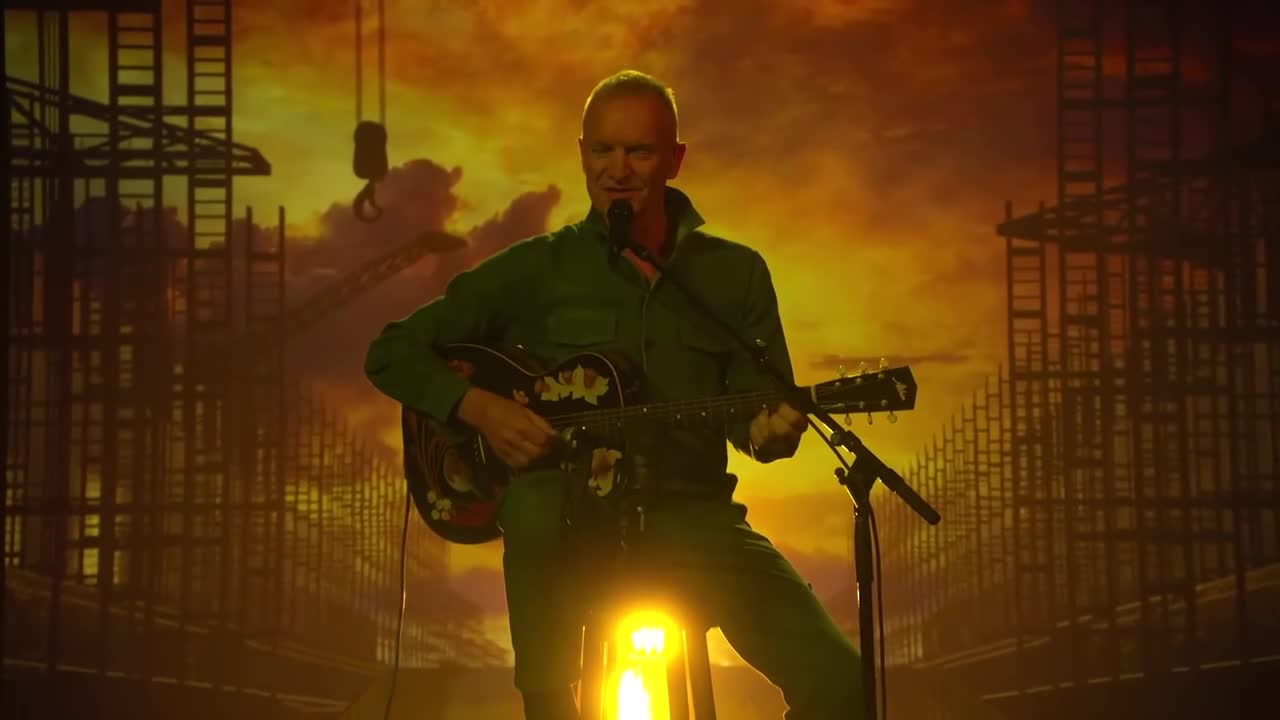
[The Resonance of Resilience: Sting and Shaggy’s Musical Journey into 'The Last Ship']-[Sting & Shaggy from The Last Ship: All This Time⧸The Last Ship Medley | The Tonight Show]
📋 Summary
The Artistic Evolution of 'The Last Ship'
In a compelling appearance, legendary musicians Sting and Shaggy brought the haunting, industrial-inspired narrative of The Last Ship to the stage. The performance served as a profound exploration of mortality, heritage, and the relentless flow of time, anchored by Sting’s evocative songwriting and the collaborative energy shared between the two artists.
The River as a Metaphor for Time
Sting’s opening lyrics establish a somber, cinematic atmosphere: "I looked out across the river today, saw a city in the fire." By utilizing imagery such as "sodium light" and "October geese on a cold winter's night," the composition creates a landscape of reflection. The river becomes a central motif, described as flowing "endlessly to the sea." This serves as a metaphor for the inevitability of life's progression, where the narrator desires to "bury the old man" at sea, signifying a transition from the past to an uncertain future.
Spiritual Intersections and the Empty Tomb
One of the most striking aspects of the performance is the infusion of gospel-infused storytelling. The narrative shifts to the Magdalene girl, whose "mind is a whirl" when she discovers an "empty" tomb. The lyrics describe a "solitary figure in a halo of light" who is in an "almighty hurry." This juxtaposition of biblical archetypes with the industrial setting of the shipyard highlights a unique tension. The figure’s refusal to be hindered—telling the woman, "don't hinder me, woman, I've no time to waste"—underscores a sense of urgency, suggesting that the divine is inextricably linked to the human struggle of labor and purpose.
The Industrial Sublime: The Last Ship
As the song reaches its crescendo, the focus shifts from the personal to the monumental. The imagery of "the roar of the chains and the cracking of timbers" captures the visceral "noise at the end of the world." This is the "mountain of steel" making its way to the sea—a powerful manifestation of human endeavor. Sting characterizes this as a "strange kind of beauty" that is "austere."
This "mountain of steel" represents the "sum of their hopes, their despair and their fears." The lyrics suggest that the ship is not merely a vessel, but a repository for the lives of those who built it. As the performance concludes, the message is one of universal inclusion: "in the name of the Father, in the name of the Son, and no matter the weave of this life that you've spun."
Conclusion
Through the performance of The Last Ship, Sting and Shaggy demonstrate that music can bridge the gap between the mundane and the metaphysical. Whether on earth, in heaven, or "under the sun," the narrative of the ship remains a testament to the endurance of the human spirit. The collaboration highlights the artists' ability to weave complex themes of industrial history and spiritual resurrection into a cohesive, standing-ovation-worthy experience.

Deep Learning with ListenLeap


