Welcome to Spotlight.
I'm Gillian Woodward.
And I'm Roger Bassack.
Spotlight uses a special English method of broadcasting.
It is easier for people to understand, no matter where in the world they live.
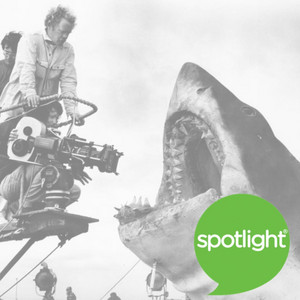
The mechanical shark did not work.
It was built with gears and bars inside its body.
It sank to the bottom of the ocean.
The crew could not do their work without it.
The film was about the shark.
The director needed to finish quickly.
The film studio was waiting.
No one thought they could make this film.
No one knew what to do.
But the young director had an idea.
He was about to change the film industry.
Today's Spotlight looks at the powerful impact of two films directed by Steven Spielberg.
He has made more than 36 films in his career.
But these two films were the most important.
These films influenced other filmmakers.
These films changed decisions made by film studios.
Many now consider Spielberg the greatest director ever.
It started in 1975 with the film Jaws.
Spielberg had made a few other small films before Jaws, but these other films did not make much money.
If Jaws did not sell many tickets, Spielberg's career might be over.
Film studios would not trust him to make any more films.
He needed success.
Jaws is about a great white shark.
The shark attacks swimmers off the coast of Massachusetts in the United States.
Spielberg had a mechanical shark made for the film. but they had only tested it in fresh water.
The water off the coast of Massachusetts is salty.
When they put the shark in this salty water, it sank.
The salt damaged the gears inside the shark.
The shark was not ready to be used in the film.
Spielberg needed to save his film.
He decided to use the problem with the shark to his advantage.
In Jaws, he waited to reveal the shark.
He only hinted at its presence.
This heightened the feeling of terror.
He filmed underwater shots from the point of view of the shark as it hunted.
He showed only the shark's tail poking out of the water in a few scenes.
The longer the audience did not see a full view of the shark, the more their fear grew.
It also gave Spielberg and his crew time to fix the shark.
They could use the shark in the film's later scenes.
Jaws was a huge success.
People from all over the world saw the film.
Newspaper reviewers said it was wonderful.
The movie made $470 million in ticket sales.
It made more money than any other film before.
It created the summer blockbuster.
This is a term given to successful movies in the summer.
Before Jaws, not many people went to theaters in the summer.
But Jaws proved summer films could be very popular.
Many studios started releasing films at the beginning of each summer.
Jaws was so successful that the studio made three sequels.
A sequel is a story that continues from a previous one.
All of the Jaws films made a total of $800 million.
Jaws influenced many other excellent films, but it also made a different kind of impact.
Spielberg used many clever and creative techniques as a director, but most people focused on how much money Jaws made.
Spielberg's success with the Jaws movies helped his friend, director George Lucas, make the film Star Wars.
The first Star Wars movie was a huge success.
The Star Wars films became another global franchise.
A franchise is a collection of films with the same group of characters and story.
A franchise also includes the games, television shows, toys and clothing connected to these characters and their story.
The Star Wars franchise made over $10 billion.
No one had seen this kind of financial success in films before Spielberg.
It changed how film studios viewed possible new projects.
This made many directors, writers, and actors upset with Spielberg.
They felt limited in what they could create.
Film studios rejected many projects because studios did not think these other film projects could make much money.
The quality of scripts and stories suffered.
Writer Daniel Dockery said, In fact, some say Jaws' huge success ruined Hollywood.
It pushed studios away from artistic projects.
Now, few things matter more than opening weekend numbers, advertising and summer blockbuster season.
Spielberg continued to make very successful movies.
Several of his films such as E.T.
The Extraterrestrial Indiana Jones and the Raiders of the Lost Ark and Jurassic Park were incredibly popular.
Spielberg made many sequels over the next 40 years.
These franchises sold toys, video games and clothing related to these films.
Other film studios wanted to make as much money.
They wanted franchises.
A franchise meant that studios could make sequels.
They could sell merchandise.
They could even create amusement park attractions, video games, comic books, and television series.
Studios could also re-release earlier films to celebrate the franchise's newest film.
A franchise makes much more money than just one film.
The Jurassic Park franchise made over $6 billion.
The Indiana Jones franchise made over two billion dollars.
But Spielberg was more than a director who made blockbuster movies that started franchises.
He could do more than make a lot of money.
He was an artist.
Nearly 20 years after he made Jaws, he released a new film.
This film showed the world he was one of the greatest directors ever.
Many people called it his best film.
The American Film Institute named it the eighth greatest film ever made.
The United States National Film Registry chose it for special preservation in 2004.
The United States Library of Congress officially declared it historically and culturally significant.
It is the film Schindler's List Schindler's List was based on a true story.
During World War II, Nazi Germany tried to kill all the Jewish people in Europe.
This was called the Holocaust.
But not all Germans agreed with the Holocaust.
Oskar Schindler was a businessman.
He saved many Jews by hiring them to work for him.
This helped keep them from being sent away to be killed.
The movie was a success commercially.
It made more than $320 million.
But this time Spielberg also received praise from film reviewers.
They loved his storytelling.
They praised his choice to film in black and white with only symbolic use of colour.
This choice fit the film's serious attitude.
Film writer Richard Probst said, It is Spielberg's finest work.
I doubt he will make another as great.
Schindler's List is more than a film.
It is a life experience of great depth and beauty and greatness.
Schindler's List won the Academy Award for Best Picture, the highest honor for a film.
Spielberg also won the Academy Award for Best Director.
Spielberg later said he thought it was his best film.
Schindler's List led to greater understanding of the Holocaust.
It educated audiences about the Nazi plan to kill the Jewish people.
The film industry now honoured Spielberg's work with many awards for this film.
He was considered the best director in the world.
Spielberg directed more films after Schindler's List that reviewers and audiences respected, such as Saving Private Ryan.
He won many more awards.
His films inspired the next generation of directors.
He was no longer the young man who needed a quick idea to fix his mechanical shark.
He was the master director with all the great ideas.
Have you ever seen Jaws or Schindler's List?
Have you seen any of Steven Spielberg's other films?
What is your favorite Spielberg film?
You can leave a comment on our website at www.spotlightenglish.com.
You can also find us on YouTube, Facebook, TikTok, Blue Sky, and X.
You can also get our programs delivered directly to your Android or Apple device through our free official Spotlight English app.
The writer of this program was Peter Anderson.
The producer was Michio Ozaki.
The voices you heard were from the United Kingdom and the United States.
All quotes were adapted for this program and voiced by Spotlight.
This program is called Steven Spielberg.
We hope you can join us again for the next Spotlight program.
Goodbye.