Thank you. Hello, and welcome to the NVIDIA AI Podcast.
I'm your host, Noah Kravitz. Credit scores are a funny thing.
Funny might not be the right word, but I think you know what I mean.
You can't have a credit score unless you have a credit history.
You have to use your credit to keep your score up, but if your score is not good enough, you can't get credit.
Sounds kind of like a vicious cycle, and sometimes it is.
But never fear, AI, machine learning to the rescue.
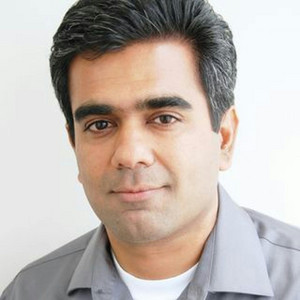
Our guest today is Ajay Gopal. He's with Deserve.
Deserve is a... California-based startup that is using machine learning to extend credit to people who don't have a typical credit history, any credit history at all.
Jay, thank you so much for joining the podcast.
Pleasure to be here, Noah. So I tried to at least tease what it is Deserve does, but I think you could speak to it much better.
Sure, happy to do that. And yeah, we're out of Menlo Park, not too far from here.
Deserve is a financial education and technology company.
And we're focused on extending credit to those who don't have it.
And you can guess what our typical demographic is.
People who are new to credit could be As a student, she decided to go to SJSU, not too far from here, and pay her way through college driving ride shares.
It could be somebody who's in their late 20s or 30s who's been a part of the cash economy. and decided they actually need more fluidity and cash flow.
Or they could be, let's say, a Canadian migrant worker who just got to the country.
So that's our typical market base. And so I tried to gloss over it a little bit, But it's basically the idea that if you want to take out a loan of some sort of line of credit, a credit card, buy a home, buy a car, something like that.
Do you typically need to have a credit score and a good credit score to get that loan? yeah so let me kind of zoom out a little bit and kind of set the stage for this so what We're specifically extending revolving credit cards to people.
The ecosystem we should think about is kind of the FICO and credit score and the bureau system.
That ecosystem... has kind of objective models and metrics on individuals and what they've done historically.
And for somebody who is new to credit, that history doesn't exist.
So invariably, by virtue of a lack of information, you're considered in the bad information bucket and you get offers of credit that are egregious in terms of their interest rates or They ask you for a deposit or something like that.
We try to turn tables on that. We're trying to actually... develop models that are true to the context of the individual and offer them fair market rates, taking into consideration their life context.
So before we dive into a little bit of the nitty-gritty of your model, which is kind of the meat of this discussion, do you work – are you –
Issuing your own credit card? Are you working with credit card companies?
Are you working with the FICOs of the world?
How does that part of it work? So in the industry, we're what's called a program manager.
So we market and issue our cards. And we're partnered with the major networks, in this case, MasterCard and a bank that's doing the intermediary lending.
All right. Now let's get to the fun stuff.
All right. All right. So your example, there's a student and she's paying her way through college, driving a Lyft. working in the cash economy, doing something like that, does not have a credit history.
How do you determine if you should extend and what type of credit you should extend to her?
Yeah, so we've tried to identify the major pockets or markets of people who are near the credit and the students are a very specific and kind of focused group for which we've optimized models.
And you could be a local domestic student or an international student like me.
But, you know, I would say For students, there are very good proxies for your... potential for financial behavior.
It could be what degree programs you're in, what your grades have been for the past few quarters or semesters.
What were your choices in schools? Are you doing something on the side for supplementary income?
And we're able to capture all of that information and fit it into our model that's customized for students.
Okay, and so then how does the model itself work?
The model itself, Our flagship model was trained actually when we didn't have any data.
And this group, by definition, doesn't have any data or historical data.
So we actually took our ideas to where the data was, and this actually happened before I joined the company, but we took our ideas to a large student loan organization.
And we develop models in-house to prove to them that the people they're leaving on the table still in terms of rejected applications for loans or whatever you might have. because they don't have actual credit bureau records, could be analyzed using these machine learning models. and have really good outcomes, which we were able to backtest.
So that was the foundation of our original model.
We actually launched as a very specific special purpose program for international students.
And when was that? Our first product hit market about two and a half years ago.
Okay. So how's it going? How are the models played out?
The models have played out fine, really well, actually.
And our learnings from being able to tune educational parameters to find people who can responsibly be citizens of the the credit economy are you know those learnings have been translated we now have products for all students and we actually have products for all people and i think a natural extension of being a student is being employed.
And we're able to use a lot of employment data as well in order to make models for different subjective cases.
We're talking with Ajay Gopal. He is with Deserve, a company that's turning the credit industry on its head.
It might be stretching it a little, but I don't think so.
And they are using machine learning to extend credit to folks traditionally... who haven't been able to get it because they don't have a credit history.
So it's kind of this chicken and egg problem you hear.
As you were just saying, you – trained your first models, you didn't have data to train them.
And we always talk about in deep learning, machine learning, you need data, you need data to train the models.
And now you're at the point where you said you've opened up the service to all people?
Is that right? Yeah, pretty much. We have different product lines that automatically customize this to different use cases, yes.
So let's change gears a little bit and talk about your approach to machine learning itself.
What, if anything, in the process—and you mentioned that you joined the company after the initial ideas were going—
But what, if anything, either surprised you or you found that you had to take kind of a novel approach to solving some of these problems for... the specific types of modeling you needed to do.
Yeah, I mean, there are obviously things that have emerged from the data that were counterintuitive.
One example I can share is In our flagship product, when we were looking specifically at international students, they're hosted by universities and brought over for different terms and lengths of education.
One would think that you know, if you're here for a shorter stay versus a longer stay, like, PhD that somehow there's a linear correlation between that and the risk you represent.
We actually found that was not the case and that there were very specific Terms could be used as labels, in a sense, rather than continuous variables, if that makes sense.
And specific labels had differentiated risk.
And that was a very interesting finding because most people would have not guessed that. even in-house.
Right. Where were you before Deserve, even backing up further?
How did you get into the field of machine learning?
Well, to be honest, the best way to characterize it is by chance.
I arrived as an international student, let's say about 20 years ago, for graduate school in Chicago.
I was working on biophysics problems and building statistical models for biological problems related to neonatal respiratory distress.
I'm happy to go into that if you care. And from where I went on to UCLA as a postdoc, where I was working on... informatics related to virology, trying to understand how the information content of of viruses kind of makes them virulent and how they succeed in infecting the world and so on.
So a lot of that work was computational.
A lot of my postdoctoral work was graph theory and graph-related computation, which kind of set the computational foundation.
Throughout the process, I was in the backdrop trying to reverse engineer the credit system in my mind.
As a poor graduate student, I would always hack the FICO system to have a better score than my sister and so on.
Now, was this out of intellectual curiosity or were you running into walls with the FICO system?
Well, you know, the honest truth is... If you do the math, you have about $28 of discretionary spending a day as a student.
And that forced you to, you know, economize and think really hard about it.
And I think at UCLA, that kind of led me to also steer some on campus efforts where I was heading the postdoctoral society for about a year.
And we used to bring in financial education. you know because we have a very highly trained group of professionals in science but very often they are new to the economic system.
Yes. And so... That got me aware. I'm a failed academic in quotes in the sense that I applied for faculty positions around the time of the economic downturn.
And I'm a happy victim of that circumstance.
So that led me to... Card.com, which is where I was before Deserve.
It's a LA-based fintech in the prepaid space, prepaid debit cards, typically serving the underserved and uncertain markets for banking.
People who are normally experiencing egregious 10%, overheads in cashing their check at payday lenders and so on.
So that experience actually exposed me to the fact that There are people living paycheck to paycheck, and their critical time was actually towards the end of the month. their earnings come in maybe once a week, once every two weeks, and there's this a little dry period just before the next check where they needed income smoothing.
And that's what got me interested in credit.
And Deserve was a natural fit because it was close to my heart.
It was offering a program for international students.
I've lived it. And it was a natural transition.
That's great. And so in your day-to-day work there now, you know, and speaking kind of more specifically about machine learning, like what gets you geeked up about it?
A few things. The financial industry is probably the richest in data that you can acquire firsthand and also acquire from external parties.
And as a Silicon Valley startup, everything is technologically highly available.
Our modeling doesn't end at good underwriting.
One of the things we're aggressively trying to solve for is once you're a customer of ours, how do we evolve that product and your experience to your evolving life conditions.
And the simplest test of this is asking yourself, What was my first credit card?
Do I still have it? I think most of us don't.
And that's because we probably got them when we were students, if they were high rates and there was somebody who came along who took a chance on us.
We're actually trying to get that out of the system in the sense that if you have something that's constantly evolving with your needs and always offering you the best product in the market, It's your lifelong financial companion.
Right. There's obviously modeling in the underwriting step. taking into account the application points that you're giving us for us to decide What's the line size we're going to give you?
And we actually start most people off at the same point.
And as you give us more and more first-hand behavioral information, How do you utilize your credit?
Is it responsible? Are you paying back on time?
Are you somebody who needs to borrow from us for longer times?
Or are you paying off in cycles and so on?
So a lot of those behavioral variables allow us to rapidly accelerate What are the lines available to you in the context of your trip?
And I think that's what you know we're trying to perfect and a lot of modeling goes into that process yeah If you think about where modeling is going right now, there's these beautiful models of Pandora customizing your music stream for you.
And we have other kind of subjective models in my sense of using subjective models.
Stitch Fix might be optimizing your wardrobe for you and you don't have to own it.
The most recent addition to that is a really nice study that came out of the Weizmann Institute that shows the effect of having an ice cream. is different for you than it is for me in terms of blood glucose levels.
And so based on measuring your blood glucose levels to different foods for 30 days, you know, we can have a healthy regimen for you that's optimized to your personal goals.
And I think as a community of people in the machine learning and AI business, you know, I'm betting that subjective models are the future.
You're not the first person to say that to me in recent days, so it's context.
And I think with the current computing power and the scalability, we can achieve that.
Yeah, I look forward to a day where you have your data on your phone or some other device and you can order your food and by sliding on a filter, just like you do, for Instagram or something and, you know, apply for a loan by sliding on the right filter on your data.
And that's what I hope for the future. Excellent.
Looking sort of ahead from this point in terms of both your work at Deserve and the modeling you're doing, but also the technology and currently the accelerated rate of advancement in the field.
Where do you see things headed or what are you sort of looking at as hot areas that you're interested in?
Oh, I can answer that at many levels. Please.
Specifically from the perspective of the financial industry.
The credit bureau system was established at a time where there was no information.
If I'm not mistaken, this is about 40 or 50 years ago.
And at that time, it gave us a basis of how people should be trusted and whether or not systemically there was risk in extending loans to people and so on.
I think with the computational power we have now, that may not be the most optimal system for us to follow. in the sense that we've just identified at least three types of people who get missed. you're a 40-year-old professor just arriving here for your sabbatical or a migrant worker from Canada, you start at the same point.
And it's that subjective context. that's getting lost in a objective, one size fits all type of model.
And I think within the industry, I'm hoping for things to move towards more and more subjectivity within the constraints of being equitable because, you know, True creativity cannot happen with infinite resources.
The true creativity has to come from those constraints.
Right, right. But when you talk about subjectivity, Is it subjectivity as determined by a neural net, a computer model?
Yes. I mean, the inclusion of your life context as inputs to the model.
Yes, that's what I meant. So that's how we're able to scale this and deliver this at scale.
So for folks, you know, you start out the conversation, you started out, Deserve started out working with students.
And so educational data, performance in class and other aspects other data was a great place for you to start looking to try to model behaviors.
For folks who aren't students and who don't have a credit history, there's employment data.
What other types of data are you using? Well, let's say... you have high school level education or not even that, right?
If you found a way to drive a rideshare service and you had regular income or even occasional income, we're able to at the very least, look at your banking information and generate, in your context, what is your financial capability?
And I think that's our mission at the end of the day, For every person, we find a way to measure your financial capability and give you access to to cashflow and fluidity to the amount that you quote unquote deserve.
Last question for you. This might be a selfish, pragmatic question.
I might be asking for a friend. I don't know.
Let's say you've had a credit card for, I don't know, four or five years, and there's a better offer that comes along.
Are you better off taking out the second credit card and still being wise with your spending or canceling the first one before you take the second one out?
Well, truth is, you never want to cancel your first credit card.
You never want to cancel your first credit card.
The systems that, like the bureau scores that you get, rely on the age of the credit lines you have access to.
We're trying to solve for that differently in the sense that if I'm your first credit card, I always have an informational advantage that the second credit card doesn't.
I know how you behaved. at Deserve, we actually take financial education as our first prerogatives.
You know, we want to bring on people, train them, give them the right behavioral nudges so that They become good citizens of our financial system.
And in that process, we're gaining an information advantage, and we're always going to be offering better products. than anybody. that can offer you with the information that's there in the general bureau system.
So that information advantage is our true power.
And I hope you'll never need a second card.
Excellent. So for folks who want to find out more...
Get educated. Maybe look into one of your offerings.
Where can they go? Deserve.com. That's where we are.
And sometimes you can literally stop by our office and we have iPads there that you can sign up on.
Perfect. Couldn't be easier. Ajay Kobal from Deserve.
Thank you so much for stopping by the podcast.
Great talking to you. Pleasure, Noah. Thank you.
Thank you.