This message comes from NPR sponsor Capella University.
Interested in a quality online education?
Capella is accredited by the Higher Learning Commission.
A different future is closer than you think with Capella University.
Learn more at capella.edu.
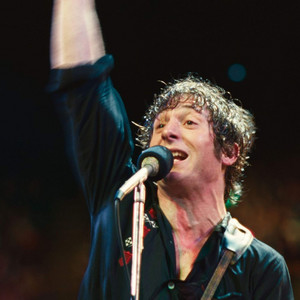
In the new film Deliver Me From Nowhere, the currently red hot actor Jeremy Allen White plays the eternally red hot rock star Bruce Springsteen.
And yes, White does his own singing.
The film tells the story of the 1982 album Nebraska, which came at a time of personal and career uncertainty for Springsteen and which ended up being recorded in a bedroom without a band.
I'm Stephen Thompson.
And I'm Linda Holmes.
And today we're talking about Springsteen, Deliver Me From Nowhere on Pop Culture.
Happy Hour from NPR.
Joining us today is writer, and I must say, Springsteen person, Chris Klimek.
Hello, Chris.
I got debts no honest man can pay, Linda.
Reasonable, reasonable.
All right.
So Springsteen Deliver Me From Nowhere is the latest in what feels like kind of a flurry of biopics about musicians including Bob Dylan, Elton John and Freddie Mercury.
This one though, starring Jeremy Allen White as Bruce Springsteen, focuses on the recording of a single album.
In the film Nebraska comes after Springsteen's big success with The River, and the record label is eager for radio-friendly singles that can continue to build on that success.
As it happens, Springsteen has a bunch of those at the ready, but they aren't what he wants to do.
He wants to record a series of lonely songs about lonely people.
You want to know why I did what I did, Sir.
I guess it's just a meanness in this world.
By the way, that is a sample of Mr Jeremy Allen White singing as Bruce Springsteen.
So Springsteen battles to preserve the integrity of the project alongside his manager, John Landau, played by Jeremy Strong.
And at the same time he tries to reckon with the depression and trauma that have perhaps led him to this difficult place.
Springsteen, Deliver Me From Nowhere is in theaters now.
Stephen, I'm going to start with you.
How'd you like it?
I know we're both a little iffy on biopics generally, but how did you like this one?
I am definitely iffy about biopics in general.
I'm probably doubly iffy about music biopics in general because of how many tropes there are associated with the form.
I think this is one of the best music biopics that I've seen.
I think the Jeremy Allen White performance is very strong.
But what I love about this film is that, in a way, Springsteen's story is an inversion of Mm-hmm, whether such a villain existed in the person's life or not.
And in this case, I think in part because you know Springsteen has always been very forthcoming about his story.
What you wind up getting in this film is a love letter to male friendship, a love letter to extremely effective management.
And a love letter to having a great team of people around you.
This film loves John Landau, Springsteen's manager.
The performance by Jeremy Strong is really just bearing out over and over again, without necessarily underlining it, 20 times that this guy cares very deeply about Springsteen, wants to do right by Springsteen at every turn.
And you see portrayals of Springsteen's friendships, not just with Landau, but just like people who've supported him along the way.
I don't think this film really gets its central romance quite right.
I don't think there's enough there there to kind of devote as much screen time to it as they do.
But I found this story really compelling as kind of a larger tale of how important it is to give mental health support.
I mean really to everyone, but especially to artists.
And how Springsteen's story kind of turns out as well as it does, in part because he has this extraordinary team kind of backing him up along the way.
Yeah, I think that's right.
Chris, I know for a fact that your concern going into this movie was that it would be embarrassing.
My understanding is that you didn't think it was embarrassing.
How did you like it?
So, well, I happened to see this at the Middleburg Film Festival and again last night with you guys.
And in this case, I'm very glad I saw a film twice.
Not an uncommon occurrence for me, but, you know, twice in a 24-hour period is a lot.
My opinion of it did come up a little bit.
I did kind of feel like the ceiling on this is okay.
I don't have to bury my face in my hands anymore when anyone talks about this movie for the rest of my life.
And seeing it again, I think it is actually pretty good, pretty successful.
My trepidation came largely from the fact that this, as many other good movies have, has a terrible trailer with a speech from Jeremy Strong as John Landau.
That is not in the movie.
It's clearly a part of a longer version of the in this house.
In my office, we believe in Bruce Springsteen.
Oh, yeah.
But the whole trailer is built around there was a hole in the floor when he was a little boy.
Oh, boy.
Oh, yeah.
I'm glad they didn't have that.
I'm glad they took that out.
I think the overall vibe of this movie kind of appropriate, getting it centered around Nebraska.
A minimalist album is more muted.
Stephen said this is a love letter to male friendship.
I think that's true.
But you know as loath as I am to deploy this cliche.
I know I say this about every movie on this show.
This movie is a love letter to the TIAC Porta Studio 144.
No, I think there is something here for recording heads.
I am still a little puzzled about who this is for, right?
Maybe it's more for you guys than for heads like me, because you know the stations of the boss.
The recording of Nebraska and the fact that he carried around this cassette tape without a box on it in his pocket is all well known.
You know, I read about that in the Rolling Stone Files compilation of Bruce articles because I came along a little bit after this, but not too much.
So there are.
You know, for the heads.
There are six or eight scenes in this movie where the vibe is extremely, you know, your cousin Marvin Barry.
There is a lot of that.
There's a little bit of that.
I think there could have been a lot more of it, though.
I was glad there wasn't more of it.
Yes.
Okay.
The specific example I'm thinking of is when Landau gives Bruce the Paul Schrader script.
It is like Paul Schrader, great writer, wrote type.
Okay.
He's telling us.
He's not telling Bruce.
You know, there's not too much mustard on that, I guess.
So on the whole, I am pleased.
This is not the disaster that I feared.
And, I think, probably a pretty good movie about what we all want to know the mystery of where great art comes from and at what cost.
Yeah.
You know, I liked this much better than I expected to.
And it's because of my general suspicion about biopics and specifically music biopics.
I have some sympathy for people who have said that Walk Hard basically made it impossible to make sincere music biopics.
Right.
And I think that's true to a degree.
But what really kind of resolves a lot of the issues for me is that not only is this about a specific moment in his life, although it looks back on childhood and although it talks about his difficult growing up.
It really is focused on this one specific artistic moment, which is not the moment in which he was most famous, right.
This is not, here's how he got to Born in the USA.
Kind of.
I mean, it is a little bit because he was recording.
But I mean, this is the era where he is pumping the brakes on that.
Exactly.
And I think the interesting thing about him for me is that I was not a big Bruce Springsteen listener as a kid.
But when I was a teenager, the live 1975 to 85 set came out.
And I cannot stress if you were not a teenager at that time the seismic nature of the release, of that where, even as a person who wasn't particularly a Bruce Springsteen person, I asked for that for Christmas and got it from my parents.
It was a seismic release and I listened to the heck out of that.
And for me every time I heard kind of the studio recordings and the radio stuff, it was less effective to me than that live set.
So I never really pursued the studio albums very much.
And it's interesting to me that I feel like Mm-hmm.
And I think, both of those ends of the spectrum, either if you're listening to a massive crowd singing Hungry Heart in an arena setting, or if you're listening to just him in a bedroom.
It restores something of his energy that it's very difficult to fully absorb through studio production.
So when you say, Chris, like, who is this for?
For me as somebody who hugely admires him but has not been this deep in the story.
It did give me an opportunity to think about why do I relate to this artist in this way, and I agree with what Stephen said about the fact that there's kind of a central romance that I think is undercooked.
I also agree with Chris that there are a few of those moments.
You know what are you going to call it.
I think I'm going to call it Nebraska.
So this song got a name?
I was going to call it Starkweather.
Now I'm thinking Nebraska.
It's impossible to avoid some of that.
What you don't have a lot of is like somebody walking by and it's like, oh, who's that?
Oh, I don't know.
It's this kid who's coming up and then they give some famous name.
That doesn't really happen in this.
And I appreciated that.
To me, I just think this Jeremy Allen White performance is extraordinary.
And I think he's riveting, which is one of the reasons why I was never bored in this film.
But yeah, the fact that he did the singing, like, it doesn't feel like a caricature to me.
It doesn't sound exactly like Springsteen, especially in the slower kind of Nebraska numbers.
But I think he's got the feel, you know?
I have to admit that he does.
Well, I want to speak to that kind of on a larger scale a little bit that one reason that I think this performance is so effective and one reason that I think the performance scenes are so effective is that Linda, you and I, you know, both grew up in the 80s kind of found springsteen in the 80s it sounds like varying degrees.
I definitely had a big, deep springsteen phase.
Is that, you know, if you grew up in the 80s and were really plugged into pop radio.
It's not just that, springsteen was one of the biggest stars in the world.
There was such a hunger for Bruce Springsteen music that, like Bruce Springsteen imitators had top 40 hits.
John Cafferty and the Beaver Brown Band had multiple top 40 hits.
And so I think...
All of us who've kind of been around Springsteen for decades and kind of heard all the people who've been influenced by Springsteen have heard lots of variations on the kind of Springsteen mannerisms and tics and bluster and the things that are really evocative and effective about his voice.
And I think Jeremy Allen White coming in and putting his own shading on that voice, it still feels very true to Bruce Springsteen.
I think that's part of why this performance works so well in a way that some of the other imitations of famous people that we've heard in music biopics over the years maybe don't work quite as well.
I'm really glad linda brought up the live 75 to 85 box set.
That was the gateway for me as well.
But hearing him introduce the river on that box set I was like, oh my God, you know, I know that this is going to be an artist that I am going to age with.
And I'm thinking this in my teen years.
Right.
And I think the other thing is, I could tell, since that was the same period of my life when I was starting to have problems with anxiety and depression.
This is years before Springsteen publishes his memoir.
Born to Run about, you know, struggling with depression throughout his career.
And, you know, he's talked about that quite openly in the decades since then.
But I think I knew, you know, I think I could sense that.
A line in this film where Landau comes to see him in that Colts Neck rental house and White, as Bruce says, you know it's in my whole family, John.
It's like a poison.
And like that family history of undiagnosed depression.
Mm-hmm.
I mean, I connected with that so vividly.
I mean, I'm the first generation in my family to talk about that stuff.
I think even then, as a teenager, before Bruce came out about all this, that was present in the music.
Right.
It feels a bit blunt, but if you listen to Nebraska and you find out this was recorded by a guy who was deeply depressed, it's not exactly shocking.
It's like this very lonely kind of outlaw record.
I always think it's very funny that has both a song called Highway Patrolman and a song called State Trooper.
You know, and a couple of songs about murderers.
It is coming from a very dark place, so in some ways it makes all the sense in the world.
Yeah, I'm glad that Chris brings up that scene with Bruce and John Landau in the bedroom, kind of sitting on the floor.
Part of what I love about it and part of what really resonated with me about this movie is they're affectionate physically.
There's a scene where like, Landau has his hand on Springsteen's knee and Springsteen puts his hand on Landau's hand.
And like the way this film depicts these friendships, these like warm conversations kind, intimate friendships I really found powerful.
It really showed me something I don't always see in these movies about the support networks that are necessary to make this lone genius a success.
Yes.
And I think also in terms of a portrayal of somebody who is struggling, as Chris said, with depression and has been for a long time.
It is so common, not just in biopics and true stories but in movies in general, it is so common to see somebody struggling and struggling with what is obviously depression and trauma and generational trauma and problems from their relationships with their parents, and see it resolve through some combination of catharsis, right.
Going and kind of having it out with the person or forgiving the person or talking to a romantic interest, and that person tells you to get it together, get over it and whatever.
In this, he goes to the doctor.
Mm-hmm.
And to me it is really a relief to see a story where a big part of not all of, but a big part of how he sort of restores himself is by actually going to the doctor.
Right.
Mm-hmm.
Yeah.
And in some stories, fictional and not, that would be what does it.
And in this film it is a much more structured.
Somebody has to tell you to go to the doctor and you have to go to the doctor first.
And I think that's often how it actually works out.
And also you know that moment where he walks in for his first therapy appointment and just breaks down sobbing before he can speak a word.
A lot of people do that.
I think I did that.
A sign you have waited too long to go to therapy.
Yeah.
Well, here's what I want to bring up though, and I'm just I'm curious to hear what you guys think about this.
Really the climax is him showing up in a therapist's office after he does his road trip across the country to his new house in LA.
And I don't think this movie is propping up that canard about like, oh, you have to suffer for art.
But his depression, his symptoms, are worsening, at the same time that he is sticking to his guns and telling everyone no, this is the sound.
Don't clean this up.
He has the good aesthetic judgment to recognize that the songs when they're played with the E Street Band in a proper studio are not as powerful as they are on that lo-fi cassette that he made.
And that was clearly the right choice.
The fact that he plays it for the record.
Exec or Landau plays it and the guy says it sounds like a mistake.
I'm amazed he played it for you.
I think people write whatever they write from the place that they are in in their life.
And I think, although those songs grew out of obviously a very dark moment for him personally, I think his ability as you said, his aesthetic judgment to say this is the way that these sound best is not from that.
It's from his general good judgment about his own work.
And to me, it's very satisfying to see that play out in that way.
I think the other thing that's very satisfying for me about this film is it is a story about an artist who had the power to be stubborn and was stubborn and was right in this very human way.
And that is, to me, a story that is so welcome in my soul right now.
Yes.
All right.
Well, you know, I think, on balance, we all really liked this movie and or, at the very least, liked it significantly better than we perhaps anticipated we would.
Tell us what you think about Springsteen.
Deliver me from nowhere.
Find us on Facebook at Facebook dot com slash PCHH. and on Letterboxd at letterboxd.com slash nprpopculture.
We'll have a link in our episode description.
Up next, what's making us happy this week?
This message comes from Dell Technologies.
Your new Dell PC with Intel Core Ultra helps you handle a lot when your holiday to-dos get to be a lot.
Luckily, the Dell PC helps you get it all done.
Get yours at dell.com.
This message comes from Progressive Insurance.
Fiscally responsible, financial geniuses, monetary magicians.
These are things people say about drivers who switch their car insurance to Progressive and save hundreds.
Visit progressivecom to see if you could save progressive casualty insurance company and affiliates.
Potential savings will vary.
Not available in all states or situations.
This message comes from ServiceNow.
People should do the creative work they actually want to do, not boring, busy work.
Now, with AI agents built into the ServiceNow platform, you can automate millions of repetitive tasks in every corner of your business IT, HR and more so, your people can focus on the work that they want to do.
That's putting AI agents to work for people.
It's your turn.
Get started at servicenow.com slash AI dash agents.
This message comes from BetterHelp.
To mark World Mental Health Day, BetterHelp is thanking the therapists who change people's lives all around the world by providing accessible mental health support.
With over 12 years of experience matching clients with therapists, and one of the world's largest online therapist networks, BetterHelp can help you find the right therapist.
Visit BetterHelp.com for 10% off your first month.
This message comes from SADFA, official mattress and restorative sleep provider for Team USA.
All athletes have to clear hurdles at some point, one of which is the need to get quality, restorative sleep to perform at their peak.
That's why Sattva is proud to be providing athletes with mattresses and bedding for the LA 28 Olympic and Paralympic Games.
You can enjoy that kind of sleep too.
Visit sattva.com slash NPR and save $200 on $1,000 or more.
Now it's time for our favorite segment of this week.
And every week, what's making us happy this week?
Chris Klimek, what's making you happy this week, buddy?
Well, I saw this movie quite a while ago, but you know, I'd like to sometimes try to do a haired recommendation or whatever we're talking about.
So for a movie that I think does an excellent job of dramatizing that same mystery of what, where great art comes from and at what cost.
I would refer listeners back to Mike Lee's 1999 film Topsy Turvy about Gilbert and Sullivan writing the Mikado.
You know, I thought about that a lot after I saw Deliver Me From Nowhere, and it is out there.
I think it's available on the big streamers.
Another film that I think dramatizes this hard to dramatize thing quite successfully.
So the 1999 Mike Lee film Topsy Turvy is making me happy.
Great movie.
All right.
Thank you very much, Chris Klimek.
Topsy-turvy.
Stephen Thompson, you are never topsy-turvy.
You're always directly on your feet.
What is making you happy this week?
Yes, famously stable.
I think mine also pairs nicely with this movie, in that they are both musicians who have talked openly about mental health and seem like lovely people.
In a lot of ways, especially when it comes to music.
My job is to be an early adopter, to say hey, you should check out this cool new thing.
So every once in a while it's fun for me to be hilariously late to a musician everyone else already loves.
A few weeks ago I got to check out this fantastic music festival called All Things Go, and the headliner the first night this year was Noah Kahn.
Now, Noah Kahn has become a gigantic star.
His album, Stick Season, it's been high on the Billboard charts for ages.
It is currently number 12, even though it's been out for like three years.
And it's not like I didn't know about Noah Kahn.
I've even written about him and everything.
But I never... got Noah Kahn until seeing him live and then revisiting Stick Season.
I kept getting caught up in trying to pigeonhole him, which is a fool's errand because there are so many disparate ingredients in his music.
There's a kind of a stomp and clap vibe.
There's a kind of Irishness, for lack of a better word, even though he's from Vermont.
His song Dial Drunk, which was a hit like two and a half years ago, feels both Irish and stomp and clap and it is such a jam i don't like.
The plan they threw me in the car i gave your name is my emergency phone call.
Honey, Big sad sack energy, big drunk guy energy and so so catchy.
Holmesy, I feel like this is your guy.
I will check him out.
I take your word for it.
You've steered me right many times.
That is Noah Kahn, his album Stick Season.
And what's making me happy is being the last person on earth to hop on that bandwagon.
All right.
Thank you very much, Stephen Thompson.
Noah Kahn is what is making you happy.
I can make it three for three on recommendations that are kind of paired with this movie.
They talk about a lot of influences on Springsteen during the recording of this album, including Flannery O'Connor stories.
One of the things they don't really talk about is how much this album is of a piece with earlier folk music.
There is a comment from one of the record executives who is going to make a folk album.
Although it is uniquely him, these outlaw songs really have a close relationship to folk music that has existed for a gazillion years in the United States and elsewhere.
So one of the things that I find interesting is that a little bit later in his career, Springsteen went on an exploration of Pete Seeger who, if you have listened to me talk about Pete Seeger in the past, you know he was a very formative artist for me growing up and as I got older.
And Springsteen was apparently not a big Seeger guy until he recorded something for a Seeger compilation album.
And then he became more of a Seeger guy and ultimately recorded an album called We Shall Overcome the Seeger Sessions.
And what I like about that project is that I think exploring your own influences and seeking out the ways in which other people's art speaks to your art is always worth doing.
And it is absolutely true that if you listen to folk records, you do hear a lot of these stories about like oh, this is about a murder.
Oh, this is about a bunch of people dying in a disaster.
And I think there is such a clear line between some of that music and Nebraska that, even though It doesn't seem to have been something that he was necessarily concentrating on at the time, the way he was, these stories and other influences on him.
I think it's fun to kind of go back and think about his explorations of that.
So we shall overcome the Seeger sessions, which is available streaming in various places.
The exploration of that and what it means about him is what is making me happy this week.
If you want links for what we recommended, plus some more recommendations, you can sign up for our newsletter.
That is over at npr.org slash pop culture newsletter.
That brings us to the end of our show.
Chris Klimek, Stephen Thompson, thank you guys so much for being here.
Thank you.
This episode is produced by Carly Rubin, Janae Morris and Mike Katziff and edited by our showrunner, Jessica Reedy.
And Hello, Come In provides our theme music.
Thanks for listening to Pop Culture Happy Hour from NPR.
I'm Linda Holmes, and we'll see you all next week.
This message comes from Mint Mobile.
At Mint Mobile, their favorite word is no.
No contracts, no monthly bills, no hidden fees.
Plans start at $15 a month.
Make the switch at mintmobile.com.
That's mintmobile.com.
Upfront payment of $45 for 3-month 5GB plan required.
Equivalent to $15 a month.
New customer offer for first 3 months only.
Then full price plan options available.
Taxes and fees extra.
See Mint Mobile for details.
This message comes from Mint Mobile.
At Mint Mobile, their favorite word is no.
Make the switch at mintmobile.com slash switch.
That's mintmobile.com slash switch.
Upfront payment of $45 for 3-month 5GB plan required.
Equivalent to $15 a month.
New customer offer for first 3 months only, then full price plan options available.
Taxes and fees extra.
See Mint Mobile for details.