Discussion keeps the road turning!
This is Roundtable.
I'm Yong Hong -in, joined by Steve and Fei Fei.
Coming up soon, across the world, food brings people together.
But during the Chinese New Year, it takes on a deeper role, becoming a language of blessings and a medium of connection.
From oranges to dumplings, we'll take you to explore what makes this celebration so unique and tasty.
But now, let's first get comfy and cozy for Roundtable's Heart to Heart segment.
Hmmm, Roundtableclear implant.
You ask… We answer.
Roundtable—Heart to Heart.
It is the place where we get to talk to you directly.
You can send your questions and we can answer them or give just our two cents.
So for today, we have two translation -related questions from our dear listeners.
We have an email question from Amber.
Amber said, Hi Round Table China, I've been a super fan of your channel.
Now I'm writing to ask if it's still worth studying translation as a major in this AI fast -developed world.
As you can see, you just have to copy your type of field paragraphs to the chat box, and it will come back with a perfect answer.
So, I think jobs like translators, or interpreters would be easily replaceable, but I am really into translation, so hope you could give me some advice.
Thank you so much. Thank you so much, Amber, for asking this question.
Actually, I feel like in our daily lives, we've been listening to this question quite a lot because we do do some translation and interpretation work.
But at the same time, we have another, well, no, happy co -incident.
We have another listener sending us a voice memo asking a related question.
So let's listen to that first.
Hello, Roundtable folks.
This isumble. I've been listening to your podcast since I was in college.
And right now I've worked for three years, so it's almost five years.
But this is my first time to try to send you a voice memo.
I can't say my old English is very good, but it's OK in daily communication.
The truth is, I'm a selfish woman, so that requires my oral English is not just can coping with daily talks.
Actually I'm sending machinery equipments with a high value and obviously my clients are the type of B2b client, so in a project sometimes we need to have online meetings with our clients from all over the world, if different and quite not easy compared to face talk.
In the meeting, I'm actually an interpretor, interpreting client sentences and expanding to our engineers, also need to do themes into our clients.
The question is, I interpret it not very well.
I will add some of my own thoughts unconsciously, because I got stuck in translation, which needed the whole meeting last for a very long time, so my question is, could you guys give give me some advice on how to improve the interpreting as an ESL learner, I need to put more effort and practice, I wish
you can show your individual experience for me to reference.
Thank you for your time and sharing, and wish you all have a wonderful spring festival holiday.
Best regards, Mint.
Thank you. Thank you, Mint.
That's very lovely.
I think Mint's question is more practical in the sense that I'm doing this job, I wanna improve myself, I wanna do a better job and as for Ember, it's more like in the future.
If I studied it really well, is there still a job post waiting for me or it's been entirely replaced.
Well, I think the cruel truth is part of the jobs of a translator or an interpreter will definitely be replaced by AI machines.
I think I studied translation when I was in college.
right now I hate translating from the scratch, and I will definitely rely on my AI assistant to translate for me, and then I proof rate their translation.
So I think AI is more of my translating assistant.
Yes. But I think assistant is the keyword there, right?
When you use that assistant is it perfect every time?
No, exactly. Exactly, well, I think it depends, especially when you are translating things more of a social science aspect.
You will notice some of the cultural nuances will be lost in the process.
And it definitely needs a human eye to really examine what the machine has done and then just twist a little bit.
To answer your ... it was Mint and Amber, right?
To answer your question, I thought, why not ask AI?
So I did. I said, will jobs like translation or interpretation disappear in the future thanks to advancements in AI technology?
This is the answer.
While advancements in machine technology, translation technology, have been significant, studying interpretation can still be a very rewarding and valuable field.
Here's why. You mentioned it Fei -Fei.
Human nuance and cultural contexts.
Machines struggle to accurately capture and convey the nuances of culture and humor and social context that are crucial in human communication.
Interputting often requires understanding and conveying emotions, which machines are still far from mastering.
And I think that's why I don't know the answer to this question, 100%, but if I had to guess just like Fei Fei's doing now, using AI as a tool, that's going to continue to improve and get better.
But I don't think it's ever going to replace it 100%, and if you love it, if you do enjoy it, then do it, I guess.
Just make sure that you're keeping up with the technological trends of the time.
I have a different point of view.
I think for Mint, for example, you're already doing it.
And for the current situation or the current development stage of artificial intelligence, no you cannot truly 100 % rely on it or trust it.
Like you said, when you are in a negotiation with your potential business partner, you want to make sure you convey the idea as precise as possible.
but you do not have to worry about including a little bit of your own idea.
Because you are an in -house interpreter, you are working with the company, you understand the background of the company, you understand you're goal 100 % and you are in the same team.
So you do not have to worry about adding more information that is not necessary in the negotiation.
It's a different situation if you are an independent freelancing interpreter.
In that case, you're not speaking for yourself.
You're speaking for your client yet for mint, for example You're kinda speaking for your entire team and also a little bit for yourself So the more you do the better you will get on your job yet for ember I have a different opinion because Steve is being very Encouraging and Steve said if you love it
if you truly love it, of course you should pursue what you love But my opinion is that you can continue learning interpretation or translation as a hobby, but maybe do not choose it as your major because I think if you choose it as your major, then you will be doing translation in the sense that you are always
translating one person's idea into another language, and you have to make sure you understand that person's idea 100%.
It's not always that easy.
And even though we say artificial intelligence nowadays is still something that is having a lot of obstacles in a sense of understanding human nuance or cultural background, it will not stay like this.
It will improve. And maybe after you don't know, five years after you graduate from college with the degree of A translation, you might be looking at the core reality that AI is faster than you, more accurate than you.
I just don't know. Do you think AI is able to develop emotions?
I don't think so, and I don't think AI is going to get to the point where it's able to understand that some things don't translate literally from one language to another.
I'll give you an example.
I remember in Seoul, Korea many years ago when I was studying Korean, I went to the bookstore, and I found a Korean Idiom book for study, and the first page that I flipped to taught this idiom, piengi tyoo ji masaeyo.
What is that? That means now if you translate it, well let me tell you what it means first.
It means don't give me too many compliments.
So, if somebody is giving you a lot of compliments, then you might say, oh no, no, no.
Yes, in Chinese we'd say na lin ari.
Okay. But so, piangi teojimah seo.
Stop giving me so many compliments.
But the translation directly to English is don't fly me in an airplane.
Now, that doesn't make any sense because piangi is airplane in Korean, so the translation to English doesn't make any sense.
So this is my point, you couldn't know that, right?
So AI would translate that literally, it's like if you search hotdog.
I'm sure AI has improved now, but hotdog is a sausage in western culture.
But in AI it might be a physically warm animal with four legs and a furry face.
You see my point? Yes.
But I feel like … it depends.
I mean, if AI can successfully translate 80 % of the content.
Of course, it doesn't mean 80 % of people would be replaced.
But it might mean 50 % of translators could be replaced.
If you are super confident that you are within the 0 .1%, if you are that good, the top 0 .1 % In the future, you can get a job, and you can, of course, there are so many occasions where we cannot rely on technology.
For example, if the information is confidential, you cannot really wear a translator and, and translating machine in your year, still you have to rely on the person.
And also if the conversation or negotiation is super, super important, you cannot fully trust the machine.
You have to have someone to oversee the results from the machine.
Of course, of course, these situations exist.
You just have to make sure you're good enough to be needed in those situations.
That's probably good advice, isn't it!
Yeah. Sure. Go ahead and study it.
Just make sure you're really, really good at it.
They say, too, that interpreters are now increasingly working alongside AI tools, and the role may shift to reviewing and refining machine translations, as opposed to the humans doing the translations themselves.
Yes. And the reason I encourage you to continue learning it.
But choosing it as a major is that if you have a major and you are also a really good translator, then here comes the edge.
You understand all the background information in your field.
You understand the company culture and the nuance even maybe of your boss.
Because I still do some translating and interpreting work.
And I realize that if I am translating or interpreting for the same client for the second time, I understand how they want the information to be convened a little bit better.
And if this is the third time, it's even better!
And imagine if you're an in -house interpreter in a company, you have all the information and you understand the technology.
You understand your boss.
You are going to do a really good job!
There's a scene from a movie that I really loved.
It came out a long time ago.
It's called Lost In Translation.
Do you remember the scene?
It's about an... If you haven't seen it, it's about an American actor who flies to Tokyo to shoot a TV commercial for an alcohol brand.
And while he's in the studio filming, he has a translator with him, and the director gives this really maybe two -minute -long speech about what he wants the actor to do, and the translator...
The actor asks the translator, okay, what did he say?
And the translator goes, look at the camera, and he said, I feel like he said a lot more words than that.
He was like nope, look at the camera.
Translation's not an easy job.
It reminds me of one of my friends who worked as in -house interpreter for a company, for a Korean company actually, here in China.
And they had, she had this experience of two teams, one from South Korea, one from China, they are negotiating something in a conference room.
And the negotiation got really heated up.
And one member from the Korean team start to curse, to send out a lot of cursing words.
And the Chinese team kind of sensed that the other side is not really happy.
So they looked at the interpreter, trying to figure out what he said, and she said, she just interpreted as, he's angry.
um you can't really translate directly those curse words from korean to chinese another great example of how important a human interpreter might be just directly yeah i've maybe gotten it wrong too who knows yes so yeah i think when it comes to interpretation or translation as a major these are our
are apparently not very same but personal ideas and suggestions, but one thing we have to make sure here is that even though you might not need to be a 100 % really professional interpreter or translator in the future, I still think learning a different language or even more languages is very crucial
because if you're relying on any kind of machine or any kind of technology, still, it's a little bit less is good, then knowing exactly what is happening in that language.
Do you know what, as we finish this chat, do you know what the ultimate irony is?
It's humans who decide whether AI will replace humans.
Yes. Isn't that quite the pickle?
Well, you can sit on that, and maybe sending us some more comments about this topic or any other questions that's baffling you, and Roundtable is always here.
We're happy to give you our 2 cents.
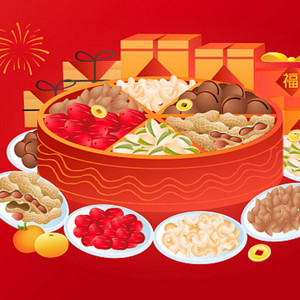
Here… it comes. Spring Festival Food 101.
Stay tuned. You're listening to Roundtable with myself, Neil Holin, Steve Heatherly, and Fei Fei.
today. They say you're are what you eat.
But during Chinese New Year, what you eat would decide your fortune.
Dumplings for wealth, noodles for longevity, and fish.
Well, don't just flip it unless you're asking for troubles, especially if you're the driver, and don't even get me started on gift giving.
Let's just say an umbrella might send the wrong message.
Welcome to the kirky, meaningful and sometimes superstitious and little bit, you know, world of Chinese new year food and gift giving.
And if I'm honest, I chose this topic for today as we're getting ready for the holiday because I wanted to learn about the cultural ins and outs of foods and gifts during the holidays.
So this is going to be a great cultural learning experience.
You're relatively new here because this is going to be your first spring festival and you're going to Celebrate it in here in Beijing and I think well I'm pretty sure no one's going to say you're eating the wrong food, but still let's tell you what are some right foods.
Some recommendations Some recommendations.
What are the must -have foods?
Where do we start? Fish.
Which definitely ...
I think it's a staple in most Chinese dinner tables at the New Year's Eve at the Spring Festival Eve Night, the big dinner night because fish represents abundance and prosperity, and because the chinese word yu, especially during this time every year sounds like surplus, like nie nieyou, you have surplus
every year. So the word for fish sounds like the word for surplus?
Okay, so that's why we're having the fish and then I'm not sure if it's a regional thing or it's just my house We always have some sort of lamb or mutton on our dinner table as well because sheep in Chinese is yang and We have a four word idiom in Chinese Oh, I'm suddenly in the middle of takeaway Chinese
It sort of represent these auspicious and happiness feeling during the spring festival so having some young or some lamb or mutton on the dinner table is also a good sign.
Question about the fish, the presentation of the fish.
I've seen this at restaurants many times.
The fish is served in its entirety, but then the body of the fish is cut in a way that makes it convenient to eat.
But you said don't flip the fish.
The fish has always served one side up and you're not supposed to flip it over to get the fish meat, if you will?
Is it called fish meat?
From the backside, why are you not supposed to flip the fish?
There are different traditions I think.
In some places people believe if you're driving a car, you do not want your car to be flipped in the sense that you do not want to get into a car accident, so you do not want to flip the fish.
And in some other, Well it depends because China is a vast country and when it comes to traditions and taboos, different places would have different level of seriousness when it comes to taboos and they have different lucky food that they wanna eat.
And for fish the reason I'm saying this is because in certain places and maybe some restaurants they would even cut open the belly part of the fish and have it almost standing in the plate.
so you do not have to flip it because both sides of the fish meat would be exposed to The diners So yeah, it's different and I used to think as well I think in my 20s I still you think everyone would eat dumpling during the spring festival the Chinese New Year, which is not true Surprisingly, yeah in southern
parts of China they would eat like tangyuan or do they call tangyuan just the rice balls and during the Chinese New Year's night, or some kind of a sticky rice products.
But it's definitely in the shape of round, because round means getting together, it means families are getting together.
Like roundtable. Yeah, exactly.
When it comes to fish, I think in some parts of China, you can flip it, you just have to make sure you can flip it entirely.
Like, no. Don't break the body.
Don't, don't even leave the body.
Ah, OK. And in coastal regions, you are not as opposed to flip it because in coastal region, there are a lot of fishermen who live on fishing, you don't want their boats or ship flip over.
They've got the car.
So you can flip it.
Just try very hard not.
I think in my family, we also flip it.
But instead of saying, let's flip the fish, we'll say, let's swim the fish.
Because it's a natural thing, then it works.
Yeah, same as well.
In my home, it's like a collective effort.
we have to make sure.
Yeah, yeah, let's swim it.
One more question about food before we get to some gift questions.
Noodles, so long noodles, yes, short noodles, no.
Can you explain that, please?
Is there a short noodle - If you bite it, it becomes short.
You still always have to bite it in here.
Oh, okay. See, I'm new to the country, I am scared to bite the noodles.
I don't want to offend anybody or hurt my luck for the new year." Well, I do not have this tradition in my family, but I don't understand.
In some places, they want the noodle or which one or before you boil it.
You want it to be as long as possible because longer, happier, everything, longevity, everything should last longer and when it comes to staple food, on top of dumpling and the sticky rice the exponential the tongue you know some people some places they would also eat some the sticky rice dumplings
wrapped up in the lead.
So that is something new that I only learned recent year so in a lot of different places we have different food traditions and as a chinese person you realize that we like words with similar pronunciations the traditional ones of Of course Yuan, Signature Cirches, Yuan, Wang, Yuan, Yuan, Yuan, when it's
round, its round and happy and gathering together.
Recently I've seen a lot of new invented one, freshly invented ones.
For example Huoshu, Fa Shun, so good things will happen and Fa Shun it sounds similar to Huashu or a Peanut and they will send you Peanut as a gift and say, oh good things will happen to you, a Peanut to you, it's cute.
It's not a taboo or any kind of traditional lucky words, or, foods.
Just playful. But, it's playful, it's festive.
How about gifts? Are there any gifts that we should avoid giving or might be bad luck during the new year?
Clucks are definitely I think a big taboo here because clucks in some key, especially the big ones, is called junk in chinese.
Nice. And gauging zhong, zhong means you gave away someone that's being passed away.
Yeah, saying goodbye.
Say in good bye, so you definitely never gave clocks to another person here in China.
Ever. Ever. Not just in the New Year just ever.
Well thankfully clocks probably aren't a common gift.
Does that apply to watches as well I wonder?
I don't think so, because that's that's different.
That's fj If we were to talk to kids about It has a different name.
And the same logic, well, different logic goes to shoes.
You're not supposed to give people… Can I take a guess?
Yes. Because I learned this when I was not in China yet.
I heard that in Chinese culture it's bad luck to give someone shoes, especially your romantic partner, to give them shoes as a gift because they may use those shoes to run away.
Yeah, to walk away from you!
Is that it? That's true.
Okay, that's fun. It's kinda true.
And also you're not supposed to be share a pair with your Significant other fruit of air because in Chinese we call it Lee which means depart Same idea if you're sharing the same prayer You're sharing the same lead then both of you would be depart from each other by saying goodbye to each other but to be
honest I feel like these taboos are not that much honored or respected here in our younger generations anymore.
Karly Yeah, but I think some of the good ones, some good recommendations as gifts is also a playfulness for example you can give cups to your significant other because beads you'll spend your life together, the whole life together.
A lifelong, so you can give cups as a gift to your significant other or in some cases quails as well, because beads is also kind of sounds really similar to a lifelong time in beads.
I think all of these lucky or unlucky is more like play of words, which is universal.
Not only here in China.
For example in Thailand, auspicious foods include jackfruit and pork rip ribs because it's the in according to Thai language, actually that name of that Jackie fruit and pork ribs is closer to help and support in Thai symbolizing good fortune meaning Bene, factors, so and also in Spanish are supposed
to have 12 grapes at midnight That is for New Year instead of my wife and I do that and she's Korean and I'm Canadian.
So, I said, why are the Koreans and the Canadians celebrating Spanish culture at New Year's Eve, but we do it every year?
She makes me even go under a table.
You're supposed to have them under the table apparently.
Do you also have to say one wish when you eat one grape?
I don't know, we don't, oh, don't tell her that.
Or one month. Don't make my New Years busy as it already is, please.
Yes, and I think at the end of the day, It's all about how you see your future and maybe if you associate luck with certain objects, then you will have luck because you're having a really good start of the year.
So that is today's Roundtable.
Until next time, keep the conversations going and the ideas flowing.
I'mio Holland with Fei Fei and Steve.
Bye!