Discussion keeps the world turning.
This is Roundtable.
You're listening to Roundtable with myself, Hyung, I'm joined by Steve Hatherley and Yu Shen in the studio.
Now that we've talked about fresh job opportunities in spring recruitment season, let's dive into another thing that springs up every year.
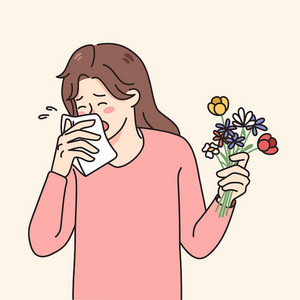
Hello allergies. While While we often blame flowers, it turns out trees might be the biggest offenders.
Let's explore how to survive spring allergies.
And have you heard of the term, flood lighting?
It's the dating trend, where one partner shares emotionally intense details too early creating an illusion of intimacy.
But why are relationship experts raising red flags?
Our podcast listeners can find us at Roundtable China on Apple Podcast. Got a question that's keeping you curious, from social issues to tech and everything in between, let us take a stab at it.
Email us at roundtablepodcast at qq .com.
Emails are fine, but we love voice memos just a tad better, because we're a radio slash podcast show after all, it'd be great to hear your voice on our show.
Now, let's switch gears.
As the days grow warmer and flowers bloom, the allure of spring beckons us outdoors.
If you can do so without reaching for tissues every few moments, no sneeze, runny noses, or itchy eyes.
Congratulations. However, for many, this season brings not just beauty but just...
but also the bane of allergies.
It's easy to blame the flowers but surprisingly trees are often the primary offenders.
So let's take a look at this whole big thing of the season right now and what is the medical explanation of allergies?
Gosh, allergies. I'm hit by both cold and the allergy.
I'm not sure which one is worse, but apparently allergies occur when the immune system mistakenly identifies a harmless substance, so it could be a pollen or pet denter or cat fur or just a airborne pollen from trees and grasses, anything.
And your immune system can recognize that as harmful and overreacts.
So when people with spring allergies inhale in those tiny particles, it immediately triggers the immune system to release histamine and other chemicals to fight them off.
The form, the presentation of your immune system, fighting them off, could be showings of inflammation in the skin, airways or digestive problems. And also, there could be all range of symptoms, including sneezing, running nose, HEIs, I'm sure we all have that, and congestions, and post -nasal drip.
well in some cases people with severe allergies may also experience difficulty in breathing wheezing or asthma symptoms that's really bad.
It can be really really bad.
Have you ever had that post nasal drip before so annoying it's when something drips down from your nasal cavity I think into your throat and it's just makes you cough but not like cough and then stop it just is consistent cough that won't go away.
It's just so annoying.
Allergy season is the worst. It really is the worst. Spring is amazing.
It's gorgeous. It's one of the best times of the year if not the best time of the year.
But it can be torture for some reasons.
And you mentioned a lot of them, right?
It can be small little things like having maybe some itchy nice eyes or a runny nose.
But like you said, it can be serious as well and I've had friends I knock on wood don't have any allergies at all oh wow oh you do I guess by now I've seen I've seen friends with really bad allergies in the springtime and it's a tough time of year as well so what is causing allergies in springtime and it certainly is not just The flowers and yeah, yeah.
Apparently, I just learned that as well trees can also have that effect because trees like Poplar and birch and cypress they release when born Poland, which is much more likely to trigger allergies I'm not sure if our listeners had saw the videos that's streaming on social media everywhere Yeah, there's some I think that's Cyprus Oh is it you and by you and by yeah that kind of trees that yeah Wavering all the Poland's like dust. Yeah in springtime and actually in English, it's called the Chinese Junipers Sorry guys for our Chinese listeners This particular show is gonna be filled with jargon or these
terms of all kinds of trees and medical terms Here's the good thing though If you don't recognize the tree names, don't worry because neither do I I'm not a tree expert by any stretch. Yeah, but we become experts preparing for this show, and it's really interesting that in Beijing, is it like about 60 % of the trees planted?
They're yuen bai, so these Chinese junipers, and now it's their blossoming season.
Yeah, this is the, this is the bad side effects.
There's also the flowers, bright colorful flowers, cherry blossoms, beautiful, this time of year.
Tulips, also very pretty.
They rely on insects for pollination so their pollen doesn't easily become airborne, but for the trees, that's exactly what they do.
They spread their seed so that they can grow elsewhere.
It's done with a purpose, I suppose, although an annoying purpose for us.
The vast majority of people have the potential for intrinsic allergies.
That's a quote from Guang Kai, deputy chief physician of the Department of Allergic Reactions at Peking Union Medical College Hospital.
And he said that allergies depend mainly on several factors like living habits or your living environment or just the amount of allergens present can be a factor too.
Yeah, it's really interesting when we reflect our own living habits and the symptoms we're having these days because, apparently, experts said that frequent consumption of high -calorie, low -fiber fast food and excessively clean living environment, plus enough allergens, can all trigger people to be allergic of things that's flying towards you in the air.
And that's a lot to look out for.
But also, it triggers us to think about just how the way we live is strongly affecting our health.
And there's so many ways that you can never imagine until you get to know it.
So spring allergies, they come to you from the airborne pollens, from trees, and grasses, and weeds, and things like that.
And it's not easy for people.
The thing that I found surprising there is that if you have high -calorie, low -fiber fast food diet, well, that's just not a good idea anyway.
But an excessively clean living environment.
Certainly not me can bring that why would that be is that because your immune system is just in a constantly sterile environment so Well, it makes sense in some case because especially for a younger child or babies if they grow up in such a super clean environment, their immune system, their skin, their entire being is used to this cleanliness.
Yeah but I mean... So when they get outside, boom!
There's all the pollutants out there, there's all the spores out there.
What are you supposed to do?
Go put your baby in a garden for four hours?
I thought you were gonna say garbage.
No no no no. I mean just expose them to, that's a difficult balance I guess.
But yeah too clean cannot necessarily be a great thing all the time I guess.
This just reminds me of, well, not just in China.
I've read, you know, for, let's say for babies or little kids that were born in the last five years or so, they grew up in not going in an environment that doesn't ask them to go out, and parents are keeping them inside just to protect them.
So once they're really out there, I think maybe you'll take them even definitely a transitional period to get used to what is out there.
Yeah, build up the immune system, right?
Also, when we see what is going on right now, it's really interesting.
In recent years on social media, a lot of people are saying that I didn't used to be allergic but now I am.
Do you agree with this observation, what's happening there?
Well, yes, absolutely.
As a Beijinger, and I believe many Beijingers will agree with me on that, Beijing residents in general have kind of developed sudden allergy symptoms in recent years.
And that's not from me, that's reported by workers .cn.
That's a website here in Beijing, and also there's an expert called Wang Liang Lu, who is from Peking Union Medical College Hospital that's attributing this, say, trend to a combination of genetic susceptibility, prolonged exposure to environmental allergens and climate change as well, so what does this mean?
It means that allergic allergies, rather, they can develop through a process where the immune system just gradually reacts after repeatedly being exposed to allergens like Poland and spores or does whatever that's in the air.
Yeah, I kind of thought that allergies were something that you got as kid and then that was it right but no you can develop allergies later on in your life.
A friend of mine didn't get any allergies until his mid 30s or something like that and he thought the same thing too so he was under the impression this is a weird thing that's happening to me but yeah it happens and that's a good point right so if you're exposed to environmental allergens for a long time, that continued exposure to your immune system, it just eventually turns into an allergy.
Yeah it's like your friend and I live by the same book.
Oh you didn't get allergies until later on?
I was a perfectly happy child in Beijing growing up.
Never had allergies.
Always saw it in American movies and thought that's strange and when I was like approaching my late 20s and I've been living in Beijing most of my life minus the X amount of years when I was abroad.
And then I was already back in China for more than a couple of years, and I got all these allergy or allergic reactions during springtime and also autumn.
And after doing some research, apparently I found out in recent years springtime pollen allergies in Beijing have intensified and is closely linked to the city's selection of tree species.
The cypress trees? Yes for urban greening and this has started decades ago but it's almost like now in recent years we've reached the years of fruition.
So the cypress trees which are pretty widespread here in Beijing they are guilty of producing a lot a lot of airborne pollen and that happens when the temperatures rise too and then it's windy during spring season here in the Beijing area really windy at times, so that means that that is the perfect mode of transportation for those pollens, right?
So we see an increase in those levels and then you see an increase in allergy cases.
It's not just cypress, it's also poplar, that's yangshu or birch, hwaxu and we said cypress, right?
And that's bai -shu.
They're everywhere.
If you to live in Beijing you know what I'm talking about.
Sh - Hi -shu! Excuse me?
A -choo! Ok, got it.
Fantastic. If I have to explain my jokes, they're not funny anymore.
Actually, that wasn't a good one.
Kiki Bali, I'm sorry.
No worries! A -choo!
Oh, let me just let it out of my system!
But anyway, I totally agree with you on the city planning.
Well, back to the case of Beijing, because I read that in the mid 20th century, that there were efforts to rapidly increase green coverage here, that led to the extensive planting of fast -growing adaptable species like what we mentioned the poplars and cypress, and additionally, preference for male trees was common to minimize fruit and seed litter, which made sense back then.
But apparently nowadays these male trees are becoming the main producer of the higher amounts of pollen that we're breathing in nowadays So this whole urban Planning have a lot to do with what's going on.
And also I think there is this urban heat island effect yeah, that's when temperatures get high in urban areas and then that just prolongs the Pollen dispersal period but back to the tree point again And Beijing has about 190 ,000 cypress trees.
And many of those are very, very, very old cypress trees.
There's 33 ,000 in the Temple of Heaven, for example.
And that means that those trees hold cultural significance, which means removing those trees is not really an option.
It's just impractical, too.
You can water them.
You can prune them and things like that.
but that just provides some short -term localized relief.
But my point is that there's a lot of these trees and they do hold some cultural significance here as well.
I'm not sure if our listeners get to ever drive in Beijing once in a while, but if you do, you'll realize that when you're driving especially on those overpass, those are the bridges that's above the ground the cars drive by.
Even for overpass, they are kind of taking detour in order to protect certain trees that's to be above the bridge itself.
So even for constructing bridges, we are thinking about protecting those trees, letting along, cutting them or removing them in general.
So they are of very important cultural say heritage value to the city so yeah.
Yeah and not just that soil conservation, right?
So they have huge root systems that prevent soil erosion especially during the windy season, then they support urban ecosystems. They provide habitats for birds.
It's a birdhouse, right?
Another insects and small woodland creatures.
That's their home. So yeah, just, you know, let's chop down all the trees.
That's like, no, no, we're not gonna do that.
We're just gonna suffer through the few weeks of allergy season.
I think chopping off the trees definitely does not sound like a good solution, But what you guys mentioned of the protection of ancient trees, I totally can get on board with.
But for city development and future urban planning, it makes perfect sense to study a bit more since we already have seen the not so great consequences of planting in masses of some trees than others.
So now, if we get a chance, maybe we could definitely make smarter choices in tree planting.
Trees are super important for a huge city, right?
They absorb more carbon dioxide than the older trees do, than the young ones do, so removing them would weaken the city's carbon neutrality efforts.
But, I mean, you do have a point, let's try to maybe put some trees that aren't making people suffer so much. And also because when they only planted those few types of trees and mainly male trees, then the lack of biodiversity in a city also sees detrimental effects and we are experiencing them.
So getting more of these scientists in botany and other natural sciences to get involved with city planning actually makes a ton of sense.
and on an individual level guys?
How do we reduce exposure to all these allergies now in spring?
Stay inside. I need to live, I like to go out alone.
Stay in your shower for two months.
I need to go to work, Steve!
What can you do? What can we do?
Apparently avoid going outside mid day and afternoon when Poland counts are the highest will definitely help, but if you cannot avoid going outside like the most of us, then try wear masks, sunglasses, and all kinds of stuff that's going to shelter your face from breathing indirectly of those Poland's and maybe even long sleeves if your skin have reactions towards it as well.
And you can take some preventative medicines as well, maybe two weeks to a month in advance perhaps of allergy season, some nasal sprays or some eye drops or inhalers might help you out.
Yes, The annual surge in spring allergies serves as a reminder of the intricate relationship between urban vegetation and public health.
And can I just quickly remind you there's also catkin season coming up.
You know what that is?
It's almost like little puffy puffs of cotton.
the little puffball things.
They will be floating everywhere and so brace for that too.
In the meantime for us individuals who suffer from allergies, less proactively manage exposure and seek appropriate care so we can embrace the joys of spring while minimizing allergy discomfort.
Coming up next, modern dating is like a battlefield where you could crash and burn in an instant And we always rise from the ashes the next day, hopefully.
Now, flood lighting is the latest threat.
Relationship experts say it's one to watch out for.
Stay tuned to find out more about that.
Looking for passion?
How about fiery debate?
Wanna hear about current events in China from different perspectives?
Then tune -in to Roundtable where East meets West and understand it is the goal.
You're listening to Roundtable with myself Hiang.
I'm joined by Yuxian and Steve Hatherly.
Dating in the digital age feels like navigating a social mindfield from ghosting to love bombing.
Modern romance has birthed a whole new vocabulary.
The latest buzzword on everybody's lips, well, those who speak English, I suppose, is flood lighting and relationship experts are urging singles to tread carefully.
What is flood lighting?
Yeah. Flood lighting is the latest Gen Z trend where one partner shares these intense, personal, often super emotional details about their lives, about themselves really early on in the relationship and it creates this sense of deep connection immediately in the relationship or that's the goal anyway.
It's unlike your traditional vulnerability, if you will, that kind of organically happens as a relationship develops over three to six months to one to two years.
You share more, your conversations get deeper.
No, this is jumping into the deep end of the pool as early as, you know, I don't know, the first date or something like that.
I am not sure if it's completely correct to that onto Gen Z because that sounds like a dating thing in general.
Seems I've offended someone.
The headline said Gen Z trend.
Okay. So blame the media, not this media member.
That's just teasing you, Steve, by the way.
But apparently, experts in, say, dating, has been voicing about the same issues that some Jessica and Luella Eldersen, who are the founders of The Dating App, have so synced, they describe described flood lighting to the Glamour magazine as using vulnerability as a high intensity spotlight that involves just unloading trauma, past relationships, and personal struggles on to someone they've barely begun to know or date.
So it's not saying my favorite kind of ice cream is this or I got fired from a job when I was 21 because of this.
No, this is really, really heavy, heavy, heavy stuff that usually takes a while to share with even your best friends.
But the floodlighting trend is sharing that level of personal information about yourself really quickly on in the relationship.
And why is that a problem?
Well, if it's done incorrectly, it can be a big problem, right?
I would say if both partners are doing it, then it's not a problem at all.
but if the conversation feels one sided and you feel like you don't have an opportunity to share because the other person that your partner is is just constantly talking and sharing that's a problem, there could be the problem too that you may feel pressured to share, because they're sharing some they're really trusting you with a lot of deep information and that might make you feel like you're supposed to do that too when you may not feel ready.
So you might feel a little overwhelmed emotionally or even perhaps a little, a little suffocated.
And I think another thing would be people who try to push a relationship along too fast, that can be another red flag again.
You know, like I said, if both people are into it, then it's really no issue.
But if, if you see your partner doing it and you're not comfortable with it.
This is called floodlighting.
A lot of times when the pace during a date is not identical from both sides of the party, then yeah, I would totally imagine myself in that scenario from my previous dating experience that if someone just quickly get close to me by trying to tell me all of his past traumatic experience just to earning maybe my intimacy towards him or even my compassion towards him then it will on the other hand make me feel like okay I am burdened right now with the secret of this guy like imagine you're on a date and you're like hey how you doing like I had a great day I bought a new bag and how about you well
my cat died when I was four and it really crushed me emotionally solved there are a few um say red flags the signs that you can watch out for including you know just when the conversation feels one -sided leaving little room for you to share or that your date constantly literally monitors your reaction towards their personal stories that they're sharing, or when you feel emotionally overwhelmed or suffocated from whatever they're sharing.
And sometimes the relationship can also feel like, oh, it's moving a bit, maybe too fast. And while vulnerability is a cornerstone of any kind of healthy relationship, but here floodlighting, as we're talking about, it can really create a false sense of intimacy see that burns out as quickly as it ignites so that's the early signs that you can detect from your partner.
Yeah I mean the dating experts say if you're in that moment like when the person is oversharing or flood lighting try to like maybe gently steer the conversation towards some lighter topics or remind them like hey you know you don't need to feel pressured to share this with me right now.
Take your time. You can make that light suggestion too!
But if you see it as a big issue, then I don't know.
It keeps wiping. Under the note that you like the other person.
Right, and also there's this other phenomenon I love to share with you.
It's called the Michelangelo phenomenon.
That is more of the deeper, more transformative form of love that It also occurs in dating these days and that's something else that's kind of nice to have than the flood lighting by the sound of it.
So that's kind of like a more psychology based style of dating where you talk about those types of topics.
Mutual growing in the relationship.
Ah, that sounds much better.
Thinking about the Michelangelo drawing of the two fingers touching by the tip.
That's it. We connect.
Who doesn't want that?
And that brings us to the end of today's show.
Thank you so much Steve Hatherley and Uchen for joining the discussion.