How's life treating you?
So, how's your new job, James?
It's great.
A bit overwhelming, but I'm getting the hang of it.
The team is really supportive.
That's awesome.
What's been the biggest challenge so far?
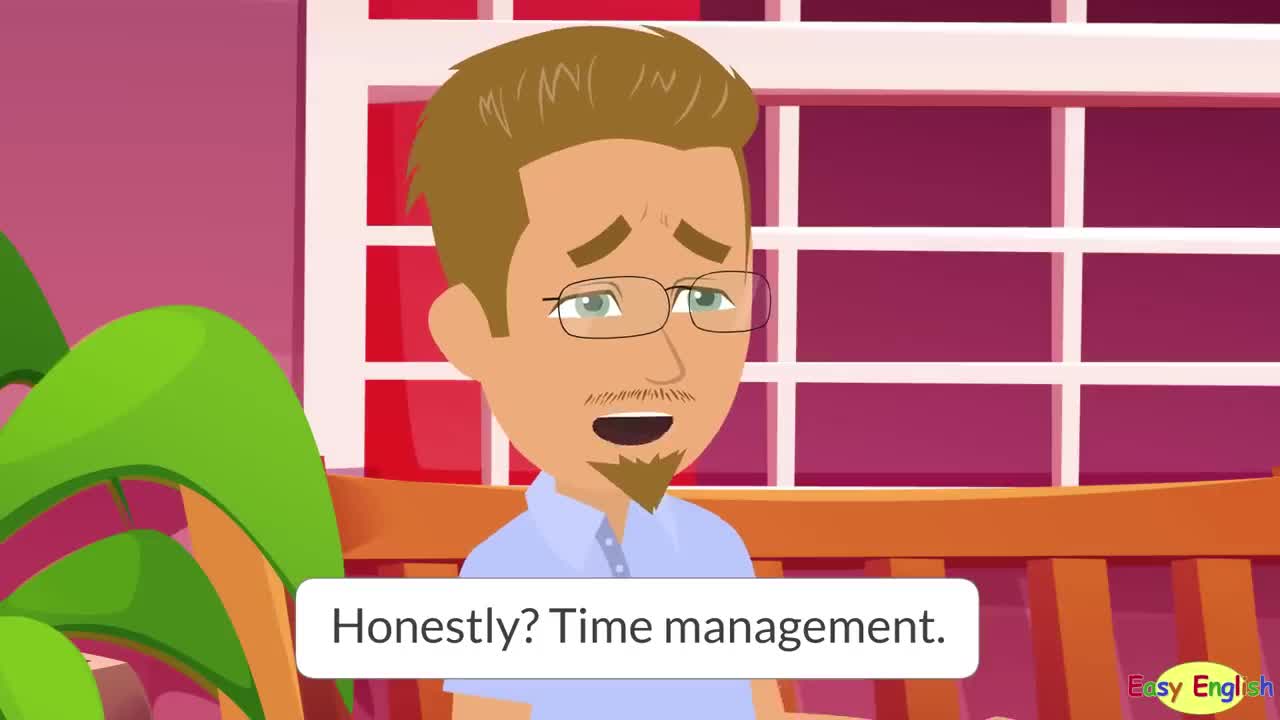
Honestly, time management.
There's so much to juggle.
Sometimes I feel like I have too many tasks.
I can imagine.
Have you thought about prioritizing tasks differently?
Like focusing on the most important ones first?
You know, that's a good idea.
I've been trying to do everything at once, but maybe breaking it down would help.
Exactly.
Plus, it might ease some of that stress.
Thanks.
I'll definitely give it a shot.
How about you?
How's life treating you?
It's pretty good.
Just the usual craziness.
But I've started running again, which feels great.
That's awesome.
We should go together sometime.
Cut to the chase.
So, um, you know how we've been talking about taking a break and like doing something fun together?
Yeah, I love that idea.
We definitely need some adventure.
Right.
Adventure is good.
And there are just so many places we could go to, you know.
Uh-huh.
So where are you thinking?
Well, there's this romantic place.
Um, it's really famous for its art and food.
Are you going to beat about the bush?
Or are you going to tell me where you want to go?
Okay, okay.
I'll stop dancing around it.
Yes, cut to the chase, Emily.
Where do you want us to go?
I really want us to go to Paris.
Paris?
Wow, that sounds amazing.
Right?
Imagine us strolling by the Seine, visiting the Louvre, and eating croissants.
Now you're talking.
Let's start planning our Parisian adventure.
Yes, I can't wait.
For real?
Hey, Nick.
How's your semester going?
Hi, Dora.
Honestly, it's been pretty awesome.
I think photography is my favorite class so far.
For real?
Yeah, I didn't think I'd enjoy it this much, but it's a blast.
I think I want to become a photographer one day.
You?
A photographer?
That's a twist.
I know, right?
But I love it.
We get to go out and shoot in different locations every week.
That sounds fun.
What's been your favorite assignment?
We had to capture emotions in a single shot.
I went to the park and snapped a kid laughing.
It just felt so... alive.
That's really cool.
I've always thought you had a good eye for things.
Thanks.
You should join me next time.
We could make it a creative outing.
Let's do it.
Let's get the ball rolling.
I'm curious about the new project we're starting, John.
Well, as you all know, our new marketing campaign starts this week.
Our goal is to increase brand awareness and drive more traffic to our website.
Sounds great.
What's our first step?
Good question.
I want us to get the ball rolling today.
We need to brainstorm ideas for our campaign themes and strategies.
I think we should consider some social media influencers to partner with.
Their reach could really help.
That's a fantastic idea, Mike.
Let's jot that down.
Rob, do you have something to add?
Yes, I was thinking about a contest.
Engaging our audience could create some buzz around the campaign.
Perfect!
Contests can be a great way to connect.
Let's keep these ideas flowing.
Agreed.
Let's keep the energy up.
Alright team, let's get the ball rolling and make this campaign a success.
Chill out.
Man, this week has been insane.
I have so much work to do.
I hear you.
But seriously, you need to chill out a bit.
It's not the end of the world.
Ah, I know, I know, but I've got a million things to do.
Dude, you always have a million things to do.
Remember last month?
You said the same thing.
Yeah, but this time it's different.
Is it though?
Or are you just overthinking it?
Just chill out, man.
Okay, okay.
You're right.
Maybe I need a break.
Exactly.
Let's hang out this weekend.
Go hiking or something.
Nature always helps me chill out.
That was epic.
That hike was awesome.
Totally.
I mean, the views were insane.
Right?
When we reached the summit, it felt like we were on top of the world.
I couldn't believe how far we could see.
And that sunrise?
Epic.
The way the light hit the mountains was like something out of a movie.
Totally.
I was like, this is why I wake up early on weekends.
Same.
And that little waterfall we found on the way down?
I didn't expect that.
I know.
The water was surprisingly refreshing.
As soon as I saw it, I was like, we have to jump in.
Yeah, we just dove in without thinking.
And remember when we got lost for a bit?
That was epic in a different way.
Oh, yes.
The way we just embraced it and ended up on that hidden trail was the best part.
Exactly.
It turned into an adventure within an adventure.
That's what makes our trip so epic.
I'll take you up on that.
So, any plans for the weekend, Jane?
Not really.
Just the usual.
Catching up on sleep and maybe binge-watching that new series.
You mean the one with the dragons?
Yeah, that one.
I've heard it's pretty epic.
But you know me, I'll probably end up scrolling through my phone instead.
You should come over.
We can watch it together.
I'll make popcorn.
That sounds tempting, but what if I just end up falling asleep on your couch?
Then I'll throw popcorn at you until you wake up.
Okay, that's fair.
Seriously, it'll be fun.
Plus, we can catch up properly.
You're right.
So, what do you say?
I'll take you up on that.
Great, it's a plan then.
We've got to keep it real.
So, how's everything going with you and Mia?
It's been good, I guess.
You know how relationships can be.
Some days are great.
Others, not so much.
Yeah, I get that.
It's like a roller coaster sometimes.
Exactly.
One minute we're laughing.
And the next, we're arguing over who left the dishes in the sink.
Classic.
But isn't it all about how you handle those moments?
For sure.
I think communication is key.
We have to talk things out.
That's true.
Sometimes I feel like people just avoid the tough conversations, and it just makes things worse.
Right?
I mean, it's better to be honest than to let resentment build up.
You make a good point.
It's like, if you're not being real, what's the point of being together?
Exactly.
At the end of the day, we're a team and we've got to keep it real.
Get off my back.
So how's life treating you these days?
Oh, you know, the usual.
Work's been hectic.
My boss wants everything done yesterday.
Oh, I feel that.
I'm also trying to keep my head above water with all the deadlines.
Speaking of which, have you thought any more about that promotion?
Not really.
It's a lot of pressure, and I'm not sure I'm ready for all that.
Come on, Sally.
You'd be great at it.
You've got the skills.
I appreciate the vote of confidence, but I'm just not in the right headspace for that kind of commitment.
You're just scared of more work.
Maybe a little.
But seriously, Jess, I've got enough on my plate right now.
You're always making excuses.
Get off my back.
I'm just trying to figure things out here.
All right, all right.
I'll back off.
But I'm still rooting for you.
Thanks.
I appreciate it.
It's on you.
Mom, what's for dinner?
I'm making roasted chicken with veggies.
Trying to keep it healthy.
Veggies?
Ugh, I don't like veggies.
Well, how about you give them another chance?
They're really good for you.
But I wanted chicken with french fries.
We can't have french fries every day.
How about this?
The chicken is going to be super tasty, and the veggies will help you grow strong and healthy.
Plus, they make your plate colorful.
But they taste weird.
I've added some spices and herbs that will make them taste incredible.
And remember, it's on you to choose what goes in your body.
It's on me?
Yes, you're growing up, so it's time to take charge of what you eat.
Okay, maybe I'll try a little bit of the veggies.
That's the spirit.
I promise you'll like them.
You make a good point.
So, how's the new project going?
It's been a bit of a roller coaster, to be honest.
The client keeps changing their mind.
Have you guys set any firm deadlines yet?
Not really.
It's like we're all just waiting for them to figure things out.
That's frustrating.
I think if they don't have a clear vision, it's on them, you know?
Exactly.
But I also feel like we need to guide them a bit more.
True, but at some point, it's their responsibility, too.
You make a good point.
We can't do all the heavy lifting.
Right?
It's a team effort.
They need to step up if they want results.
Maybe I should just send them a weekly reminder.
Hey, still waiting on you.
That might actually work.
I'm down!
So, how's your week been?
Not too bad.
Just the usual school stuff.
How about you?
Same here.
Lots of homework, but I managed to finish most of it yesterday.
Nice.
I wish I could get that motivated.
It helps to have a deadline, I guess.
True.
Any plans for tonight?
I was thinking of just chilling at home.
Maybe read a book.
You know what?
What?
I heard there's a new sci-fi movie out.
Oh, really?
What's it called?
It's called The Electric State.
I've seen the trailer, and it looks awesome.
Oh, right.
I've heard good things about it.
Want to go to the movies tonight?
Oh, yeah.
I'm down.
Awesome.
What time do you want to meet?
Should we meet at the food court around 6.30?
6.30 works for me.
We can grab some snacks before the movie.
Cool.
I can't wait.
Same here.
Movie night it is.
Keep your cool.
You've been kind of quiet today, Pam.
What's up?
Ugh, it's this test coming up.
I just can't shake off the nerves, you know?
I get that.
Tests can be really stressful.
But you've studied a lot, right?
Yeah, I have.
But what if I blank out?
Everyone keeps saying how hard it is.
Look, I know you're worried about the test, but you'll do better work if you keep your cool.
Easier said than done, Trisha.
True, but remember that time you thought you'd fail that math quiz and you aced it?
Yeah, I guess I did surprise myself.
Exactly!
You just need to trust yourself a bit more.
You're right.
I just need to breathe and remember what I studied.
That's the spirit.
Thanks, Trisha.
I really needed this chat.
I didn't spill your secrets.
You know what, Jane?
I'm really tired of you spilling my secrets to everyone.
What?
I didn't spill your secrets, Sylvia.
Oh, really?
Then how did everyone at the party know about my breakup?
I...
I thought you'd already told them.
You have a big mouth, Jane.
You always have to share everything.
I'm just trying to be friendly.
I thought friends shared things.
Yeah, but there's a line.
Some stuff is personal.
Okay, I get it.
But I thought you wanted people to know you're okay.
I wanted to control who knows, not have it blasted everywhere.
Okay, I didn't mean to overstep.
I'm sorry.
I just need you to keep my stuff private.
Can you do that?
Yeah, I promise.
I'll be more careful.
Alright.
Friends again?
Thanks for watching and be sure to subscribe to our YouTube channel for more videos like this.