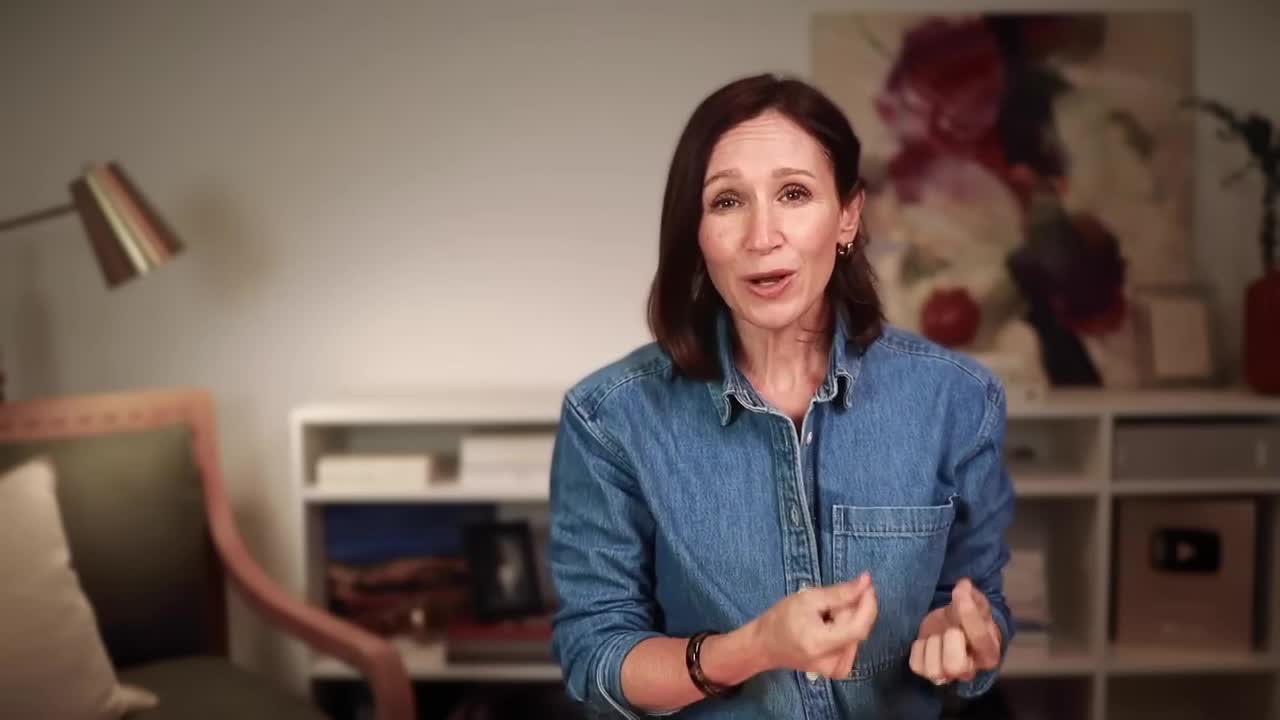
What if you could speak english with authority and inspire trust with your voice, even when you feel nervous on the inside?
I know that might sound a little too good to be true right now, but i promise you it's possible.
I just want you to stick with me.
You and I know that when we're nervous, our voice can betray us.
People can hear shakiness, hesitation, and a lack of confidence.
As a result, they might make snap or quick judgments based on those first impressions.
But it doesn't have to be that way.
Even the most experienced public speakers feel nervous.
I still feel nervous sometimes, even after more than 20 years of teaching and more than 10 years of doing videos like this.
Chances are, you're going to feel nervous too.
In job interviews, presentations or even everyday meetings with your colleagues, where you want to share an idea that is important to you.
The key is this.
Train your voice to sound powerful, even if your heart is racing or your palms are sweaty or your mind feels totally blank.
And today we're going to walk through four practical techniques that will help you control your voice and speak with clarity, confidence and authority in English.
So let's start right away with something you can do now to steady your voice.
I want you to work on controlling your breathing.
I know that this doesn't sound super important.
And right now you might be thinking, Annemarie, I want to learn how to make my voice sound powerful.
Why are you talking about breathing?
In just a moment, I will share with you the most important change that you can make in your speaking to demonstrate confidence and authority.
But the truth is how you breathe is the foundation of everything.
When we're nervous, we tend to breathe fast and shallow without even realizing it.
And here's what I mean.
Take a look at how I'm breathing.
Notice that it's very quick.
It's not a long, deep breath.
And I'm not breathing deeply.
I'm just breathing from sort of this top part of my body here.
That shallow breathing tightens our throat muscles and it reduces airflow, ultimately leading to a voice that sounds shaky or weak.
And that's not all.
That tension in your throat can tighten your vocal cords, resulting in a higher-pitched voice.
We're going to talk more about the possible consequences of a consistent, high-pitched tone in a moment.
But there's one more thing about this shallow breathing.
It also connects to your mental clarity.
Fast, shallow breathing sends signals to your brain that there's danger, which increases panic.
And that increased panic makes it hard to think clearly.
So if you've ever felt like you forget everything in English when you're nervous, or like there's some kind of fog or cloud in your brain, this is why.
So how exactly do you break this cycle?
First, I want to remind you to relax.
And I know that that is easier said than done.
I also want to remind you that you're in control.
You get to make decisions about what to do when you're nervous.
You can decide to use techniques that are going to help you or not.
So to help, what I want you to do is this.
I want you to practice box breathing to lower anxiety.
Anytime you're nervous, the best thing to do before you speak is this simple box breathing activity.
It will allow you to reset, and here's how to do it.
It's very simple.
Number one breathe in for four seconds, hold your breath for four seconds, then slowly breathe out for four seconds and again hold your breath for four seconds before you start that cycle over.
I would be more than happy to demonstrate it for you, but I'm not sure you want to watch me breathe for 20 seconds.
What I love about box breathing is it's super simple and very subtle.
You can do it anywhere.
Now, if you're still feeling just a bit uncertain, here's another way to think about this.
I want you to imagine smelling something wonderful like fresh bread, jasmine or a great cup of coffee.
How do you breathe in those moments?
You breathe slowly, deeply, like you want to hold on to that smell.
That's exactly the breath you want to take before speaking.
And here's why.
Deep breathing isn't just about relaxation.
It's the foundation of your vocal power.
When you breathe deeply, it releases tension. in your throat, jaw, and face.
It also gives your vocal cords steady airflow, which contributes to a lower pitch so you sound calm.
And it activates your body's natural calm down system.
Now that you have breathing in place, let's talk about pausing.
When you speak english, i want you to pause more.
I want you to go slow and steady.
I know this doesn't sound right.
When i work with my students on this in fluency school, the first thing i hear is anne-marie, if i pause, won't i sound awkward or less fluent?
Actually, the opposite is true.
There's this big myth that fluency means speaking fast.
But let me show you how fast speaking sounds.
When I work with my students on this in fluency school and the very first things I hear is Amory, if I try to pause one, I sound more awkward or less fluent.
It is really not easy to speak fast.
And the truth is, when I try to speak fast, I lose my breath and I make a ton of mistakes.
On top of that, it was also probably really difficult to follow and impossible to understand.
If you've ever tried to speak fast so that people wouldn't interrupt you or so that you sounded fluent, I get it.
But let me ask you, did I sound calm and confident?
Did I speak with authority?
Did I inspire trust in that moment?
Or Did I sound nervous?
And if I spoke like that all the time, would you be here right now?
Would you trust me to help you in your English confidence and fluency?
Probably not.
So I want you to remember this.
Pauses are not mistakes.
They are a fluency strategy.
When you speak too fast, you run out of breath.
Words blend together and your voice sounds shaky.
Pausing in the right places helps you breathe.
Stay calm and keep your message clear.
In fact, research from institutions such as the National Center for Voice and Speech indicates that a slower, steady pace with effective pauses is the key to clear communication.
I want you to think for a moment about your favorite Ted Talks experienced news journalists and admired podcasters.
They have all learned how to slow down and pause.
Now.
If you would love to learn more about when to pause and how to do it right after you're finished watching this video, I want you to check out my lesson titled How to Group Words and pause for natural sounding English.
That lesson is a great place to start. for practicing with confidence.
And if you truly want to master the ability to speak English with clarity and control.
This is one of the pillars of my Fluency School program, which I offer twice a year.
The next one will be coming up soon.
So if you'd love to get all the details to join me, you can do that over at SpeakConfidentEnglishcom.
And now, moving on to our third technique for speaking with authority is your posture.
I know it's another surprising one, but here's why this is important.
Just like your breath.
The way that you hold your body affects breathing.
Vocal strength and clarity.
And if you're not sure, I want you to try something with me right now.
I want you to gently cover your mouth with your hand and then say this simple sentence.
Hi, my name's and then include your name.
So here's my example.
Hi, my name's Anne Marie.
I want you to do that and listen carefully to how your voice sounds.
Do you notice that it sounds trapped, tight and weak?
That's exactly what happens when we speak with a closed posture, meaning that your body is hunched forward, as mine is now, the shoulders are rounded or slouched and everything gets tense.
In these positions, your chest cannot fully expand, your breathing is restricted and, as a result, your voice is going to sound shaky, quiet and weak.
So what happens When we feel nervous?
If we're not paying attention, anxiety can signal fight or flight mode to your body.
And this triggers a variety of responses, including tense muscles and defensive postures such as those rounded shoulders in a slouched position.
Again, restricting everything and tightening your voice.
So what's the solution?
It's easy.
It's an open posture.
When you open your chest, relax your shoulders and loosen your jaw.
This open posture naturally amplifies your voice, enhancing vocal resonance and producing a fuller, clearer sound, with no extra effort and no extra volume.
Now I want to back up for a moment and talk about a word I just used, resonance.
This is when your voice vibrates and naturally fills the space without effort.
And for this I want you to imagine the sound of tapping on a crystal wine glass versus the sound of tapping on a plastic bottle.
Think about that for a moment.
When you tap on a crystal wine glass, the sound expands in the room.
It vibrates through the room.
But a tap on a plastic water bottle?
It's just an empty thud.
There's nothing to it.
So, with that in mind, here is a posture checklist for you to use before you speak, especially if you're nervous.
First, I want you to stand or sit tall.
Imagine there's a string pulling the top of your head to the top of the ceiling.
And then relax your shoulders.
Just let them drop naturally.
And open your chest, giving your lungs room to breathe.
Next, I want you to think about loosening your jaw and your tongue.
A great way to do this is to have just a very gentle slight smile when you're speaking.
And finally, relax your face, including your eyebrows and your facial muscles.
In a moment, I'm going to share with you my favorite way to practice all of this, so that you can instantly see the impact of these changes.
But before we get there, there's one more technique to take a look at.
If you saw my lesson last week on rising intonation, you might remember that I briefly discussed up speak.
This is when Our sentences sound like questions, even though you're just making a simple statement.
Consistent use of rising pitch can lead to negative perceptions, including a lack of confidence, reduced authority and insecurity, which is the opposite of what we're trying to do.
Now here's what I didn't tell you last week.
Anxiety increases the potential for up-speak.
And just as a quick reminder, here's what up speak sounds like.
I'm going to say a sentence in two ways, and I want you to listen carefully to the ending.
First, this is the best solution.
Second, this is the best solution.
Listen to those again.
Number one, this is the best solution.
Number two, this is the best solution.
As you notice, those two phrases are exactly the same.
I didn't change the words at all, but that change in intonation sent very different messages.
In the first one, with rising intonation, i'm indicating that my thoughts on this solution are uncertain.
I really don't know if this is the best solution.
I feel unclear and i'm really curious what your thoughts are.
In the second one, with that falling intonation, i'm indicating clarity confidence, certainty.
Now, so far in this lesson today, we've talked about the fact that anxiety can lead to shallow, quick breathing, meaning limited air.
It can lead to muscle tension and closed posture.
And on top of that, anxiety increases fears of interruptions, being misunderstood and making mistakes.
Together, these factors make up-speak a common vocal symptom when nervousness shows up.
So how do you solve this?
Well, to start, i want you to try these four steps.
The first deep breathing.
We want to make sure that we're feeling calm and that we have a full supply of air so that we can finish our sentences strong.
Then step two is to slow down, give yourself time to breathe and be in control of your pitch, of your intonation.
Then number three keep an open posture, creating that physical space for your voice to resonate downward and finally, have awareness over your pitch.
This is going to help bring focus to how you use your voice and how other people hear your voice.
So let's practice this together.
I'm going to give you a sentence.
I'm gonna say it with rising pitch and I want you to do it with me.
This is the best approach.
And now let's shift to a falling pitch or falling intonation.
This is the best approach.
Consistently using that falling pitch at the end of your sentences is going to send signals of clarity, confidence and authority.
Now that you have all four of these techniques, I want to show you the best way to practice them.
Now, before I share this favorite method of mine, I want to be clear about speaking with authority and confidence.
You can start using all of these techniques today and you will feel, you will hear, you will notice a difference, even in your very first sentence.
But something else is also true.
If these habits have been with you for a long time, they will not disappear overnight.
If, for example, up speak or fast speaking or shallow breathing happens to you without realizing it, the real change will take consistency.
You'll need time repetition, self-awareness and sometimes even support from others to make lasting change.
The good news is, the more you use these techniques, the more natural they become, and every single time you speak English, you have the opportunity to put these techniques into practice.
And that brings me to my favorite way to do that, my favorite practice method.
And it's very simple.
Record yourself speaking and then listen to it.
If you've never done that before, I know it can sound uncomfortable.
And honestly, it is.
No one really likes to hear their voice in a recording.
So when you listen to yourself in a recording, you might cringe at first.
That's okay.
It's normal.
A minute or two of discomfort.
Recording your voice and listening to it is a very small price to pay for lasting change.
Now let's talk about why I love this method so much and why it's so effective.
First, it gives you a safe space to practice all of these techniques.
That might feel strange the first time you use them.
You can try breathing, using pauses and changing your pitch without the judgment of anyone else around.
It's just you.
Mistakes are allowed.
This practice method also helps you to switch from speaker mode into a more objective listener mode.
The truth is, when you listen back to your recording, you're going to hear things that you didn't notice in the moment.
You'll notice your speed, your clarity in your pitch.
And lastly, the best part of this practice method is it tracks your progress.
If you save a few recordings and I recommend that you do you'll start to hear real improvement over time.
And that is extremely powerful.
So again, if you've never done this before, let me give you a few tips for how to get started.
First, just keep it very simple, very short.
Just record yourself speaking a few sentences.
It doesn't have to be a long presentation.
It can literally be just one minute talking about your day.
And then you stop.
You stop recording and the next step is to listen actively.
As you listen, ask yourself just one or two things.
Did i pause?
Did i use falling intonation at the end?
It's really important to just focus on one element at a time.
Maybe right now, pauses are really important to you or you are trying to work on posture.
Focus on one thing at a time And finally stay consistent.
I want you to think about it like fitness.
You build strength with regular practice, not just one long session at the gym.
And the same is true for your English practice, building up the ability to speak with authority and confidence.
Lastly, I want you to remember that this is not about perfection.
Perfection just doesn't exist in speaking.
What we're doing here is learning how to build awareness, have control and communicate with confidence.
Every time you follow this practice method recording, listening and then adjusting as you go you're training your voice and you're training your brain.
Now, if you're listening to this and thinking this all makes sense, but I know these habits are going to be hard to change on my own.
You're not wrong.
And these are exactly the habits we retrain inside Fluency School, my in-depth speaking program that is focused on helping you speak with clarity, confidence and freedom.
Inside Fluency School, you don't just learn strategies, you practice them in real time, with expert feedback and a supportive international community of other people who know exactly what it feels like to stay silent or feel stuck.
Fluency school isn't about relearning grammar or memorizing a bunch of dialogues.
It's about learning to speak clearly, confidently, and fluently.
I have to say, one of my students, Gergana, said it best.
After finishing fluency school, she said if I had to pick a word, it would be freedom.
I feel free in english, and that's what fluency school is all about.
Again, if you want to get all the details and learn how to join me for that, you can find them over at speakconfidentenglishcom fluency school, and i'll leave a link in the episode notes as well.
You now have four practical techniques that you can use to train your voice to be powerful and to inspire trust.
You've learned to control your breathing so that you calm your anxiety and strengthen your voice.
You've also learned to slow down and pause to project control and clarity.
You've learned the importance of opening your posture so that you enable full vocal power and resonance, and you've learned to end statements with certainty, to signal confidence and authority.
These aren't just tips.
They're voice control techniques backed by research on the nervous system, vocal mechanics and listener perception.
So now it's your turn.
I want you to take the opportunity to use that recording method i shared with you today.
Record yourself speaking aloud, even if it's just for a minute, using these four techniques.
Notice which one makes the biggest difference for you.
And after you give it a try, share it with me in the comments.
I would love to know how it goes for you.
And don't forget that, if you want to learn more about pausing in English, be sure to check out my lesson how to group words and pause for natural sounding English.
As always, if you found this lesson helpful to you, don't forget to subscribe or follow.
Wherever you're listening or watching from today.
Thank you so much for joining me and I look forward to next time.