Do you want to sound more British?
It's actually pretty easy.
Today, you are going to learn how to sound like a Brit in just 12 minutes.
So we're focusing on phrases in this lesson, but that is only one part of sounding more British.
If you really want to sound British, you also need to perfect the accent.
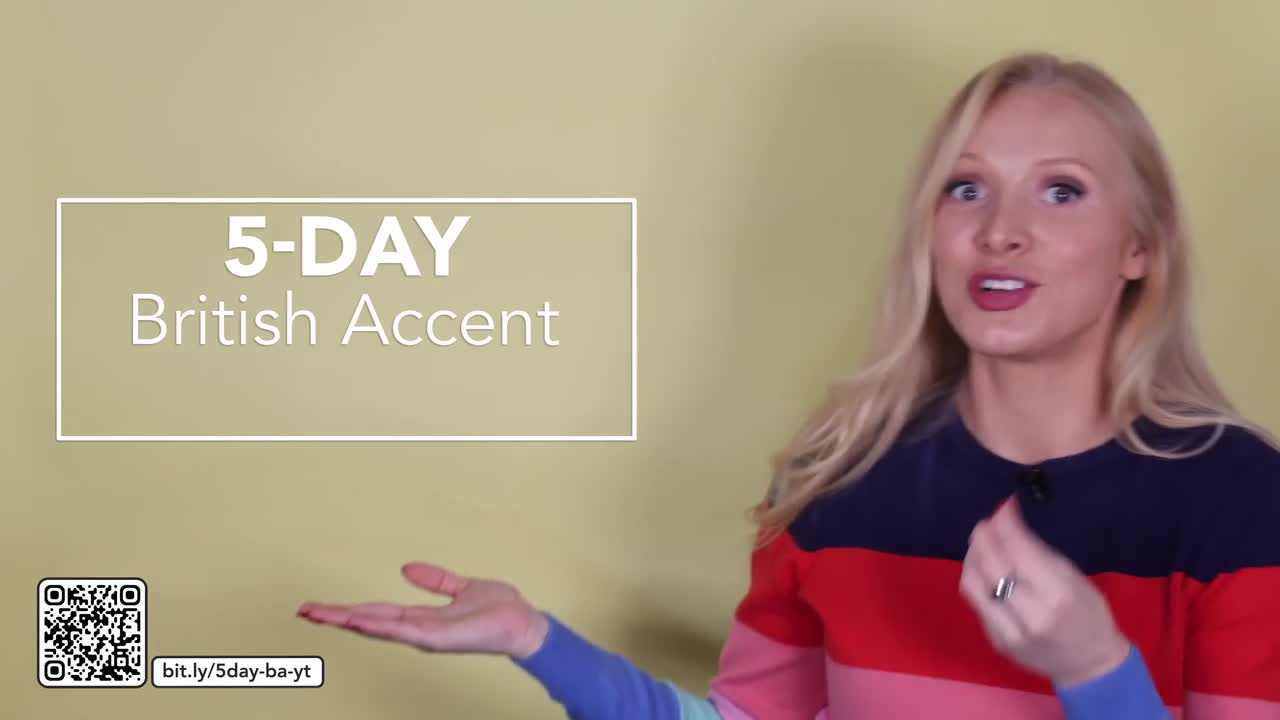
The fastest way to get started on that is my five-day British accent bootcamp.
In just 15 to 30 minutes per day for five days, you will learn the sounds that make my accent modern RP stand out.
From essential vowel clarity to the letters we soften or drop, all while mastering natural rhythm with real British vocabulary.
I am offering lifetime access to the content and a huge discount.
Enrol today and make huge progress fast.
To learn more and join, click the link in the description box or scan the QR code there.
Okay, today we're looking at polite, indirect language.
Now, the UK is very diverse.
Not everyone uses all of these phrases, but in general Brits are known for being quite indirect.
We don't say how we really feel.
Sometimes this is very annoying.
We often soften or hedge our statements and questions in various ways.
If you want to understand British people and maybe even sound more like us, these are the phrases you need to know.
We will begin with polite requests.
Let's imagine we're at a cafe.
This is a fairly standard question and it's absolutely fine.
Can I have a flat white please?
Is there a word to replace can to make it even more polite? could I have a flat white, please?
We also use could to ask for permission politely.
Could I borrow your phone, please?
Could is the past form of can.
We often use past forms to sound less direct and more polite in English.
To ask for permission, we also use may and even might, which is the past of may.
Might is very polite and it's quite formal.
It's not common in modern English.
You might hear it though.
A couple of examples, may I borrow your phone please?
Or may I ask whether you've had time to consider my offer?
Now, may I ask whether is doubly polite because it forms an indirect question.
That's a question within another question using an introductory phrase.
Another common phrase used in indirect questions is, I was wondering if.
For example, I was wondering if you were free tomorrow.
Are you free tomorrow is fine, but using this phrase I was wondering if you were free tomorrow is more polite and less direct.
And what do you notice about the tense?
It's in the past.
I was wondering if you were free.
Again, past tenses are used for distancing and politeness.
You'll often see, I was wondering if, followed by a modal verb in the past tense.
We really like to layer on the politeness sometimes.
For example, I was wondering if you could help me.
And to soften the question even further, we can use just.
We were just wondering if there might be a table available this evening.
Now, of course, we could simply say, is there a table available this evening?
But where's the fun and Britishness in that?
Another brilliant phrase for this section is, would you mind?
We can use this as a polite request, in which case it's followed by an ING verb.
For example, would you mind closing the door?
Or it can be followed by if I or if we to politely ask for permission to do something.
Would you mind if I closed the door?
Now notice how the d and y sounds in would and you come together in fast speech to form j would you.
We also often use a schwa at the end, would you, would you mind?
And again, we can use this phrase with other polite ones.
I was just wondering if you'd mind helping me carry these boxes.
So wordy, so British.
A final way to make polite requests is by using the second conditional.
You've already seen some examples.
Here are a couple more.
It would be great if you could attend the meeting on Friday.
Or I'd appreciate it if you could let me know as soon as possible.
Notice we use it after appreciate.
Learn this as a chunk.
I'd appreciate it if.
We can also use second conditionals in questions.
Would it be okay if I sent the money on Friday?
Or might it be all right if we arrived a little earlier?
Let's think about making suggestions now.
Here's one way, but it's quite direct.
We should take the train.
Can you think of a way to make it less direct?
Well, Brits often use the modal verbs might and may when making polite suggestions.
For example, we might want to take the train.
It may be a good idea to speak to your manager.
Or it might be worth leaving by seven in the morning.
Now notice it's be worth followed by an ing verb, worth leaving.
Now let's see three polite, gentle ways of disagreeing.
It might not be the best idea.
I might be wrong, but I thought the deadline was on Thursday.
I'm not sure that's quite right.
In those sentences the speaker is probably certain of what they're saying, but they softened their language.
We just really don't like saying you're wrong.
Let's see a bit more language to hedge our statements or make them less certain.
We often use to seem and to look like.
For example, there seems to have been a misunderstanding.
You misunderstood in plain language.
Or it looks like the project is going to go over budget.
We can also use the adverbs possibly, maybe, and perhaps.
This makes sentences more tentative.
For example, maybe we could try the new Italian tonight.
Or perhaps you might prefer it if I drove.
I know the roads.
That's a lot more polite than saying, hand over the keys, I don't like your driving.
To sound even more British, say perhaps with one syllable instead of perhaps with two.
Perhaps Jenny's coming later, for example.
We will round off the video with some more softening language.
We saw just earlier.
We often use just to make something seem less strong or less emphatic.
For example, could I just have two minutes of your time?
Similar words include a bit or a bit of, a little and a little bit.
Often we use them for understatement.
For example, we might have a bit of an issue here.
This means we definitely have a big issue or i'm a little bit concerned about harry, which tends to mean i'm extremely worried about harry.
We also use vague language to sound less direct, like kind of and sort of notice how i'm saying of, not of.
Within sentences we tend to use the weak form of kind of or the informal contractions kinda and sorta.
For example, we kinda got the impression that he might not want to see us, or I was sort of hoping you might lend me your car.
Who could say no to that very indirect request?
Okay, let's finish off with a quiz.
There are five questions in total, but for questions one to three, I'd like you to complete the gaps with a word you've seen in the video.
Ready?
Number one, you want to speak to John about that.
Number two, there to be a bit of an issue with the report.
And three, I was wondering what time you were arriving.
Okay, let's correct these ones first, then we'll do four and five.
In the first gap, we can have might.
Remember, we use you might want to, to make a polite suggestion.
In the second, seems.
This makes you sound less certain and less direct.
And in the third, just.
This minimises your question and makes it seem less important.
For questions four and five, think of more British ways to phrase each one.
They are both fine as they are, but let's make them super indirect and polite.
Ready?
Number four, can you make me a coffee, please?
And number five, you didn't understand me.
Pause if you need to.
There are lots of possible answers.
Could you make me a coffee, please?
Or I was just wondering if you could make me a coffee, please.
Are great for number four.
And for number five we could have.
I think you might have misunderstood, or there seems to have been a misunderstanding.
There are many other ways of phrasing that too.
Let me know your answers in the comment section and let me know your scores out of five.
Well, I'm really sorry, but I think we might have reached the end of the video.
Do you think you might start using all of these phrases or are they just too indirect for you?
They can be quite frustrating.
Let me know in the comments.
I hate a debate as a British person, but I'll go with it anyway.
Oh, and if you're ready to make some serious progress with your British pronunciation, my five-day British accent bootcamp is exactly what you need.
In just five days, you will learn how we actually speak here in the UK.
We'll focus on my accent, modern received pronunciation.
You'll learn the real sounds, the natural flow.
As I said, there is a huge discount and lifetime access.
To learn more and join, click on the link in the description box or scan the QR code there.
I will see you in the next video.
Bye.