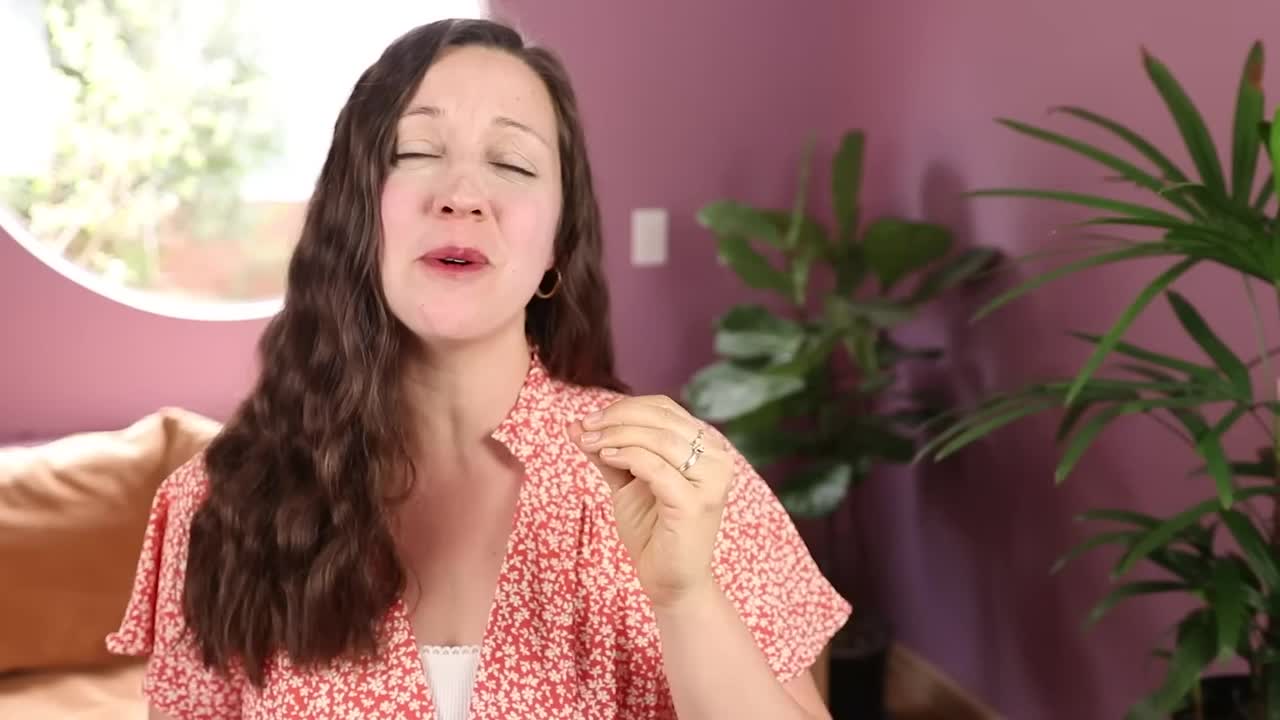
Today you're coming with me to the grocery store, the pharmacy and the gas station to immerse yourself in real life English.
No amount of AI lessons or trainings can prepare you for how the real world works.
So join me and by the end of this lesson you will be able to go out into the real world and use English with confidence.
If you're new here hi, I'm Vanessa from SpeakEnglishWithVanessacom and for over the past 10 years I have been teaching real life English to over 7 million of you here on YouTube.
And every single week I create a free PDF worksheet for you.
This worksheet includes everything you're about to learn today.
Plus I have included a special speaking bonus.
You will have the chance to have real speaking practice with me.
It is essential that you not just listen to today's lesson, but that you immediately use what you've learned.
So when you download this free worksheet, you can also download the speaking practice and get using it right away.
How can you get this worksheet?
Well, all you need to do is click on the link in the description, enter your name and email address and voila, just like that, this worksheet will land in your email inbox.
It is my gift to you.
So are you ready to join me at the grocery store back when my son was so small and so adorable?
Let's go.
All right, first things first, we are going to go through the parking lot and get a cart.
I call this just a cart. but some people call it a shopping cart.
And here in the south where I live, people call it a buggy, a buggy.
Our first stop is the free fruit snack for kids.
This is Freddie's favorite thing to do in the grocery store, so I sure hope they have something for him.
Look at this Freddie, you want a banana.
Yeah okay, can you open it?
Maybe you need some help.
Wow, hold it down there.
Yummy, All right, let's go get some stuff from the produce section.
Notice that I said the word produce section.
This just means where you can buy fruits and vegetables, but let's pay attention to the pronunciation of that word produce.
The emphasis is at the beginning.
Produce.
Produce.
There's another word which is a verb.
To produce something.
I produce one YouTube video every week.
Here the emphasis is at the end. produce.
I produce a video.
This is different than the produce section.
We're in the produce section right now and let's see what's going to happen next.
Who knows?
It could be anything.
Should I get the single ones or should I get the bag?
Well, let's see.
There's 94 cents for this, and there's 1, 2, 3, 4, 5, 6 in here for $5.
It's a better deal, but they're in a bag.
Look at this.
What do you think?
Should we get lemons?
Yeah, let's get some lemons.
When you're buying produce, you have two options.
You can buy loose produce, like the broccoli that I bought, or you can buy bagged produce, like the lemons that I bought, or here, like the potatoes.
And really, there are so many to choose from.
It's pretty unbelievable the type of options that we have these days.
I feel so lucky to have these options.
As we go through the bulk section, where you can buy items in bulk, you'll see these bananas in a bag that are on sale.
I want you to know the difference between on sale and for sale.
These bananas are on sale.
That means there's a discount.
It's on sale.
But really, every item in the grocery store is for sale.
For sale means that you can buy it.
There's no special discount.
There's no special price.
It's just for sale.
Here we are at the deli counter.
At the deli counter, you can order freshly sliced lunch meat.
You might say, I'd like half a pound of turkey, please.
Or I'd like a pound of cheddar cheese, please.
We decided to not order anything today because there was only one person working early in the morning and the wait was too long.
But that's all right.
Let's move on to the next thing.
In the bakery, you can get some freshly baked donuts, bread, or cakes.
Because Freddy is turning two soon, at the end of March.
We've been talking about cakes a lot recently.
He's very excited about getting a birthday cake or cupcakes.
Let's see.
What cake would you like for your birthday?
This one?
Yeah.
This one or this one?
This one.
This one?
This one.
This one?
Yeah.
This one?
Oh, the one with the cereal all over it?
That looks exciting.
You know what would be really good?
Yeah.
You'd get some hummus.
You want some hummus?
That's bell pepper hummus.
That's yummy.
Yum is Freddy.
Thank you.
In the grocery store you have the option to get fresh fish or frozen fish.
But watch out because usually the fresh fish has been previously frozen.
You can also get fresh cuts of meat or you can get pre-packaged meat.
If you want to get a fresh cut of meat, you could say, I'd like two pounds of ground beef, please.
This is a really polite and common statement that you can use.
Now I'm going down an aisle.
Notice this pronunciation, aisle.
The S is silent.
Go down an aisle.
Or you can say, it's on aisle three.
Great pronunciation.
Pretzels, pretzels, crackers.
Crackers?
Are you excited about crackers?
Crackers.
All right, we gotta get some pretzels.
I wanna get this kind.
Hold it.
You wanna hold it?
Okay.
And I'm going to get this one.
That's our special snack.
That's our special snack.
We don't get many treats like chips and stuff, but pretzels.
We love pretzels.
Yep.
I'm walking past a case of frozen meat and on the other side is an end cap.
An end cap is a shelf on the end of an aisle.
The chips are on the end cap.
We're gonna get some poster board for Theo, me and for freddie.
Okay, you need some poster board too.
Is it down here?
Oh, let's go down here.
We need some poster board.
Oh, look at this Yes.
Next, I'm going to be walking to the dairy section.
The dairy section includes milk products like milk yogurt, cheese and also, for some reason, eggs are included in this.
The dairy section is refrigerated.
There are refrigerated items in this section.
Let's take a look at this pronunciation.
Refrigerated.
Refrigerated.
That final T is going to sound like a D in American English because it's surrounded by vowels.
This is very common for American English.
I'm going to say the word again and I want you to try to say it with me.
Refrigerated.
Refrigerated.
I'm in the refrigerated section getting some refrigerated items.
I hope that this helps.
I know this word is tricky, but you can do it.
All right, let's go get yogurt.
Where's the yogurt?
That way.
That's right.
It's that way.
Do you think we need to buy any eggs?
We actually don't need to.
We don't need to buy any eggs because our chickens make so many eggs.
We are looking for a plain whole milk yogurt.
Vanilla, vanilla, vanilla.
I don't want vanilla yogurt.
Plain whole milk yogurt, but this is so expensive.
Do we need yogurt that bad, Freddy?
Okay.
We need yogurt that bad?
Okay.
Okay.
Now it's time for a little splurge.
A splurge is something you don't need.
Maybe it's a little too expensive, but you really want it.
I'm going to get some sparkling water with a little bit of fruit juice in it.
It's so tasty.
Let's talk a little bit about alcohol.
In the state where I live, North Carolina, you can buy wine and beer in the grocery store.
This is a very simple thing to do, but if you want to buy hard liquor so this is considered like rum or vodka you need to go to a special store called a liquor store.
Here in the south, where I live, we call these an ABC store.
But you need to go to this specialized store if you want to buy something else, not just wine and beer.
But for now, I'm not going to get any of it.
I need to get some more gardening gloves.
Believe it or not.
Yeah, mine have holes in all the fingers.
The point of gardening gloves is to keep your hands safe, but if they have holes in all the fingers and this will save me a trip to Lowe's
Before we check out, there's one key word that I haven't talked about yet, and we need to talk about it.
Can you guess what it is?
It's the word grocery, grocery store.
That's where I'm at and I'm buying groceries.
There's two different pronunciations for this, and it's just a regional difference or a personal preference.
You can say grocery with an S sound in the middle.
Grocery.
Grocery.
But for me, I say grocery.
Re with a sh sound in the middle.
Grocery store.
Grocery store.
Both of these options are correct and it just depends on what you feel the most comfortable saying.
So you could say, I'm at the grocery store.
Or, I'm at the grocery store.
I'm buying groceries.
Or, I'm buying groceries.
Both of these are beautiful, very natural, and it's the most common expression that you're going to hear in the US when we talk about a store where you buy food.
It's the grocery store.
Now it's time to check out.
We can use this word as a noun or a verb.
Let's check out or let's go to the checkout.
You can also say the checkout counter.
Let's go to the checkout counter.
I need to buy the things that I put in my cart.
Let's check out.
It's time to check out.
At the checkout counter, watch out because there are a lot of snacks and junk food waiting for you.
The grocery store wants you to splurge and buy these things.
For me, I try to avoid them.
It's always unhealthy, not really a good choice. but this is here to make a last minute purchase.
I want to know in your country are there a lot of snacks and junk food options waiting at the checkout?
I think this is kind of common around the world, but let me know in the comments if this happens in your country.
Now I'm asking the kind checkout lady if I have her permission to film while I'm checking out.
I wanted to give you this experience to see the final step at the grocery store.
Well, I forgot all of my bags today, so I can help to check out too.
Let's do paper.
Now all of the items are going down the conveyor belt and the checkout lady is scanning them while I put them in my bag.
I usually bring my own bags, but this day I was so focused on filming, I totally forgot.
So I chose to get paper bags.
I can compost the paper bags in my garden, but you might choose to get a plastic bag because you can reuse them as a trash bag in your house.
It's time to pay for all of these groceries.
I'm scanning my membership card so that I can get a few discounts.
And she asked me if I want to use cash or credit.
Or she might say cash or card.
And you can choose which one.
Thank you.
Thanks, you too.
I appreciate your help.
Yes.
Bye.
Now I go out through the automatic doors, like magic, and load the groceries in the car.
I load the groceries in the car, and then at home I will unload the groceries.
Thank you for going to the grocery store with me.
Now it's time to hop over to the pharmacy and see how real American pharmacies work, plus learn some essential vocabulary for daily life and see when my daughter was just a tiny little baby.
Let's go.
All right, are you ready to join me, Vanessa, and my baby Matilda inside the pharmacy?
Let's go.
So inside a pharmacy in the US, there are a lot of things that you can purchase.
You might think that a pharmacy is just for medicine, but that's not true.
There's a lot of different sections, so let's walk around.
Here we are in the cosmetics section.
Cosmetics means makeup.
And you can see down each aisle.
Like this you can buy soap shampoo, really anything you can imagine.
Little toys and trinkets.
There are endless amounts of things you can get at a pharmacy.
In fact, this is something that the US is kind of known for, for having stores that are a one-stop shop.
That means you can stop one place and get everything you need.
Very convenient and kind of a stereotype.
This is where you would go if you were celebrating a birthday party and you wanted to buy some balloons candles, themed birthday plates for your kids, birthday cards, any cards for really any occasion.
In fact, this is something that pharmacies are known for is having lots of cards.
So if you are on the way somewhere and you realize i forgot to bring a card well, you can just stop into a pharmacy.
Let's see.
So over here you can see, this is the actual pharmacy part.
You can go to the clinic.
You can actually see somebody who is a certified nurse or doctor, someone who can give you some advice about a medical issue.
Generally, it's a good idea to make an appointment, but you can always drop in and ask if they have any way that you can talk with someone if you have an issue.
Over here, you can see It says in big letters what we came for, pharmacy.
So at the pharmacy, this is where you would go if you were going to pick up a prescription.
And in the US, there's a couple different ways to get medicine.
Unfortunately, a lot of medications that are pretty typical, like an antibiotic, you have to have a prescription, which means you need to see a doctor first.
You have to pay to see the doctor.
The doctor has to evaluate if you need that medicine, and then they will send a prescription to your chosen pharmacy.
So when you go to a doctor in the US, they'll ask what is your preferred pharmacy and you'll choose maybe a place like this, and you'll say the address and the location and then you can come here and you can pick up your prescription whenever it's available.
I see my baby has noticed the microphone.
You want to grab that?
Not a good idea.
It is possible that you could ask the pharmacist or, if they have a little clinic like this, you could ask them for some advice.
So if you have no appointment, if you just need some medical advice maybe you're on a vacation and you have a cough that won't go away you could ask Do you have any recommendations?
What should I do?
You could ask them for advice.
Who knows what they'll say, but it's always worth it.
And it's no problem to ask.
Let's take a look at some of the aisles to see what kind of medication you can get over the counter.
And I'll explain what that means.
So, for example, this is the children's section, but let's say you have allergies, terrible allergies, and you visit the US during like a spring season.
You will need to get some allergy medicine.
This is something that you can get over the counter.
These are children's allergy medications In the children's section.
But you can get allergy medicine.
You can get pain and fever relieving medicine over the counter.
And I've always been a little bit confused by this phrase, because where's the counter?
There's no counter.
Instead, that's the counter. where you actually have to have a prescription.
So don't be confused.
Over the counter means that you can just walk in and get it.
You don't need a prescription.
You don't need a doctor's approval.
You can just walk in and get anything over the counter, even though that's the counter.
Don't be confused.
Sometimes English is strange.
All right, let's keep walking and see what else you can get.
Need some Kleenex?
You can get Kleenex.
You can get wrapping paper if it's Christmas time like it is now.
You can get reading glasses if you forgot your reading glasses.
You can even get some kind of like minor medical supplies.
There are some hearing aids.
There are some braces for your arm.
There are alarm clocks.
Paternity testing kits.
I didn't even know you could get that here.
There's thermometers.
Pain medication.
Sometimes in the US we do use, you alright baby?
Sometimes we do use the brand name.
Oh, a little cough, maybe you need some medication.
We do use the brand name to talk about medications.
So if you ask a pharmacist I have a cough, what should I do?
And they recommend a specific brand name to you and you're not familiar with it, you can just ask oh, is that a cough medication or is that a fever reducing medication?
You're welcome to ask for clarification, because sometimes I don't know what the medication is either.
So feel free to ask for clarification if you're not sure.
All right, let's keep going.
Lots and lots of medication, lots and lots.
All right, we're getting to the section of stuff, not not medicine anymore candy candy, candy.
So if you need to buy any dry goods, maybe last minute christmas presents you can get toilet paper, laundry detergent, all of these types of dry goods.
And there's even lots of different types of foods.
So let's go take a look at the food.
There's candy and candy and candy and candy.
Lots of candy.
But there might be, you know, seasonal items as well.
Right now it is almost Christmas.
I know it's after Christmas when you're watching this, but imagine Christmas.
So lots of candy for stockings and different seasonal things.
There's many toys down here.
Let's actually go down the next aisle.
I want to show you something.
These types of things are like grab-and-go snacks.
So you could get pistachios, chocolate-covered almonds.
I love that kind of stuff.
More trail makes dried fruit, chips, lots of soda, lots and lots of soda.
Beef jerky, lots of beef jerky apparently.
Different types of popcorn and juices and back here It's a little bit loud.
There are coolers where you can get cooled drinks.
And guess what?
In some pharmacies in the US, you can buy Alcohol.
Did you hear that right?
Alcohol.
You can get beer and wine in some pharmacies and that's really normal.
Here, I guess in this pharmacy, I don't see any.
It might be state by state too.
Different states have different rules.
But don't be surprised if you walk into a pharmacy and there's wine.
Grab a bottle of wine and go have a party.
Let's go down here for the last section.
This is the baby section.
So if you have a baby, like I do, and you need to buy anything like specific baby medicine, baby soaps diapers wipes, any of these types of things, you can get this here.
So it's pretty incredible.
Pharmacies are... so inclusive of many different things.
They are really a one-stop shop.
Now I must say that oftentimes pharmacies in the US are gonna be more expensive than going to somewhere like Walmart or purchasing something online, if you have that option.
But you know what?
Sometimes, when you're visiting or you're traveling, it's nice to just go to one of these places.
That's an easy access and one stop shop and you can just get whatever you need to get.
All right, I'm going to grab a pack of baby wipes.
You always need baby wipes when you have a baby.
And we're gonna go to the checkout and I'll show you how the checkout works.
If I remember right, this pharmacy has a couple checkout options.
So let's go see.
Oh, you can even get stuff for your car.
Pretty amazing.
If you need some washer fluid or something for your car or to wash your clothes, it's here.
So I'm going to use the self-checkout because that's the easiest option and there's nobody here right now.
And I think those are pretty much pretty much the same all around the world.
Place your item in the bagging area.
I did.
One little note as I do this, there is a photo studio.
So if you want to have any pictures printed and you don't have access to doing that online, this is a great place to do that.
So you can get your pictures printed here.
All right, i'm going to and i'm going to continue.
No, your total is five and i will use my card processing, swipe or insert card and follow instructions on pin pad.
Right now i know in some countries you have to just put your card in really quickly.
Sometimes in the us it's quick, sometimes you have to leave it in there.
So please read the pin pad little screen and make sure you're doing it the right way.
All right, i don't want a receipt, so i'll click no receipt And that's it.
I'm not going to use a bag.
I'll just carry it out myself.
Let's go.
You're welcome.
I just want to let you know there also is an ATM at a lot of CVSs.
You can use the ATM or what you can do if you go to the checkout counter where there's an actual person there.
I think you can do this at the self checkout too.
You can choose cash back and you can get cash back.
So if you need $20 in cash, You're welcome to go to the counter and buy something small.
Buy a little candy bar or some gum and then ask for some cash back.
And you can get cash back or you can use the ATM.
That's what we call it in the US.
In fact, it's right here.
A-T-M.
You can use that as well to get money back.
All right, let's leave.
Come on.
All right, I want to show you something else down here.
This is kind of a blast from the past.
I don't know if in your country people use DVDs still or if they're more likely to use Netflix.
In the US DVDs are not very common, but this is a machine where you can rent DVDs and they will come out of here, I guess, this little slot.
They'll come out and you can actually take the physical DVD home.
It's called a red box.
It's kind of a blast from the past.
I don't know how many people actually use these.
But you know what, if you need a DVD, go for it.
Enjoy the red box at the pharmacy.
Thank you for coming to the pharmacy with me.
Now it's time to do our final errand and go to the gas station.
We need to fill up the car with gas so that we can get where we need to go.
Let's go.
Hey, I just realized my light's on and I need to fill up.
Wanna come with me?
There's a couple expressions I wanna share with you.
The first one is my gas gauge.
So on my dashboard, there is a gauge that shows me E, to F and that means empty to full.
Right now the gas gauge is closer to E, so that's why we're heading to the gas station and usually, if you have a somewhat modern car, if your car is low on gas, you will see a fuel light or a gas light appear on your dashboard and And that's a little warning to let you know get some gas soon so that you don't run out.
There's two idioms we can use to talk about my situation right now.
We could say I'm running on empty or I'm on E and that's referring to empty.
Now we use this to talk about the car.
I'm running on empty.
That means I have hardly any gas in my car.
It's just fumes coming out.
I better get to a gas station soon.
But we can also use this for your personal life.
Let's say that you've been working really hard.
You've been staying up late.
You've also been taking care of your family.
You're exhausted.
You have no energy left.
You can say, Guys, I'm running on empty.
I'm on E. I just need to take a nap.
Can you guys just chill for a moment so that I can go to the other room and take a 15 minute nap?
I'm running on empty.
So this is great for talking about your car or for yourself.
All right, let's head to the gas station, where I will introduce you to some more great daily life.
English expressions.
All right.
Here we are at the gas station.
In the US we call this a gas station and there's usually a little convenience store where you can buy little snacks and things like that.
Now I want to let you know that there's different terms we use for gas that you will hear all around the world and in the US.
You've heard me say a few times gas.
Well, this is not talking about steam.
This is short for gasoline.
So we put gasoline in the car, and in the US we shorten that to gas.
But you could also say fuel.
I need to put some fuel in my car.
And there's a specific type of fuel called diesel fuel.
That in the US is not common for ordinary cars like what I have, but big trucks, construction vehicles, 18 wheelers, these type of big tractor trailers.
They use diesel fuel.
And I wanna let you know that in the US we do not use the word petrol to talk about what you put in your car for fuel, but this is more common in Europe and in the UK.
So if you hear someone in another English-speaking country say I need to put some petrol in my car, they're talking about the fuel, the liquid that goes in the car.
But here we call it simply gas.
Now that I've pulled up to the pump, I need to open the fuel door.
Usually there's a little button or a latch down here to open the fuel door and I'm going to start choosing which grade of fuel I want.
So come on to the other side of the car and let's start.
Here in the US, we have self-service gas stations.
That means you have to pump the gas yourself.
But a long time ago they used to have full-service gas stations where there was someone who worked here who would pump the gas for you.
But I have to do it myself, and that includes paying for the gas.
You have a couple options.
For me, I'm gonna pay at the pump, but if you have cash, you need to pay inside.
For me.
I've never done this, I think because it's so much more convenient to pay with a card at the pump.
So let's see how that works.
I'm going to choose to pay with my card, so i will choose the option for debit.
You could also choose credit if you want.
I need to insert and remove my card and then i will have to choose which grade i want, but we're going to let it process for a moment.
I'm going to add my pin which will keep my card information safe.
It's authorizing.
Do I want a receipt?
Nope, I don't need a receipt.
And now I'm going to need to choose which grade I want.
All right, so I already put in my payment information.
Now I need to take out the pump and choose which grade.
I'm going to choose 87.
That's the lowest.
It's the cheapest also, but it's also what my car needs.
And I need to put it... in the gas pump.
So I'm going to take off the gas cap and insert the gas pump into the gas tank, turn it on And you can see here that it is starting to add gas to my car and the price is going up and up and up.
Here in the US we generally have cheaper fuel than other countries, especially Europe, but you know, it still adds up after some time.
Alright, now that the gas is pumping, let me tell you some basic vocabulary here.
This is the gas pump.
It's the piece that I put into my gas tank, and the tank is the term that we use for that container that holds the gas in your car.
And after I finish pumping gas that's the verb we use to pump gas I will need to close the gas cap so that everything is sealed in the car and it's not a flammable hazard.
All right, my gas just finished, so I'm going to put the nozzle back.
Very important step.
And I will also close my gas cap. make sure it's locked, close the gas door, and that's about it.
There's some other things that you can do at the gas station if you would like.
For example, you could use a squeegee and clean off your windshield.
You could throw away some trash.
A lot of gas stations also have an air pump.
Sometimes they're free, sometimes they're a dollar, but you can add some air to your tires if you need to, or you could go into the convenience store and pick up some snacks if you feel like it.
So are you curious how much it cost me to fill up my car with gas?
Well, here in the US we use gallons.
That might not be the same for you, but I put about 15 gallons of gas in my car and it cost me 46.
For me.
I don't drive an awful lot, so this will last several weeks, but it's still an expense that you have to pay if you want to get around in the US.
Great work joining me at the gas station and learning the real life English that you need to know.
Don't forget to download today's free PDF worksheet that includes all of the vocabulary that you just learned in today's lesson.
Plus, you can download the bonus speaking practice, where you'll get a chance to practice speaking with me and using what you just learned.
If you don't use it, you're going to lose it and forget it.
So make sure you download the free worksheet.
Just click on the link in the description, enter your name and email address and voila, just like that, it will land in your email inbox, so that you never forget what you've learned today.
Well, thank you so much for learning English with me, and I'll see you again next Friday for a new lesson here on my YouTube channel.
Bye.
But wait, do you want more?
I recommend watching this video next, where you will join me at three more essential places that you need to learn how to speak about the donation center, the bank and the post office.
I'll see you there.