This message comes from Meta AI.
The new Meta AI app is built to get to know you, basing its responses on your preferences and interests.
Get help anytime with Meta AI, your personal AI.
Download the Meta AI app today.
Now available on the Apple App Store and Google Play.
You're listening to Shortwave from NPR.
Hey, everybody, it's Emily Kwong, and I'm with science reporter Ari Daniel.
You're taking us on an adventure today, right, Ari?
I am indeed. Emily, I'm going to take you to Jeju Island.
Ooh, where's Jeju Island?
It's like 50, 60 miles off the coast of South Korea.
And in this video that you're hearing, there's a motorboat that's chugging along the coast before the vessel even comes to a stop.
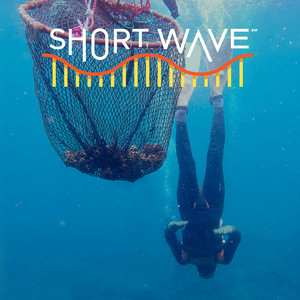
An older woman in a wetsuit jumps into the water and dives down.
Oh, so this is a diver.
Yeah. Cool. What suit?
I'm assuming she's also got fins and a mask.
Yes, yep, yes. And like an oxygen tank and stuff?
No, just pure lung capacity.
This woman is part of a long line of female free divers on Jeju Island called the Henyo.
And these women can hold their breath a really long time, Emily, up to two or three minutes.
Two to three minutes?
Minutes. What are the Henyo doing down there?
They're collecting all kinds of seafood to eat and sell.
Things like abalone, sea urchins, you know, harvest seaweed sometimes.
It's like grocery shopping while holding your breath.
Marine grocery shopping, exactly.
Yeah. This is Melissa Alardo.
She's an evolutionary geneticist at the University of Utah.
And she sent me this video that she took of a few Henyo divers who routinely dive in waters that can be in the 50 -degree range.
Oh, so they're diving in really cold water.
Yeah, I could never do it.
I mean, I can barely handle 70 degree water.
But these women, they start diving as girls and continue well into old age.
And what's astonishing is that it's not just years of training that make this feat possible.
It's also a set of special adaptations, ones that Melissa and her team recently uncovered.
So today on the show, the super divers of Jeju Island.
Plus the mix of physiological and genetic adaptations that make these women's dives possible.
I'm Emily Kwong. And I'm Ari Daniel.
And you're listening to Shorewave from NPR.
So, Ari, today we were talking about the haenyeo, these female free divers in South Korea.
How do the haenyeo compare to other free divers around?
This message comes from the Nature Conservancy.
People from all walks of life depend on nature.
For the food they eat, the water they drink, and the air they breathe.
For strengthening their communities, powering their livelihoods, and safeguarding their health.
Nature is common ground for everyone.
And uniting to protect nature can help solve today's challenges and create a thriving tomorrow for future generations.
Discover why at nature .org slash NPR.
This message comes from Lisa.
Lisa meticulously designs their mattresses for exceptional comfort and support.
Visit Lisa .com for 30 % off mattresses and a free sleep bundle, plus get an extra $50 off with promo code NPR.
This message comes from NPR sponsor, Microsoft Azure.
The AI platform shift brings immense opportunity, but the road to success isn't always clear.
Leading the Shift is a new podcast from Microsoft Azure, where leaders and visionaries from organizations of all kinds share what they're learning as they navigate this new era of technology.
Listen and subscribe now to explore stories of real innovation in real life.
Available wherever you get your podcasts.
they still go out in the water, no matter how cold it is.
That's commitment. Indeed.
And these women dive across all of life's milestones, which I talked to Melissa and her collaborator, Diana Aguilar -Gomez, about.
Diana is a population geneticist currently at UCLA.
They dive throughout their whole pregnancy.
They say they just dive until basically before they give birth, and then they were back in the water three days later.
Yeah, it's amazing.
Amazing. Diana and Melissa wanted to know whether there were adaptations the Henyo might have that allow them to do this.
And they recently pinpointed some in a study that published in the journal Cell Reports.
Fascinating. OK, how did that study come about?
Well, Melissa Alardo, she runs something called the Superhuman Lab, where she studies extreme physiologies across different populations, including among the Bajo free divers in Indonesia.
They're just really good at holding their breath and being underwater.
And we found that the Bajo had larger spleens and we were able to link this to a genetic adaptation.
And so the spleen plays a role in diving because it stores red blood cells that are oxygenated.
And when you dive, your spleen contracts and it pushes those red blood cells into circulation.
So essentially, we think the Bajo have big spleens because it enables them to stay underwater longer.
Melissa told me the Bajo were the first group of people that were found to have evolutionary adaptations to make this kind of diving safer.
And she wanted to know how the Henyo might be adapted to their extreme lifestyle.
How evolution might have shaped the Henyo to be better divers, to dive more safely, to dive for longer.
Yeah, it's so impressive that they can do this.
So how did Melissa and her team go about conducting this study?
Well, they decided to compare the Henyo to other elderly women on the island who aren't divers, but have a similar genetic background, and distill others off island who aren't related, about 30 women in each group.
Okay. So they had some groups of non -divers to compare to the divers.
So how did they compare them?
Because I assume they didn't just throw all these elderly women into the open ocean and hope for the best. They certainly did not try that approach. Okay.
Fortunately, there's a workaround, a safer workaround.
It's called a simulated dive.
You hold your breath and put your face in a bowl full of cold water, and your body responds as if you're diving.
Your heart rate will drop measurably.
I've done this when I'm very anxious, but why does your heart rate drop when you put your head in a bowl of ice water?
It's just an automatic thing, Emily.
Your body acts like it's underwater water and triggers something that's called the mammalian diving reflex, which slows down your heart rate, allowing it to do less work to limit oxygen consumption.
The Henio, though, they found this experiment kind of silly.
They said like getting in the ocean, being underwater, that's diving.
Whatever this is, this isn't diving, but they still held their breath long enough that we were able to elicit a response.
I'm just picturing all these aunties and grandmas like for science, I guess if I have to.
But so what was the response between the Henyo and the non -divers in doing this?
There was a significant one.
The Henyo heart rate fell by about 50 percent more than their non -diving peers.
Wow. We had one diver whose heart rate dropped over 40 beats per minute in 15 seconds.
Melissa says the Henyo response is due to a lifetime of training and diving experience.
experience. So it's classic physiological adaptation.
What about genetic adaptation?
Did they do an analysis of those women on the level of their DNA as well?
They did. The researchers took saliva samples to look for genetic differences between the three groups.
And they found that everyone from Jeju, both the divers and the non -divers, had basically the same genes, meaning that the people of the island appear to have been genetically sculpted by generations of divers.
What this suggests is that everybody in Jeju has an equally likely chance of being a descendant of a diver.
What a thing to inherit.
And was there anything special about this particular gene pool that stood out?
Yeah, two things, actually.
The first was a gene that seems to be related to cold tolerance.
Maybe that protects them from hypothermia in ways that we don't fully understand yet.
That makes sense. Right.
And the second gene is associated with blood pressure, which Diana Aguilar -Gomez, who did this work as a PhD student at UC Berkeley, thinks is likely connected to blood vessel structure and function.
Diving increases your blood pressure and particularly through pregnancy that can be very dangerous.
It can increase your risk for preeclampsia.
So if these women have a gene that lowers their blood pressure, it's like built -in protection from preeclampsia and other life -threatening complications.
And so… Probably women that were protected against this would be more likely to have more children.
Oh, and they would pass those genes along.
Bingo. And I should tell you, Emily, that Jeju Island has an especially low rate of stroke mortality.
And Melissa thinks that could be related to this second protective gene, since stroke can result from high blood pressure.
Wouldn't it be amazing if by studying divers in Korea, we can translate these findings to develop a therapeutic that protects people from stroke around the world.
So by studying these populations, it can lead to discoveries that could have really important implications for people everywhere.
Absolutely. This is so the value of studying outliers.
So what health lessons can be learned from these free divers?
So I spoke with Stephen Chung, who studies extreme physiology at Brock University in Canada.
He wasn't involved in the research, but he addressed this exact question.
By pushing the body to its limits, we get a better sense of where those limits are, but also just what the human body is capable of.
I'm not even near the age of these women, and I don't think I can go and dive all day.
I mean, I feel like that's like a superpower.
A superpower that Diana says may not be around for much longer.
The newer generations of women, they're like going to university and doing other stuff.
So like the average age of the genio nowadays is around 70 years old.
Oh, wow. So this is just becoming an increasingly rare practice, even if the genetics live on in the descendants of these divers.
That's true. And it's one of the reasons that it was important to Melissa that her and her team returned to Jeju Island to share their results with the Henyo.
These women are extraordinary.
Their biology is amazing and what they do is amazing.
And so I think it's really important to celebrate just how unique these women are and how it's changed their bodies and the bodies of other people on this island.
Ari Daniel, thank you so much for coming on Shortwave. I'm really glad we know more about the Henyo.
Thanks for having me, Emily.
I love being here. If you liked this episode of Shortwave and you want to support the show, follow us on the NPR app or wherever you get your podcasts and you'll never miss an episode.
This episode was produced by Hannah Chin.
It was edited by our showrunner, Rebecca Ramirez, and fact -checked by Tyler Jones.
Jimmy Keeley was the audio engineer.
Beth Donovan is our senior director, and Colin Campbell is our senior vice president of podcasting strategy.
I'm Emily Kwong. Thank you for listening to Shortwave from NPR.
This message comes from Lisa.
Lisa meticulously designed their mattresses for exceptional comfort and support.
Visit Lisa .com for 30 % off mattresses and a free sleep bundle, plus get an extra $50 off with promo code NPR.
This message comes from BetterHelp.
June is Men's Mental Health Month, and every year, 6 million men in the U .S. suffer from depression.
If you're feeling overwhelmed, the strongest thing you can do is ask for help.
And BetterHelp can make it easy.
Take a short online quiz and connect from home with a qualified therapist. Visit BetterHelp .com slash NPR today to get 10 % off your first month.
That's BetterHelp, H -E -L -P dot com slash N -P -R.
The House of Representatives has approved a White House request to claw back two years of previously approved funding for public media.
The rescissions package now moves on to the Senate.
This move poses a serious threat to local stations and public media as we know it.
Please take a stand for public media today at GoACPR .org.
Thank you.