This is NPR's Life Kit.
I'm Marianne Segarra.
Hey, it's Marielle.
There's a big winter storm moving across the country this weekend expected to bring heavy snow, freezing rain and very cold temperatures across the US this weekend, even down south in states like Georgia and Texas.
LifeCat reporter Andy Tegel has been covering this.
And on this episode we're going to talk about how to prep for a winter storm, because there's a lot you can do ahead of time to set yourself up and many more delicious and lean protein options.
For wellness when you need it.
Shop Smart Meal Shortcuts to stay motivated, like Ready to Eat Salad Kits.
Shop all things wellness at Whole Foods Market.
This message comes from ServiceNow.
People should do the creative work they actually want to do, not boring, busy work.
Now, with AI agents built into the ServiceNow platform, you can automate millions of repetitive tasks in every corner of your business IT, HR and more.
So your people can focus on the work that they want to do.
That's putting AI agents to work for people.
It's your turn.
Get started at servicenow.com slash AI dash agents.
This message comes from NPR sponsor, Adobe.
Introducing the all new Adobe Acrobat Studio, now with AI powered PDF spaces.
Need to turn 100 pages of market research into five insights with a click?
Templates for a sales proposal that'll close that deal?
Or an AI specialist to tailor the tone of your market report?
You can do all that with the all-new Adobe Acrobat Studio.
Learn more at adobe.com.
So when you hear on the news, for instance, that a winter storm is coming...
How do you know when to get really serious about it?
Right.
Because I feel like there are all these different words, storm watch, storm advisory, storm warning.
Yeah, it can be confusing.
So a watch, a storm watch means a heads up.
Bad weather is likely headed your way in the next few days.
Conditions are favorable for this thing to occur.
So it just means be on alert.
Now for advisories and warnings.
Both of these things mean that bad weather is now expected to come your way.
So if you receive either of those, you need to start preparing.
The only difference there is the scale.
So different regions have different criteria for weather warnings.
So maybe in New England, for example, you might need six inches of snow in order to trigger a snow warning, whereas in Mississippi you might only need an inch of snow to trigger a warning.
So if the incoming weather falls below that certain marker, you'd receive a weather advisory, not a warning.
Okay, so a storm watch is like, it could happen.
Whereas an advisory or a warning is we expect it to happen.
Right.
Imminent, basically.
Okay.
And then there's a threshold where if it's above this amount let's say it's six inches in your area then it's a warning.
And if it's below that, then it's just an advisory.
Right.
Right, but that just is what you want to be careful of.
I talked to Michael Hill about this, about all these weather words.
He's a warning coordination meteorologist at the National Weather Service in Jackson, Mississippi.
And he says that people sometimes don't always take these alerts seriously and that can lead to problems.
So let's say your local weather service puts out a snow advisory instead of a snow warning.
So a lot of times what you'll see is people get lulled into thinking oh, it's an advisory, just an advisory.
Well, just an advisory can still mean three to four inches of snow.
Just an advisory can still mean ice everywhere.
It's just not going to reach that threshold.
Let's say your threshold is six inches of snow for a warning.
You can get four.
And that's still an issue for people.
So, you know, warning, advisory, watch.
You still want to be careful.
It doesn't mean it's time to plan that camping trip, right?
Also, when it comes to forecasting, it sounds obvious, but people can forget.
This is a forecast.
It's not a promise.
So the storm clouds you see from the weatherman on TV, they're estimates.
They're not exact locations.
So if you're somewhat near the center of a storm, Michael says it's a good idea to prepare like you're going to receive the worst of it, because you very well might.
Okay.
Well, let's talk about preparation.
What supplies should you have on hand when meteorologists are predicting a winter storm?
So the first thing you want to do is start gathering supplies early.
Just like any other emergency, you're going to want to have extra food, extra water.
You want to have fuel and batteries, any tools you might need for the weather.
Power outages are one of the biggest concerns during winter storms.
So you want to make sure you have options and backup options for your heat and your light and your cooking.
So you want to think about flashlights, matches, candles.
When it comes to outdoor cooking, you're thinking about propane, charcoal grills, camping stoves or generators, if that's something you can invest in for longer outages.
When it comes to indoor cooking, you might consider candle warmers, like sternos is one option, and you can use those with things like fondue pots.
Another idea is fireplace cooking.
And then you can also have no-cook options, like canned goods and other non-perishables.
And is this all really necessary if you've only got four inches, for instance, or three inches expected?
I mean, you want to expect the unexpected.
You know, it might only be three or four inches.
Those three or four inches could down power lines.
It could lead to trees falling down in the middle of the road, which could back up traffic, which could lead to accidents.
You just you never really know where that might lead.
Better safe than sorry.
OK, well, let's talk about prepping your home.
What are some of the things you can do ahead of time?
The first thing you want to do is seal up all the nooks and crannies, right?
You want to seal your home as much as you can from the elements.
So some examples of that, you want to weatherstrip your doors.
You want to insulate your windows.
You're just closing gaps from drafts, from snow.
The big word is winterize.
You want to winterize your pipes and your gutters and your drives.
As a lifelong Californian, this was a new term for me.
You want to insulate your pipes and make sure that they're not cracked.
You can wrap them with foam pipe sleeves.
You can do that with heat tape or even just old towels and newspaper.
If you're planning to not be around your home for a while, you want to make sure to let the faucet leak so that your pipes don't burst.
You want to clear your gutters and your downspout so that there aren't any ice dams or roof leaks, so you don't end up with any dangerous icicles and things like that that can fall on people.
When we say to insulate the pipes...
Where?
Like just the ones you can see under your sink?
Or are there other exposed pipes that you should be like going into your basement to find?
I think ideally you would winterize everything if you could.
But if you're thinking about triaging, you want to winterize the unheated areas first.
So what's going to get coldest?
What's going to be exposed to the elements?
That's what you want to start with.
So, you know, maybe a garage.
If you have crawl spaces, exterior walls.
Start there, then work your way inward.
Okay.
What if you're a renter, though?
Yeah.
I also ask that question.
It's a good question.
I talked with disaster management expert Alyssa Provencio.
She's an associate professor of political science at the University of Central Oklahoma.
She's also a regular here at LifeKit.
Here's what she told me.
It doesn't hurt to have a conversation with your landlord if you're able to and understand what they will take care of and what you are responsible for.
So if...
They are responsible for clearing things like downspouts and gutters, ensuring that they're doing that in a timely way and kind of holding them to account, if you're able to do that.
Melissa says, even if you don't own a space, if you have the means and the time, it's a good idea to get extra supplies.
So a shovel, salt, snow blowers.
And do what you can.
So, for example, she says salting sidewalks and driveways isn't something you necessarily could or should wait for a landlord for.
It's easy to do and an easy way to help yourself get in and out.
Okay.
And if you've never done this before, round about how much salt should you be using?
So guidance from the Salt Smart Initiative says says about a coffee's cup worth of salt spread evenly is enough for about 500 square feet of driveway.
That's about 10 sidewalk squares of driveway.
The best time to salt is after you shovel, but before a big storm hits.
And a little goes a long way.
And then I have one last important note for you when it comes to prepping your home.
Home fires and carbon monoxide poisoning are two of the most common hazards that result from winter storms.
So it's really important to make sure your furnace has been serviced and your chimney is clean.
You want to make sure your carbon monoxide and fire alarms are working before that big storm comes in.
You want to remember the rule of thumb.
When you're getting cold, you want to keep a three-foot perimeter around any space heaters.
Yeah, I mean, that's a big concern during a winter storm, staying warm.
What tips do you have on that?
Well, I have one really revolutionary tip.
Marielle, are you ready?
Mm-hmm.
You want to stay inside.
No.
Wait, I'm trying to go sledding.
What are you talking about?
Yeah.
So best practice, of course, you want to stay inside when a big winter storm hits.
Of course, that is not always an option for everyone.
So if you must go out, say for work or something else, you want to try to reduce your exposure to the elements.
So reduce the number of trips outside.
Keep your doors and windows closed as best as possible.
You know, shut the door behind you if you have to.
If you have to keep going in and out, dress in layers.
So just like you would outside.
Something to just keep in mind if you're going outside is, depending on weather conditions, hypothermia or frostbite can take just a few minutes to set in.
So expose as little as possible and take breaks from the elements if you can.
And then what if your heat goes out?
Yeah, that could be a scary situation.
So if your heat goes out or if you don't have access to regular heat when you're indoors, try to keep everybody in one room.
Is one quick idea.
You want to keep all the body heat in one area.
You never want to use a generator or a camp stove inside or even anywhere partially enclosed.
In fact, you want to keep it away from doors, from windows and vents that could allow carbon monoxide to come indoors.
Stay tuned to the local news, your local authorities to see if they have any type of warming stations and shelters for people, just in case things go wrong for you at your home.
And make sure you have access to them.
You can call 211 in any part of the country for assistance finding warming shelters.
Many states activate emergency shelters once the temperatures drop to a certain level.
You can also search for your city or your county plus warming shelter online, and that's usually a good place to start.
We'll have more on how to prepare for a winter storm after the break.
All right, we're back with LifeKit reporter Andy Tegel.
Let's talk about travel.
I know, ideally you do not want to drive during a winter storm, but if you have to, or if you're out when it starts, what should you have with you in your car?
Yeah.
Ideally, you don't want to be driving during a winter storm, but it's still always a good idea to have that go bag in your car.
And I'm assuming, because you listen to Life Kit, that your car is already packed with that standard 72-hour go bag, as advised in our previous episodes.
In that go bag you want to have blankets hats gloves snacks, water and then maybe a small shovel or similar tool.
Alyssa says it's important to add winter tools to that kit when the weather starts to turn.
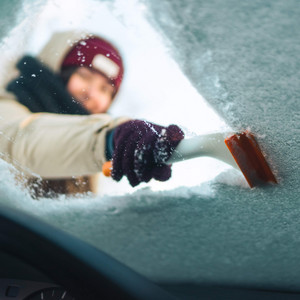
So things like an ice scraper or a snow brush.
And then another good thing to have is a roadside safety kit for emergencies.
So that has things like jumper cables or, you know, those little reflector emergency triangles.
After that, you want to make sure to winterize your car.
So that means you want to make sure it's serviced to the best of your ability.
So you want to have chains, tires with good tread.
You want to test your battery before you go out?
Replace your fluids like antifreeze and washer fluid.
And you want to gas up so you don't have to worry about fuel line freeze.
Did you learn anything about how to stay safe while you're driving around?
I did.
I learned that you should go even slower than you think you need to.
Be smart.
So you know, if you see people pulling over or putting on chains or turning around, that is not the time to speed up on your way home, right?
To say suckers and go around.
Exactly.
Exactly.
Another thing, don't assume that plowed roads are safe.
You know, they may have the snow out of the way, but black ice is invisible.
It can still linger under a plowed street.
Another good idea around this time of year is to carry kitty litter or sand or rock salt in case you get stuck in the snow.
And that is something that does happen, which is why you want to make sure you have your kit with you.
Here's Alyssa again.
Pack your car like it's a shelter so you can always use it as a shelter if you need to.
And it's easier for rescuers to locate, particularly if there's low visibility due to rain sleet, snow.
So if you do get stuck on the side of the road in your car, there's a couple of best practices.
First thing Alyssa says, don't try to walk to the nearest gas station...
Stop.
Wait for help.
You're going to put out those reflective markers from that roadside kit that you're going to make sure to have on you.
If you don't have that, if you have a bright piece of cloth like say, a glove or a colorful hat, you want to put that on your antenna so somebody can see you in case you're stuck in a snowstorm.
And then call for help early.
As soon as you realize that you're stranded, you want to call for help and then try and save that battery life.
All right.
So let's pivot here.
You made it through the storm.
What do you do after?
Yeah.
So the first thing you want to do is take stock of what's happened in your immediate area.
You want to inspect for any damage.
So are there any pipes that have been cracked?
Are there any leaks?
If you have or live around trees, are there any fallen branches to worry about?
Alyssa says you want to check and recheck your appliances.
Importantly check and recheck your smoke and your CO2 detectors, because storms and power outages can affect those.
And then you want to replenish any supplies that you used from your emergency kits so that you're ready for the next storm.
Before you venture out further, you want to be aware that just because the things are clear in your immediate area, that doesn't necessarily mean that they're clear everywhere else.
See what roads are available to you.
Those types of things.
Your local officials stay informed with your local news and everything for road conditions.
They'll probably have updates on water main breaks.
Those are the things that you really look for after a winter storm.
It's like, what's the damage for the infrastructure and how accessible things are to you?
Okay.
So you've done emergency preparedness episodes for LifeKit before. several times in the past.
I wonder, do you have any other insights?
I would say overall, preparedness is something that you do year round.
So that might look like getting an extra case of water at the grocery store when you can, or opting to pick up that flashlight at a thrift store when you see it.
Stalking away small bits and pieces here and there, can go a long way in making you feel more safe and secure when a disaster hits.
Alyssa says, you know, emergency prep doesn't have to be alarmist or rooted in fear.
It's really about giving your future self or your family options.
The more time and resources that you can spend doing this, the more you're going to save down the line if something were to go wrong.
And so if you are doing things like clearing your gutters and you're saving your the time and having to deal with like roof leaks because you did that one thing in advance, then you're saving yourself a lot of time and money.
I like that idea a lot, that preparation is just an investment in your future self.
Another sentiment I hear a lot is just to be a good neighbor, is to invest in your community.
Alyssa told me the best preparedness is a basket of muffins, because that's how you get to know your neighbors.
Michael says that should be a two-way street.
Look out for people.
If you hear storms coming, make sure to spread the word.
Make sure everybody has their go-bag ready, not just your own household.
Just tell your friends, tell your neighbors say hey, did you know that weather is going to be bad this week?
Just you know empathy and you know trying to survive these things, because everybody's going to go through it at some point.
So just trying to be a good neighbor to one another and being good stewards of our communities.
I like that idea.
It's like thinking about this as a we problem, not a me problem.
Absolutely.
All right, LifeKit reporter Andy Tegel, thank you so much.
Thanks, Mariel.
Time for a recap.
Learn the difference between a winter weather watch, warning, and advisory.
And remember, even a lower-level storm can be a big problem, so it's better to be prepared.
Get your supplies ready at home.
You want to have food, including pantry items, that you can eat without cooking flashlights and batteries, matches and candles fuel.
Also think about how you might cook if the power goes out.
Do you have a propane or charcoal grill that you can use outside or a generator for longer outages?
Do you have sternos and a fondue pot or a fireplace you can cook over?
Seal up your home as much as possible.
Weather strip the doors, insulate the windows, insulate your pipes.
Ideally, don't travel during a winter storm.
But if you have to, pack your car like it could become a shelter.
Make sure you have a 72-hour go bag with blankets hats gloves snacks water, a small shovel, an ice scraper or a snow brush, and also a roadside safety kit in case of an emergency.
Also, make sure your car has been serviced recently and that it's full of gas.
After the storm has passed, look for damage.
Cracked pipes, leaks, fallen tree branches.
Also be careful while you're walking around because there might be downed power lines.
And then replenish the supplies that you used so you're ready for the next storm.
For more Life Kit, check out our other episodes.
There's one about how to stay calm in an emergency and another on packing a go-bag.
Also...
If you have episode ideas or feedback you want to share, email us.
Why don't you at lifekit, at nprorg?
This episode of Life Kit was produced by Sylvie Douglas.
Our visuals editor is Beck Harlan, and our digital editor is Malika Garib.
Megan Cain is our senior supervising editor, and Beth Donovan is our executive producer.
Our production team also includes Claire Marie Schneider, Margaret Serino, and Mika Ellison.
Engineering support comes from Zoe Vangenhoven and Stacey Abbott.
I'm Mariel Segarra.
Thanks for listening.