
[The Timeless Tale of Snow White: A Journey of Beauty, Envy, and Restoration]-[Snow White]
📋 Summary
The Tragic Origins and the Wicked Queen's Envy
The story begins with an evocative scene: a queen sits sewing by a window, wishing for a child with "skin as white as snow," "lips as red as blood," and "hair as black as the ebony window." Her wish is granted, yet the birth of Snow White marks a transition from light to shadow as the good queen passes away. The narrative introduces the antagonist, a "wicked queen" who relies on a "magical mirror" to validate her vanity. The mirror’s initial confirmation that she is "the fairest of them all" sustains her ego, but the turning point arrives when the mirror reveals the truth: "Snow White is fairest." This shift drives the queen into a state of "rage," leading her to command a hunter to kill the princess and return with her heart.
Refuge in the Woods and the Seven Dwarfs
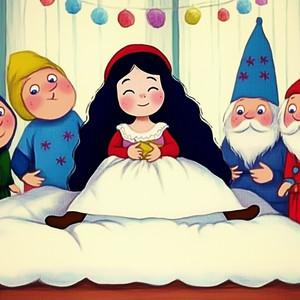
The hunter, moved by pity for Snow White’s "innocent heart," spares her life. Snow White’s subsequent flight leads her to a cottage inhabited by seven dwarfs who spend their days "mining for gold in the heart of the mountain." The domestic arrangement that follows highlights Snow White’s kindness and industrious nature. Upon discovering her, the dwarfs are charmed by the "pretty child," and they reach a communal agreement to let her stay if she "take care of our house." During this period, Snow White finds safety and purpose, while the queen remains consumed by her "vain heart," eventually discovering through her mirror that the girl still lives: "Over the hills and far away, she lives with seven dwarfs today."
The Deception and the Poisoned Apple
Driven by a maniacal desire to remain the most beautiful, the queen resorts to trickery. She disguises herself as an "old peddler woman" and visits the cottage. The queen’s manipulation is subtle; she offers Snow White a poisoned apple, knowing the girl’s trusting nature. By poisoning only the "rosy side of the apple," the queen ensures the success of her lethal plot. Snow White, unaware of the malice, consumes the fruit and collapses. The tragedy deepens as the dwarfs return to find their companion lifeless, leading them to mourn for "three whole days" before placing her in a "coffin of shining glass" atop the mountain.
Resurrection and Resolution
The final act of the story brings a prince, who discovers the glass coffin. Struck by the beauty of the "pale girl who lay so still," he arranges for her to be moved. A fortunate accident occurs when a servant stumbles, causing the coffin to shake and dislodging the "piece of poisonous apple" from Snow White's throat. This act of providence restores her to life. The narrative concludes with the union of Snow White and the prince, while the "wicked queen" is left to succumb to her own "mad[ness] with envy." This classic tale serves as a powerful reminder of the destructive nature of vanity and the enduring triumph of purity and goodness over malice.

Deep Learning with ListenLeap


