
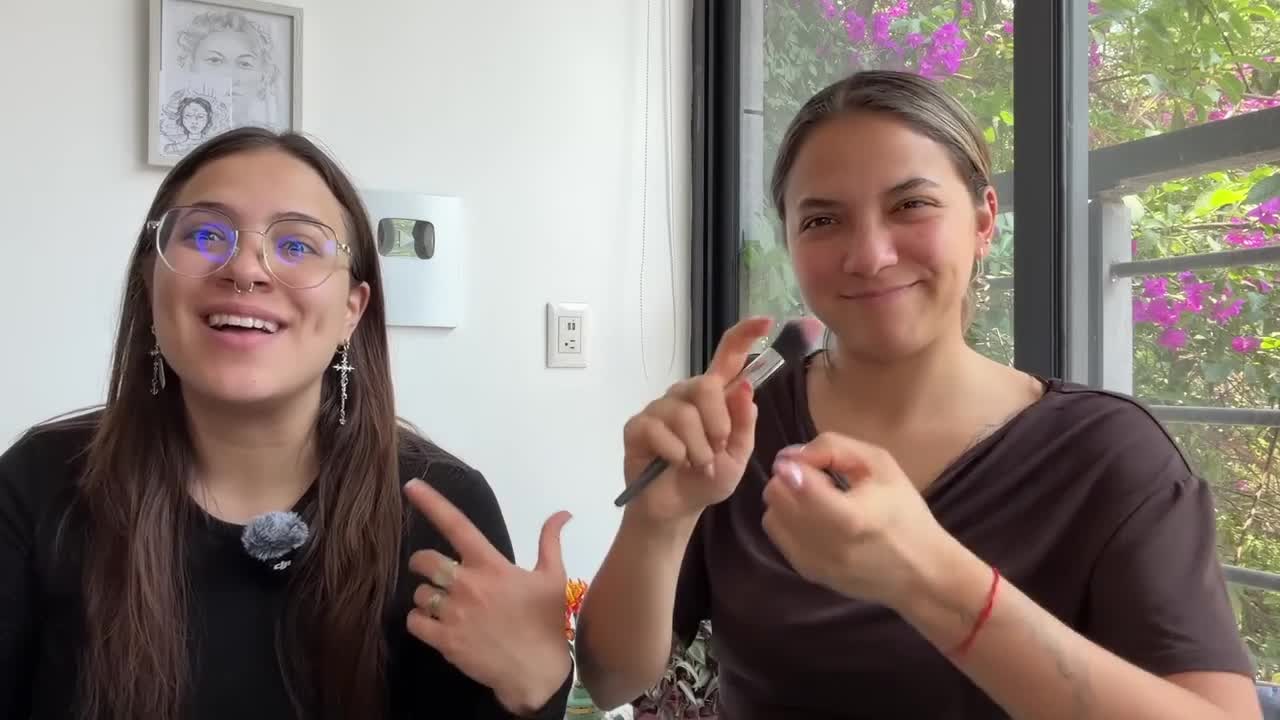
[A Comparative Guide to Individual Makeup Routines]-[Slow English Listening Practice | Makeup Routine]
📋 Summary
Exploring Diverse Makeup Routines: A Comparative Analysis
Makeup routines are deeply personal expressions of style and self-care. In this podcast, two sisters discuss their distinct approaches to beauty, revealing how individual preferences—ranging from "simple" to "complicated"—shape daily cosmetic habits. Through their conversation, we gain insight into the specific tools, techniques, and products that define their respective aesthetics.
The Philosophy of the Base: Foundation vs. Brows
The fundamental difference between the two speakers lies in their starting points. For one, the process begins with a "primer" spray followed by "foundation," which is applied using a "makeup sponge." The speaker emphasizes the tactile nature of this step, noting that she prefers to "pat the makeup sponge" on her face to achieve a "sparkly effect" rather than using traditional brushes.
In contrast, the other sister approaches her routine with more spontaneity. Having only started her makeup journey "one month ago," she skips foundation entirely. Instead, she prioritizes her "eyebrow gel," brushing the hairs "all the way up" to frame her face. This highlights how a routine can be "still building up" and evolving, rather than being a static set of rules.
Strategic Application: Blush and Eyeliner
As the routines progress, the sisters focus on facial definition and eye enhancement. The first speaker utilizes a "very used" blush, applying it strategically to her "nose," "cheeks," "forehead," and "chin" using a brush.
For eye makeup, both demonstrate a preference for versatility. The first speaker experiments with "black eyeliner" on the "bottom lash line" and occasionally swaps it for a "sparkly blue" eyeliner, which she notes makes her eyes look "watery" but beautiful. She also incorporates "white eyeliner" near the "tear duct" to brighten the eyes. Her sister, however, opts for a more "subtle chic look," steering away from the "extravaganzas" she sometimes enjoys, such as wearing "blue contacts" to create a hypnotic effect.
Finishing Touches: Powder, Lashes, and Bronzer
To ensure longevity and polish, the first speaker introduces "translucent powder," which she applies with her sponge to prevent looking "sweaty" and to help her makeup "stay better." The final steps for both involve the eyes and lips. The first speaker uses an "eyelash curler" and "mascara" only on the top lashes, as she feels she lacks enough hair for the bottom. Her sister, meanwhile, uses mascara on both top and bottom lashes and occasionally opts for "fake eyelashes" for "special occasions."
Finally, the first speaker completes her look with a "bronzer," using a "small makeup brush" to highlight her "cheekbone," "jawline," and "forehead." She tests the product first to ensure the application is not "too heavy." Her ultimate finishing touch is "lip gloss," as she finds it preferable to "lipstick," which she describes as carrying too much color.
Conclusion
This dialogue illustrates that there is no single "correct" way to apply makeup. Whether one prefers a structured, multi-step process or a more experimental, casual approach, the tools—from "eyebrow gel" to "makeup brushes"—serve as instruments of personal expression. By sharing their "slow makeup routine," the sisters encourage listeners to find what works for their own unique features and confidence.

Deep Learning with ListenLeap


