Hello everybody!
This is Teacher Levi, and today we'll be talking about my daily routine, or daily routines in general, in slow English.
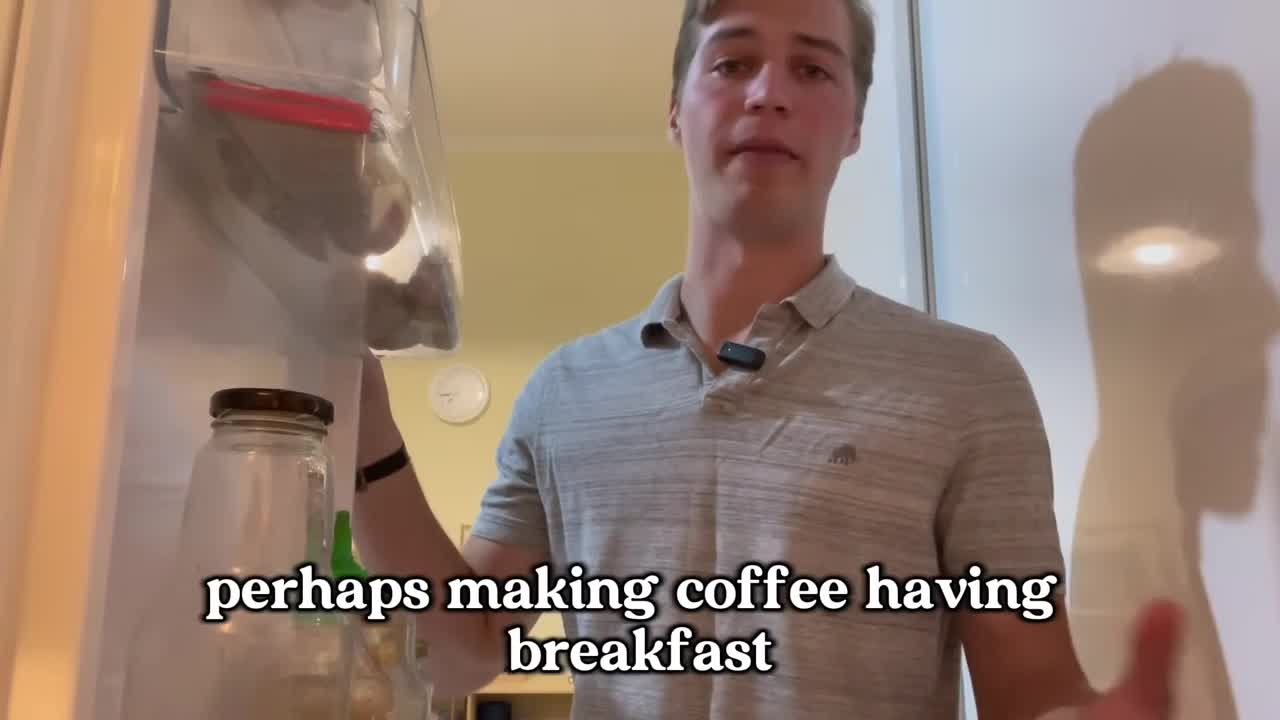
We'll talk about from waking up to making your bed, perhaps making coffee, having breakfast, and I will share useful vocabulary and phrases for today's video.
So let's get started.
Okay, so the first activity that people usually do in the morning after waking up is they make their bed.
To make your bed is to literally, literally fix the way your bed looks after you have just woken up.
So we have our pillows And sometimes people have extra pillows for decoration.
And we have our blankets.
So we'll fix the blanket and put these pillows in place.
Put them in place maybe like this.
And then we'll move this blanket so that it covers the bed.
Something like this.
But now we can come around and fix it.
Fix it or adjust it to adjust. from the other side to make it look nicer.
Obviously this is not perfect, but it is better, better than it was before.
So this is making your bed in the morning after you have just woken up.
Okay, now we will do what people usually make after waking up, which is making your breakfast.
So some people like to have eggs, bacon or cereal, but in the morning we make ourselves breakfast.
We make breakfast in the morning okay, so we'll be making notice, we'll.
We'll be making a quesadilla, which is a Mexican dish, because I skipped a breakfast.
To skip is to jump over or to not have, not take part in something.
So this morning I kind of skipped breakfast.
So this is around brunch time.
Brunch is a combination of breakfast and lunch.
We have brunch in the middle of when you would eat breakfast or eat lunch.
So this is an island, by the way, in the kitchen.
So I'll have this cutting board I'll have tortilla wraps.
These are tortilla wraps.
I'll have deli meat.
Deli meat, which we spoke about in the recent livestream that I did.
So this is sliced maybe ham. or turkey.
This is sliced cheese that we'll use as well.
Mayonnaise.
People say mayo for short.
I would like to have some mayo.
So this is mayo.
Salsa.
Well, this is salsa and a tomato.
Sometimes you hear people say tomato, but we can say tomato tomato, we can say tomato.
So these are the ingredients and we'll make the quesadilla from these ingredients.
So we have the wrap, the tortilla wrap we'll have.
First i usually put notice put the cheese like so, on the wrap and then i'll add the meat, the sliced meat, onto the cheese.
I usually do three slices of meat.
Then I'll chop up this tomato.
To cut up, we can say to chop.
This is a cutting board or a chopping board.
And we'll put these on the quesadilla or in the quesadilla, because we will fold this later, after.
The placement is not so important, but you just want the taste of the tomato, then we'll put the mayo oops okay, so we have made the quesadilla.
Now I found a pan.
This is a pan and we'll put the tortilla wrap onto the pan or slide it.
We can slide it onto the pan and put it on the stove.
Then we'll start heating the tortilla.
But We want to do low heat.
We want to have a low heat so we don't burn the quesadilla.
If we have high heat or heat, it will burn and become black and that is not tasty.
So with low heat we can get the cheese start to melt, and then I will fold the tortilla in half and then you will see the quesadilla.
This is the flame.
We can adjust, make it stronger or weaker, and this is, I think, about the right, maybe a little less, and this is the correct amount of heat that we want for our tortilla or quesadilla.
Okay, so you can see the cheese starting to melt.
The cheese is melting.
Now the back side of this is starting to turn a golden brown color, so we can fold it in half and try to get a even fold and then move it in the middle.
You can see some cheese sticking to the pan and this will get flipped one more time in 10-15 seconds.
I will flip it and then it will be ready.
So let me flip it actually now, just so I can show flipping.
That is flipping.
Usually you want to have a tool, a wooden spatula or fork, to flip your quesadilla, but this is fine.
Okay, this is done.
It is still hot to the touch.
It is hot to the touch, but we can throw it down there on my cutting board and we can cut it.
We can cut it in half so that it will cool faster.
So I'm cutting it down the middle.
We can say down the middle to get a even cut.
And this is almost finished.
You can see the cheese, the meat, the tomato right in there, and the mayonnaise, mayo.
On top of this, we'll put the salsa.
I don't always do this, but today I'll put salsa on top of the quesadilla.
So it will add a nice extra flavor.
Okay let's get a plate that we can use to put the quesadilla on.
We will put these on the plate and I will put the salsa on top of the two halves.
Usually you can use a spoon, but now we can pour it or drip it onto the quesadilla.
This is faster and we don't need a lot.
We want just a little for each side.
I don't know how spicy this salsa is.
Sometimes it is spicy, sometimes not, but this is a good brunch.
It's healthy, it's good for you, and it is tasty.
We can now sit down on the couch and watch TV.
Some people might watch TV.
They may read a book, but let's go through the television remote or TV remote.
We can use the TV remote or the remote to turn on The TV, we can also turn off or turn it off.
And we have the volume.
We can adjust.
We can increase or decrease the volume.
We can turn it up or turn it down.
Talking about the volume hey, could you turn down the volume?
It's too loud if this is a phrasal verb, which was in my first phrasal verbs video, to turn down the volume.
If you have channels, you can also switch between channels, although now people have Netflix and they have other TV apps like Hulu or streaming platforms that they have.
So maybe now people aren't watching the regular old school TV channels.
Wanted or wanted to show YouTube here, but actually I lost internet or internet today, so it won't load.
Notice, won't load unfortunately, so Let's turn off the TV.
Maybe next time.
All right, guys, this is the last but most important place where I do my work.
So usually I will teach from my laptop, sometimes in different places.
If you are my student, you might have noticed that I have different backgrounds sometimes depending on where I am.
I will be teaching and also I will have the same place and read books or take notes on students.
This is not my notebook, but you can have a notebook to take notes about English or your goals whatever you are looking to take notes on.
Taking notes is a great activity for learning a language.
I wanted to film this video to share a little of my routine.
Sometimes I don't make breakfast or lunch or brunch.
I will go out and get food from a restaurant, or sometimes I will order food to order food to your house, your home, because that is faster than cooking.
And I will work get food and then sometimes at night I will go for a walk.
That is a good time for thinking or for clearing your head.
So my routine is different, but usually it revolves around my work and now also around filming as well.
So tomorrow we will have a live stream.
So if you are watching this in time, it will be on Monday, tomorrow and Last time you guys were very active.
There were a lot of people chatting and commenting and I think it was a helpful stream.
So thank you for those who joined and took part, to take part, to participate in the stream, and I will look forward to seeing you tomorrow, hopefully.
If you support these videos, feel free to like and subscribe, and I will be posting more videos soon for the members as well.
Thank you and bye bye.