Discussion keeps the world turning.
This is Roundtable. You're listening to Roundtable.
I'm your only join by Steve and Yushen.
Recently, we've got some reveals from our listeners.
Actually, we've got a WeChat group, which has a social media platform.
And in the group, we can talk to each other.
And we've got a RT Army group.
That is Roundtable Army.
We've got an Army of our friends, a WeChat group.
This is a phrase to me. I did not know that.
We're sharing their insights about their show.
And we've got a friend called Chai Kuh.
I'm assuming a lovely dog, a type of dog.
That is the inspiration of the name.
Sharing about yesterday's nutritious drinks topic, talking about, huh?
We do not like. I do not like bottled drinks or cupped drinks, these ultra processed people or ultra processed food is making us ultra processed people.
And maybe one way of doing a or making a really healthy beverage, just to do it by yourself.
Get some ingredient from your local TCM hospital or just traditional Chinese medicine stand so that you buy the ingredient.
If you go home, you buy your own, if I say, I mean, brew or buy your own tea or herbal tea.
And that is his understanding of a very healthy beverage.
It's a more cost effective way to take care of that as well, maybe cheaper than buying it at the store.
And I'm going to reveal your place.
That is Guangdong. I see that you're from Guangzhou.
That is the city in Guangdong province, they're famous for their coat tea, coat drinks, the healthy drinks.
So I think that's also kind of why.
They're from the coastal area that's closer to the southern part.
That's usually potter warmer.
Yeah, famous for their coat tea, coat.
We call it Liang Cha in Chinese.
It's really healthy and I enjoyed it quite so much.
Thanks so much for sending us a message.
Thank you so much and in the future, if you're interested, you can definitely leave us a comment.
And if you have any questions, let us know.
We would give you some reply or just like this, talk about it on the show.
Coming up, imagine standing at the base of a towering mountain, the summit barely visible through the morning mist.
You've come to challenge yourself, to conquer the peak through sheer determination.
But as you approach, you notice an escalator winding up the side, promising an effortless...
Oh look, a fusion. Yes, and...
If this convenience a gateway to more enjoyment, or does it strip away the essence of the journey, today we'll explore whether modern convenience in cynic spots, in hence our experiences, or dilute the thrill of exploration.
And ever thought about what it's really like to live with your in-laws after getting married?
Does this arrangement strengthen the family unit, or does it introduce unnecessary stress into the new marriage?
We'll be talking about it today, but now.
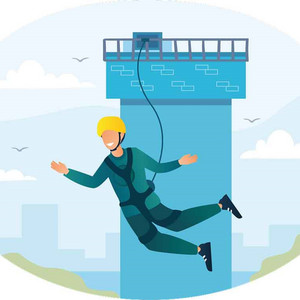
One experience, the thrill of bungee jumping, but afraid of height?
Now there's a slow speed bungee jumping.
One to avoid the physical exhaustion of mountain climbing, but to enjoy the scenery along the way?
Ascolator is at your service.
Now here is the debate, that has been gaining really good attraction, or attracting people's attention these days.
Are the new tourism facilities popping up in cynic spots, making travel more enjoyable, or are they taking away from the true experience?
I need to ask this question first.
What exactly is a slow bungee jump?
Thank you for asking that, because that was my question, too.
What is a slow bungee jump?
Well, to put it into detail.
The setting and the preparation of doing a soft or slow bungee jump is no difference from a normal or real bungee jump.
The only thing is that the rope, which has reduced elasticity, that's behind your back, will slowly send you to the ground instead of letting you free fall like a real one.
You get lowered to the ground as opposed to just free falling.
I was watching that video on YouTube, and literally in like 10 seconds you just jump.
Then you get lower to a level that's about 30 to 40 meters on the lower ground from the position you jumped, with a giant curtion on the bottom as a soft landing.
If you're talking about a real bungee jump, you may reach all the way up to a speed of about 20 kilometers per hour during a 4 to 5 second free fall before the bungee cord or the rope behind rebounds.
That's almost similar to as far as a research, similar to the speed of a roller coaster taking you dashing down.
Imagine yourself sitting on a roller coaster and dashing all the way down.
That's the speed, similar speed you get when doing a real bungee jump.
But this one, we're talking about the soft one.
It doesn't show how slow it gets, but from the video it's more like a sightseeing elevator.
Without a glass and without a metal box.
It's the equivalent speed of taking an elevator, which is a lot slower than free falling when you do the regular style of bungee jump.
I watched the video almost to everybody using or enjoying the slow speed bungee jump was laughing.
See the idea is that you got scared to you, prepare yourself psychologically, like I'm going to jump.
And the jump and free in the air feeling only happens when you jump in that one second.
And then you're supposed to be safety rope, starts to be basically the rope that's carrying you and lowering you slowly.
So everybody when they got the courage when they jump out, they were actually a little bit prepared for falling.
It didn't fall. That's why they start laughing.
So this is similar to a zipline experience maybe when the zipline starts to go when it's released.
You have that little bit of fear, but then two seconds later you feel like, oh, okay, this is just an enjoyable experience now.
Maybe, maybe similar to that.
So the idea then behind this slow bungee jump is like you said, homelin in the opening.
You want the thrill and experience of the bungee jump, but yet you don't want that death scare.
But is this, I mean, what are people saying about this?
Is that what they get from this experience?
Is it still scary when they do it?
You said people are laughing when they're when they're doing it?
That doesn't mean they're scared at all.
The precise reason that they're laughing is because they are scared for a second.
And then they stopped getting scared.
Also it's that. There's nothing to scare about.
Yeah, that's the reaction.
So it's for those people or the participant who wants to try it, but are maybe afraid of heights or like very tall altitude, but also in the meantime they just want to feel the adrenaline just running in the van and take that leap of faith and just do a jump and we'll take care of the rest.
Okay, so it's a less scary experience than the real thing.
I personally want to try that.
I always want to try bungee jumping, but I don't know whether or not I'll be okay with it.
So I think what I can do is to try the slow version first and I've enjoyed it and I want more.
I go try the real one because you at least enjoy the same feel that is you're in the air.
You're looking at something from a very high altitude and you slowly reach the bottom or in this case reach around 20 meters and get pulled up when you do this slow bungee jump when you really, really bungee jump, then your head is headed towards the ground.
Correct? Maybe not in every case, but in most cases, but in this case, the bungee cord is not attached to your ankles, not to the ankle, but behind your waist or lower back.
So it's like a vest you put on.
So you were really flying.
Yeah, it's like you're parallel to the ground.
Leonardo DiCaprio at the front of the Titanic, right?
I wonder who came up with the idea of slow bungee jumping and for them, I say thank you, but for those who come up with the idea of installing an escalator to a mountain climbing, I'm going to say, wow, thank you.
Really? I love this idea too because well, this is according to Beijing news.com, which reports that there have been escalators where elevators even installed along the mountains, mountain range from over 100 meters to as long as six to 700 meters.
I mean, just imagine taking a trip to the mountains and realize you have a Plan B option B, which just free you from all the labor of climbing up yourself and just take the escalator, elevator or escalator and yeah, just still enjoy the scene.
I saw the images on the internet.
It just looks like such a juxtapose, like look at the escalator and I automatically think subway station, right?
It takes away the fun. Shopping mall, the artificial scenario.
And then you look to the left and the right of the escalator and it really truly is an escalator that you would see in a shopping mall.
And it's just beautiful mountains and trees.
It just doesn't, it seems so out of place to me.
I understand that for the elderly who can't go hiking on their own or just people who don't like hiking and prefer flat surfaces, then why this would be a wonderful thing.
I think accessibility is definitely one thing for those who are relatively find it hard or challenging to climb such high mountains, but want to enjoy the view in the peak of the mountains.
Definitely they can use the escalator.
I think the first time I see something similar to this is in Hong Kong.
And it's not a scenic spot.
It's not the kind of mountain you go up to because you want to enjoy the view.
It's simply because it's a mountainous area and you have to climb all the time and having an escalator saved my life, not literally, but that's what I felt.
And it didn't feel out of place for you.
A little bit in the first place, but the convenience it takes, especially at that scenario, I didn't plan for climbing mountains, which means I was in working clothes.
I do not want to sweat so much.
And in the escalator, I also enjoyed air conditioning, which is the situation in a lot of these scenic spots as well nowadays.
You can even enjoy a sea in these places.
And it was quite a enjoyable experience, but I also understand your stance, Steve, that is for those who want to exercise a little bit, who want to enjoy the fresh air in the nature.
They don't necessarily want these kinds of settings for people who do enjoy these types of settings or the people who built these this infrastructure in the beginning.
I'm guessing the goal is to attract more tourists because if you have a mountain or a park in a mountain, you're going to attract the hikers, but you're not going to attract the people who don't like hiking or can't hike.
If you put facilities like this, you're going to attract people who otherwise would not visit there.
Is that one of the ideas behind this?
I believe so, because nowadays people's pursuits or wills of going out are not solely focused on pure thrill or adventure, but looking for unique and distinctive experiences when they're out to work and enjoying the view and stuff.
The search becomes the keen observation for the tourist management site to utilize this market trends and give such bold, innovative strategies or trials for people to maximize their experience when they're there.
I believe it does cater to some participants' curiosity and also need to try new things out of especially existing scenic spots.
I was thinking about it.
My mom may come to visit China in the next few months, which I'm very excited about.
My initial reaction to this type of thing was, no, no, we can't do this.
We can't put this type of thing in the middle of a beautiful nature scene.
But then I thought, well, wait a minute, if my mom came to visit, that would be the only way she would get to enjoy that type of scene is by having an escalator there.
Then I saw other stories.
They have some maybe in different locations.
You get to the top and then a go-cart track can take you back down the mountain or a water slide can take you back down the mountain.
That might be a little bit too much, but I'm starting to warm up to the escalator idea.
Yes, and we see that now around China, there are a lot of, I mean, a lot of scenic spots.
The resource of tourism destinations in China is abundant and we see the competition is fierce, which is good for us as consumers.
And we see they are rolling out different policies, different building, different facilities and giving, providing different services for customers so that they can put their name on the map.
There are some quite strange ones, for example, if you're in a park or if you're in a scenic spot, you can actually enjoy the service of a treasure box.
We call it treasure box in Chinese, but it's actually the kind of items that you can find in the box, including first aid items and including, for example, 10 ponds for ladies.
And including later on, we started to see herbans, we started to see perfume to drive away mosquitoes, wadu shui in Chinese, the kind of, yes.
And also, of course, for umbrellas, it's really easy to see.
And later on now in these places, we also see, for example, the kind of machine that automatically clean your shoes, nail polishing stuff.
It's, yes, in different places, they even provide you with the service if you're in a line, it's kind of like in Heidi Laul, the hot pop place.
One of the service is definitely brought to a brand new level.
People will remember the service and the sheer level of service would put the scenic spots on the map.
Yeah, I get that, you know, offering more things to customers, I get the idea behind it, but who needs to have their nails polished when they're climbing up a mountain?
That seems like a different kind of scenic spot.
Yeah, maybe I'm still stuck in the mountain setting, but yeah, I know I get the idea.
And also, if you drive to certain destinations, they will even wash your car.
It's part of the service.
So, yeah, we see a lot of these service happening in these scenic spots.
Do you think it's attracting enough or is it necessary in a way?
The nail part, to me, doesn't sound really appealing and necessary, but yeah, you're not going to book a trip so that you can have your nail.
That's not going to be the motivational factor for booking the trip like that.
I want to get my nails done.
I go to a place to get my nails done, not during a trip, but in the meantime, I can see why it kidders to a lot of personal needs from the tourist side, why it can potentially attract them to come back.
And also it guarantees satisfactory for their trip, ongoing trip.
And you know what, guys, I was just interviewing Laming from the office just now from his experience of going to one of the largest Buddhist temples in northern Beijing called the Hong Luo Temple.
And according to him, there's no elevator or escalator or soft bungee jump, but there's a skitway service.
Do you know what a skitway service is?
Like a little trolley car.
You can ride up and down the mountain.
Yeah, okay. Okay. Yeah.
So, so he did that with his son.
So for two people, the round ticket price is about a hundred yuan, which is $14 US dollars.
It brings you just up and down the mountain without you being, you know, paying the labor to climb it and climb it down afterwards.
It's the trip, the total round trip is within one hour, but there were lines like a lot of people waiting to get on that little trolley.
That's another thing. If you're bringing really little kids to these cynic spots, yes, they're energetic, but the energy doesn't last that long if they're climbing mountains.
So the idea is that with these kind of services, you can also take your really young kids there.
And my theory about the nail polishing car washing service is that if you do something that is, or if you create something that is seem a little bit out of place, like an escalator on a mountain, actually it will create a phenomenon.
And it will persuade people that you're trying really, really hard to provide the up to standard service.
And that story itself might be a really good advertising story already.
I suppose you're right.
But if it becomes too popular, then all of a sudden you have two million people lining up to get on an escalator to go up the mountain side.
And doesn't that detract from the experience maybe, maybe not.
But drinking a balance is always a good thing.
You're listening to round table coming up next.
The joys of marriage. You found the love of your life.
And now you get to share that bliss with your in-laws.
Yes, nothing says romantic newlywed face, quite like arguing over who gets the last dumpling, who's washing the dishes while your mother-in-law suddenly judges your life choices.
But hey, maybe living with your spouse's parents is just what your marriage needs.
A little extra spice. Or is that just indigestion?
Today we are diving into the hilarious awkward and somewhat heartwarming world of co-hibiting with the in-laws.
Stay tuned. Looking for passion?
How about fiery debate?
Wanna hear about current events in China from different perspectives?
Then tune in to round table.
Where East meets West and understand is the goal.
It's the hour of round table with myself, Neil Hunlin, Steve Hathorley and Ushan.
I joked a little bit in the teasing part of the topic.
Like actually I do not find living with in-laws that complicated or hard or challenging.
I will share that a bit later.
Yes, because I'm currently doing it.
And I am not lying because my in-laws do not understand English.
I do not have to say this for them.
It's okay for me to say the truth.
And the truth is actually there are a lot of perks and getting to know your in-laws is quite an interesting experience.
But I'll get that later.
So why are we having this topic?
Are a lot of newly-wed living with their in-laws?
In reality, many new couples in China are facing this concern as we're talking about it.
Like, you know, housing or childcare.
In many cases, young couples hire nanny rather than turning to their parents in law for help.
And according to eye media research, which is a leading domestic research facility in 2024, a significant proportion of female consumers in China, which accounts for about 67% have used domestic service with the majority being married with children.
So I assume the majority of young women like me who only have a general idea of what marriage would look like would turn away from the idea of living with in-laws.
I mean, personally, I can barely live with my parents for more than two days.
That's a little bit different, actually.
Yeah, it is. Yeah, it is.
Because when you're with your parents, you are familiar with the relationship with your parents.
So you have a, you have a, basically a pattern dealing with your parents or co-existing with your parents.
Yet for this in-law, these family, both of you are acquaintance at most.
And you started to know each other, you started to understand each other.
And from the habits of your in-laws, you actually can get how calm some of the habits that your spouse is developing or showing.
And it's a way to understand your spouse as well.
Yeah, fair enough. Yeah, fair enough.
Yeah, the good and the bad.
Yeah, it's a good and the bad.
It's an interesting experience.
They did a study in Finland and they wanted to find out about the differences or similarities, couples with children and couples without children and their relationship with their parents versus their relationship with their in-laws.
And what they found is that the couples without children and with children were just as likely to have some conflict with their own parents.
So there was no difference there whatsoever.
The difference was that the couples with children were more than likely or likely or than the couples without children to fight with their in-laws.
So no children, less likelihood of fighting with your in-laws with children, higher likelihood of fighting with your in-laws.
And they say part of the reason for that is the in-laws then start to want to get involved with the parenting styles.
Exactly. And then the problem arise there.
Like shown in TV dramas, right?
A little bit. A million TV dramas from a million cultures from all around the world.
And you get to see the pattern are a little bit changing or evolving or shifting because previously many young couple like Kuchen has demonstrated earlier that you have a very blurry idea about what marriage is like.
And it's hard for you to imagine living with your in-laws.
It was the situation and it, I mean, living with your in-laws can be challenging for many young couple spec them because for example, the young couple would fear that their in-laws would not approve of their life choices, would having certain comments.
And then the young couple would not be able to make a living with their in-laws.
And then the young couple would not approve of their life choices.
And then the young couple would not approve of their life choices.
And then the young couple would not approve of their life choices.
And then the young couple would not approve of their life choices.
And then the young couple would not approve of their life choices.
And then the young couple would not approve of their life choices.
And then the young couple would not approve of their life choices.
And then the young couple would not approve of their life choices.
And then the young couple would not approve of their life choices.
And then the young couple would not approve of their life choices.
And then the young couple would not approve of their life choices.
And then the young couple would not approve of their life choices.
And then the young couple would not approve of their life choices.
And then the young couple would not approve of their life choices.
And then the young couple would not approve of their life choices.
And then the young couple would not approve of their life choices.
And then the young couple would not approve of their life choices.
And then the young couple would not approve of their life choices.
And then the young couple would not approve of their life choices.
And then the young couple would not approve of their life choices.
And then the young couple would not approve of their life choices.
And then the young couple would not approve of their life choices.
And then the young couple would not approve of their life choices.
And then the young couple would not approve of their life choices.
And then the young couple would not approve of their life choices.
And then the young couple would not approve of their life choices.
And then the young couple would not approve of their life choices.
And then the young couple would not approve of their life choices.
And then the young couple would not approve of their life choices.
And then the young couple would not approve of their life choices.
And then the young couple would not approve of their life choices.
And then the young couple would not approve of their life choices.
And then the young couple would not approve of their life choices.
And then the young couple would not approve of their life choices.
And then the young couple would not approve of their life choices.
And then the young couple would not approve of their life choices.
And then the young couple would not approve of their life choices.
And then the young couple would not approve of their life choices.
And then the young couple would not approve of their life choices.
And then the young couple would not approve of their life choices.
And then the young couple would not approve of their life choices.
And then the young couple would not approve of their life choices.
And then the young couple would not approve of their life choices.
And then the young couple would not approve of their life choices.
And then the young couple would not approve of their life choices.
And then the young couple would not approve of their life choices.
And then the young couple would not approve of their life choices.
And then the young couple would not approve of their life choices.
And then the young couple would not approve of their life choices.
And then the young couple would not approve of their life choices.
And then the young couple would not approve of their life choices.
And then the young couple would not approve of their life choices.
And then the young couple would not approve of their life choices.
And then the young couple would not approve of their life choices.
And then the young couple would not approve of their life choices.
And then the young couple would not approve of their life choices.
And then the young couple would not approve of their life choices.
And then the young couple would not approve of their life choices.
And then the young couple would not approve of their life choices.
And then the young couple would not approve of their life choices.
And then the young couple would not approve of their life choices.
And then the young couple would not approve of their life choices.
And then the young couple would not approve of their life choices.
And then the young couple would not approve of their life choices.
And then the young couple would not approve of their life choices.
And then the young couple would not approve of their life choices.
And then the young couple would not approve of their life choices.
And then the young couple would not approve of their life choices.
And then the young couple would not approve of their life choices.
And then the young couple would not approve of their life choices.
And then the young couple would not approve of their life choices.
And then the young couple would not approve of their life choices.
And then all that is kind of important.
And I understand the struggle.
And I understand some people can be difficult.
But also I would like to enjoy those who are not living with their in-laws at least to, you know, pay a visit once a while.
I mean, I see the, and the significance of building and respecting the boundaries between different family members.
And it doesn't really have to necessarily just apply between the younger generation and the in-laws or their parents.
But between different family members, and the younger generation as well.
So as long as we have that, we'll have a balanced family life.
Yes. While the traditional mode of living with in-laws offers economic and emotional benefits, it also demands a modern approach to conflict resolution and privacy for sure.
So if you got the wisdom to strike the right balance between these elements, you will have a happy life no matter what.
And that brings us to the end of today's roundtable.
Until next time, keep the conversations going and the ideas flowing.
I'm Neil Honeley. And you shed.
Thanks for listening. Bye.