
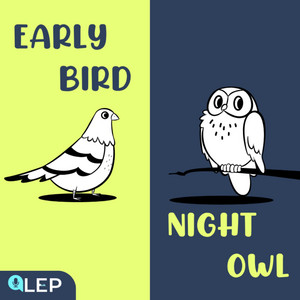
[Decoding Sleep Patterns: Night Owls vs. Early Birds]-[Sleep Patterns: Night Owl Or Early Bird]
📋 Summary
Understanding Sleep Patterns: Night Owls and Early Birds
In this episode of the 8-Minute English Podcast, host Nathan explores the dichotomy of sleep patterns, specifically focusing on the differences between "night owls" and "early birds." Through a discussion between students Josh and Emily from The Psychology Club, the episode breaks down the characteristics, benefits, and challenges associated with these distinct circadian preferences.
Defining the Archetypes
The podcast defines these two groups based on their peak productivity hours and sleep cycles:
- Night Owls: These individuals prefer staying up late and are "most productive during the evening hours." They typically have "delayed sleep phases," which means their bodies naturally want to stay awake later into the night.
- Early Birds: Conversely, early birds feel "most energized and productive in the morning" and possess "advanced sleep phases," leading them to feel tired earlier in the evening.
The Pros and Cons of Each Lifestyle
The Night Owl Experience
Josh, a self-identified night owl, highlights that being awake at night offers unique advantages. Night owls often excel in professions requiring "late-night problem solving" and benefit from the "quieter, more peaceful environments" that the late-night hours provide. However, a significant struggle for night owls is the difficulty of aligning their natural rhythm with "regular work hours" or standard school schedules, which can lead to "sleep disorders."
The Early Bird Experience
Emily, an early bird, notes that her lifestyle allows for "increased productivity and better concentration throughout the day." Her morning routine, which includes "exercise or meditation," helps set a "positive tone for the day ahead." Despite these health benefits, early birds face their own set of challenges, such as "social obligations" that occur late in the evening. This mismatch with social life can lead to "FOMO" (fear of missing out). Furthermore, maintaining this schedule "requires discipline," and a lack of consistency can result in sleeplessness.
Key Vocabulary for Sleep Science
To help listeners better understand the topic, the podcast introduces several essential terms:
- Sleep Cycle: A period consisting of five different parts, each characterized by varying brain activity.
- Problem Solving: The process of finding solutions to challenges, which night owls are often adept at during their late-night peak hours.
- Meditation: The act of focusing attention to become "calm and relaxed," a tool Emily uses to transition into an early bird schedule.
- FOMO (Fear of Missing Out): The anxiety that one is missing exciting social events, often exacerbated by social media.
- Workaholic: A person who works excessively, a trait Emily previously identified with before suffering the consequences of a poor sleep schedule.
Strategies for Adjustment
For those looking to transition from one pattern to the other, the speakers suggest practical steps. To solve social conflicts, it is crucial to "determine hours of social interaction" with friends and colleagues. To change one's internal clock, they recommend "rearranging the schedule" and adjusting sleep hours incrementally from day to day rather than attempting an abrupt shift.
A Final Insight on Creativity
The episode concludes with a fascinating study finding: while analytical tasks are best performed during one's preferred hours, "insightful problems which need creative thinking" are actually solved more effectively during "non-preferred hours." This suggests that the brain may experience bursts of creativity when it is slightly "mentally tired." Ultimately, the podcast emphasizes that whether you are an early bird or a night owl, the key to wellness is the ability to "adjust your living hours to suit your current situation."
Deep Learning with ListenLeap


