
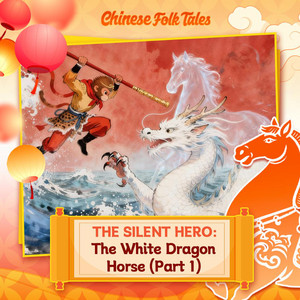
[The Silent Hero: The Legend of the White Dragon Horse]-[The Silent Hero: The White Dragon Horse Part 1 | Year of the Horse Special]
📋 Summary
The Unsung Guardian: Unveiling the Legend of the White Dragon Horse
In the grand tapestry of Chinese literature, few works resonate as deeply as Journey to the West. While the narrative is often dominated by the exploits of the Monkey King, Sun Wukong, and his companions, there exists a figure whose contribution is as vital as it is understated: the White Dragon Horse. As we approach the Year of the Horse, it is a fitting time to revisit this legendary creature, who is not merely a beast of burden, but a noble prince seeking redemption.
The Unlikely Fellowship
The journey to the Western Heaven is defined by the pilgrimage of Tang Sanzang, a monk tasked with acquiring sacred scriptures. His path is fraught with "demons, hardships and tests of faith." Accompanying him are three legendary figures: the mischievous and powerful Sun Wukong, the loyal yet greedy Zhu Bajie (Pixie), and the stoic Sha Wujing, who serves as the "silent carrier of the team's heavy luggage." Yet, the team remains incomplete without their fifth companion, a figure often overlooked despite his profound role in ensuring the mission's success.
From Royal Prince to Heavenly Exile
Before he was a steed, the White Dragon Horse was known as Jade Dragon, the third prince of the West Sea. Described as a "rising star of the dragon clan," his life of luxury and prestige came to a sudden end when he "accidentally set fire to a sacred pearl," a symbol of royal power. This act, whether born of youthful impulse or palace intrigue, led to a death sentence from the Jade Emperor. His salvation arrived in the form of Guanyin Bodhisattva, who recognized his potential for atonement. She intervened, requesting that the prince be spared to serve as a "loyal servant to carry a pilgrim to the Western Heaven."
The Trial at the Gorge of Eagle Sorrow
Guanyin’s plan required the prince to wait at the Gorge of Eagle Sorrow for the arrival of the Tang monk. When the party finally appeared, the dragon, driven by hunger or perhaps a misunderstanding of his destiny, emerged from the river and swallowed the monk's original horse. This triggered a fierce confrontation with the Monkey King, who, "exploded with rage" at the loss of his master’s mount. The battle was intense, with the dragon eventually fleeing into the complex network of "secret tunnels" within the gorge. It was only through the intervention of Guanyin that the dragon was identified and ultimately transformed. With a "blinding flash of light," the noble prince relinquished his dragon form to become a "flawless white steed," fully committing himself to the pilgrimage.
A Legacy of Silent Devotion
While the White Dragon Horse is often characterized as a quiet participant, the narrative hints that his true value is revealed during moments of crisis. As the host notes, many believe he contributed nothing, but "true heroes reveal themselves in crisis." His journey is one of quiet redemption, transforming from a condemned prince into a steadfast guardian of the faith. As the podcast concludes, the White Dragon Horse’s story is far from over. His contribution to the team's survival—particularly in the kingdom of Baoshan—remains a testament to the idea that greatness is not always found in the loudest voices, but in those who carry the burden of the journey with unwavering loyalty.

Deep Learning with ListenLeap


