A -Cast powers the world's best podcasts.
Here's a show that we recommend.
February 35 is a running conversation between two good friends, me, Dory Shafrier, and me, Elyse Heu.
In this wild time to be alive we're a show about the many ways we take care of ourselves.
Sometimes that might mean upgrading our skincare routines or it might mean more rest or stretching.
We talk about all of it.
with each other and with our thoughtful and funny weekly guests.
Boundary making really is just a reflection of how you think about yourself.
Cream blush is the best thing you could do for your life.
How, Sui? You need to build my this for me.
All right, so we aren't actually 35 anymore.
But we are still the show called Forever 35.
Find us wherever you listen.
New episodes drop Mondays and Wednesdays.
of the day. Welcome back to Podcast & Chill.
It's your guy, Leo, here to have a good time.
And I'm Gwen, here to keep us from going off the rails.
So, have you ever woken up feeling even more exhausted than when you went to bed?
Or find yourself getting ridiculously annoyed at, like, everything?
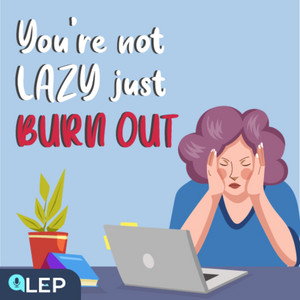
Well congrats, you might just have burnout.
And the worst part?
Half the time you don't even realize what's causing it.
Right. Am I overworked, or did I just drink too much coffee?
Why am I sobbing over a freaking broken pen?
Today, we're digging into burnout.
What causes it how to spot it and most importantly how to bounce back Right because just suck it up is hands down the worst advice ever Burnout is sneaky, honestly, your crush is more likely to notice you before you notice burnout creeping in facts People think burnout just means being really tired, but it's way more than that.
All right, enlighten us oh wise one.
Burnout happens when stress wears you out for a long time.
It makes you feel extremely tired, negative about things, and like you're not getting anything done.
Wow that sounds kind of dramatic.
It does. Psychologist Christina Maslach says it's a mix of exhaustion, losing motivation, and feeling unproductive.
So, how do we know if we, or someone else, are dealing with burnout?
There are some signs, such as brain fog, zero motivation, and feeling emotionally checked out.
That explains why I sometimes feel like I'm just going through the motions, like nothing really matters.
And let's not forget the extreme exhaustion.
Like even after a full night's sleep, you still feel like a zombie.
So, we're technically functioning but our brain and body have already clocked out.
Pretty much. So burn out is like running on autopilot.
Except the pilot is asleep.
And the plane is on fire.
So how come nobody notices they're burning out?
Stress stacks up little by little.
Over time, you're completely drained, but you don't even realize what's sucking the life out of you.
So basically, burnout is the poor camel whose back finally gives out?
Right. And the stress is all the straws.
But where does it even come from, because I'd love to return mine for a full refund?
Sorry, no refunds. Once you've got it, you're stuck with it.
Burnout comes from too much stress.
Yeah, yeah. But what causes that stress in the first place?
Oh, right. There are a lot of culprits, but work is one of the biggest ones.
Stress kicks in when your job demands way more than you can handle.
So basically, I can just blame my boss.
Let's not start pointing finger, especially since, ahem, I'm kind of your boss.
Relax, I'm just messing with you!
But okay, besides work, what else causes burnout?
Work -life balance, or more like, the lack of it.
When your job takes over your personal life, you're in trouble.
But isn't staying balanced easy?
I mean, in romcoms, the main characters always find a way to crush it at work and have a perfect social life.
Yeah, well, that's because they're in movies.
In real life, a quick email check can turn into working till midnight before you even realize it.
You're right. If I keep running myself into the ground like this, burnout is basically guaranteed.
Undoubtedly. And another big cause?
Lack of recognition.
Wait, how does that cause burnout?
Because working hard without feeling valued is draining.
Maybe not physically, but mentally.
Oh for sure. So, I'm basically like Wi -Fi?
What? Why? Well, everyone depends on me, but they only notice when I stop working.
That's... actually a really good analogy.
If that happens, I'd be seriously down bad.
And, you know what?
Once you drain your mental and emotional battery, it's only a matter of time before you hit rock bottom.
And let me guess. My good old friend, Burnout, is already waiting for me down there?
Without a doubt. Another cause?
Setting unrealistically high expectations for yourself.
Why though? Let's put it this way.
The higher you climb, the harder it feels when you crash.
But it's tough not to aim high when you're surrounded by people who are just too good at what they do.
And that's why your surroundings play a huge role in stress and burnout.
What do you mean? Being around toxic or negative people can rub off on you.
you start absorbing that energy without even realizing it.
Look, when I say I like toxic, I mean that Britney Spears song, not this.
Same but unfortunately, this kind of toxic doesn't come with a catchy beat.
So I'm officially burnt toast. How do I fix it?
Because my current strategy is staring at the ceiling and hoping for the best. First off, you need real rest. I do rest. I mean actual rest, not doom scrolling until 2 a .m. But doom scrolling is so addictive.
Nope. Your brain needs proper downtime.
Turn off notifications, step away from screens and let your mind actually recharge.
So no work emails after hours?
Just so. Try taking a short walk, reading or just sitting in silence for a bit.
Okay but what if my job keeps throwing more work at me?
That's where setting boundaries comes in.
You've got to learn to say no when you have your plate full.
Won't that make me look lazy?
Nope. Resting doesn't mean slacking.
In fact, it actually makes you more productive.
Seriously? How does that work?
Studies show that working too much without breaks wears your brain out, and you start making more mistakes.
So if I don't set boundaries, it seems like burnout will set them for me, huh?
I couldn't have said it better.
Do you remember the brand that popped up while you were scrolling your social feed?
No? But I bet you remember who sponsored your favorite podcast. That's because 74 % of listeners recall the brands they hear when listening to podcasts.
If you want your business to be top of mind, podcast advertising with ACAST is the way to go.
Book your campaign today by visiting Go .ACast .com slash ads.
Hmm, but what if saying no isn't an option?
You know we live in a society...
Then you have to work smarter, not just harder.
It's about switching from hustle mode to sustainable mode.
And what exactly is sustainable mode?
It's like you take turns working and braking.
Breaking down? My bad, I mean taking breaks.
Ever heard of the Pomodoro method?
The tomato one? Yeah, I know it.
Right, you work for 25 minutes then take a five minute break.
And that actually helps?
Taking short breaks keeps your brain sharp, reduces stress, and stops you from crashing at the end of the day.
Sweet. That means I can work away without worrying about getting totally fried, right?
Hey, just because you are in sustainable mode doesn't mean you can totally ignore yourself.
So, what should I do?
You gotta take time for yourself too.
Do something you actually enjoy to unwind.
Does scrolling memes count?
Not exactly. Try something that actually lets your brain relax.
Like cooking? As long as you don't mind the disaster zone in your kitchen afterwards, sure.
Yeah, I'll pass. So, what if I'm already deep in burn -out mode?
Do these tricks still work?
If you're really at that point, you might need some serious help.
Where do I even find serious help?
Talk to a therapist, career coach, or even someone who's been through it.
But therapy is expensive.
Can I just vent to my plants instead?
That's... an option, I guess, but professional help gives you actual strategies to get back on track.
Noted. And don't forget that actual human interaction matters.
Instead of just texting, try hanging out with friends or family.
Even if it means putting on pants?
Yes, Leo. Bare minimum effort, please.
Talking to people face -to -face can actually help you de -stress.
Or it could backfire and stress me out even more.
Fair enough. In that case, try chatting with your coworkers.
Why? So we can bond over spreadsheets?
No, because you're probably not the only one running on empty.
Venting to each other might help.
So my daily office rant sessions are actually self -care?
More like, free therapy.
Plus, you can join groups or communities that focus on work -life balance.
So instead of suffering alone, we can suffer together?
Why not? Even misery does love company after all.
Hey Gwen, let's go over some interesting phrases today.
First, point finger.
It means to blame someone for something.
For example, instead of solving the problem, they just keep pointing fingers at each other.
Second, run oneself into the ground.
Second, it means to work too hard and become exhausted.
For example, he ran himself into the ground trying to meet the deadline.
Third, hit rock bottom.
It means to reach the lowest point in a situation.
For example, after losing his job and apartment, he really hit rock bottom.
Fourth, rub off on.
It means to influence someone's character by spending time with them.
For example, spending time with positive people can rub off on you and make you more optimistic.
Finally, have one's plate full.
It means to be very busy with responsibilities.
For example, I can't take on another project right now.
I already have my plate full.
Now let's go over two questions about burnout.
The first question is, why do you think burnout is so hard to notice at first?
Because it builds up slowly.
You don't wake up one day completely burnt out.
It sneaks in little by little.
That's spot on. Stress adds up over time and before you know it, you're running on empty.
Here comes the second question.
What's one way to recover from burnout?
And setting boundaries.
If you don't say no sometimes, burnout will set the limits for you.
Well said. What about you, listeners?
Drop your thoughts in the comments section below.
And that's a wrap on burnout, what it is, why it happens, and how to fight back.
If you take one thing away from this, let it be this.
Burnout isn't just about being tired.
It's about long -term stress draining you completely.
So set those boundaries, take real breaks, and maybe, just maybe, put your phone down for once.
And if you're already feeling burnt out, don't ignore it.
Get some rest, reach out for support, and make changes before you crash.
And remember, suffering alone is overrated.
Talk to your friends, coworkers, or if all else fails, your plants.
Hopefully, this episode helps you avoid turning into burnt toast. Thanks for hanging out with us on Podcast & Chill.
Don't forget to like, subscribe, and let us know your best burnout survival tips in the comments.
Take care, and we'll catch you next time.
8cast powers the worlds best podcasts.
Here's a show that we recommend.
Hey guys, welcome to Giggly Squad.
A place where we make fun of everything but most importantly, ourselves.
I'm Paige Disorbo. I'm Hannah Burner.
Welcome to the squad.
Gigly Squad started on Summer House when we were giggling during inappropriate times.
But of course we can't be managed.
So we decided to start this podcast to continue giggling.
We will make fun of pop culture news.
We're watching. Fashion trends.
Hep talks where we give advice.
Mental health moments.
And games and guests.
Listen to Gigly Squad on ACast, or wherever you get your podcasts.
ACast helps creators launch, grow, and monetize their podcasts everywhere.
acas .com