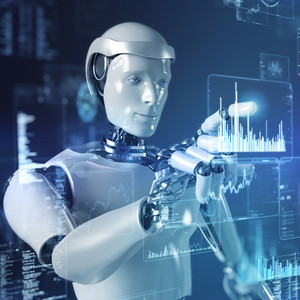
discussion keeps the world turning this is round table you're listening to roundtable with myself Hyung I'm joined by Steve Hatherly and Yushu in the studio coming up they say two things in life are certain death and taxes but in a world dominated by automation should we add robot taxation to the list
let's decode the future of fairness in an AI -driven economy!
And need a boost to crush the weak?
Our special segment motivational Monday is your ultimate adrenaline shot to kick things off strong.
Our podcast listeners can find us at Round Table China on Apple Podcast.
And got a question?
That's keeping you curious, from social issues to tech, and everything in between.
Let us take a stab at it!
Email us at roundtablepodcast at QQ .com.
Emails are fine, but voice memos are always better and we'd really appreciate it if you can include your name and region of residence in the voice memo, so we know a little bit more about you while we're designing the discussion for you!
Now let's switch gears!
With robots taking on roles from manufacturing to logistics, they're undeniably changing the global economy, but unlike humans, they do not pay taxes?!
Could implementing a robot tax help redistribute wealth support displaced workers and maintain a fair business environment in an increasingly AI driven world.
Or would it stifle innovation?
And just to give you more of the context, talking about this in 2025, according to a report from the World Economic Forum by 2025, automation will disrupt 85 million jobs across 15 industries and 26 economies particularly in medium and large businesses.
Over eighty percent of business executives are speeding up the digitization of work processes and fifty percent expect to automate more roles and that means lots of current jobs might go to robots, or AI algorithms.
So, let's talk about this, first of all, well, robot tax.
What does that entail?
It's a weird term, isn't it?
It's a specific tax on companies that deploy AI and robotics that are capable of autonomous decision -making, and this robot tax could provide economic support for displaced workers, workers who lose their jobs as a result of AI or robotics in their workplace, as well as an incentive for strategic decision making
about automation particularly when the benefits are marginal, but this is not an easy issue to define in terms of yes or no should we tax or should we tax, because there's so many questions that need to be answered and those questions do not have easy answers to them.
We'll get to some of them.
So generally it is disincentivizing the practice to cover the loss or revenue from payroll taxes when robots are used.
And I was thinking about who should be taxed.
It is the robot, because the robot cannot be taxed.
They're not independent legal entities with their own assets or incomes.
This means robots cannot pay taxes in the same way that humans or corporations can.
So most proposals suggest taxing the producers or sellers or users or owners of the robots, not the robots themselves.
Right. And this has become such a hot issue.
If you search this topic on the internet, you can see a number of media outlets talking about robot tax.
The reason is because of the rise of robots in industry.
Robots or automated machines in the workplace help to increase efficiency.
They help to reduce cost.
But they also have a profound impact by replacing certain manual labor positions.
So as robots replace humans, especially in manufacturing, right, many low -skilled jobs may disappear.
McKinsey, they put out a report.
They say up to 50 % of jobs worldwide could be replaced by robots in 2030.
You talked in the opening, didn't you, Ho -Young, about a report from the World Economic Forum.
But the question now is if robots are replacing people in the workplace, there has to be some One sort of economic balance going on.
And that's why the question of taxing robots.
I mean, it's not really a robot tax, is it?
But taxing companies that use AI or automated machines has arisen.
That's such a valid question to ask.
It is, isn't it? Right?
Because in the beginning I thought, oh, such a simple question.
That is, you know, just taxing the tech companies behind the robots, but in realities, think about this.
Are you taxing the company that's invested in the research and development and coming up with the technology, or maybe when the downstream companies that have bought the technology from this original company have already - like during the transaction of the technology, maybe They've already paid taxes
or something like that.
You shouldn't double tax.
And then if we just follow this chain of command, supply, whatever you call it, and then with the companies that have bought this technology and are using this technology, should they be taxed?
And also you guys mentioned the user.
Let's say if you are a human nurse in a nursing home that is utilizing the Robotic or AI technology that will significantly trick your work burden Are you a user?
Should you be tax 'and if you if there is a taxation that levies on this poor worker I think that's the most grotesque in the world, because this person is still working hard and then that technology is merely maybe part of the work routine now.
And I, I would hate the idea that this person gets taxed.
Yeah, right. You know that's exactly, everything you just said is exactly what I was talking about, two minutes ago, is that there's so many different issues here.
But Bill Gates, we all know who Bill Gates is, right?
at the founder of Microsoft, he suggested, and this is back in 2017.
So this concept has been around for quite a few years now, he suggested in that year that if a robot performs work valued at $50 ,000 similar to a human worker, it should be taxed at the same level as a worker and that idea is quite broad and vague.
It does lack, you know, very specific details But it does open up the concept of robot taxation in the AI Era.
But again, there's just so many questions to answer here.
Do you see there are advantages of levying of complex robot tax?
Oh, yeah. I actually went through a lot of analysis on how the world is treating this kind of a robot tax.
And actually, Brookings came up with the analysis saying that taxing as a measure for economic adjustment is the way that robot tax goes.
By taxing robots, governments can gradually reduce tax incentives for robots or adjust taxing level to encourage enterprises to find a balance between innovation and labor utilization.
robot taxation would not aim to stifle innovation but would use a reasonable tax system to optimize industrial structures and guide robots application in sectors like industry services, health care, agriculture and emergency rescue and promote the deep integration of the robot manufacturing industry
with its commercial applications.
But yeah, you say it wouldn't stifle...
or sorry, Brookings says it wouldn't stifle a innovation, but I think that's one of the arguments against.
Because if a company who is using a lot of AI or automated machines in their manufacturing process, if they're suddenly going to be taxed per robot, for example, well, that's going to discourage that company from wanting to use automated machines or robots in their company.
If they look at their bottom line and they figure out that it's costing them too much money, well then that's one company.
And then what if that happens all over an industry or all over multiple industries?
Then you're talking about that innovation that isn't going to be stifled?
well, it could because companies might not be so excited to want to employ AI or automated machines within their company.
And that's why I think, maybe, it could be beneficial only, or not only, but mostly in the cases of most of the human labor world were replaced.
and this kind of phenomenon is intensified and that's why this kind of, you know, robot test can in some way put on a balance between companies that are using robotics or autonomy robots and human labors.
So, in theory, you're saying possibly when some workers lose their jobs because of the advancement in AI and other technologies and in order to, let's say, upscale, re -skill and maybe even to some extent if you don't have a job and to get some social security compensation kind of thing, then the robot
taxation can be used for that.
But it sounds pretty ideal.
Yeah, yeah, it is. and it's all in a vacuum, right?
Okay, so let's say the decision is made.
Great, we're gonna tax robots now.
Oh, wait. What's a robot?
What's defined as a robot and what isn't defined as a robot for, not for our discussion for tax purposes?
Is a robot any machine that automates a task or does it need to have specific capabilities like AI?
Does it need to be autonomous us to be considered a robot for tax purposes, and technology keeps changing, doesn't it?
It feels like every day of the week we're coming out with a new advancement in AI.
So does that mean that the definition of a robot is going to change in the future for tax purposes?
It's very, very blurry.
And that, in itself, is not an easy question to answer.
That's so true. And AI algorithms is not something that is tangible.
You cannot touch it.
When we talk about robots we think about this chunky silver metal -made thing but in today's tech world, yeah, a lot of the times when you talk about automation and all this technology there's nothing you can hold your hands onto.
So it is an interesting concept.
Okay. So let's say we've decided we're going to tax robots.
And let's say we have a clear definition of what a robot is.
Wait. Next question.
how much do we tax?
because determining the appropriate amount of tax for robots is another huge challenge.
The tax needs to reflect the economic benefits that the robots provide, like cost savings, or productivity gains, but it also has to account for the potential displacement of human workers.
But setting a fair tax rate is really difficult without any clear data on how much value robots add to the economy and how they would affect employment in different industries.
So there's another major question.
Sorry, this might be a little bit of a sidebar, but a while ago, when we talked about giving tips in the U .S.
and how the tipping culture is just blown out of hand, there was one example which I, we both found really interesting.
That was when now you are asked to give tips especially at the automatic checkout counter.
Sometimes you're asked to tip as well.
When you see no human being operating machines, no human being is there to help you and you're asked to tip.
There was a news report in the States.
I think it was ABC that put out that report.
But anyway, the news anchor was really upset about that.
He said, who am I tipping?
Where is this money going?
Come out of the machine, human being or the genie.
So it's really interesting in this, today's world.
You know, all this money or taxation where should I go to, it's really not what we used to think it is.
And maybe it begs the question of think it a fresher perspective in how this should go.
So looking into the future, do you actually see a future for robot tech?
Yeah. What do you think?
I wanted to ask you Facem, because when we talk about job displacement and the robot tax might help with that, is that guaranteed to help?
I don't think so, right?
You know, when the goal of a robot tax may be to address the unemployment caused by automation, there is still a risk that the tax could negatively affect a business's ability to hire workers or invest in new technologies.
If businesses are taxed too heavily they might choose to reduce their workforce further rather than balance labour costs with automation.
And this could exacerbate job displacement rather than mitigate it.
And as Haeyung asked the question, OK, where does that kind of task goes?
What I can think is that, if we would like to strike a balance between the automation and the people who were replaced by automation, maybe the techs need to go to, and they should go to the infrastructure building and all of these facilities that build for people like this.
Yeah, but I mean, talking about the future, where is this going?
The past couple of decades, the global digital economy has really flourished and then the debates over this digital service tax or digital economy tax.
It's resulted in the formulation of legal frameworks in gosh many countries.
Over 30 countries. I think right.
France, the U .K., Italy, Singapore, India, that list is long.
So will this robot tax remain a perpetual debate?
South Korea back in 2017?
They introduced the world's first robot tax and they didn't tax the robots directly but the law cuts the tax incentives that businesses once received for investing in robotics.
In Korea, in the past, the government said, oh, we'll give you a lot of incentives if you're a company that's using these AI or automated machines.
But then they reduced that.
Specifically, the tax deductions for companies investing in automation, they were originally between three or seven percent, and they got reduced to two percent.
production. So will other companies follow suit?
Will they not? It's open for debate.
Striking the right balance of fostering progress and addressing the needs of displaced workers is a challenge worth tackling.
Taxing robots could redefine how we approach automation and its impact on society.
While it might not be the perfect solution, it does open the door to broader discussions on wealth, redistribution, economic adaptability and the value of human labor in an increasingly automated world.
Coming up next motivational Monday.
No, no, no. Motivational Mondays!
For this motivational Monday let's start with Yuxuan, what do you have for us?
So recently, I've noticed that before I make certain things, especially those I consider important, important, I want to be fully prepared to the point even of triggering anxiety that I cannot do it perfectly.
In the end it feels like I'm already exhausted before even starting." Then, I came across an article about avoiding over preparation, and it said, "...
Some people pursue perfection excessively, wanting the perfect timing, the perfect state, and perfect outcome.
But as the renowned Chinese writer Shi Xian said, there has never been a case of designing everything perfectly before taking the first step and don't try to figure everything out before you start walking.
And there is one that I really like.
efficiency of finishing something is more important than making it perfect.
So Over preparation has as a hidden downside as well.
It can raise our expectations.
In a way that after preparing for so long and investing so much.
If things don't go as expected, we would feel deeply frustrated and even lose motivation entirely.
So maybe don't be fully prepared and just take a step right away.
Don't overdo it. Like see you shouldn't.
I wanna applaud you first cause I've never gone to the point that I think I over prepare.
I always feel, oh there's so more I can do to prepare and I wish I could plan my time a little bit better.
I'm a procrastinator and I need some help, but thank you so much for sharing and what an inspiring message for a Monday.
Steve what'd you have for us?
Mine is somewhat related toadosians.
Mark Twain, who is an American, famous American author from a long time ago and here's the quote.
The secret of getting ahead is getting started, and the secret of getting started is breaking your complex, overwhelming tasks into small, manageable tasks, and starting on the first one.
And the reason I chose this is because oftentimes, we feel overwhelmed if we have so many things that we need to get done.
We don't know where to begin, and when we don't know where to begin, sometimes that That causes us to not begin at all because there's just too many things to do.
And I chose this for today is because my wife and I talk about this a lot.
When we're feeling overwhelmed, when we have too many things that we need to get done, we say, okay, what's number one on the priority list?
Do that until it's finished and don't even pay attention to anything else on the list.
Just totally ignore everything else on the list until number one is done.
and when that's done you get that sense of accomplishment, that sense of achievement, that sense of reward and then you go on to the second one and you don't even look at the third one until the second one's done.
So it's not perfectionism, in the same sense that you were talking about Yu Shin, but it is scratching things off the list by breaking down your overwhelming tasks into little mini tasks and scratching them off one by one.
after listening to what both of you are sharing, I feel I'm the right person to be on this show because I need help from both of you.
I've expressed how I admire what you shouldn't just mentioned, but Steve, I'm already struggling with what you're saying here.
That's great a plan, but what if you have three tasks that are asked of you to happen at the same time?
So then that's when I'm like, oh my good.
I am just shoot me in Because you have three things that are simultaneously happening and and then you get mixed up in what do you do because you can't afford just to do one so what happens to me and I've learned this from experience is that when I try to do too many things at one time I can't give
100 % of myself to one thing therefore all three of those things suffer.
Yes. Right. I'm suffering.
And the quality of the product of all three of those things suffers.
So, it's better for me to just pick one and if I'm prioritizing, then I have to make that decision by myself, if my boss or manager or somebody else is asking me.
Then I ask them, what is the first thing that you would like accomplished?
And they give me an answer and I say, Then that's number one and I give 100 % of myself to that before I even look at the others.
Yeah, sometimes you can just see the boxes that you're going to tick to be finished, and then you'll get confident, and then that's the start point that you are going to finish now.
And you know, the really difficult part is...
sometimes it's not the bosses intention that's most important here.
You need to be judicious in placing what's top in that priority list.