This message comes from ShipBob.
Go global in 2025 using ShipBob's e -commerce fulfillment solutions.
Store your inventory and fulfill orders from over 50 ShipBob fulfillment centers worldwide.
Save money and time.
Go to ShipBob .com for a free quote.
This is the TED Radio Hour.
Each week, groundbreaking TED Talks.
Our job now is to dream big.
Delivered at TED conferences.
To bring about the future we want to see.
around the world. To understand who we are.
From those talks, we bring you speakers and ideas that will surprise you.
You just don't know what you're going to find.
Challenge you. We truly have to ask ourselves, like, why is it noteworthy?
And even change you.
I literally feel like I'm a different person.
Yes. Do you feel that way?
Ideas worth spreading.
From TED and NPR, I'm Manoush Zamorodi.
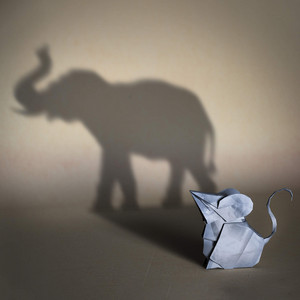
And today on the show, Small But Mighty.
So, I want you to touch your face.
Go on, touch it. What do you feel?
Soft? Squishy? Maybe chafed?
It's you, right? You're feeling you?
Well, that's not quite right.
You're actually feeling over a hundred billion bacterial cells on your face.
Those that are creating some of the aromas of body odor and stickiness.
You're feeling some of the fungi that have floated down from the rafters or ceiling today.
Those that set off allergies.
You're likely coated with some bacterial cells that came from the fecal plumes that arose out of the toilet the last time you flushed it.
Oh yeah, and there's at least two species of face mites that are squishing their way across your skin.
And they definitely had sex on your face last night.
This is Anne Madden.
She's a microbiologist and self -described microbe wrangler.
who does not seem to be bothered by what she just described.
We are an ecosystem, and so just as we expect to have lots of different creatures living in a jungle, we expect to have lots of different creatures living in our homes and on our bodies.
And while that's gross, it's also pretty cool.
Anne hasn't always been passionate about the microscopic jungle that surrounds us.
It certainly wasn't on her mind when she went to college.
But I had this opportunity to do an internship in the rainforest of Costa Rica.
And so when I arrive in the jungle, I see these trees that are taller than cathedrals.
And there are these howling monkeys that sound like dying jaguars.
And these beautifully, vibrantly colored poison dart frogs that kind of sound like a baby duck everywhere.
And I am in love. and as i get to help all of these different scientists study venomous snakes and poisoned dart frogs and plants i realize we know nothing about our beautiful magnificent world and that the process of research is this puzzle this adventure and it never ends but it did end at least for ann
she had to go home and back to school and i went back to wellesley college in Massachusetts, and everything was beige and boring, and there were no poison dart frogs, and I was as far away from the jungle as I could imagine.
But then I started research in a microbiology lab, and I found out that I'd never left the jungle.
There were microscopic species everywhere, just beyond the line of sight, and these species, we barely uncovered what they were.
Maybe we know 1 % to 10 % of what these species are.
And if you grow them on a Petri plate, they erupt in colors and aromas and very strange little behaviors.
And many of them can do remarkable things and have been doing remarkable things, and yet they never get credit for it.
And so I think that's when I fell in love with microbiology.
I remember the first time I discovered and got to name a new species.
Anne Madden continues from the TED stage.
It was a fungus that lives in the nest of a paper wasp.
It's white and fluffy, and I named it Mucor nidocola, meaning in Latin that it lives in the nest of another.
I called up my dad, and I go, Dad, I just discovered a new microorganism species.
And he laughs, and he goes, That's great.
I hope you also discovered a cure for it.
Now, my dad is my biggest fan.
So in that crushing moment where he wanted to kill my new little life form, I realized that actually I'd failed him.
In my years toiling away in labs and in people's backyards, investigating and cataloging the microscopic life around us, I'd never made clear my true mission to him.
My goal is not to find technology to kill the new microscopic life around us.
My goal is to find new technology from this life that will help save us.
That will help save us.
The diversity of life in our homes is more than a list of 100 ,000 new species These 100 ,000 new sources of solutions to human problems I know it's hard to believe that anything that's so small Or only has one cell can do anything powerful But they can Tiny organisms with extraordinary potential A single
word that can pack a punch a passing moment that changes everything.
In a world of attention -grabbing headlines and seismic global events, we sometimes forget the little guy, the almost imperceptible but powerful forces around us.
And so today on the show, small but mighty.
Forget big and boisterous.
We are talking about things that are minuscule or fleeting, but potent, like microbes, which can both hurt and help us humans.
We live in a time of a horrid pandemic, so I think we're all familiar with how powerful and how devastating one microbe can be, in this case, a virus.
But many microbes around us are equally powerful, but they're not devastating.
So there are microbes in our dust bunnies that are the source of many of our antibiotics, and they've been saving our loved ones for as long as we've known.
One of the first jobs that Ann Madden ever had was working in research at a pharmaceutical company.
And our goal was to find new microbes, with the idea being that these new microbes could create novel antibiotics.
And so that's where I really learned my microbrangling skills.
we were using new techniques to grow microbes from soil that had never been grown before and no one had ever explored them in the lab and indeed these bizarre slow growing tenacious little critters were creating novel antibiotics and though they haven't been commercialized yet we were successful in finding
them you knew what you were looking for then i mean it's not like you're like here's a new microbe let's see what it does like what are some of the clues that you look for when you are hunting down microbes that you think might have medicinal uses?
Yeah, so part of it is the idea of guilty bite association.
So other microbes that live in our soil are the source of many of our antibiotics that we use today.
You'll actually know if they're in the soil because they produce the smell of fresh -turned earth.
And so these microbes, you grow them in the lab, and they actually look like tiny little sheep.
They're adorable and fluffy.
And one strategy is to then look for species of microbes that are related, the idea being if your cousins can do it, maybe you can too.
Do you give them like bits of disease and see how they respond or how do you test it?
Yeah. So there are different ways of assessing whether a microbe can produce novel antibiotics.
And one of them is a gladiator test.
So you actually put them in a petri plate next to a microbe that causes disease.
So say you've got a microbe that's MRSA, right?
So it's a horrible staph infection.
And you can slather it on a petri plate and have it grow.
And then you come back the next day and you look to see who grew and who died.
Oh, wow. Okay. Battle to the finish.
Yeah. And so that gives you one hint.
That's not the end of the story by any means, but it gives you a clue that, all right, this fluffy microbe has something that's killing off a microbe that causes disease.
So maybe we can isolate that something, extract it, and maybe it can do what no other antibiotics could do before.
Okay, Anne, you have also been working on projects that are more about the simple pleasures in life, like a good beer, which brings us to another microbe story that involves wasps.
Yeah. So as soon as you start talking about wasp research, people my entire life I always said, what's good about a wasp?
Nobody likes wasps.
These are stinging creatures that often create nests in our eaves.
But it turns out that yeasts, microbes that we love because they make bread and beer and all sorts of lovely flavors, use wasps as airplanes.
We started with a pest.
Inside that wasp, we plucked out a little -known microorganism species with a unique ability.
It could make beer.
This is a trait that only a few species on this planet have.
In fact, all commercially produced beer you've ever had likely came from one of only three microorganism species.
Yet our species, it could make a beer that tasted like honey.
And it could also make a delightfully tart beer.
In fact, this microorganism species that lives in the belly of a wasp, it could make a valuable sour beer better than any other species on this planet.
This yeast could do what no other yeast species could do before it, which is make a sour beer in record time, just a few weeks.
And so brewers could make sour beer more economically and people could enjoy new flavors and understand the benefits of biodiversity.
And with that weird little moment in time, we gave a yeast the ability to make beer for the first time in 150 million years of its existence, And so now, just a few years later, brewing with these lactic acid yeasts is now commonplace.
And there's something magical about that.
I'm here to tell you that the next 100 years will feature these microscopic creatures solving more of our problems.
And we have a lot of problems to choose from.
We've got the mundane, bad -smelling clothes or bland food.
And we've got the monumental, disease, pollution, war.
And so this is my mission, to not just catalog the microscopic life around us, but to find out what it's uniquely well -suited to help us with.
These creatures are microscopic alchemists with the ability to transform their environment with an arsenal of chemical tools.
This means that they can live anywhere on this planet, and they can eat whatever foods around them.
This means they can eat everything from toxic waste to plastic.
I keep thinking about what you've mentioned a couple of times now, which is plastic eating microbes.
I mean, that is we always hear about, you know, the plastic that goes into a landfill and is going to be around for thousands and thousands of years.
Is there a possibility that that actually maybe that might not be true, that if we could add microbes, it would in some fashion break down?
Absolutely. So scientists have already found microbes that are incredibly adept at breaking down plastics, even the plastics that seem to last forever.
That's really what they were designed to do.
And as we think about our future, we need to think about not just the microbes that are going to break down plastic, but those that are going to help us build materials that are more sustainable.
And so right now, there are also microbes that generate PLA or polylactic acid, which which is the plastic -like filaments that a lot of people are using in 3D printers.
And those are made by microbes.
Are they more biodegradable?
They are. And there are groups that are now using AI and machine learning to enhance the activity of those microbe -made enzymes that tear apart plastic.
And so it's going to be microbial skill sets and human ingenuity linked together to create that better future.
When we return, the most famous microbe of all?
I'm Manoush Zomorodi, and you're listening to the TED Radio Hour from NPR.
Stay with us. Support for this podcast and the following message come from Lumen.
Have you ever wondered how your metabolism works?
Lumen is a metabolic device that measures your metabolism and gives personalized nutrition insights so you can take control of your health.
All you have to do is breathe into your Lumen and you'll know what's going on with your metabolism through the app.
Visit lumen .me slash radio hour.
That's L -U -M -E -N dot M -E slash radio hour.
And use the code RADIOHOUR to save 20 % off your Lumen today.
This message comes from Charles Schwab.
When it comes to managing your wealth, Schwab gives you more choices, like full -service wealth management and advice when you need it.
You can also invest on your own and trade on Thinkorswim.
Visit schwab .com to learn more.
This message comes from the Financial Times.
When it comes to voicing or acting on our opinions, why are some of us more confident than others?
By reading the Financial Times, you form your own opinions with conviction based on unbiased and trusted reporting.
Whether you're exploring unique data journalism that asks what makes the U .S.
truly exceptional, or an explainer on what Trump is likely to do in his first 100 days in office, the FT tackles global issues with an impartial and rigorous mindset, providing the analysis you need to make up your own mind.
Visit ft .com slash tedradiohour to read free articles and save 40 % on an annual subscription.
visit silversea .com.
It's the TED Radio Hour from NPR.
I'm Manoush Zomorodi.
And today on the show, Small But Mighty.
And we were just talking to microbiologist Ann Madden, who spends her days exploring the vast, colossal, positively cosmic universe of teeny tiny microbes.
If you were to take a sugar packet's worth of soil and you were to explore the microbe species in there, you would find more microbial species in that sugar packet's worth of soil than you would find in all of the zoos on this planet.
And if you were to take just another sugar packet worth of soil, you'd find a whole other planet's worth of species.
This is what we live in at the microbial scale.
I do feel like the pandemic changed my relationship to microbes.
Maybe it made me a little bit paranoid in many ways.
Yeah. And not just the idea that there is a virus circulating among us, but potentially many scary microbes around us.
How do you feel like people's relationship with microbes has been changed by COVID?
Yeah. So I think during the pandemic, particularly at the beginning, watched as the word microbe brought chills to everyone.
And I saw it in young children, too, where it was it was a lesson that was hard learned.
And microbes kill, they destroy, they bring with them sadness and isolation.
And I think as we navigate our microbial world, it's important to also teach children and students that, again, not all microbes are evil.
And so while it's important that we use hand sanitizer and things like that to limit the spread of certain microbes, we need to remember the plurality of these species and that there are microbes that we can play with in the soil and that that brings with it health, not just kind of griminess or germiness
of what we think of.
so when it comes to good microbes do you worry that you know just as certain species are going extinct are certain microbes also in trouble have we humans caused them harm oh so what keeps me up at night sometimes is thinking about all the microbes that have gone extinct because we have no idea what they
are we have no idea who they were or what they did and i don't just think about that in terms of those that are in our house that we might have accidentally killed off with some kind of bleaching agent.
But I think about that in the world in terms of habitats, and as we navigate worlds where we're clear -cutting forests, we don't really know all the microbes that we've lost.
And there very well might be microbes out there that are going to create the solutions to our future problems.
And so one of the reasons that I know a lot of microbiologists such as myself, love uncovering new species to science is that part of that discovery involves conservation.
We are asked when we name a species or rather required to put some of those cells into a deep freeze in multiple countries.
So they are sitting in biobanks where they can be revived in the future.
And we don't necessarily know what any of those microbes are going to be doing right now.
A lot of them sit just as specimens with Latin names that no one can pronounce.
But that doesn't mean that they'll always be that way.
There might be a future where they are revived and those cells will help people combat a future pandemic.
Or maybe they'll help them grow furniture in space stations or something far more mundane.
But the key is that they still exist.
That's microbiologist Anne Madden.
She's the founder and chief scientist at the Microbe Institute.
You can see her full talk at TED .com.
On the show today, how the little things in life can make a big difference, like the words we use to express ourselves every day.
Our next guest studies how small variations in language may mean big distinctions in how we experience the world.
And to demonstrate, let's play a little game.
Close your eyes. Yes.
Well, so if you're driving, don't close your eyes.
But if you're not driving or operating another kind of motor vehicle, close your eyes and point southeast.
Southeast. Okay, I'm pointing.
Okay. So if you do this in any kind of normal room full of westerners, I want you all to close your eyes and point southeast.
Keep your eyes closed, point.
And then you have people open their eyes.
They will immediately see that they have pointed in every possible direction.
I see you guys pointing there, there, there, there, there.
I don't know which way it is myself.
You have not been a lot of help.
And I do this to point out that there can be really big cognitive differences between groups of people.
And I've had a chance to work in an aboriginal community in Australia where they could do this task very easily.
I could ask a five -year -old girl, hey, can you point southeast?
And she would point immediately and without hesitation.
And, you know, that's a big difference compared to, say, a room full of distinguished scientists.
So I'll point in different directions.
This is cognitive scientist Lara Boroditsky.
And I study how humans get so smart, how languages and cultures that we have help us think the way that we do.
So, Lara, it may not seem obvious to some of us, but what do you think this exercise of pointing southeast says about how language influences the brain?
Well, our languages and cultures teach us to pay attention to certain things and not to other things.
There's basically an infinite set of things that we could possibly take in, process, but our brains can't process all the information, can't take in all the information, so we have to make some choices.
And one of the ways that we make those choices are by the things that our languages and cultures require of us.
So in this aboriginal community in Australia that I mentioned, they, instead of using words like left and right to give directions or to talk about the body, they use cardinal directions, more or less north, south, east, and west.
And they use these directions at all scales.
So, for example, in some languages like this, like in Gugu Yumetir, you would even say, there's an ant on your southwest leg.
You would say, you know, move your cup to the north -northeast a little bit.
In Kuk Tair, this language that I had a chance to work on, the way you even say hello is, which way are you going?
And the answer should be something like north -northwest in the far distance.
How about you? So imagine as you're walking around your day, every person you greet, you have to report your heading direction.
Here's Lara Boroditsky on the TED stage.
That would actually get you oriented pretty fast, right?
Because you literally couldn't get past hello if you didn't know which way you were going.
In fact, people who speak languages like this stay oriented really, really well.
They stay oriented better than we used to think humans could.
We used to think that humans were worse than other creatures because some biological excuse.
Oh, we don't have magnets in our beaks or in our scales.
No, if your language and your culture trains you to do it, actually you can do it.
So for me, whenever I come across an example like this, the biggest lesson for me is to not underestimate the potential of the human mind, not just to say that the things that I can do or the things that I can imagine, that those are the limits.
Language allows us to recombine elements in infinite new ways and create new ideas on the spot.
So right now I could say imagine a giraffe river dancing on a pancake while solving differential equations, right?
You've never had that thought before?
No, no, I'm glad, happy to say.
Maybe it's not the most useful thought.
But there are so many other thoughts like that that people throughout history have had.
and all of a sudden we have interesting ideas about time travel that make us engage with the future in different ways.
So this ability to think beyond what is physically present and imagine and work in the realm of the abstract is one of the things that language opens the door to.
You are really the latest in a long, centuries -long line of people who have been asking this question, does language shape the way we think?
Like, why has this been such a debated topic?
Because when I, you know, I remember the first time thinking about it, I just assumed it did.
But actually, this is not something that anyone agrees on, how it works.
Well, I think often we disagree with ourselves about it, right?
I think all of us have both intuitions.
And so the idea that language shapes thought is very similar to the idea that physical exercises changes the way that your body looks and acts, right?
When you speak a language, you're practicing paying attention.
You're practicing categorizing something every day, constantly.
And so it would be, in fact, the most surprising thing that the thing that you do all day, every day, this practice of speaking language would have no influence on your brain.
And for me as a scientist, what's interesting is to figure out what are the times that language shapes thought meaningfully and what are the times that it doesn't.
And so I think one of the reasons that this idea has gotten new life in the last 20 or 30 years is because we started using experimental methods, like real scientific experimental methods, rather than just arguing back and forth about our intuitions.
One of your critics, John McWhorter, the linguist, he said, well, the gradual consensus is becoming that language can shape thought, but it tends to be in rather darling, obscure, psychological flutters.
It's not a matter of giving you a different pair of glasses on the world.
Is this a small discovery that you're making or would you beg to differ?
Um, obviously I would beg to differ because, you know, there are many different ways you could ask how deep, big, important differences are.
And there are studies that reveal really big, interesting differences of different kinds.
So, for example, if we look at color perception, different languages have different words for colors, put color boundaries in different places, we can find that language influences even these tiny perceptual decisions that are so early on and so kind of stupid, you know, like a pigeon could make these decisions.
And yet, somehow, even in these smart human brains, language is making a difference in how you tell the difference between two patches of blue, for example.
Now, that tells us that language can have an extremely early influence in cognition.
And if it can influence something very early, that means it's influencing all of the other things downstream.
Languages also differ in how they describe events, right?
So you take an event like this, an accident.
In English, it's fine to say, he broke the vase.
In a language like Spanish, you might be more likely to say, the vase broke or the vase broke itself.
If it's an accident, you wouldn't say that someone did it.
Now, this has consequences.
So, we show the same accident to English speakers and Spanish speakers.
English speakers will remember who did it because English requires you to say, he did it, he broke the vase.
where Spanish speakers might be less likely to remember who did it if it's an accident, but they're more likely to remember that it was an accident.
They're more likely to remember the intention.
So two people watch the same event, witness the same crime, but end up remembering different things about that event.
This has implications, of course, for eyewitness testimony.
The language guides our reasoning about events.
so another example that's coming to mind for me and tell me if this fits it's the use of gendered pronouns in the U .S.
so one of my daughter's friends uses non -binary pronouns they them and my daughter and I were talking to my mother about this friend and my mother was getting so confused every time we referred to them because she thought we were referring to multiple people.
And it made me think, like, does this come down to a generational thing, the way we change the way that we use language, the way we think about the gendered sex of someone that is changing?
Does this example fit into what you're talking about?
Absolutely. Yeah, it's a wonderful example.
And it's another wonderful example of how whatever it is that we're used to seems to be the way that things naturally should be.
So for example, in English, we mark gender on third -person singular pronouns.
So he, she, his, her.
We don't mark gender on first -person pronouns.
We only have I. We don't mark gender on second -person pronouns.
We only have you. So in fact, most of English pronouns are gender neutral.
It's just in a third -person singular that we mark gender.
But proposing that there could be a new pronoun or proposing that we could not mark gender on those pronouns causes some people incredible pain.
And they will argue nothing will be understandable if we don't have gender.
But there are languages that mark gender on first person pronouns or at second person pronouns or on plural pronouns.
Some languages don't mark gender at all right like right take a finish as an example um there are no gendered third person pronouns in finnish and in experiments looking at uh for example hebrew learning kids english learning kids and finnish learning kids um it turns out that kids learning hebrew is their
first language, figure out whether they themselves are a boy or a girl earlier.
In Hebrew, even the second person pronoun is gendered, so the word for you is gendered.
English is somewhere in between, and then Finnish kids take about a year, an extra year, before they can reliably classify themselves with boys or girls.
And so that's an indication of language forcing you to pay attention to some dimension that you may want to think about in a different way.
And so what may seem like a very small difference to one person might seem a really big deal to someone else.
Of course, if it applies to you, it's going to be a lot more important and you may feel like the language that you're being forced to speak is constantly forcing you into one category or another that doesn't fit.
And that has always been the way language change comes about.
People feel like the current language that they're speaking doesn't fit their thinking, doesn't fit the way that they want to be in the world.
And so they start trying to change the language and inviting other people to also think in this new way.
And thinking in new ways is painful.
So what would you say the goal then is of your research?
I mean, why should someone just listening to the show know this?
What do you think it does for them?
Oh, well, I think whenever you're looking at another culture, another language, the most important thing you could learn is about yourself and your own language and your own culture, right?
So take the mirror and turn it on yourself and say, why do I think the way that I do?
Why would I be surprised that someone thinks differently?
Like I have been practicing speaking in this way, thinking in this way my whole life, and often we assume that whatever it is that we're used to is the way that things have to be.
But actually we have many more options.
And so for me, it is always an invitation to, one, examine the assumptions that I have and why is it that I think the way that I do?
How could I think differently?
How do I want to think?
And then you can learn a lot and you can expand your own thinking.
That's Lara Boroditsky.
She's a professor of cognitive science at the University of California, San Diego.
You can see her full talk at TED .com.
On the show today, small but mighty.
I'm Manoush Zomorodi, and you're listening to the TED Radio Hour from NPR.
We'll be right back.
This message comes from NPR sponsor Informatica.
Everybody's ready for AI to help them with the next big breakthrough.
Accept your data. Get your data AI ready at informatica .com slash AI.
Informatica, where data and AI come to life.
This message comes from Capital One with the Venture X Card.
Earn unlimited double miles on everything you buy.
Plus, get premium benefits at a collection of hotels when booking through Capital One Travel.
What's in your wallet?
Terms apply. Details at CapitalOne .com.
This message comes from NPR sponsor, Microsoft Azure.
The AI platform shift brings immense opportunity, but the road to success isn't always clear.
Leading the Shift is a new podcast from Microsoft Azure, where leaders and visionaries from organizations of all kinds share what they're learning as they navigate this new era of technology.
Listen and subscribe now to explore stories of real innovation in real life.
Available wherever you get your podcasts.
This message comes from Capital One.
Say hello to stress -free subscription management.
Easily track, block, or cancel recurring charges right from the Capital One mobile app.
Simple as that. Learn more at CapitalOne .com slash subscriptions.
Terms and conditions apply.
It's the TED Radio Hour from NPR.
I'm Manoush Zomorodi.
Today on the show, Small but Mighty.
And now, a story for you about the simple but often difficult act of asking for help.
And we'll start with a precocious kindergartner named Sam, who was very independent.
I just remember him being very responsible and someone who you can really almost count on.
If you can imagine counting on a five -year -old.
This is Ye -yoon Kim.
She was Sam's kindergarten teacher.
As a five -year -old, tying your shoelaces can come as a big challenge.
But Sam was able to even help other kids tie their shoelaces.
He was a leader and a lot of the other students would go to him for help all the time.
And what about Sam?
What would he do if he needed help?
Like let's say he spilled something or he had an accident.
Yes, so parents of young children would usually bring one or two extra change of clothes just in case you spill something.
And when that happens, they would oftentimes tell the teacher.
But what I noticed about Sam was he would never come to me for help.
But all of a sudden, maybe after lunchtime or after he'd been to the bathroom, he would have different shorts on, for example.
So later when I started paying more attention, then I could really see just how much he was doing things on his own.
Were you like, I don't even need to think about Sam, I can concentrate on the other kids because he's got this, he's going to be just fine?
Strangely, I think the opposite happened.
You know, other kids who were very vocal about not being able to do something, it's very easy to catch and help them.
But for a kid like Sam, I didn't want to miss those little subtle signs.
Ye Yun was always trying to pick up on those signs, those moments when a child needed help, like if they fell down.
Yes, when a kid would fall down, they wouldn't start crying immediately.
There was a few seconds of buffering that was happening where the kid would stand up kind of confused as to what just happened before he or she would have an emotional reaction to it.
And most of the time, it wasn't because they were injured.
It was more because of the shock and that kind of sense of reassurance that they could get from the teacher or please console me, that kind of a feeling almost.
I didn't want to miss those little subtle signs.
Ye Yun was always trying to pick up on those signs, those moments when a child needed help, like if they fell down.
Yes, when a kid would fall down, they wouldn't start crying immediately.
There was a few seconds of buffering that was happening where the kid would stand up kind of confused as to what just happened before he or she would have an emotional reaction to it.
And most of the time it wasn't because they were injured.
It was more because of the shock and that kind of sense of reassurance that they could get from the teacher or please console me, that kind of a feeling almost.
And as a new teacher, Ye Yoon really wanted to be that person to reassure them.
She was just waiting to share one of those moments with the student.
Yes, I kind of felt that.
But when I saw that happening over and over to other teachers but never happening to me, that kind of became something that I really wanted for me to achieve in a way.
And then one day...
I heard one of the students calling me saying teacher Sam fell down.
So I rushed to the indoor playground there Sam was looking you know puzzled and kind of confused and he turned around and looked at me and his lips started trembling and just burst out crying.
So I rushed to him and gave him a hug and I said oh Sam it's okay what happened does it hurt and it lasted only a few seconds.
But that moment kind of imprinted in me as that feeling of, wow, this connection finally happened.
You felt needed. Yes, I felt needed.
I think the fact that it was also Sam made it a bit more special.
After that year, Ye Yun moved on from teaching, and she didn't really think about Sam that much.
Eventually, she landed a job managing volunteers for a nonprofit, and she loved it.
I found the work very enjoyable, and it was so much fun.
And I think that was the beginning of me justifying to myself that, hey, you know, 14 -16 -hour days are fine, as long as I'm having fun.
And if you're actually having fun, is it work?
So I started losing time that would help me be me outside of work.
And kind of like Sam, Yayoon did not want to ask for help.
Instead, after a long day, she would blow off steam by going out.
Exactly. And that's how it kind of started.
At the end of a very long workday, look for other friends who've had long days and have a drink.
And that would lead to a few more drinks and a few more drinks.
Eventually it got to a point where I didn't know what to do with myself if I wasn't working or if I wasn't out drinking with friends.
I really thought that I was doing it all.
I was kicking butt at work.
I was the entertainer in my friend groups.
Even if there was a big work day tomorrow, I would go and still be able to perform well at work.
At that time, I really didn't see it as a problem.
I should have. Now I know that I was a very high -functioning alcoholic.
A sign that should have told me you should seek help was that I would often have blackouts.
One morning after one of her blackouts, Ye Yun woke up with a big cut on her foot and no idea how it happened.
She could only remember the previous night in brief flashes.
The flashes that I did remember were horrifying.
I was extremely frustrated and afraid, almost in a state of paranoia and crying for help.
I don't know what, but crying and yelling for help.
So did you have a person in your world then, like Sam found in you, this person who you could be vulnerable with, who you could ask for help?
I think when that moment happened, I couldn't see the help.
I had friends who were around me.
We had gone to dinner, but I was still in that buffering phase like Sam.
I was just kind of standing up for what had happened.
And I think I was trying to figure out how to get myself out of this mess.
So when my friend noticed that I was not really participating in conversation or answering questions, he removed me from the place.
We went outside of the restaurant.
That's where he had to shape me.
shaped me and said, can you do this?
And I had to say this.
Did that change for you?
Yes. I wasn't really sure if I wanted to so openly talk about this because it was really me admitting to people that I work with on a daily basis to say I have struggled with alcohol abuse and have burned out.
So I really didn't know how it would come across.
I didn't want this to be a way for other people to think of me differently.
But after sharing the story, I'm kind of relieved that people don't look at me the same way that they did before.
I'm not just this bubbly, independent person that has everything together.
Yes, I am all of that, but also I'm deeply flawed and I'm struggling.
So when I felt like, oh yes, I do need to get professional help.
I sought out a therapist.
And after sharing the story, so many people were coming to me asking for advice on how did I look out for my therapist?
How is therapy? That really made me feel like, oh, I did the right thing of being a little courageous to share this story because so many people came asking me for help afterwards.
I mean, that's huge.
Yeah. especially from the Asian context where going to therapy is still very taboo.
It was really encouraging to see people be more open about it with me.
To me, this tiny little moment of you and Sam locking eyes, it's like a tiny little push of a domino.
It sets off this cascade.
And then to see the tables turned as an adult, It sounds like this moment of accepting the offer of help from your friend was also a huge turning point for you.
Yes. You would imagine that if someone comes to you for help and looks to you and cries and looks very hopeless, that somehow you are the person in the position with the power.
But very weirdly in that moment when Sam looked at me, it didn't feel that way.
But rather, this is such a privilege He had something so powerful And he was willing to give it to me By asking me to be the one to help him It's really just a four letter word Help But when you say it It's powerful That was Ye Yoon Kim You can watch her talk at TED .com On the show today, small but mighty.
And we started off the episode with the tiniest organisms, microbes.
And now we want to end with another critter, rats.
Over the past 25 years, rats have been crucial to helping sniff out landmines in former war zones.
But where on earth did the idea come to recruit lowly rodents to do this life -saving work?
industrial engineer Bart Wittgens explained on the TED stage in 2010.
I'm here today to share with you an extraordinary journey, extraordinary rewarding journey, actually, which brought me into training rats to save human lives by detecting landmines.
As a child, I had a passion for rodents.
I had all kinds of rats, mice, hamsters, you name it, I bred it and I sold them to pet shops.
I became an industrial engineer, engineer in product development, and I focused on appropriate detection technologies.
Actually, first, appropriate technologies for developing countries.
I started working in the industry, but I wasn't really happy to contribute to a material consumer society.
I quit my job to focus on the real world problem, landmines.
Two thousand people every month are killed or maimed by mines around the world.
We're talking 95 now.
Princess Diana is announcing on TV that landmines form a structural barrier to any development.
It is my sincere hope that by working together, we shall focus world attention on this vital, but until now, largely neglected issue.
as long as these devices are there or there is suspicion of land mines you can't really enter into the land actually there was an appeal worldwide for new detectors sustainable in the environment where they needed to produce which is mainly in the developing world we chose rats now why would you use
rats rats have been used since the 50s last century in all kinds of experiments Rats have more genetic material allocated to olfaction than any other mammal species.
They're extremely sensitive to smell.
Moreover, they have the mechanisms to map all these smells and to communicate about it.
Now, how do we communicate with rats?
Well, we don't talk rats, but we have a clicker, a standard method for animal training, with which we can reinforce particular behaviors.
First of all, we associate the click sound with the food reward, which is mashed bananas and peanuts together in a syringe.
Once the animal knows click food, click food, so click is food, we bring it in a cage with a hole, and actually the animal learns to stick the nose in the hole under which a target scent is placed, and to do that for five seconds, which is long for a rat.
Once the animal knows this, we make the task a bit more difficult.
It learns now to find the target smell in a cage with several holes, up to 10 holes.
Then the animal learns to walk on a leash in the open and find targets.
In the next step, animals learn to find real mines in real minefields.
They are tested and accredited according international mine action standards, just like dogs have to pass a test.
There's a number of mines placed blindly and a team of trainers and their rats have to find back all the targets.
If the animal does that, it gets a license as an accredited animal to be operational in the field.
Just like dogs, by the way.
Maybe one slight difference.
We can train rats at a fifth of the price of a trained demining dog.
This is our team in Mozambique.
They have a skill which makes them much less dependent on foreign aid.
With this small investment in a rat capacity, we have demonstrated in Mozambique that we can reduce the cost price per square meter.
If we can bring in more rats, we can actually make the output even bigger.
We have a demonstration site in Mozambique.
Eleven African governments have seen that they can become less dependent by using this technology.
They have signed a pact for peace and treaty in the Great Lakes region.
And they endorse hero rats to clear their common borders of landmines.
To conclude, I would actually like to say you may think this is about rats, this project.
But in the end, it is about people.
It is about empowering vulnerable communities to tackle difficult, expensive and dangerous humanitarian detection tasks.
And doing that with a local resource plenty available.
So something completely different is to keep on challenging your perception about the resources surrounding you.
Whether they are environmental, technological, animal or human.
And to respectfully harmonize with them in order to foster a sustainable world.
Thank you very much.
that was bart whitkins he is an industrial engineer and he founded the organization apopo 25 years ago which is still clearing landmines with help from rats in mozambique angola zimbabwe and cambodia and they are also training rats to detect tuberculosis you can find bart's full talk at ted .com Thank
you so much for listening to our show today.
Small, but mighty. This episode was produced by James Delahousie, Katie Monteleone, Fiona Gearn, and Susanna Brown.
It was edited by Sannaz Meshkinpour, Andrea Gutierrez, and me.
Our production staff at NPR also includes Rachel Faulkner -White, Matthew Cloutier, and Hersha Nahata.
Our fellow is Malvika Dang.
Our theme music was written by Ramteen Arablui.
Our audio engineers were Ko Takasugi Chernovan, Josh Newell, and Joby Tenseiko.
Our partners at TED are Chris Anderson, Colin Helms, Anna Phelan, Michelle Quint, Jimmy Gutierrez, and Daniela Ballarezzo.
I'm Anoush Zomorodi, and you've been listening to the TED Radio Hour from NPR.
This message comes from Mint Mobile.
Mint Mobile took what's wrong with wireless and made it right.
They offer premium wireless plans for less, and all plans include high -speed data, unlimited talk and text, and nationwide coverage.
See for yourself at mintmobile .com slash switch.
Support for the following message comes from LinkedIn ads.
As a B2B marketer, you know how noisy the digital ad space can be.
If your message isn't targeted to the right audience, it just disappears into the noise.
By using LinkedIn ads, you can reach professionals who are more likely to find your ad relevant.
target them by job title industry company and more get a 100 credit on your next campaign at linkedin .com slash results terms and conditions apply this message comes from warby parker what makes a great pair of glasses at warby parker it's all the invisible extras without the extra cost like free adjustments
for life find your pair at warby parker .com or visit one of their hundreds of stores around the country