
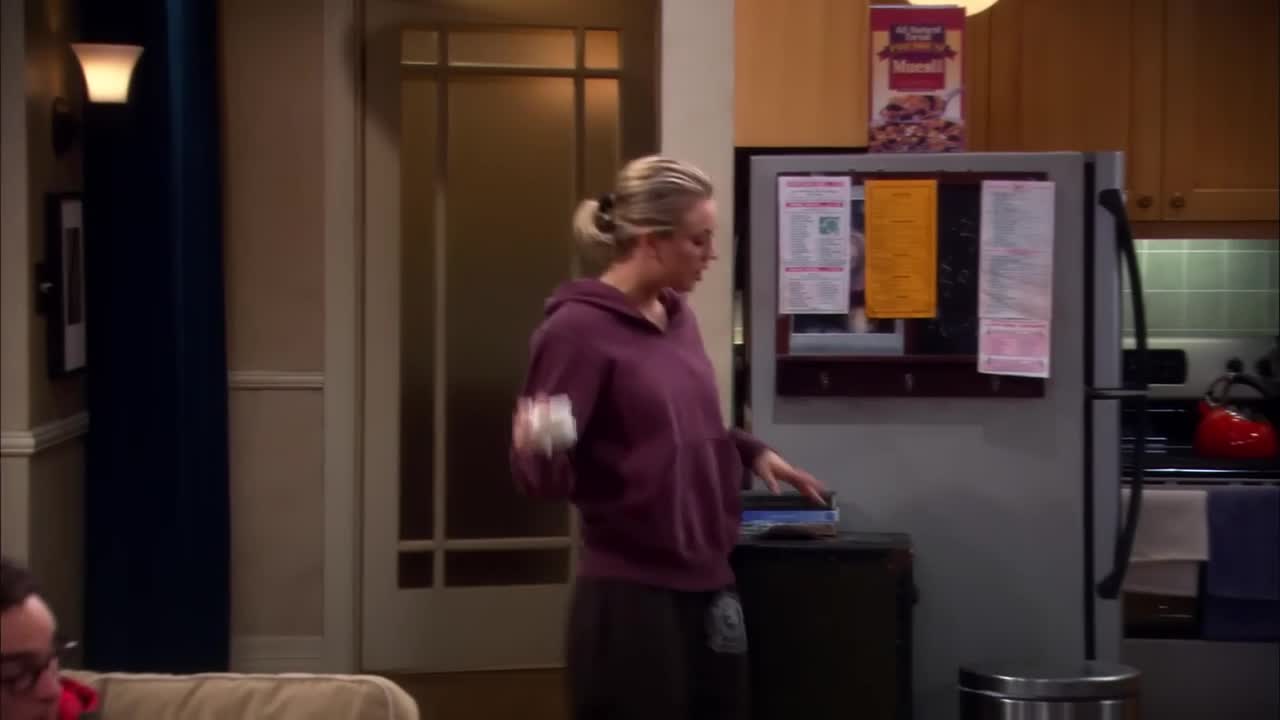
[The Anxiety of Change: A Study of Sheldon Cooper’s Domestic Stability]-[Sheldon Can’t Handle New Neighbors | The Big Bang Theory]
📋 Summary
The Cascading Chaos of Unpredictable Change
In this brief but revealing exchange, the characters navigate a series of minor domestic disruptions that trigger a disproportionate psychological crisis for Sheldon Cooper. The dialogue serves as a microcosm of Sheldon’s rigid worldview, where even the slightest deviation from the status quo is perceived as an existential threat. This summary explores the themes of stability, the fear of the unknown, and the comedic friction created when Sheldon’s neuroses collide with the casual social norms of his peers.
The Fragility of the Status Quo
The conversation begins with a trivial grievance regarding steamed dumplings, which Sheldon characterizes as "horrible," signaling his inability to process minor inconveniences. However, the central conflict arises when the group discusses the departure of the neighbors in apartment 5A. For Sheldon, the departure of tenants he "never met" is not a neutral event; rather, it is a catastrophe. He describes their anonymity as "perfect," noting that their lack of presence meant "no awkward hellos in the halls" and, crucially, "no clickety-clacking of high-heeled shoes." This highlights Sheldon’s ideal living environment: one characterized by absolute sensory and social predictability, which he hyperbolically compares to a "family of cats"—minus the "ammonia urine smell."
The Catastrophic Nature of Uncertainty
Sheldon’s reaction to the news of the vacancy reveals a profound phobia of transition. When Penny attempts to reassure him that "it’s gonna be fine," Sheldon offers a bleak philosophical rebuttal: "Change is never fine. They say it is, but it’s not." This sentiment underscores his fundamental struggle with entropy. To Sheldon, an empty apartment is a blank slate of chaos. He immediately spirals into worst-case scenarios, imagining future tenants ranging from an "opera singer" to "the cast of Stomp," or even a "tap-dancing pirate with a wooden leg." These absurd projections serve as a defense mechanism; by making the outcome sound ridiculous, he attempts to justify his paralyzing fear of the unknown.
The Climax of Domestic Dread
The tension reaches its peak when Howard Wolowitz proposes a solution that Sheldon finds far worse than the original problem: moving into the apartment himself to "get away from my mother." While the others attempt to mitigate Sheldon’s anxiety through logic or humor, Howard’s suggestion introduces a new variable that threatens to destroy the very proximity Sheldon values. Sheldon’s final exclamation of "The horror" serves as the ultimate punctuation to the discussion. It encapsulates his worldview—that any change, whether it be a neighbor moving out or a friend moving in, is an intrusion upon his carefully curated existence.
Ultimately, the conversation illustrates the irreconcilable gap between those who view change as a natural, manageable part of life—like "putting a new fish in a tank"—and those like Sheldon, who view the water itself as a volatile environment that should never be disturbed.
Deep Learning with ListenLeap


