I am so excited for the spa day.
Candles lit.
Music on.
Hot tub warm and ready.
And then my chronic hives come back again in the middle of my spa day.
What a wet blanket looks like another spell of itchy red skin.
If you have chronic spontaneous urticaria or CSU, there is a different treatment option.
Hives, during my next spa day.
Not if I can help it.
Learn more at treatmyhives.com.
Get up to 50% off site-wide, plus huge doorbuster deals on popular styles.
Go DIY and do it all 100 online, or choose white glove service with expert design, help and professional installation.
Both backed by Blinds.com's 100% satisfaction guarantee.
Blinds.com's Black Friday Super Sale is here.
Save up to 50% site-wide and get a free professional measure.
Limited time offer, rules and restrictions apply.
See Blinds.com for details.
Hey, Lili Miller here.
I am the host of Terrestrials, a show all about animals and nature from Radiolab.
If you've ever wanted to hear a story about an octopus breaking out of an aquarium, or a squirrel that can regrow its brain, or the wild stories unfolding inside a tree stump well, we've got an episode for you.
And did I mention we sometimes break out into song?
Join us, Terrestrials, over on the Radiolab for Kids feed.
Listen wherever you get podcasts.
The dinner table might just be our most important space for difficult conversations.
This is especially true in culinary diplomacy, which is the intentional practice of strengthening geopolitical ties through food.
The idea is pretty simple.
Whenever we sit across from each other, it's natural to engage deeply.
But fostering actual progress, well... that's not so easy.
Today's story is about one such example of culinary diplomacy.
Only, the characters at the center aren't politicians or government officials.
Yiya Vang and Colby Rassevong are award-winning chefs who inherited the historically fraught relationship of their forebearers.
It's a decades-long conflict between the Hmong and Lao peoples of Southeast Asia.
By hosting a dinner event, the chefs hope to start conversations about the way forward.
Today on Proof from America's Test Kitchen, finding common ground through the language of food.
I'm Jack Bishop, stay tuned. the days are when bakers really get to show off.
There are pies loaves cakes, cookies and maybe even those impressive pastries you've been gearing up to make all year.
This is where Plugra Premium European Style Butter comes in.
Plugra has 82% butterfat.
That means less water and more butterfat, so your doughs stay tender and your layers bake up flaky and light.
It's also slow-churned, which gives it that rich, creamy texture that works easily into doughs and supports better lift and structure in your bakes.
Plougra was developed by chefs for chefs, which means that you and I get to reap the benefits in our home kitchens, and so do our loved ones, because the best gift that you can give this holiday season might just be something baked with Plougra Premium European Style Butter.
Reporter Nak Bui has the story.
On a hot June evening, I find myself at a restaurant called Vinai in Minneapolis.
It's one of the city's most prominent restaurants that serves Hmong food, and it's bustling tonight with a particular energy.
That's the voice of Yia Vang, the chef and owner of Vinai.
In recent years of working as a producer at Minnesota Public Radio and just living here, I've gotten to see local Hmong chefs like Yiya Vang and Diane Mua breaking through in a food world that had long valorized European fine dining.
As a fellow Southeast Asian and Minnesotan, it's been amazing to see Hmong food being recognized in this way.
What I admire most though, is how Yiya has always been grounded in a mission to honor his family's story through food.
Every dish he makes is a chance to share with people the journey his family took, having to escape Laos in the wake of a devastating war and then having to rebuild their lives in the US as refugees.
Vinay is actually named after Ban Vinay, the refugee camp in Thailand where Yia's parents met and where Yia was born.
The path they took is a path that's familiar to the more than 360000 Hmong people who now call the US home.
Many live in Minnesota.
Tonight, Yia has invited V9 regulars and newcomers alike for a special dinner to share these stories in a whole new way.
One for two snacks, Frips.
The dinner event is a collaboration with Colby Rassevong, an award-winning Lao chef.
He helms a restaurant called Bad Idea in Nashville, Tennessee.
The event is part of Yiya's Vernacular Dinner Series, where he invites chefs from around the country to Vinay for a culinary exchange.
So Vernacular is this idea that these two beautiful food cultures, when they collide together, we create a third culture.
The focus of tonight is to showcase the possibilities of Hmong and Lao cuisine in a way few have done before.
Yi and Kobe also tell me this event is about reflecting on the historical ties between the Hmong and Lao.
Kobe's family, like Yi's, also had to flee Laos as a result of the war some 50 years ago.
But he says he isn't familiar with the particulars of the strife.
This event has made him want to learn more.
As far as, like the Lao and Hmong people you know, I don't know too too much about it as far as I've ever known, until I've met Yiya.
You know, Hmong people were Lao.
They were just the mountain tribe people of Laos, but trying to do more research about it.
For Yiya, this event is an attempt at mending historical fractures.
Fractures created decades ago as a result of war and conflict that wouldn't have predicted a Hmong and Lao chef could come together in this way.
So growing up, There's always been this kind of you know little thing where we just heard story that, like Hmong people and Lao people, didn't get along.
Or, like, kind of like, hey, here's the line.
The Hmong kids.
We don't go on that side because it's the Lao kids, you know.
And the Lao kids don't come on this side because it's the Hmong kid.
With all of this as a backdrop, Ye says he hopes this event with Kobe can demonstrate how food can provide a path forward from a difficult past.
It's the cooks in the kitchen can actually show you that there is commonality in what they do every day.
Maybe maybe there's commonality between you and the neighbor that lives across the street.
The history between Hmong and Lao people can be traced all the way back to the 1800s, when Hmong people started migrating to Laos from China.
I reached out to two historical experts to learn more about the story.
One is Hmong and one is Lao.
Hmong people had lived in China for many years in the mountains.
They had to leave China because of expanding Han Chinese empire policies and the desire for the Han Chinese to sort of conquer and incorporate ethnic minorities within their expanding empire.
And so for Hmong folks, they didn't want to, you know, be subjugated in those ways.
That's Chang Mua.
And I am an assistant professor of Hmong Studies and History at the University of Wisconsin Oshkosh.
Chang is Hmong, and she told me that those who left ended up in Southeast Asia, notably in Laos.
Given that the lowland areas have already been occupied by Lao, Hmong tend to be in the highlands.
That's Sangmini Labut, a scholar of Lao descent.
I am a community-based scholar on Southeast Asian and Southeast Asian American history.
Sangmini says the Hmong who fled to Laos settled in the mountains.
But life wasn't easy for the Hmong people there, Chang says.
I think the Hmong really want to, their search for autonomy.
If you live closer to other folks, then you're going to have more interactions with them.
And if you live closer to the more dominant powerful groups, then you're going to be in a situation where you might be subjugated in the ways in which they were.
Being the newcomers, they are subjected to misperceptions about who they are.
And some of those misperceptions are things that followed them from China, right?
In China, there were stereotypes of Hmong sort of being uncivilized, unassimilable.
Things got more complicated in the mid to late 1800s, when France began to expand its colonial empire.
It took control of Laos and much of Southeast Asia, forming French Indochina.
There were many Hmong who were, as well as Laos, who were given very high titles in the colonial governments.
And so, at the same time, there were promises that were made even by the French, that Hmong would get an autonomous area in northern Laos.
Then, from the 1950s through the 70s, a power struggle emerged in the region and in Laos after the end of French rule.
War broke out as communist forces began to gain a foothold.
A group called the Pathet Lao became close allies with the northern communist forces in Vietnam.
And the U.S. began to intervene both in Laos and Vietnam.
They were determined to prevent the spread of communism.
This is the battlefield in Laos.
These are government troops, supported and financed by the United States, fighting and losing ground to communist troops, many of them from North Vietnam, fighting in remote mountains in an obscure corner of Asia.
It looks and sounds familiar.
Needing a way to fend off the Pathet, Lao and North Vietnamese forces, the US secretly began to recruit and train a great number of Hmong people to fight on their behalf.
They built an alliance with a prominent Hmong general.
The man who commands most of the secret army is General Bang Pao.
He is a Hmong tribesman who worked closely with the CIA in organizing the hill people.
Disalignment and what unfolded would be called the secret war by some.
But Seminyi says this term needs a more critical examination.
I think the systems in our own history has always been taught to us by other folks, right?
And so it does bring in the lens of I mean the outside of our community, the lens of the US.
Even when we're talking about the conflict in Laos, many folks use the term secret war.
And so even that terminology is from the perspective of the US, because it is the US secret war in Laos.
But for folks who have lived and experienced it, it wasn't a secret.
On the ground, the conflict pitted families and neighbors against each other.
Yia remembers hearing about this.
So literally it was, you know, brothers who fought against brothers.
And my father even telling me stories of family members betraying other family members or being told like saying hey yeah, come meet us out here.
And then your brother's cousins come.
But it was an ambush, because this family member got paid by the Patalao and say hey hey, like we'll give you X amount of dollars if you do this for us.
Or it's like, if you don't, we'll kill your family.
So again, complexities.
In short, it was a war that complicated and exacerbated existing tensions between the Hmong and the Lao.
It also caused major devastation to the region.
Hundreds of thousands of people lost their lives and many more were displaced.
The US also dropped more than 2 million tons of cluster bombs on Laos, turning what was once a land of lush forests and vast mountainscape into the most bombed country in history.
The war finally ended in 1975, with the communist Pathet Lao gaining control of Laos.
After the US withdrew, the new communist regime targeted Hmong people who they suspected were working with the Americans.
This led to what has been called a genocide against Hmong people in Laos.
Yia and Kobe's families were directly impacted by these events.
Yia's grandfather had fought alongside the Americans and died in the war.
Yia's family eventually fled to Thailand and stayed at the Banvinai refugee camp before making their way to the US.
Kobe's grandfather was killed by communist forces.
After that, Kobe's grandmother decided to pack up the family and escape.
They went to North Carolina before landing in Tennessee.
It's now exactly 50 years since the war ended.
Yet, Chang says the perceptions and misperceptions of years past still affect how Hmong and Lao people relate to one another today, even for the younger generations who may have more distance from these events.
Nowadays, you know, I think there is still some of that impact because For those of us, like me, born over there but raised pretty much here in the United States, you hear these stories right.
Even though I've never had a direct or personal negative experience with another Lao American.
These are things that you hear.
Sangmanee notes there are generational differences in how raw these feelings can be.
He also says it's important to challenge the idea that the war was simply Hmong and Lao people fighting one another.
Much of the younger generation have classmates who are Lao and Hmong.
I mean their relationship is different from the elders, who have experienced war and conflict and infighting as well, right?
And when we're speaking about infighting, we're also speaking of Hmong Lao.
Hmong Hmong Lao Lao right.
Because, like during the war and conflicts in Laos, there were members of Hmong who were pro-communists and there were members who are Hmong who are against communists in Lao community as well.
In the face of such a layered and painful past, Yia wants this event with Colby to begin from a different place.
The way that we do our food, the way that we talk about food, we're actually cousins.
But there's this divide that happened so long ago.
What if this wasn't some kind of geopolitical like You know, like we can all live in peace together?
But what if it's just two boys?
What if it's a Lao kid and a Hmong kid who loves to cook and wants to cook food together?
What if we just start from there?
After the break, dinner service begins at Vinay.
And now back to our story.
A few weeks before the Vernacular Dinner event at Vinay, Yia and Kobe met on a Zoom call to figure out the menu for the night.
Okay, bro.
Let's rock out this venue.
Let's do it.
Dude, I love all your notes.
Snacks-wise, I kind of want to do three.
What are you thinking?
Three would be cool.
I like the way we're doing one each.
It would be cool if we can collab on one.
Although they both belong to this current generation of Southeast Asian chefs making waves in the culinary world, Yiya and Kobe are quick to tell me they have very different approaches.
My food is very different than most Asian people would cook.
It's very modern, it's very forward, and that's kind of by design.
Whereas Yiya's food is very honest, it's very real, very authentic, which is what I love.
As for how Yiya sees it... Kobe's pedigree in, you know, coming up from Nashville...
Cooking out in Charleston.
You know, being around some of the more, I guess, if you want to call it fine dining restaurant, some of the flavors are more honed down, more.
You know, for us we're more of this, like hey, like we're going to rough it.
You know it's going to be more.
Quote unquote rustic.
Yi and Kobe start hashing out a fried rice dish they want to put on the menu for the event.
We have a base fried rice.
I think it's a Georgia's, but we have a base fried rice we use.
Kobe wants to add a massive egg souffle on top of the rice to jazz it up.
It's super fun.
It's based off another omelet that I saw in Thailand.
But pretty much take the eggs and separate the whites and the yolks.
And then we'll take all the whites and we'll whip them to like stiff peaks.
And then we'll fold the yolks into them.
And then in a pot, we'll pretty much like fry half this base.
And then we'll put it in the center, and then we'll put a little meringue on top and then throw it in the oven.
It'll kind of all set into like a giant souffle.
Oh, okay.
Yeah.
Cool.
And then once that's ready, you just throw it on top of the fried rice?
Yeah, sometimes we put it on the side, sometimes we throw it on the fried rice.
But it looks gigantic.
Like three eggs will turn into like something the size of your head.
That's a great idea, dude.
It turns out to be a fun combination of their specialties.
Okay.
With Kobe adding his touch to Yia's crab fried rice.
They're effortlessly ping-ponging ideas.
I was thinking okay, so for the fish, either branzini or, I mean, rainbow trout is kind of the thing up here.
And so it's easy, we can stuff it.
I was thinking, you're saying sausage, I was thinking mung sausage.
Okay.
It's kind of like a lao sausage, but it's more, it's not as, a little more herbaceous.
Okay, cool.
So, yeah, we'll stuff it with that.
And then i was thinking about part roasting it okay, finishing it on the grill, oh perfect.
Yeah yeah, we can serve it along with some of the i was gonna say like sliced cucumbers, sliced carrots, real thin, you know, sliced carrots, sliced cucumber uh, some watermelon radishes, and then some wraps uh, some lettuce.
That's great yeah yeah, i love that idea.
I mean, Between the brainstorming and planning, I noticed they're also trading family secrets of things they grew up eating like lob.
Traditionally, it's minced meat with herbs and eaten with fresh lettuce and sticky rice.
Do you guys do it kind of tartar style, like raw?
My family did both.
There's the cooked one, there's the raw one, and then there's sometimes the one made with blood.
For us, it was raw with all this other stuff.
Like with the bile in it, it's like, oh man, that, I'll wake you up in the morning.
Oh no.
It feels like Ye said, two cousins chatting away.
But just when it looks like they've come up with a menu that's a novel synergy of Hmong and Lao food crafted with the authentic vocabulary of both, there's something that gives Ye a pause.
How do you pronounce that noodle?
Kwa teal.
Kwa teal.
Yeah dude, i looked at it i was like, oh yeah, i just i just want to go play with it.
Yeah, it's so good.
I i had it in uh, in thailand when i went a couple years ago.
It blew my mind because it's like it, they only cook it on one side, so it gets really nice crispy, uh.
Then the top side stays like really nice and fluffy and chewy.
It's so Ye spots right away that it won't be easy to cook this right, so that it has that unique one-sided crunchiness.
Kobe also mentions that his cooks weren't a fan of making it at his restaurant.
The noodles is the only thing that I'm a little concerned about.
You have to get the right cook for it, you know?
It's funny.
I put a version of kway teow on our menu last winter, and all my cooks hated it.
Why?
They couldn't figure it out, you know?
Because you can't. flip it because you're cooking it on one side.
So they all had to do it by feel.
So half of them would burn and then half of them wouldn't be able to get it out of the pan.
And I'm just like you gotta let your little Asian grandmother inside of you tell you when it's perfect.
They're like, we don't have Asian grandmothers.
I wondered how everything would come together for this event.
After all the planning and prepping and chopping, Dinner service finally begins.
Ea says he's feeling good, but is already tired from a full day.
We're dealing with AC issues.
It's been so hot here.
My mom and them had some stuff for me.
They live like half an hour away.
It's like, hey, you want to come pick it up now?
Because it's so hot.
So I went and picked up like 100 chickens that they butchered up for me.
All of this on top of getting ready for this event.
But it's good, because I think once people start coming in and we just start cooking, then you just feel like yep, this is the rhythm.
This is how it is.
Kobe tells me he's looking forward to cooking Lao food without restraint.
It's something he doesn't often get to do in Tennessee, where he has to adapt dishes because there isn't a big Lao or Southeast Asian community like there is here in Minnesota.
Collaborating with somebody who's from Southeast Asia.
We just wanted to be a little more free, just wanted the food to come from the heart, so it's been really fun.
With everything set, they head to their positions.
Yie is managing the flow of orders tonight while Kobe is in the kitchen.
He's got his pans ready on the burners and all of his tools lined up neatly on the counter.
The kitchen staff are all at their assigned posts as the front house staff does one final huddle.
All right, so last day, take the food menus off after their first round leave.
Exactly at 5 o'clock, the doors open.
The first people through the door are Song Vang and Ong Zhang.
They're here for Ong's birthday.
Sang and Ong are both Hmong, and Sang says they have a special connection to Vinay.
You know, both of us, my wife and I, we were born in Vinay too, so we came here as refugees.
And, you know, again, we hear so much about Chef Yia Vang.
At another table is a group of friends who are also celebrating a birthday.
Among them is Eric Hebel.
He's excited to try Laotian food again.
So my hometown has a fairly decent-sized Laotian community and so I kind of, in like middle school, got introduced to like my first ever like sticky rice with like the spicy dipping sauces, and at first I was very scared because it's very hot, and then, as I've gotten older and I've actually like refined my palate a little bit, It's been really fun to really introduce myself to it again.
It's so good.
As I make my way around the room I learn the guests have a wide range of familiarity with Hmong and Lao food, like Cindy Spacuzza and her family, who had been waiting to eat at Vinay for the first time.
Yeah, this is sort of an entree for us.
This is a gateway into this cuisine, so...
Kim and John McDevitt at another table are not new to the food or the place.
We're a fan of Hmong cooking and we've been here before for dinner, so the idea of merging that with the Lao just sounds really interesting.
The six-course dinner begins with a trio of appetizers.
Here is the first course, the small plate.
There's fried dumplings stuffed with bamboo and sheep's milk cheese.
There's also a Hmong cucumber salad and a tomato tart with sukiyaki.
It all comes with a set of jowl or dipping sauces specially made by Kobe in Tennessee and brought all the way here.
Yeah, but this is different.
Whatever the stuffing is, it's completely different than what you expect.
Well, yeah, it almost has a juice flavor.
It is.
It's juicy, it's tender, and then the crispies grow.
It's a good combination of textures.
This is with tomato, right?
Yeah, it doesn't taste like tomato at all.
I know.
I would never in a million years guess that that's tomato, the way they transformed that.
But I would have 10 more of these easily.
This is so good.
Next is the mushroom lab with fish sauce caramel and puffed rice.
It's served, of course, with purple sticky rice.
For Song Bang and Ong Zhang.
Using mushroom instead of meat was a surprising take on a very familiar dish.
So the mushroom lab, taste great, but I separated out the components and I was eating it separately.
Like, hey, where's the la component of this, right?
But as soon as I took my hand, grabbed the purple sticky rice, made it into a ball and dipped it all in there and ate it all together.
It's like there you go.
That's la right there.
It's nothing we would see like from the Hmong community making a la with mushroom, but having that with the Laotians like the dipping of the rice into the sauce and all the flavors.
I could see how well put it was together.
Then comes the stir-fried flat noodle.
This was the dish that Yeo was concerned about because of how challenging it can be to make.
And like two, three of each.
Okay.
Then like four, five-ish.
One of this guy's.
But after a little instruction from Kobe, Yi's staff was able to pick it up with ease.
It's a well-earned crowd pleaser.
Course number four is the crab fried rice with egg souffle.
Everyone marvels at the souffle.
Oh, we always love that reaction.
Fried rice and egg souffle omelet.
Enjoy.
The crab is so good.
The souffle, I don't know if I've ever had souffle.
It's like airy, fluffy.
It's not like online.
What you usually get with fried rice.
Yeah.
Usually with fried rice you get scrambled eggs.
This is fun.
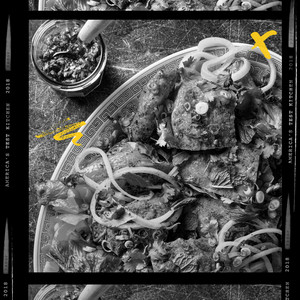
The grand finale is an entire grilled trout stuffed with pork and mushroom.
Ye describes it as a fish stuffed with egg roll filling.
I recognize it as a twist on a Vinai signature.
We have that rainbow trout here.
Served with some lettuce.
Make your own lettuce wraps, rice noodles, pickled peppers, and then we've got that mushroom naan frites.
Thank you.
Wow, that fish looks so good.
The question is, at course five, how do you...
All of it is so good.
All right, that's really tasty.
Very tasty.
Capping it all off is Kobe's pandan tapioca semifreddo.
It's based on a dessert found in Hmong and Lao cuisine called nava, which normally comes with tapioca, fruits and coconut milk.
I'd never seen anyone reinterpret it into an ice cream style like this before.
I like that.
It's not like super sweet.
Making my way around the room, I don't see any leftovers despite how much food there was.
And by the end, no matter what brought them here, it seems everyone is feeling a fullness that only comes from a one-of-a-kind meal, anything like this whole meal ever.
So everything was a surprise in that way.
Like I was expecting it to be the Laotian and Hmong food, but I didn't quite know what to expect.
And I'd never had anything like it.
And it was all very good.
Song Bang tells me the meal expanded his view of a cuisine he had known his entire life.
You know what I grew up knowing as Hmong food, tasting as Hmong food, and then to come in and taste this today.
It tells me that, oh my goodness, there's so much more.
So much more.
And it led him to reflect back on his childhood.
My Laotian friend and I, I mean, friends and I growing up, you know...
I know that our parents always said, you know, they always have their differences.
They're like, oh yeah, you should not be friends with the Laotians.
And I know that my Laotian friends' parents also said that you know you should not be friends with those Hmong people too.
But you know what?
The dishes that we had tonight tells a whole different story.
But yes, combining the two makes delicious food.
Delicious dishes, yes.
Aung Jong echoes that feeling.
I think bringing food together like this really shows that we can all really just co-exist together, no matter what happened in history.
As the guests clear out, the sounds of utensils clinging on plates and excited chatter taper to a quiet hum.
The fatigue of the day sets in for the staff who are finally getting a chance to sit for the first time.
After a job well done, Yi says there's only one thing left to do.
No, I'm just going to probably go to Wendy's, get a double cheeseburger, get a Frosty, and then lay in bed and think about my life choices that brought me to this moment.
I catch up with Yi and Kobe a few months later.
Both have returned to the daily hustle of running their restaurants, and each are fresh off of picking up national awards for their work.
In September of 2025, Kobe was named one of Food & Wine's Best New Chefs.
Yiya's restaurant Vinay was named to Bon Appétit's Best New Restaurant list.
Reflecting on the vernacular dinner event in June, Yiya says that it sparked a lot of conversation.
We got a lot of really cool response. from the Hmong community itself.
You know we had everything responding from people going well, I never knew there was like a divide between Hmong and Lao people to people going you know that divide between Hmong and Lao people have been the only thing that my parents and my grandparents have been talking about.
Kobi, on the other hand, reviews to me that doing the event inspired him to take more risks at his restaurant.
He even added the mushroom lob to his menu.
Being in Minneapolis and getting to cook things so raw allows us to here in Nashville, you know, be a little bit more bold in that sense and brave.
We get to.
You know, if we have an idea, you know we don't have to think, so We try not to think so hard about it anymore.
And with this being 50 years since the end of the war in Laos, I asked Kobe what he thinks an event like the one he did with Yia would look like 50 years from now.
I think I can only imagine...
The possibilities would be endless.
You know, I think, the conversations that we continue to have today.
You know, I think it's really exciting to see Lao food in its original form on menus, the way it's intended to be.
But I also think it's really exciting to see hopefully, young chefs who see us and want to pursue this on their own, create their own voices.
In October, Yi and Kobe did a second event together.
This time, Yia went to Tennessee to cook as the guest chef at Bad Idea.
And when Yia reflects on what he sees ahead, he returns to a moment his parents shared with him from when they were still at the Bon Vinai refugee camp.
My mom said the night before we were going to come to this country, you know, we were in our little hut at Vinai, the refugee camp.
And your father said to me I am dead so excited that we get to go to a country where my sons and daughters can write their own destinies and it's not determined by war.
And he truly believed that he literally, you know, he gave his whole life to make sure that we can write our own destiny.
And even if the history of the lao and the mong are complicated, i get to hang out with dudes like kobe And we get to rewrite some of the wrongs that maybe our fathers and our fathers' fathers and our fathers' fathers, our ancestors, did to each other way, way back in the day.
And the vehicle we get to use is food.
And for me, that's always been the drive.
In their own way and together, Yia and Kobe are continuing to do just that.
One dish and one conversation at a time.
Do you know what part of Laos your parents are from or your family?
My dad is from Vang Vang.
Where?
Oh, are you serious?
Yeah.
I visited there.
Yeah.
I didn't realize how big a city that was.
It's huge.
Yeah, it's like a metropolitan.
Yeah.
My mom's side of the family is actually from Thailand.
Oh, your mom's Thai?
Or are they just... They just live... Northern?
No, no, no.
Kind of like that middle.
Oh, okay.
Close to Vientiane, but they're from Phnom Penh.
I don't know.
I just found out.
My entire life.
She never told me her side of the family is from Thailand.
My mom was born in Laos.
But her mom and her dad are from Thailand, which I never knew.
That's what I'm saying.
My family doesn't talk about it.
What's up?
My family doesn't talk about it.
Really?
Yeah.
They do now.
Thanks to Nakbui for bringing us today's story.
If you like Proof, be sure to subscribe wherever you listen so you can get new episodes as soon as they drop.
And while you're there, why not leave us a rating or write us a review?
It really helps other people find the show.
This episode was hosted by me, Jack Bishop, and the podcast is made by the following cast of characters
I'm Yumi Araki, the managing producer.
I'm executive producer Caitlin Kelleher.
I'm senior producer Alex Curran-Cardarelli.
I'm associate producer Angelica Quintanilla.
I'm associate producer Louise Curran-Kensler.
And I'm Kyla Forman-Andrade, the TV and podcast intern.
Audio services are provided by Ultraviolet Audio with scoring, mixing and sound design by Matt Boyden.
Brian Campbell of Signal Sounds composed our theme music, additional music by Kyle Forrester and Jordan Pearson.
And Margolis is our director of post-production, and our director of production is Diane Knox.
Fact-checking and additional research by Sarah D. Collins.
Special thanks to chefs Yiya Vang and Colby Rossavong for letting NOC document their vernacular event.
Thanks also to the diners, the historians, and everyone else who spoke to NOC for this story.
Nina Gianelli is the Senior Vice President of Television, Video, and Podcasts.
Dan Souza is the Chief Content Officer, and Dan Surratt is America's Test Kitchen's CEO.
Proof An Airwave Media Podcast.