Discussion keeps the world turning.
This is Roundtable.
You're listening to Roundtable with myself, Heye Young.
I'm joined by Youshan and Steve Hatherly in the studio.
Coming up, what if you could design your own bus route like ordering takeout.
Well, kind of. Pick the time, the stop, and even the fellow passengers.
Shanghai is doing just that.
But could this reshape how we think about public transport?
And perhaps to a certain age, we all have that one object we couldn't let go of.
An old stuffed toy, a threadbare blanket, maybe even a cracked coffee mug.
It's not that stuff.
It's not just stuff.
It's comfort. It's our a -be -be.
Do you still have one?
Our podcast listeners can find us at Round Table China on Apple Podcast. From the world of entertainment to what fuels your passion, our Heart to Heart segment is all about you.
Share your thoughts with us at roundtablepodcast at qq .com or, better yet, record a voice memo.
We'd love to hear your voice.
Now let's move on to the next topic discussion today.
Subways are speedy.
Private cars give you comfort.
Ride hailings, perfect when you're in a rush.
And shared bikes, great for fresh air and quick trips.
Getting around the city has never been easier.
But as we've shared with you on previous shows, city buses in many parts of China have been struggling to stay afloat, losing passengers to all these new options.
Now instead of cutting routes, some cities are taking a new route.
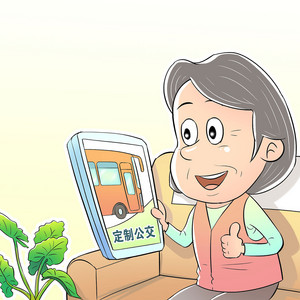
Literally, in Shanghai commuters can suggest and vote on new bus lane, well, new bus lines through an app.
If enough people back it, a brand new route can launch in just three days.
And how is it done?
Well, that's all done by Shanghai's newly rolled out policy on designing this whole new kind of public bus operation system.
And it's designed by commuters, bus riders themselves.
and it was launched only when enough riders requested.
So what we're talking about are customized bus routes that can be used to drop off kids at school in the early morning or send seniors to the hospital based on advanced booking system and also send the suburban commuters to the metro in a faster way and even take families to visit ancestral graves.
That's a bit less commonly used.
Those are all the things, you can do more things by the way.
That's not the complete list of four opportunities you have. Yep.
Actually, I heard that this whole customized bus thing is not entirely new.
It's been around for a few years.
But what's new in Shanghai is that this is, according to a recent article by the Shanghai Observer.
They noted that there was a special section called customized buses launched on May 8, 2025 in the app or on WeChat or the WeChat mini program called Sui Sheng Xing.
The shen as in the second name of Shanghai.
So it can be literally translated into follow Shanghai.
And residents in Shanghai, they can check the current customized bus routes and their operation time and file the application of a route.
They design, like when they wanted to start and ends, how they prefer to operate through what time of the day and how frequent you need a trip to be.
all that stuff, they can follow it in and help the city builders to decide if it's worthy to set up such a new line based on the request. I actually looked on to the mini app this morning and it was...
For the Beijing one.
Actually for the Shanghai one as we spoke.
And there is a list of new routes proposed by local people.
Some are participated by only two to three people, agreeing that yes, it's worth building a new line based on how it suggests here and I want to add this and this and that.
Some, like one between a community named Shihui Cheng and it's from Shihui Cheng to the Shanghai International Studies University -affiliated bilingual school in Baoshan that's in north Shanghai as far as I know.
So that line attracted 253 people voting for it saying that I want this, I want this from what time to what time, and I here's here are my suggestions on how this whole route can make our life easier.
So this is happening.
Yeah, so you go into the app and then you either vote on someone else's proposal or you design your own proposal.
If you design your own proposal, and they say typically 15 to 20 passengers per trip, so I guess fewer than that number of people then it wouldn't get approved.
But if you get the numbers, then they design it.
They actually do it.
That's why they call this a customized bus route and they do it within three days.
This is awesome. Yeah, and Shanghai does stuff very efficiently and that you gotta just give it to those people.
They're making decisions and implementing decisions And just sort of to offer a little caveat, um, possibly because this survey was done during springtime when Tomb Sweeping Festival was taking place soon, and that's why there was that little example of going to visit your family member's ancestral grave. And usually these places are - Sticking with that note, okay, are a little bit further route than city center, so it's usually a little bit more expensive if you take a taxi there and it's great if there's a bus route there.
But I also think about this and realize you don't need to visit that often, so when you're usually, when people are customizing the bus routes, I wonder if they're thinking about the frequency.
Is this a place I'm visiting every day, such as going to work or dropping my kid off?
That's on every workday, I would think.
So it makes sense if the frequency is high, but if this is a one time thing, then it probably doesn't really make all that sense to customize a bus route for the day.
What do you guys think?
Well I mean obviously, I've never used it, I've never done it myself, but it's popular in Shanghai.
They've launched over 220 different routes, different customized routes, and it's all over the city, all over the 16 city districts, and it's proven to be really popular with people.
My assumption would have been, oh this would be really difficult to accomplish.
Nobody wants to go where I go, I would think, right?
Maybe you're more mainstream than you thought.
But it's so specific to people's lives.
Yeah it is, it is. So my assumption would have been, oh, okay, well if I want to design a bus route that's specific to my life, how am I going to find 20 other people who need exactly what I need?
Not exactly, but at least somewhere along the way.
But it turns out that, that's exactly what's happening.
Yeah. That's a very keen observation from the bus rider's side, but from the city builder's side, what they want to do is, on a more general basis, which is to call on for supporting city bus companies to fully utilize their transport capacity to run customized routes for commuting, school travel, and medical appointments, et cetera, et cetera, in order to improve the, say, the general livability of this whole city.
So that's all coming back to an opinion, a policy opinion, that's published in October 2023.
And also there's been the new regulations on urban public transportation, which took effect on December 1 in 2024, which clearly states that under the premise of ensuring basic urban public transport companies, they are allowed to offer customized travel services to, you know, just people who wants a shorter or quicker trip between A to B.
And if you're wondering how much it costs, the fares are market -based.
So what that means is there's no discounts that are currently offered for students.
Students, sometimes right, when they take the bus, they can qualify for a discount or seniors or other groups, but not in this case.
There was another report from the paper that talked about the fact that they could optimize the allocation of laborers and buses by improving the public transportation network, like reducing the buses on routes with low passenger volumes and also during periods with surplus capacity.
So, for example, in one particular area, a bus route originally required 10 vehicles maybe to meet the service demands, but passenger flows change, right?
And as that passenger flow changes, part of the route can be shortened and then vehicle turnover can increase and this allows the route to be operated with just eight buses and then what happens with those extra two buses?
Well they can be redeployed to run customized bus services.
It's all about optimizing the efficiency.
Yeah, you're right.
I gave the opinion from a rider's point of view, from the city's point of view they're thinking well at certain parts of the day if we have 10 buses, for example, allocated for this route, but nobody's using them between, I don't know, 2 and 5 p .m. for example.
Well then let's take out some buses and use them more efficiently.
It's a smart idea. Yeah, it is a smart idea.
But if you look at - if this idea has been floating around for almost a decade now and the technology empowering it has been around for some time as well.
But It hasn't become as popular as everybody's doing it, or you know somebody is doing it.
It hasn't gotten to that point.
So what do you think has sort of impeded it's popularity?
Because when this originally came out everybody was like, I love this idea.
But in reality, people aren't using it as often.
So what's the discrepancy there?
Well, this is also according to the paper, which reported that sometimes these customized bus services face a certain mismatch between supply and demand, and for bus companies, it is sometimes difficult to grasp passengers' travel needs and conduct offline surveys.
These are all time consuming labors.
And, of course, those who say they need the bus to go their way, they may not actually take it at last. They'll probably just take it like once per month or once in a while.
So that's a huge mismatch. Or they might not use it at all.
Yeah, exactly. Things change during the day, you never know what's going to happen, right?
So for a lot of these citizens, they know that there's such a benefit that they can get for customizing buses, but some of them just simply have limited awareness of customized buses and… Yeah, that was gonna be my question too.
Do people know this exists?
Do they know that it's available?
And maybe even more importantly, do they know how to do it?
You know, if we think about who commonly takes public transportation during the day, well, students do in the morning, okay, people going to work and what have you, but also the elderly.
And do they know about this?
Do they know how to do it?
That's a fair question, perhaps.
Perhaps. And often during the day it is indeed the seniors who enjoy the buses and usually they don't need to pay for it once they're above a certain age.
And some would argue that they're enjoying the regular bus rides already and do they need a custom or customized bus route?
Well maybe they do but it might be difficult to figure out, especially also, even if it's as fast as three days ahead of time in Shanghai, I think maybe for everyday people, it's kind of something of an extra hurdle that you don't really wanna go through.
I was just about to say, do people even wanna go through this?
Because first you have to design the route yourself.
If you don't find one that's Already there.
Vote worthy for your needs, and you got to design it, you got to go on the app, you got to do this, you got to do that.
Then you got to check back, right?
And see if you get enough votes.
Yeah, and so in the meantime, you could just figure out another way to get to where you need to go three days later.
So it might not be worth the trouble, the what's that English expression?
The juice might not be worth the squeeze.
Oh, yeah, it sounds like a big three day ahead of time squeeze.
Yeah. So you know, do you guys like this idea, do you see a future of this to continue to expand or maybe you'll just gradually fade away just like the popularity of public buses in general but I'm not I'm not saying that people aren't using buses anymore it's just the heyday of public buses seem to have passed in big cities in China.
Well I do hope it stays because like the example I raised earlier there's this faraway school in Northern Shanghai linked to a community?
And what if, let's say, what if there are students or people going to work or study in that school, in that university and just need that extra few miles or kilometers to travel, but they don't have it right now, so they have to walk or so they have to call a cab.
That's going to cost them more.
Let's imagine if such thing exists for them it's going to help them in so many ways.
And the highlight for why we're discussing about this topic again today is that this launch of the service platform in Shanghai is significant in that it uses digital and big data tools to facilitate timely and convenient matching for supply and demand.
So with the technology being used here, I think it's going to be faster and easier for people to operate, design, submit their request, and get the result, a timely result after it's submitted.
So to me, it's still helpful.
Yeah, I think it's new possibilities for urban mobility, right?
You gave the example where 225 passengers voted for one particular route.
Now for every route that gets suggested in the app, 99 % of them might not get picked up but for city officials and bus route designers, they might think, oh, we didn't realize citizens can really take advantage of that route.
maybe we can make this a permanent fixture.
So I think it gives the opportunity for citizens to let public officials know through an app that hey this is something that could be really useful for us.
Yeah also just a quick explainer I said that the heyday of the public bus might have passed.
What I meant is the heyday of profitability of public buses has passed and the problem why the companies are struggling is simply because buses are supposed to be cheap, very affordable.
But running and the operation is increasingly expensive.
So how do you keep the service afloat?
Especially if it's a public service, it's supposed to be the bottom safety net that helps those most vulnerable and we also need to consider fairness.
So the public bus just like the post office maybe we've heard aren't really making money but we need them and now maybe we found another way to bring in some new revenue and oh we know that these bus companies would really appreciate that coming up some call it clutter we call it a soul softener the childhood blankie in your drawer?
Yup, that's your Aveve.
I'm talking in Chinese, by the way.
So what worn out thing gives you peace?
Stick around, everybody.
We'll discuss right after this break.
Looking for passion?
How about fiery debate?
Want to hear about current events in China from different perspectives?
Then tune in to Roundtable, where East meets West, and understanding is the goal.
You're listening to Roundtable with myself, Hye -Young.
I'm joined by Steve Heatherly and You -shan.
Ever had that one raggedy childhood blanket, stuffed animal, or even a weirdly comforting old t -shirt you just can't let go of?
Well, you're not alone.
And in China, there's a whole movement celebrating these beloved threadbare treasures called abbe.
Social feeds are full of folks showing off their emotional lifelines, It's proof that comfort comes in all shapes and shabbiness.
Why are adults so attached to these good old comforting objects?
Where did the phrase Abebe come from?
That's from a very interesting anecdote I found online.
So at first this term, Abebe, first became a term that's popular.
It was from an online influencer's video, sharing how her son, her child, was just holding this very cute blanket around himself and saying to the camera, This is my abbebe.
So it's not really a term.
It's not a phrase of any sort.
It's just a very cutesy and loving name a child gave to his blanket.
And then thousands of millions of people just watch that video and they're like, oh my goodness, that's so cute.
That's where the name came from.
Yeah, I love how this little boy called his blanket Abebe, and let's just talk about this.
Like I have mine Abebe, too, and what it is for me to be called Abebe.
And so I'm not talking about myself.
Oh, you're not. Okay.
Representing netizens on discussing their Abebe.
so they can be childhood toys, plushies, and pillows, or blankets, pillowcases that are already as old as the users themselves, and often fall in the seams and strips sometimes.
So yeah, these are baby.
I looked at these pictures, they are often threadbare.
So it's falling apart.
And I think you need to wear a face mask before you sniff, because all that stuff might get into your nostrils.
It's really not good.
But, Steve, how would you say this in English is that a transitional object?
Transitional object, security object, security blanket.
But it doesn't mean that it has to be a blanket.
It can be it can be anything actually.
It can be, well, for babies, it can be a piece of a blanket.
It can be a teddy bear or some kind of doll.
It could be a soother.
It could be anything that provides comfort to the child.
but adults too, and they say by the way that it's perfectly normal for adults to have a kind of security blanket as a means of like Nostalgia or comfort.
I had mine. I had an old hoodie.
Oh my goodness, I You know I used to love to wear it when I would do do my radio show and one day the the Elbows in this hoodie were worn out to the point that my elbows would poke through the holes in both sides.
And at one point, the sound engineer said to my producer, should we all pitch in and buy Steve a new shirt?
Because I'm starting to feel bad for him.
No, that was my security blanket.
I love doing the radio in that hoodie for some reason.
So, I think it's okay, and experts say that too.
It's not just children that have their a -bay -bay, adults can have their a -bay -bay as well.
Yeah, because it provides a sense of comfort to you, right.
It represents the touch from your guardian or your parents who gave it to you in the first place as a child.
And that similar touch or even after a long time, you no longer use it or wear it, when you feel it like a plushie or something fluffy, you still feel the comforting, like power behind it, that's representing maternal love and the place for securing yourself and feeling Yeah.
So yeah. It makes sense.
So it's been called a transitional object for a reason.
You're supposed to transition to something.
And now we're adults.
Are we supposed to be over there now?
Don't you have one?
Don't you have some sort of...
I had one. Did you?
But I was made to give it up by my Mom.
She was like, Now you're entering junior high, girl, you should probably put that thing away and not have to sleep with it.
That's nice that nowadays young people are encouraged to have this community and talk about their Abebe so that they no longer feel ashamed in a way or feeling deprived of their Abebe.
And you have social media to share with like minded people.