discussion keeps the world turning.
This is Roundtable.
Sensitive skin cases in China have become more of a norm than an outlier.
But is the booming care market a real solution or part of the problem?
As winter has arrived and the issue of skin becomes a pressing one for many, we'll investigate the hidden triggers and the truth behind the labels, tracking the science and the spin all the way to the source.
We're live from our studios in Beijing.
This is Roundtable.
I'm Steve.
Thank you so much for being with us today.
And for the show, I'm with Yushun and Feifei.
First up.
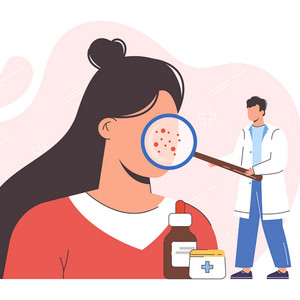
For nearly two-thirds of people in China, the daily reality is a battle against skin that is persistently red, itchy and or reactive, a startling condition that has surged dramatically in just one decade.
This silent epidemic has ignited a booming, crowded market of specialized products, all promising solace and relief.
Beneath the sophisticated marketing and compelling packaging however, the real drivers of this crisis are a complex web of modern environmental and lifestyle changes, revealing a profound disconnect between our skin and our world.
Yet amidst this flood of serums and creams there are so many out there it's tough to know whether consumers are finding genuine solutions, are simply navigating A labyrinth of cleverly marketed hope.
And it's so confusing.
There are so many products with so many different claims saying they can do this and that for your skin, and many buy it for luxurious reasons.
But for millions of people out there, skincare is a serious and stressful issue.
Your skin...
Yishun and Feifei, good afternoon to you both.
It's your largest organ and it helps protect your body from germs and infections and injuries and it helps control your body temperature.
But for all the great things that it does...
It can be tricky to take care of and it can be a source of great, great stress and discomfort for many people as well.
So you should get us going.
The numbers are a little bit shocking, to be honest with you.
Yes, to be honest, skin issues has always been a challenge for many people, since they're very young, right.
No matter it's about the acne or itching retinas or other problems.
They're just so common.
And recently, At a dermatology-related meeting held in southwest China's Chongqing in early November, research shows that the incidence of sensitive skin in China has reached more than 64.
That is a significant jump from just 16% in 2010.
And that's what I meant when I said the numbers are a bit shocking.
Yeah, like basically every five people, three of them have sensitive skin.
So experts have summarized three key trends.
First, the prevalence of sensitive skin has nearly tripled in the past 15 years.
And second, the condition is increasingly affecting younger people, with 18 to 30 year olds making up nearly 80 of those affected.
And third, the factors contributing to sensitive skin are more diverse, with like environmental irritants, poor lifestyle habits and psychological stress being the main culprits.
Sensitive skin, I mean, it sounds like a very broad term.
How is that defined?
What are we looking at when we're talking about sensitive skin?
Actually, the outermost layer of your skin caught the stratum corneum. works like the outer wall of a house.
So it's made of more than 20 layers of flat, tightly packed skin cells.
You can think of these cells as the bricks of your body.
And between the bricks there is a layer of fats, mainly like some chemical or like that kind of things, that have fatty acids, that that kind of thing, which acts like the cement um, that holds everything together that, and that gives you a skin, a strong, and brick wall like structure.
And then on top of this wall there's a thin protective film made of sweat or natural oils.
And this film is like a coat of paint on the wall, adding an extra layer of your protection.
And then, when we encounter these kind of situations that I just mentioned, these kind of a protection may be get down and then your skin will lose that kind of protection and you will have that kind of reaction.
And it could be anything, right?
It could include the weather toxins, products that people use, like creams or serums or things like that, or even makeup.
People can have a bad reaction to that as well.
Even the wrong soap can not do your skin any favors.
So yeah, if you have sensitive skin, you'll notice things like dryness or itching or skin, even skin discoloration, sometimes suddenly or after it's irritated in some way shape or form.
And it's quite complicated because some people are born with these thinner skin level, as Yusheng just mentioned.
I would call them like the barrier of your body.
Some people are just born with thinner barrier and they're naturally very sensitive to different changes in the environment, in their diets, in their lifestyle, or the things or the products they put on their face.
But others.
I think when we are seeing this surge in the incident of sensitive skin in China, and also, I think, globally as well, is I think we can see say that it's not just biologically.
Um there, there are other things, like um weather.
For example, right now in beijing, we have strong dry, cold winds which can be the cause of sensitivity in your skin.
And other things like I'm a living example of that is that when you're using wipes on your face, on your skin.
It can also be very irritating and lead to sensitive skin problems.
Wipes, like what?
Makeup removers?
Yes, yes.
Because I didn't have this problem a few years back.
But when I was working as a reporter and traveling around trips, just for the convenience I would use makeup remover products wipes, to remove my makeup.
And after several wipes, several times with using those wipes, my skin become more sensitive.
Of now, probably the alcohol in the wipes, probably all the very strong um you know, force to wipe the surface of your skin can be also very irritating.
Yeah, well, there are plenty of things that can trigger an irritation, even your clothing.
In the wintertime, I don't like to wear sweaters without a long t-shirt underneath, because things like Wool can really rub against your skin and irritate it.
That's one for me.
But other things in your house, like cleaning products, makeup, we mentioned that.
Even the wrong laundry detergent.
Can can be a problem.
And usually it's scented products or products that contain some sort of harsh chemicals that will trigger your your skin sensitivities.
It feels like you know I was thinking about this, as you said, some people like born with these kind of natural skin, skin that can it can be like weaker to these things.
But another thing is that I feel like human evolution hasn't kept up with some of the commercialization of these products, because I
I think back then, when we don't have these kind of cleaning stuff not detergent, I mean disinfectant, right.
You use them with your detergent maybe sometimes.
Back then I think in my family we don't like very, very commonly use it and back then I don't have that much skin issue.
But after I regularly starting to use a lot of these, no matter it's the laundry stuff or household cleaning products,
I started to have these things and I have to pay a lot of attention to these products.
I was just about to say that's.
One of the big challenges is that oftentimes something will trigger your skin and you don't know exactly what it is.
And if you go to the doctor, The doctor will ask you have you made any changes in your house recently?
Have you started using a different detergent?
Have you started using different creams or lotions?
Things like that to try and find out exactly what the culprit is.
But oftentimes that's hard to do.
Being said though, they have been able to identify some of the reasons that this has become more serious.
So what are some other causes now I have?
Why have we seen such a significant jump in the numbers from nearly sixteen percent to a well over sixty percent?
Well, I think Overuse of chemicals is one of the reasons.
That sort of reminds me when I watched a sort of presentation about allergies.
And the doctor said they're also witnessing an uptick in allergies globally as well.
One of the reasons is the first uptake of really mass allergy outbreak among humanity is about the same time around detergent enter the market.
So they were proposing that maybe the use of chemicals in your daily life is also part of the sensitivity in your whole body system.
And that's why, I remember in the early days of skincare, we only use cleanser and then lotion.
That's it.
And then later we have like some sort of water and then serum, and then eye cream and then cream, and then lotion plus cream.
And then you also use some other oil.
You know, it's a very complicated process.
That can be one of the reasons.
So then in that case we'd have to blame maybe advertising social media, because we are exposed to a different idea of beauty, or perhaps different, more ideas about beauty were kind of bombarded with them all the time in the past.
Maybe you'd have to pick up a magazine and flip through the pages to see those beauty advertisements, or flip through the channels on your television.
Now... simply turn on your phone, go to any social media app and you'll see lots of pressure there.
Sometimes a lot of these causes are kind of related or connected, I would say.
Social media and advertisement is one thing.
Another thing is that the environment that we're living in may be also changing, like the sharp drop in humidity when it's winter in some area, or the rising indoor temperature if we were using heating systems right.
And also large temperature differences in indoor and outdoor when you're going into different areas or rooms.
So and then when we are living in this kind of environment, people would think about OK, I maybe need more products on my face to protect my skin so that I won't have that kind of problem.
Yeah, and that's the irony, isn't it?
Is that we think the more and more we try to do for our skin, the more and more we might be hurting it.
I mean, it's big business.
China's medical aesthetic industry.
They talked about this at the 8th China International Import Expo, the CIIE, which we talked about here on Roundtable.
According to that report, the market for China's medical aesthetics industry is about 42 billion.
That's about 300 billion yuan.
And that was back in 2023.
And they're expecting it to grow up until, well, at least 2030.
That was the projection there.
But of course it's not just China, it's America, it's Korea too.
The South Korean Ministry of Health and Welfare.
They reported that in 2024, nearly 12 million foreigners visited the country for medical treatments.
Medical tourism is big in South Korea.
That's in the news quite a bit.
But these treatments might be hurting your skin and there are personal stories about this.
Yes, for example, there is a woman named double.
She felt this deep sense of insecurity.
And then she found one of those clinics in South Korea and then trying to get rid of her acne scars.
But from that treatment, she started to develop these sensitive skin syndromes.
And you know she after, especially when she came back to China and went to a hospital for a checkup, she was diagnosed with damaged skin.
Yeah, again back to the point of the more we try to help sometimes and oftentimes it will help, but sometimes you can be doing more harm than good.
But it's not just about that.
It's about lifestyles in general now.
They've become perhaps a little bit more unhealthy.
Another example is when a woman named Tichi first started working in a new company and this company may be asking them to handle a lot of major questions projects, which means they need to work overtime or work very, very long hours.
And then after the project ended, the work intensity didn't ease.
And And.
In this kind of scenario, she tends to eat more greasy food or like cheating meals that can make her feel better.
So, which has bad effect on her skin and these kind of layer of stress and poor habits and food.
Yeah, it's like a spider web then, isn't it where everything is connected to something else?
So in our busy modern day work lifestyles, where we are at the office for many hours of the day, it leads us to to be a little bit lazy, maybe when it comes to our food choices, because we're so exhausted at the end of that long working day, and that can be bad for your skin as well.
What kind of impact can food have on your skin?
There's lots of news about that.
Yeah, as Yufeng said, greed food is one of that, and also sugary stuff.
Like we intake a lot of sugar these days through food through you know the food we eat and also the drinks we have and also a study led by a group of scholars from Yunnan province.
They also found that that spicy food and alcohol can also be a contributing factor to your sensitive skin.
So they said that studies have revealed that individuals of Asian descent exhibit increased suspected to sensitive skin when exposed to a spicy diet.
So it's also very important to be mindful of what putting you into your mouth.
And also, I think, sleep patterns also a big factor when we are talking about this surge in sensitive skin.
Is that because of the stress in workplace or in your studies, sometimes people would sleep very late into the night and that can also be a contributor.
And also thinking about the caffeine people take in or alcohol people take in because of the stress and because of the Poor sleep patterns.
So all of that.
Stress too, right?
Yeah.
When you are stressed, your body releases cortisol, a hormone that weakens the skin barrier and reduces its ability to hold moisture.
And this can make your skin dry.
First of all, dry, irritated and more sensitive than usual.
And then people under heavy stress often experience sudden flare ups or retinas or even stress related hives.
And that is when I think.
As I said, that's all connected.
When you're having a bad sleep or high stress, your immune system will also get affected, and then everything may be affected as well.
But it's not common knowledge, though, isn't it?
I didn't know that...
Cortisol that stress hormone dries out your skin.
I had no idea about that until this very moment.
So I think that's part of the problem as well is that you know, We get lots of health tips on the news and on shows and it's always being told to us do this, don't do that, to take care of your health.
But skin is often ignored, I feel, and people don't really know the right way to take care of it, and it is a confusing place to live The skincare market.
It's a big, big, big market out there, and the numbers prove it.
Yes, especially in recent years, I think, here in China, if we are talking about sensitive skin skincare industry, China has experienced significant growth, with a compound annual growth rate of about 27 in the online market from 2020 to 2022.
And also overall China's cosmetic cosmetics market is also experiencing booms.
And it's Basically one of the top players around the world.
The country's beauty and personal care sector is projected to reach 78 billion US dollars in revenue this year.
And that means lots of brand competition.
Domestic brands have... seen rapid growth in market share.
In 2019 alone, two domestic brands led the sensitive skincare market in terms of market share and taking first and second place.
And then, by 2022, the market share of domestic derma dermatological-grade skincare brands grew to almost 50, almost on par with foreign brands.
And one example is a brand called I'm Winona.
Maybe, with its special care cream, has propelled its parent coming to be become the leading medical skincare stock.
So It's not for a lack of products, right.
For people who have sensitive skin, there are so many choices out there.
And that sounds like a wonderful thing, but it might also be part of the problem as well as a choice.
You don't really know what to choose.
There's such a price variation in terms of some of the products as well.
And I think that's been a little bit complained about recently in the domestic market is that the cost is going up.
Exactly.
And for example, there is an early user of domestic skincare brand for sensitive skin called Jojo.
She recalled that a 50ml bottle of sunscreen was about 8 yuan.
That was- It's about a dollar.
Yeah.
And a 50 mil spray was only about $4 in 2017.
That means that you could take care of your skin for a whole month and that's very affordable.
But every year these domestic brands launch a new wave of products, especially in the first half of the year.
And if you compare these new releases, most of them are just upgraded version of their old products and their price are going up.
For example, the 10 version was priced at US12 for 50g, but when it was upgraded to 20 version, the price will be run to 38 or close to 40 us dollars for the same amount of product.
So therefore, that's what people are complaining about.
About eight years ago or so, they could get a small bottle that would last a month for a pretty good price, but now you're seeing perhaps smaller packages, you're seeing increased prices and you need to buy more often than you did before.
What about the service?
Are people talking about the service as well?
Yeah, the thing is that a lot of these skincare products, you need to use them.
Um, you need to use them according to your own skin type, right?
You, we have different skin types, dry oily or mixed ones.
Uh, that doesn't like assure or guarantee that that specific skin product that is working for somebody is working for you.
And that is why a lot of people buying these skin products are saying okay, it's just not working and I'm paying a lot of money for that.
But the thing is that some of these core product ingredients of these Chinese brands, which should be confidential, are openly listed in financial reports, and domestic brands have even joined live streaming platforms teaching consumers how to Tackle skin sensitivities and wrinkles, step by step.
Yeah teaching, or further confusing, because when you dive into it, you'll find that even within one category, for example a repair category, there are almost a dozen options under that one category, like strengthening the skin barrier or quickly relieve itching, or things like instant redness relief or long-lasting sensitivity reduction, and that's just under the relief category or repair category.
So this is a bit of a problem, and I'm not sure that we can blame the sellers here.
You know, if you watch a live stream or something like that, then they'll be promoting these types of terms that we just talked about.
But from a consumer's point of view.
Again, going back to the point that we're not I think it's safe to say we're not that well educated on our skin and how to take care of our skin perfectly.
So, as a consumer, when you watch a live stream like that or you walk into a shop and you hear all those terms, it's really, really confusing to know what's best for for you and it could end up in you wasting your money because you just don't know until you get the package home and you open it up and you put it on your skin to find out whether it's good or not.
And again back to the sellers.
I don't think we can really blame them because Yushin, as you mentioned, everybody has different skin.
One size fits all solution.
You really have to do some research and find out what's best for you.
Yes, exactly.
And then Yushun and I were talking about, you know, your reaction to different environments.
And for us, us that were born in different weathers, we have different reactions to the same weather film in Beijing.
So that also complicates the problem.
If I'm originally from a very dry place dry and cold place coming to a warmer and more humid place like Beijing would have a different reaction than You call Beijing a more humid place.
Where were you before if Beijing is humid?
In Mongolia, which is in the middle of the desert.
So that also complicates the problem.
And I don't think the seller can really, you know, have this one-to-one solutions for every one of their consumers.
And when I was trying to research on these sensitive spaces skin topic I also found that when it comes to skin care, it's also not mainstream research health issue compared to, for example, your immune system or other problems you may have.
So I think, but skiing is also one of the big of the surface of all a lot of your health problems.
So we need to you know, get to know your skin first of all, and learn about it, get educated.
Well, how do we do that then?
What are some good tips if we want to learn about the proper ways to do the right things for our skin?
Exactly what we said, right?
First of all, you need to identify or judge which kind of skin type you are having or like.
The way that you use your products or cleanse your skin is some sometimes very, very important when, when you have different types of like skin type.
So wash your face with a gentle cleanser to remove the dirt, oil or makeup and then pat your face dry with a towel and leave it for about 30 minutes to let your skin return to its natural state and then observe your skin And then maybe you can tell that if it is getting oily or just normal or it is getting dry or it's mixed.
I think a good tip too is to do a patch test.
If you're trying out a new product.
I don't wear makeup on my face, but I assume this is good advice for that too, right?
You have to just test a little tiny bit space of your skin, area of your skin to see if there's going to be any reaction or not.
Yeah, it's tested on the lines of your jaw to have it go first.
Oh, is that where they recommend doing it?
Yeah, over here.
Either makeup or skincare would be the place to have a test.
Also, I think we also need to be mindful about, for example, your lifestyle, the things you eat, your sleep, with your intake and also exercises.
A lot of studies are suggesting that exercises can also help with a lot of your skin problems as well.
Yeah, and if you do have sensitive skin, I guess you have to really pay attention if you are introducing new products into your home.
If you try a new detergent, pay attention to that.
Or if someone brings a new detergent into your house, pay attention to that.
Or new dish soap or anything that might come in contact with your skin.
If you notice a change, then that might help you out as well.
Yeah, it's an important issue for millions and millions of people here in the country.
And again, as we get into winter, particularly here in Beijing, it is time to really pay attention to taking care of our skin.
Winter in beijing last year was my first, and last winter i thought my hands were going to shrivel up like small grapes or raisins because of the.
The air is quite dry in the winter time.
But this time around i've prepared myself.
I've got my creams and my lotions and my gloves and yes, cover up your skin in the winter time too.
That's a very basic tip.
Uh, hopefully some of that information will help you out today.