This is the TED Radio Hour.
Each week, groundbreaking TED Talks.
Our job now is to dream big.
Delivered at TED conferences.
To bring about the future we want to see.
Around the world.
To understand who we are.
From those talks we bring you speakers and ideas that will surprise you.
Just don't know what you're gonna find.
Challenge you.
We truly have to ask ourselves, like, why is it noteworthy?
And even change you.
I literally feel like I'm a different person.
Yes.
Do you feel that way?
Ideas worth spreading.
From TED and NPR, I'm Manoush Zomorodi.
Today on the show, the secrets in a baby's DNA.
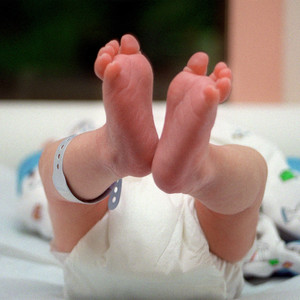
Right now, when a baby is born, their heel is pricked for a few drops of blood, which are then tested to check for diseases, including sickle cell anemia and cystic fibrosis.
But there's a new test that goes way beyond the usual newborn screening.
For BabySeek, we really start working with the family once the baby is born.
Bethany Zettler is a genetic counselor working on the BabySeek project, a clinical trial that's sequencing the DNA of healthy babies to look for hundreds of diseases.
Things like childhood onset cancers or childhood developmental problems, muscle disease, vision or hearing loss really any part of the body that could be affected by a single gene condition.
When parents are invited to join the trial, they're asked to make a very personal decision.
Do you want to know about diseases that your child might be at risk for but that may or may not ever show up in your child's future?
Let's say you do.
A few months after analyzing your child's blood, you'd get a call from someone like Bethany.
Bethany, I'm a genetic counselor with the BabySeq project.
I do have your BabySeq results ready. would now be a good time to talk through them together.
And let's say they found a risk factor.
We did have one of those risks identified that we were looking for, so I'm going to talk through that with you today.
We found that he is at risk for something called.
Your healthy baby is apparently at risk for a disease that you've never heard of before.
They'll send the report to your baby's doctor, who will refer you to specialists.
In a few cases, this could be life-saving information.
In most others, the parents will now be on alert to watch for signs of a disease that may or may not ever become a health problem in the future.
But your genetic counselor assures you that you made the right choice to get all the information.
You could don't choose what we pass down to our kids.
It's totally random.
So I think you've done a really good step here by getting more information for him.
Thanks to new technology and the exploding field of genetics, new tests are becoming available to predict, treat and possibly prevent disease.
But when does seeing into the future of someone's health become more harmful than helpful?
First, a conversation with a pioneer in the field of genetic testing.
Dr Robert Green and his team led one of the first projects to ever sequence the DNA of newborns that appear healthy in order to screen for hidden health risks.
My name is Robert Green.
I'm a professor of medicine in the Division of Genetics at Mass General, Brigham and Harvard Medical School.
And what I do is probably best described as preventive genomics.
And we should mention that you're also the co-founder of a public benefit company called Nurture Genomics, related to the work you do,
So let's talk about what preventive genomics even are and how you found your way into that work.
So preventive genomics is a catchphrase that I use to indicate that Something about the DNA is going to warn you about the future.
And in warning you about the future.
You can take action to mitigate or even prevent a medical condition that's coming.
It's most relevant for single gene diseases, many of which you've heard of, like BRCA1 for breast and ovarian cancer or familial hypercholesterolemia.
I think that the excitement of preventive genomics is finally using DNA in order to get some clues to what might affect you in the future.
Robert Green's journey into genomics started back when he was a neurologist studying memory disorders in adults.
It was 1993 when scientists linked a single gene to an increased risk for late-onset Alzheimer's disease.
It's only about 25% of the population that's carrying it may have heard of it.
It's called APOE.
But I got very interested in that because many of the families I was treating asked if they could have that gene tested in themselves.
And the prevailing wisdom at that time was, oh, no, you shouldn't do that.
You can't do that whatsoever.
Many physicians were against testing for the gene because there are no great options for treating this kind of Alzheimer's.
And even if someone tests positive for it, it doesn't mean that they'll necessarily develop the disease.
But Green listened to the families who wanted to know regardless and decided to do a study.
We wrote a grant which treated information like a drug.
People who wanted this information.
We randomized them into two groups and we delivered the information to one group and did not deliver it to the other.
And what we discovered was that there was way less distress than had been predicted throughout the entire field.
It's not to say that people weren't affected and sometimes sad or a little distressed when they found out they had it, but they recovered quickly.
And, by and large, those who wanted the information were extremely grateful for it and adjusted quickly.
I've never heard it put that way, that you treated information like a drug.
That is such an interesting sort of framing of it.
That's right.
Meaning that it would treat people because they would change their behavior or see a physician sooner or treat themselves essentially.
Yeah, that's exactly right.
So we took the kind of methodology that you use for pharmaceutical drugs and and applied it to an experience.
And the experience, in this case, was disclosing a genetic risk.
Green and his team went on to do multiple more trials, publishing dozens of scientific papers comparing all sorts of things like the best way to help people decide if they want to know what's in their DNA, how physicians should tell people what was found in their DNA and the role of genetic counseling.
Later, he studied what actions patients took after they got their results.
What did they do with the information?
Were they upset?
How much money did they spend following up?
What did they tell their family or withhold from their family?
What did they do in terms of insurance purchasing or any of those kinds of issues?
So that was the medical world.
Meanwhile, in the tech community, all kinds of new genetic startups were taking off.
Some of those companies went on to be the ones you've heard of, 23andMe, Navigenics, and so forth.
And the whole thing made me realize that something extraordinary was happening in the world.
That genetic information was becoming less expensive.
It was going to become ubiquitous.
And we were very, very unprepared to try to communicate that information to people who wanted it.
Then Green and his team got the funding to do another clinical trial.
But this time offering whole genome sequencing to healthy adults and their primary care docs.
And that was so exciting.
No one had ever done that before.
And we found out quite a lot.
Once again, we found that adults were not distressed by this, particularly the ones who asked for it.
We found that at least 15 of these healthy adults were carrying a single gene mutation that put them at risk for a future disease.
At the time, it seemed impossibly high.
How could 15% of healthy adults be carrying around such a mutation?
But we really have to change the way we think about these mutations.
They are not determinants.
They are risk factors.
Uh-huh.
The world tends to think about genetics in an overly deterministic way.
Oh, if something's in my DNA, it means I'm definitely going to get it.
Most of the time, it's not like that.
Most of the time, the change in the DNA simply increases your risk.
Like blood pressure is elevated.
That's a risk factor.
In many instances, if you have a certain mutation, it's a risk factor, not a diagnosis.
Uh-huh.
And so all along, we've been studying the medical, behavioral and economic outcomes associated with giving back genetic information.
It's complicated, but that was the point where you turned your attention to newborns because, of course, disease is not something that always just appears later in life.
It's something you're born with.
That's the whole point of genetics.
So how did that happen?
Well, at that point, we were sort of thinking about Thank you so much for having me.
And we put in a proposal to sequence healthy young children.
We called it BabySeq for baby sequencing.
Robert Green explains from the TED stage.
On April 22 2015, a four-day-old baby girl in Boston became the first healthy infant in human history to have her genome comprehensively sequenced, comprehensively analyzed, as part of a clinical controlled trial in preventive genomics.
Why is this important?
It's great to be first, but it's important because when children are ill, everybody's upset.
But when children remain ill and doctors can't figure out what's going on Well, that casts their parents into a diagnostic odyssey that can take years and be incredibly agonizing.
It can create all sorts of misunderstanding, misdiagnosis and mismanagement.
Now, sometimes those children will go on to get genetic testing and sometimes they'll find an answer.
And sometimes those answers mean that you can treat the child, but by then, It can be too late.
The damage is permanent.
This is particularly tragic because there are so many treatable genetic conditions today and there are going to be even more with gene editing cell and gene therapies.
So the key to this is obviously finding these children early, actually analyzing their DNA at or shortly after birth.
What this gave us was to take these volunteers and we could really compare the outcomes.
We could really compare psychosocial distress.
We could really compare amount of spending.
And we could compare, of course, what medical diagnoses were able to be made versus...
In the healthy babies who are not sequenced.
You almost never made any of these diagnoses because the disease risk was hidden and was not going to manifest till later.
And once again, the numbers were really surprising.
In a minute the reaction Robert Green and his team got when they presented their findings after screening healthy newborns for genetic diseases.
Sometimes people's voice was shaking.
Sometimes they were shouting.
I mean, it was unusual how much emotion this stirred in people.
Today on the show, the secrets in a baby's DNA.
I'm Manoush Zomorodi, and you're listening to the TED Radio Hour from NPR.
We'll be right back.
This message comes from NPR sponsor Adobe.
Introducing the all new Adobe Acrobat Studio, now with AI powered PDF spaces.
Need to turn 100 pages of market research into five insights with a click?
Templates for a sales proposal that'll close that deal?
Or an AI specialist to tailor the tone of your market report?
You can do all that with the all-new Adobe Acrobat Studio.
Learn more at Adobe.com slash DoThatWithAcrobat.
This message comes from NPR sponsor How to Be a Better Human, a podcast from TED.
It's a show for the self-help skeptic.
TED speakers explain how you can be the best you with science, thought-provoking insights and hilarious stories.
Listen to How to Be a Better Human wherever you get your podcasts.
It's the TED Radio Hour from NPR.
I'm Manoush Zomorodi.
Today, genomics researcher Dr. Robert Green and his BabySeq project.
This is a clinical trial sequencing newborn babies' DNA.
And as the research has gone on, Green and his team have discovered that many more babies are born with genetic risk factors for disease than people previously thought.
We were taught that about 3 of babies were born with some kind of congenital problem.
And then an uncertain number went on to develop genetic conditions in the future.
And I don't recall ever having a sort of master percentage of that.
Because all these children go out into various pediatric practices.
There's no central registry that aggregates diseases.
There's several thousand of these rare diseases individually.
They all have groups that support them, advocacy groups that help the families.
So there's individual numbers, but what we found in general terms, somewhere around 10 of children will go on to develop a rare disease.
And that's not even counting the ones that are misdiagnosed or undiagnosed.
What was really surprising about this... was what we found in these normal babies.
Robert Green explains the BabySeq project findings from the TED stage.
If you take, let's say, 400 genes which represent conditions that are treatable today, absolutely treatable, In about 1000 families.
We found mutations in those genes in about 4 of these babies.
And if you expanded that gene list to be, let's say, 5000 genes long, and that includes conditions that aren't treatable, yet conditions that maybe attack you in adulthood we found an incredible 12 of these babies were carrying such mutations.
Now remember that doesn't mean that all of these children are going to get the disease, but it does mean that if you know the risk that the children have, then your pediatrician and your family can be on the lookout for vague symptoms that would otherwise be overlooked.
This isn't a small problem.
If this holds, that means in the United States there's over 400000 babies a year that will carry these risk mutations.
And worldwide, that's over 15 million babies a year.
It's kind of ironic, isn't it?
Because these are individually rare diseases, but together they are a massive medical problem.
What kind of diseases are we talking about here?
Are they things that we've heard of or that we don't even know about?
Some of them we've heard of, hemophilias, biochemical diseases.
There's one with an unwieldy name ornithine transcarbamylase deficiency, in which particularly boys can't tolerate eating protein.
And if they do, they can get high ammonia levels and even brain damage.
There's a series of neurodevelopmental disorders that kind of get lumped in under autism.
They don't all have genetic markers, but about half of them do.
There's seizure disorders.
There's cardiac disorders.
There's diseases of the eye.
There's diseases of the liver and kidneys and skin.
So one of the reasons it's been so hard to get a handle on these is that in the individual, diseases are relatively rare.
But in the aggregate, these are not rare at all.
I mean, when we hear it this way, it feels like, well, why would you not want to do this?
Why is this not being rolled out into hospitals absolutely everywhere?
But in your TED Talk you said that 10 years ago, when you presented the findings to the medical community, We didn't quite get the reaction we were hoping for.
People were aghast.
They thought we were going to do terrible medical things to these children.
They thought there was going to be catastrophic psychological distress.
And they thought we were going to spend all sorts of money.
Tell me about that moment.
Were you surprised or did you expect that?
Well, we sort of expected it, because this has been something that our research has kind of butted heads with since the very beginning.
They were aghast when we comprehensively returned both treatable and untreatable results to adults.
When I would be in a room and presenting this, people would listen politely but then stand up and a few of them were, quite surprised, aggressive in their objections to this.
The system's not ready.
There's not enough geneticists.
We don't know the penetrance of these conditions.
We're going to spend excessive amounts of money chasing down a minimal number of conditions that might manifest.
You're going to terrify families and create catastrophic psychological distress and You know people are pretty cordial at these meetings but sometimes these comments were delivered with quite a lot of emotional valence.
Sometimes people's voice was shaking.
Sometimes they were shouting.
I mean, it was unusual how much emotion this stirred in people.
Some people would go as far as to say that, in trying to define genomic profiles for either children or adults, we were somehow replicating some of the things that were done in Nazi Germany.
And we were encouraging or amplifying race-based misunderstandings or stereotypes.
And the very language we would use was objectionable.
Someone not too long ago stood up at a meeting and felt that Any underrepresented populations or any historically marginalized populations that were encouraged to be in research biobanks would be readily misused by law enforcement to make cases that were not real and convict persons who were innocent.
It sounds like you were really touching a nerve about fundamental fears about humanity.
From eugenics to surveillance concerns real historical traumas that remain in our recent memory.
And now, as with much of technology, there is a fear of the unknown, the unknown future.
What will be possible?
How do you make the case that genomic screening can be done ethically And then it's worth the risks?
I think these are all legitimate concerns, but some are edge cases, things that are unlikely to happen.
Others are probably real, but infrequent.
The other thing that often happens is you're proposing something as a research project in order to determine whether it's beneficial or harmful, how much it costs.
There are times when people misunderstand that you're doing research in order to understand whether and how it should be rolled out.
And I feel like these are parallel questions to almost every technological development.
Cell phones allow people to follow you if misused.
Self-driving cars are wrapped up in a huge debate about safety, autonomy, responsibility.
So I don't think we are alone in facing both legitimate concerns and, at times, unrealistic fears when people hear that we're moving in this direction.
But I do think that, in contextualizing all these concerns, we have to remember the number of children and adults whose lives we could save.
Let me let you hear from a couple of the BabySeq mothers who've gone through this.
Now, this was baby Adam, who had an elastin gene mutation which can be associated with a narrowed aorta.
Finding out that your newborn has a heart problem, of all things, is absolutely terrifying.
But knowing that we could be proactive gave us some peace of mind, that we were doing everything we could do instead of being surprised down the road.
And in fact, after this mutation was found, a scan found that this baby's aorta was already mildly narrowed.
It can now be followed and treated if it gets worse.
Baby Cora, who's now almost nine years old, was found to have mutations suggestive of biotinidase deficiency, which is absolutely necessary for proper brain development.
So she takes a simple dietary supplement every day that's kept her brain safe.
We give her a daily vitamin to treat her enzyme deficiency.
We had to get creative at first, but now it's part of our routine.
I'm just glad we discovered the conditions before there were any symptoms.
What are some of the most common diseases that are showing up?
Well, there's most common and most impactful.
The most common is one called G6PD deficiency.
And that is a deficiency in an enzyme that can result in a jaundice of the child when they're exposed to certain medications or certain body stressors.
It's usually not too dangerous, but it can really send parents on a wild goose chase.
So it's good to know if your child has it.
That's by far the most common.
But as you start to look at the rest, it's a potpourri of very interesting, rare and treatable conditions.
So for instance, our colleagues in the UK have reported retinoblastoma risk.
And that's a gene which predisposes a child to get a very frightening tumor in the back of the eye.
Now, here's the thing.
That tumor is completely treatable if you catch it early.
But most people don't catch it early.
If you catch it a little bit late, you lose the eye.
If you catch it much later than that, you can lose the child's life.
So it's a classic situation where you want to find that early so you can treat it.
That condition that I mentioned about the eating protein, that's another one.
Some of the hemophilias where you have a tendency to bleed too much, can be found and aren't always tested in the newborn screening scenarios.
And it just goes on and on.
There's a list of 700 or so that we've published that are all treatable.
I love theater and musical theater, and I often think of Jonathan Larson, the composer of Rent, who gave us that extraordinary piece of theater and who died the night before it opened of a ruptured aortic aneurysm, probably due to Marfan syndrome.
That would absolutely be detected on our genomic screening and is not looked for on any state of the union today.
And that's treatable?
Oh, yeah.
He went to emergency room several times and was sent home thinking it was a stomach problem.
If you just knew you were carrying that mutation, they would have gone right to his aorta and imaged it and they would have seen it expanding and they would have operated and probably saved his life.
So that brings us to the point you made earlier, which is that most of the programs conducting any type of healthy newborn genome sequencing tend to only screen for treatable conditions.
That's right.
Why?
Why?
Well, there is an argument that knowledge is power, and many families would like to know everything, whether it's treatable or not.
And then there's an argument that what's not treatable today will likely be treatable tomorrow, and if you know it, you're empowered.
But even as we try to be on the cutting edge of this, there are traditions in newborn screening that focus specifically on treatable conditions.
It is a public health imperative And it has been designed and has its history embedded in finding things that need to be treated that you might not otherwise find.
So for the moment, almost all of the sites around the world who are doing research studies or pilot clinical projects in newborn or early childhood sequencing.
In almost every single one of those, they are restricting what they look for and what they deliver to things which are treatable, sometimes with a broad definition, in the sense that you would follow some sort of imaging, you'd follow some sort of lab test, not necessarily a pill to treat it, but some way of maintaining surveillance for early detection of something that the child is now at risk for.
Now, the one study in the world that is returning a few adult onset conditions is our BabySeq study.
And we did that deliberately, because the philosophy of BabySeq is to cast a broad net, large number of genes treatable and untreatable, a small number of adult onset conditions, to see what are the true benefits and, if any, harms of a great deal of information.
But by and large this field is developing to stay with young children and to stay with pediatric conditions.
And what about this idea that people want to know every single genetic thing that could possibly happen to them, because who knows where the science will go?
Because, you know, I talk to a lot of high-tech biological researchers who are saying that the ability to cure diseases, thanks to AI and understanding the human genome is It's going to vastly increase.
There will be cures for things that we can't even imagine within the next 5 10, 15 years, and maybe in time.
I believe that as well.
In fact, there's billions of investment. in gene and cell therapies.
We've done a whole series of hypothetical studies in which we asked people what they want.
Would they want treatable things?
Would they want untreatable things?
And there's a pretty consistent set of results.
When you frame the question as do you want treatable things about 70 of people or parents say they want it.
If you frame things to that same group as untreatable things, about 50% say they want it.
So there's a divide and it's relatively consistent across populations and scenarios that many people want treatable risk information and some people want all information.
We call those information seekers.
You get into some practicalities.
The more genes you're looking at, the harder it is and the more expensive it is.
You get into the sociology of medical care.
Do you want to dump a whole lot of information on pediatricians or doctors that they are then left to explain and manage in those patients, so often without a treatment?
Do you want to give some admittedly very nervous parents, for example?
Do you want to get them going down a road where they would be vulnerable to treatments that are illegitimate, to misinformation?
I'm really against patronizing.
I think people have the right to information.
But on the other hand, you have to admit the realities of human beings.
And but we are on the verge of a revolution in genetic therapies.
It's really happening.
So none of the pilot projects are actively designed to return results on an ongoing dynamic basis, which is the other way you can think of this.
You could think of well, let's go back and reanalyze the genome in light of new treatments that have become available, in light of new DNA variants that have been discovered.
Let's update this.
So I started a public benefit company called Nurture Genomics, which proposes to do just that.
And we are building a pipeline where people or healthcare centers or even countries can use this pipeline to get those babies sequenced and then get their genome reanalyzed and updated.
It's a simple concept, but it's way more complicated than you think.
There are never going to be enough geneticists, particularly in other places around the world, So you've got to actually create navigation systems for the pediatricians to know what to do.
And it's not like you can feed all the medical literature into a big AI and it tells you what to do.
There are not papers published yet on what to do when your healthy child has a risk mutation.
So we are actually creating that knowledge base in order to find a way to give pediatricians the tools they need.
It's easy, relatively easy to sequence DNA.
It's becoming easier to interpret those findings.
But what's really hard this is the last mile is okay.
So you put that risk variant in the hands of the family and the pediatrician.
What do you do next?
When we come back, we dig into the idea of maintaining surveillance, watching over a child to see if a genetic risk actually turns into an illness.
A pediatrician and bioethicist explains the big problems with testing healthy babies for genetic risks and why she advises parents against it.
I want children to grow up to be able to play in a healthy environment, to be able to go to school and learn, and to find fulfillment.
I don't want every aspect of their life to be a medical decision.
On the show today, looking for the secrets in a baby's DNA.
I'm Manoush Zomorodi, and you're listening to the TED Radio Hour from NPR.
Stay with us.
It's the TED Radio Hour from NPR.
I'm Manoush Zomorodi.
We've been spending this hour exploring the BabySeq project, a clinical trial that is sequencing the genome of seemingly healthy newborns to see if they're at risk for hundreds of diseases.
Based on its promising results, the head of the project, Dr Robert Green, hopes that BabySeq will eventually become available to any parent who wants it.
That is absolutely the vision.
And it's not just the United States, but everywhere in the world.
It's not going to happen very soon, but this could be eventually rolled out to every child and every family in the world who wanted it.
But not everyone agrees.
We have to remember who we're testing in this circumstance, and who we're testing are healthy newborns.
This is Dr. Lainey Friedman-Ross.
She's a pediatrician and bioethicist.
And she's been part of the newborn screening debate for decades.
And Lainey says genetic projects like BabySeq present a whole host of problems.
Because, don't forget, Just because you have the genes doesn't mean you're actually going to get the disease.
Some genetic variants are very highly penetrant, meaning high likelihood that if you have those genes you're going to get the disease.
But there are very few that are 100 percent.
I asked her to walk me through some of the pitfalls of genetic testing like BabySeq.
Her first critique?
Identifying genetic risks can lead to parents panicking needlessly.
Now you have this information, your child is going to get this disease.
And decades go, and your child hasn't gotten it.
But you've been, in a sense, a patient and waiting.
You've been waiting for that second shoe to drop.
By the time it drops, the parent might not even be alive.
The kid might not have been told about it because the kid has been healthy all these years.
Laney warns that that could lead to overdiagnosis, stressing out families and the medical system at large.
We're going to have to do surveillance.
So now we've taken a healthy kid and now we're bringing them back to the clinic.
And so now we have somebody labeled.
The stigma that can come with that, the anxiety can come with that.
Every time my kid sneezes.
Is this the disease coming on, or is it just that my kid has a normal cold?
All that surveillance could lead to overtreatment, she says.
One of the conditions that was picked up in the baby's seek was the biotinidase deficiency, where it wasn't clear whether the child actually needed treatment.
It's a vitamin, so it's not going to be harmful if the child gets a little extra.
But we could imagine other treatments that have more side effects and maybe clinical risks.
So we have over-diagnosis, over-surveillance, and over-treatment.
But there's also the flip side the parents who are told that their baby has no genetic risks, which could lead to a false sense of security about their child's health.
When you look at some of the tests that have been done over time, what you find out is that comparing genomic sequencing to traditional newborn screening genomic sequencing misses cases.
So those are the concerns for the parents who opt in to get their baby's DNA screened.
But what about those who opt out?
We're going to get people who really value their privacy.
So it's going to be people who don't trust the government or the health care system.
Yeah, I mean, there's a whole history we should note.
Good reasons why certain demographics don't trust the government.
I'm thinking of Tuskegee, other sort of health experiments done without people's permission.
But you're saying that this distrust could lead to parents opting out of all testing, including the ones that are standard now, the normal newborn heel prick screening.
Right.
And that's a real danger to all of us, because one of the values of those newborn blood spot cards is it's an epidemiological cross section of the entire United States, of every single baby.
If we no longer can use those samples for research because parents no longer trust us to do it with confidentiality and anonymity and things of that sort.
We're going to harm science in the future as well.
Yeah.
So, for those for which we have urgency, severity and treatability, we already are including them in the newborn screening.
And that I want to be universal in a population-based level without having to go for consent.
OK, so that's a big picture problem.
But when it comes to an individual who decides to screen their baby, how can they be harmed?
If we have an ill child and you say we're not exactly sure what's going on, let's sequence the child.
I raise my hand and say, yes, let's do it.
And we can make diagnoses, so that people can make medical decisions much quicker and more accurately.
That's awesome.
Once you start saying well, this might present when they're 10, you're taking a healthy baby and talking about probabilities and scaring parents.
So I'm going to give you an example.
One in 300 children born today will develop diabetes in childhood.
Imagine some doc walks into your hospital room and says your child has a 1 in 300 chance of having diabetes.
You weren't worrying about diabetes.
Now it's on your mind, right?
And now I can do that for every disease.
Actually, given your genes, you're actually 1 in 1,000.
Oh, I feel relieved.
I've created anxiety and I've taken it away.
Now I say, oh, your genes, your child has a 1 in 100 chance.
So now I've increased your anxiety even further.
Remember, I walked in that room, you weren't thinking about diabetes at all.
I don't need the genes to tell you.
Every child has risk.
Some are higher, some are lower.
But if I start doing that as a pediatrician, I'm going to have parents medicalizing the child's life.
I want children to grow up to be able to play in a healthy environment, to be able to go to school and learn, and to find fulfillment.
I don't want every aspect of their life to be a medical decision.
If someone, listening to Robert Greene, thinks I want my baby, when they're born, to be part of this BabySeek study, what would you tell them to ask themselves before they went ahead?
I would ask them would they be willing to get their own genome sequence and would they like to understand all the genetic risks that they themselves have in their genes?
We're going to find out.
We have a slight increased risk of this heart condition, this body part condition dementia, lower risk of one type of cancer, maybe a higher risk of another type of cancer.
The anxiety we could create in all of us.
I hear the positivity from Dr. Green, and 30, 40 years from now, I really hope he's right.
But right now, we are not there.
And in order for you to justify doing genomics sequencing on infants.
That means understanding all the risks, benefits and alternatives.
You know, we spoke to bioethicist Lainey Ross, who said there's this concept called patience and waiting where, if you have a gene, the patients are just waiting for the other shoe to drop, and that people don't want to spend their lives being patients.
What if nothing comes of this genetic marker that people just want to live their lives?
Yeah, I've been on this debate quite a number of times, including with Lainey.
And although I certainly see where she's coming from, I really do disagree.
I do think patience in waiting hasn't been an issue in adults who are apprised of their risk.
They tend to feel empowered and happy that they have learned whatever they learned.
It hasn't been an issue in the parents of the children who that we have offered this to.
Nobody's talking about imposing this information on families who don't want it.
Among families who want it, our evidence suggests that they cope very well.
What were some of their concerns that you felt, okay, well, that makes sense, actually.
I guess I'm thinking of things that parents do to their children.
And then when their children are older, they're like, I didn't say you could do that.
I'm just thinking about what I hear from a lot of kids right now, which is like my parents have been posting photos of me since I was a baby online.
I have zero privacy online.
I did not ask them to do that.
And that's potentially a less harmful – maybe not.
We don't know what's being done with all those photos and surveillance by tech companies.
But do you find that there could be a point where kids are like, I didn't ask for this?
I think that is absolutely a concern.
Will some of these children resent that certain risk variants were identified in them against their will or when they couldn't decide?
To that I would just say you know, parents make all sorts of life-defining decisions for their children.
Education, discipline, health, cell phones, credit cards.
This is just one more that a parent has to use their best judgment.
None of these concerns are unreasonable, by the way.
It's not that one group is resisting progress or making things up.
There were legitimate concerns about disrupting parent-child bonding.
There are legitimate ethical questions about giving people risk information when you truly don't know how likely it is.
If I tell you your child has a genetic predisposition to a kidney tumor, we're going to have to send your kid in then for regular imaging, probably for their entire childhood.
I know the chances are higher, but I might not know if the chances are 10%, or 50%, or 70%.
If I tell you your child has a mutation for a conduction deficit that's been associated with sudden cardiac death.
There's no cardiologist who has experience in predicting the likelihood and knowing exactly what to do.
We're deliberately pushing knowledge into an area where the medical system, almost by definition, isn't fully ready.
And that's very worrisome to folks.
They would like a lot more data and information and evidence before they see this become part of day-to-day life.
And look, some of these are long-term questions.
We haven't been able to answer them.
But through a BabySeek project And then through some of the other projects that have followed, we've been able to answer some of these.
You do not disrupt parent-child bonding.
We know that?
Yeah, we know that.
We don't know that in every corner of every population.
But in our published trials we have carefully, with validated scales, measured anxiety depression, parent-child connection or bonding.
And we've been able to do it in a best possible methodology, a randomized clinical trial.
And we've published it, and it's simply no difference between the two groups.
Does that mean there couldn't be a family who was very devastated?
Of course not.
Sure.
But it means that it's not a common, catastrophic psychological distress.
I would love to talk about how this works financially, because right now, at least here in the US, the insurance system is set up to favor people who don't have previously known conditions not to provide preventive care just generally, and to provide coverage when there's no other alternative other than to receive treatment.
So how would things have to change for this to be equitable in any sort of way?
I think things would have to change a lot.
We have a recent grant from NIH which is the first time anybody has ever been asked or allowed or funded to study bringing whole genome sequencing to multiple state laboratories.
And we're on the verge of picking seven states to be the first multi-state effort in the country to see how feasible is it to bring this for free to the families into the state laboratory newborn screening workflow.
So you can approach it from that direction, where we do have highly equitable, highly representative newborn screening system.
It gets almost 99.9% of babies in the country.
So we're exploring feasibility there with a new study that we call Beacons.
I think there will not be a one size fits all.
There'll be a certain set of genes that hopefully get integrated into conventional newborn screening in a highly equitable way.
And then there'll be a set of conditions and products that are not covered by insurance.
And so people will pay out of pocket, or their employers will pay or their healthcare systems will subsidize.
And That won't roll out in an equitable way.
That will roll out first to those who can pay for it.
But look, I think that's a lot of what happens with technology, right?
Yeah, but if we're talking about a disease that is life or death and it's, a poor woman comes into a hospital and can't find out that their kid has a treatable illness, but a rich woman can, that feels incredibly sad.
It does, but I don't think it is a situation that is any different from the rest of medicine.
We already know in a much less dramatic way that people who are under-resourced for all sorts of reasons have much worse outcomes, and the scale and scope of what it means to be poor in the United States is so much more devastating.
We're talking about millions of people whose blood pressure is not well controlled, whose diabetes is not well controlled, who don't get the medications of the early detection, of the screening.
The notion that there's something special about the asymmetry in genetics is probably true in some ways that it's going to roll out.
But my gosh, it's small compared to the impact of the inequities in our health system in general.
Now, that's not an excuse, but it's a context.
If somebody listening thinks you know, this sounds dystopian for me.
What do you wish they understood?
What would you say to assuage their fears and be more excited about the prospect of this technology rolling out?
Most of the time that people feel it's dystopian or are fearful of it.
They are worried about privacy breaches and discrimination.
And those concerns are real.
But I would propose to that person that they have not recognized how minimal those privacy concerns are.
Nobody can identify too much from your DNA that's going to hurt you.
There are laws to protect most kinds of insurance.
Yes, it's possible you could end up paying more in life insurance if this was known, but they're not balancing it against the life-saving benefits.
I would contextualize with what we already give up in privacy for our online searches, our telephones and our credit card histories.
These are all been monetized.
The concerns about privacy and discrimination are totally legitimate, but they have been over-indexed on, whereas the potential benefits have been under-indexed on.
So I would encourage that person to take a more balanced view.
And if they don't want it for themselves, that's fine, but not try to keep it from developing for the benefit of children everywhere.
It's going to take a certain amount of courage to change the way we think about disease, to embrace the knowledge of risk in order to preserve our health rather than waiting for us and our children to get sick.
If we can embrace this, we can save millions of lives and usher in an entirely new era of genome-inspired medicines.
There are a lot of questions still out there and there's still some people who would say it shouldn't be done at all.
But I would say the majority of us have moved the question from should it be done to let's find the most constructive and beneficial way in which it should be done.
And with that in mind yes, I think you're gonna see healthcare systems, you're gonna see states, you're gonna see entire countries start to bring this on board.
And they'll do so in different ways, with different styles, with different sets of genes.
But I think it's caught on now and I don't think we're going to go backwards.
That was Dr Robert C Green, professor of medicine at Harvard Medical School and director of the Genomes to People Research Program at Mass General Brigham Hospital.
He's a co-leader of the BabySeq and Beacon's baby genome sequencing projects.
His company is called Nurture Genomics.
You can watch his full talk at TED.com.
Thank you so much for listening to our episode.
Please rate us on Apple or leave us a comment on Spotify.
We love hearing directly from you.
This episode was produced by Phoebe Lett and edited by Sanaz Meshkenpour and me.
Our production staff at NPR also includes James Delahousie, Katie Monteleone, Fiona Guerin, Matthew Cloutier, Harsha Nahada and Rachel Faulkner-White.
Our executive producer is Irene Noguchi.
Our audio engineer was David Greenberg.
Our theme music was written by Ramteen Arabloui.
Our partners at TED are Chris Anderson, Roxanne Heilash, and Daniela Valorezzo.
I'm Manoush Zomorodi, and you've been listening to the TED Radio Hour from NPR.