Discussion keeps the world turning.
This is Roundtable.
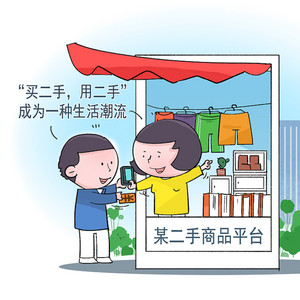
Secondhand shopping is hotter than ever, it's cheaper, greener and definitely lighter on your carbon footprint.
But hold up, if it's all that good, why is turning secondhand into a profitable business so tricky around the world?
And the seventh China International import expo is where innovation takes center stage with global industry giants revealing their latest breakthroughs.
We have the freshest highlights from this year's CIIE, especially in the world of automobiles.
Coming to you live from Beijing, this is Roundtable.
I'm He Yang. For today's program, I'm joined by Steve Hatherly and Fei Fei in the studio.
First on today's show, ever wondered how China's secondhand economy is transforming the way we declutter our homes while making a positive impact.
With online platforms facilitating online listings and offline physical store pickups, it's easier than ever to turn your unused items into contributions for those in need.
With a 40 % rise in secondhand brick and mortar stores across Chinese cities, as reported by CCTV, it's never been easier to shop sustainably while giving back.
So let's take a look at how do these online platforms in China operate and integrate with physical storefronts.
Yeah, so in China, I think when it comes to secondhand shopping, what happened is we firstly have a lot of online platforms, like Xianyu, the idol fish in direct translation, or Zhuan Zhuan, or iHoi Sho, or any more platforms to name.
But then after a few years of development, they sure have witnessed very fast growth.
But in recent years, they started to open up physical stores offline at the same time.
And so right now, I think Xianyu opened their first physical offline store for people to donate or for others to pick up secondhand items.
But then it comes to, for example, more developed platforms like Ahoi Sho.
They have opened up their first offline shops back in 2013.
And now they are opening stores in more than 200 cities in China.
And now the total number of their own offline stores is close to 2000.
And then another platform, Zhuan Zhuan, who's been publicizing itself on social media accounts, like in a very crazy way right now.
And they are also offering opening nationwide offline stores, I think the number is about 300 across China.
And at the same time, they're also having online platforms.
So I think what's been happening with the combination of both online offline for people to have that convenience if they want to donate or resale or buy secondhand things.
It's really fun. In the United States and Canada, this is not a new thing and people really enjoy doing it and have enjoyed doing it for a long time.
It's a different experience visiting the brick and mortar stores as opposed to shopping for secondhand goods online.
Of course, sometimes that's more convenient, but you get to browse, you get to donate, you get to purchase your secondhand goods in person.
That creates more of a community experience I would feel and think.
I've always felt that way about shopping there.
And I love it. You go in there and you just know that all the t -shirts and shorts, I always like the fashion because you get these vintage t -shirts and shorts and pants and jeans for like $2 or $3 in Florida where I used to do some shopping there.
And it's just a fun way to spend an afternoon.
Right. Also, just a quick question, Steve.
In the countries you mentioned or in these cultures which have a thriving and rich history of buying vintage, by the way, that must be 20 years plus of an item's age.
And some snobs would say, well, actually, it has to be 40 years and above.
With these cultures, is it more, do they have like vibrant online existence as well?
Or do people just go to physical stores?
I think it would be more of the brick and mortar stores than it would be the online experience.
There's something different, isn't there, about buying something new online versus buying something secondhand online, particularly when we're talking about thrift shops.
We're not talking about buying necessarily secondhand items that will cost you a couple of thousands of dollars or something like that.
We're talking about things that are really affordable.
They will not put a dent in your wallet.
And yeah, Canada, it's huge business in Canada.
90 % of Canadians have shopped or donated or both at thrift stores before.
That's an increase from 2022.
This is from Yahoo Finance from this year.
GenZ, they love it as well.
40 % of GenZ do it. GenX, I think, is big on it too.
What's interesting is that they spend in Canada 6 .8 times more in person in the shops than they do if they're shopping online.
Oh, interesting. And GenX is like those, that's the generation before millennials.
So they would be born in the 1970s or late 1960s.
Yes. My mom and dad love thrift shopping.
Oh, lovely. Yeah, it's really popular with older people too.
I'm not thinking China is more of a young people's thing.
I can't imagine my parents who are born in the 1960s would buy a secondhand of anything.
Why is that? I think first of all, they never throw away old things.
They can use the same thing for over 20, 30 years as long as they're not shattered into pieces.
I have a wardrobe in my home that was more than 30 years old and I want to throw it away or donate it or sell it to a secondhand platform.
And my mom was like, she didn't want to let it go because there is all the history and love that.
But the thing is, and then when it comes to young people, I think, first of all, I think with the online platforms definitely helps because they are more customized into shopping online.
And then at the same time, we have the promotion publicity when it comes to sustainability and shopping greener.
And I think that's why for China, I think 80 % of the secondhand buyers on the platforms like Xianyuan, Dranjuan under the age of 30.
And I think this is a different phenomenon that's happening here in China.
Yeah, it contributes to environmental sustainability.
In a 2024 survey found that 70 % of young Chinese respondents believe that buying secondhand does contribute to the environment.
And it does have a significant impact on the environment.
In fashion, for example, by buying secondhand you're contributing to the reduction of textile, waste, you know, old clothes that get thrown out often end up in landfills or incinerators.
Thrift shopping prolongs the life of products, right?
They get a second life if you go and buy something secondhand.
Therefore, you're contributing to the reduction of consumption of raw materials to energy, water, all those things that go into the production of new items you're helping out there.
You're reducing your carbon footprint.
Yeah, I think that's a very admirable and valuable point.
And I wonder though, really, you know, when it's one of the, let's say more than 170 million monthly active users on Xianyu, or one of those more than 24 million monthly active users on Zhuan Zhuan are actually thinking about how much carbon footprint am I reducing?
And also, I think it's kind of unfair to sort of expect your users or target audience or consumers to have that top on their priority.
And it's unrealistic.
But the fact is so many young people these days, you have limited space in your apartment or in this rental place.
And after a few years, and then there's this real need to get it out of the house, or, you know, if you can earn a few bucks on the way.
I mean, that's great.
Yeah, exactly. So it's a win -win, right?
And you feel good about what you're doing at the same time.
That's definitely a plus.
And it's really interesting to see, like you guys mentioned, how people go from online to offline or offline to online or to stay offline, as in maybe the thrift shop that Steve, you just mentioned on in Canada and here in China, I suppose, it's a peculiar situation that in the last 40 plus years, this society
has just developed so much in terms of economics and in terms of technology as well.
In China, in so many places, people, I mean, some of the obscure little towns across the country, people went from directly to road or, you know, maybe a dirt road to maybe high -speed rail.
And we went from directly, well, actually, people leapfrogged the credit card stage and went straight to online payment.
And when it comes to secondhand, yeah, people went straight online to sell and buy secondhand goods instead of going to thrift shops because we didn't used to have so many of these places.
And here we're saying, interesting.
Now people are kind of going offline for pickup or to browse these goods or whatnot.
So it's really a fascinating place to see how change is taking place.
And it reflects social change to some extent as well.
And if we turn our attention to, let's say, the US, where there is this secondhand economy as well, and there is apparently definitely interest in buying secondhand, but why are these online platforms fighting it such a struggle to profit?
Yeah, this is from APR's marketplace.
You're right. There is a strong interest in the United States.
Consumer interest statistics show that 62 % of Americans reported buying secondhand goods in the previous 12 months for things like affordability and for things like uniqueness as well, which I think is a strong factor when it comes to shopping in these types of places, you can find some really weird
and wonderful things there.
There are platforms like Poshmark and Depop that saw a boom in users recently, particularly during the pandemic when shopping from home and your computer and your phone became a really big thing.
But they've struggled.
Yeah, as you mentioned, to maintain profitability because of high operational costs and their profit margins are really not that big either.
For example, 3 .7 billion in total revenue for US secondhand clothing in 2023, but the net profit for online platforms remained limited because of logistical challenges.
There's other things standing in the way of making money as well, the high cost of product inspection.
When items come into these stores, they have to have staff to make sure that these things are able to be sold in their stores or on their platforms.
Then you've got things like return management.
If people want to return an item that they've already purchased, and then you've got customer service as well.
So there are many reasons why.
This is a business.
It's a different kind of business, of course, but it's still a business and there are challenges to making money.
Well, that reminds me of a recent experience selling my broken phones online is that I broke my phone, the back of my phone, and I took to the store, the official iPod store, and they told me that it was worth nothing at the official store.
But I can still use it.
The camera is all good.
I can still take photos with the phone.
Just the back of the phone has a lot of cracks.
So I went up on to one of the online platforms and I placed the order online.
By that afternoon, a staff member came to my home and to inspect and check on the phone and then offered me more than $2 ,000 for to collect that phone.
Then I can purchase a new phone on that platform so that I can have that 2 ,000 UN discount, which I think is one of the reasons why a lot of people are choosing these platforms online here in China.
It's convenient. It's fast.
I guess when it comes to the cost of inspection and management here in China, it may not be that much of a burden for Chinese platforms compared to Americans.
Yeah, but they're having someone come to your home.
So that's a staff member, right?
So they're making a salary as well.
Then they come to your home and they make sure that they can sell that product because if it's like it is in the United States, for example, where many platforms report return rates between 20 and 30 percent, then that can have an impact on profits.
So it's better for the online platforms to have a staff member to come to your house or to inspect the goods first, make sure that they're good enough so that they don't have to run into these return problems in the future.
20 to 30 percent of a return rate.
That's really, really quite high.
It is. I'm sure the companies would do a better math calculation than we do, but what really stood out to me, listening to your story, Fei -Fei, is that there was actually a person sent to your house.
Can you imagine how expensive that labor cost would be in the UK or the US?
And also, 2000 yuan is a good price.
I mean, how do they make money?
They must sell that phone with a higher profit margin, for obvious reasons.
Yeah, definitely they can make a profit, otherwise I don't think they can over meet that price.
An app will turn away your business.
So this is a fascinating area.
Yeah. But then I'm selling that phone to a platform, so it's more of a customer to business model if we're talking in business terms.
And then I think when it comes to customers to customers shopping experiences, for example, if I want to buy or sell something on Xingyu to another customer, and the problem is with the trust issue is also there.
I guess regardless if we're shopping in China or in the US, we're not sure who is on the other side of the phone and who is buying or selling.
And is that the product really up to the quality that they claim to be?
And I think that's the trust issue and also the quality issue is also very prominent here in China as well.
One of the things, there's a popular secondhand application in Korea, South Korea called Carrot, and one of the ways that they combat that problem.
Yes, they have had problems with the app in the past.
Certain stories have popped up in the news about scams and things like this.
But one of the things they do, and I used it all the time.
So if I sell something to Fei Fei, and she's happy with the experience, and she's happy with the product, she immediately gives me a review, and then I have a temperature meter.
And the more positive reviews I get, the higher my temperature meter goes.
So one of the ways that they combat the trust issue is that you can see the person's trust meter from the other end and just judge, oh, okay, they have a high trust meter.
That means that everybody's given them positive reviews.
And of course you get a positive review if you sell something that is of quality.
Right, and that's the standard practice for all online platforms, be it when you're hailing a car or when you're ordering food or whatnot, anybody, buyer or seller, provider of the service or on the receiving end, you get a review, you get a rating on the internet.
And that's one of the really upsides, I think, that adds trust for the platform.
We also have the same rating system here on a lot of the Chinese second -hand online shopping platforms.
But there is also, people can work around the algorithm as well.
They can have a very good rating, but you don't know how they get that rating.
And so I used to sell furniture online, and that buyer was really clever.
He placed the order, but he didn't pay me.
And then he came to my house to check on the furniture himself.
And until he found that piece of furniture is okay, and he can really buy it, he didn't pay me the money through another way instead of on that platform.
So I think it's one way of making a sale on those second -hand platforms is that you can make connections online, but you still have to have communications offline as well.
And it can be tricky.
You talked about electronics, Fei -Fei.
Another example would be second -hand clothes.
If you look at the United States, we just talked about the fact that it's a really popular thing with young people in America.
And clothing tops the list of purchases at 67 % for people who buy things second -hand.
And this is a quote, and I thought this was really on point.
This is a quote from Claire Tasson, who is a retail and e -commerce analyst talking about those statistics.
She said, the way that we treat fashion has changed so dramatically in the past few decades that clothing now is oftentimes seen as more of a one -and -done.
You just wear something a few times, and then you move on from it, as opposed to the way it used to be for my dad's generation, for example, or even me.
I'll hang on to a t -shirt for 20 years if I still think it's good.
But the shift in the fashion industry now with fast fashion has led people to buy something and even maybe just wear it one time or two times, and then sell it.
And then this has contributed to the popularity, I think, of online second -hand applications too.
Well, actually, I have a counterargument to that.
I believe that fast fashion has significantly diminished the popularity of, or at least what used to be a shining label of buying vintage or buying, well, let's say, the unique pieces because fast fashion only became popular in the last 25 years or so.
And what is it known for?
Well, it's ripped straight off the runway of Milan or Paris Fashion Week from maybe two weeks ago, and it's of such poor quality.
And can you imagine?
Now, a lot of these secondhand places, they're flooded with fast fashion pieces which are of poor quality.
And Steve, you mentioned that vintage t -shirt that somebody would hold on to for 30 years.
That's probably of better quality than that fashion piece that you can get from the second hand place.
And guess what? If you can buy something of a newer style of equally as bad quality and at a really cheap price in the brand new clothing store, fast fashion store, why would you get it from secondhand?
I'll counter your counterargument with a counter counter argument, because if you can save 50 % on an item that's only been worn one time, knowing that you are only going to wear it one time, you don't need, you don't care if the item is going to last five or 10 years because you have no intention of using
it for that long. So if you can buy something brand new at maybe a double the price, okay.
But if it's only been worn one time, it's essentially new.
But how would you know it's only worn one time?
It could be like something you've worn many, don't know how many times.
Sure. But you know, it kind of, you feel the fabric.
It feels like a piece of tissue and then it breaks up in like a few years time.
And I think that is also one of the detrimental things that fast fashion has brought to this planet.
Also, the biggest thing it does to the secondhand stores is that fast fashion depresses the amount of money that people perceive as appropriate to pay for particular types of clothing.
If it's like a 50 year old pair of Chanel tweed shoes, flats, ballerina flats, I think it still commands a considerable amount of money.
But let's say 50 years of a pair of fast fashion shoes, first of all, does it even exist?
Second of all, how much are you willing to pay for that?
Maybe one dollar. And so yeah, I think it's really interesting to see that, you know, there are these new dynamics that are happening in the secondhand industry.
Yeah. And maybe the reason that offline stores are becoming more popular, especially with things like fashion is because people can, you can go there and touch the clothing yourself.
You can check the quality yourself.
You can evaluate whether it's worth it for you or not.
You can also check it on for size from my experience selling clothes secondhand through the app before.
It can be really annoying because people come and they, you know, you have to arrange time schedules and then this and that.
And then you go and you meet them, you meet them on the street, right?
Cause you don't want to invite them into your house.
Yeah. And then they try it on and they're like, nah, no thanks.
Yeah. And then, you know, that's fair.
Of course, that's fair, but at the same time, it's just so much time and effort.
And it's not, I guess selling stuff online and buying stuff online, just not for everyone.
But again, maybe that's why the offline stores have become more popular because people get to spend their time and, and, you know, use their fingers to touch and try on the clothes.
Yes. I think that's precisely the reason why in China, the physical stores are more are really booming right now is because I think, first of all, we customers don't want to waste time communicating for one piece of item that's probably priced at 20 quai and then they can just drop off at the store.
And so that platform can take it over.
And then at the same time, the other customers on the other side can really inspect and feel and then make the purchase wisely.
Yes. Well, interest in secondhand goods is definitely on the rise and there could be this other side to the story and this might happen or it's seen more in some of the western countries.
It's called green fatigue with so many equal friendly messages, bombarding consumers.
Now, how does that impact the behavior of people who feel this is just way too much?
Yeah, green fatigue.
It's a good point you're making there.
That's that sense of exhaustion that you get or indifference perhaps even sometimes with sustainability because it's just kind of shoved down your throat all the time.
Not that it shouldn't be shoved down your throat.
It's just for many people that can be a little bit tiresome after a while.
And there was a report from a Munich based organization that notes that 40 % of western shoppers, particularly in Europe and the US, they experienced this type of green fatigue and some feel that the messages are repetitive.
They add pressure to the consumer rather than inspiring action.
And more than 50 % of survey Gen Z shoppers reported that eco -friendly shopping is important, but they also feel pressured by societal expectations to follow suit, to always go green.
And online shopping, we talked about it in the beginning, you're contributing, you're reducing your carbon footprint, but for many people, they feel that that's a lot of pressure on them and it forces them in the other direction.
Right. And for the companies, maybe they really need to show the data or share stories about positive environmental outcomes than just saying that, oh, we're going green.
That's called green and that's where people want to experience any more.