Last year, over 20,000 people joined the Body Electric Study to change their sedentary
screen-filled lives.
And guess what?
We saw amazing effects!
Now you can try NBR's Body Electric Challenge yourself.
Listen to updated and new episodes wherever you get your podcasts.
You're listening to LifeKit from NPR.
Everybody I'm Scott Detro in for Mary L. Sagarra.
Emily Oster has a knack for using data to help expecting parents find the best care.
Oster is an economist at Brown University.
She's written several books on parenting and also writes the newsletter, Parent Data.
Back in 2013, her book Expecting Better helped people navigate bad conventional pregnancy
wisdom.
Fast forward to 2024.
Oster has a new book that arms people with more data and more knowledge about what to do
during especially difficult pregnancies.
She corroded with Dr. Nathan Fox, an eternal fetal medicine specialist.
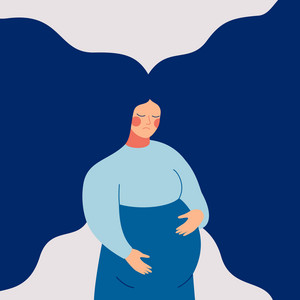
It's called The Unexpected Navigating Pregnancy During and After Complications.
With Episode of LifeKit, my conversation with Emily Oster.
Support for this podcast and the following message come from Wise.
The app that makes managing your money in different currencies easy.
With Wise, you can send and spend money internationally at the Mid Market Exchange rate.
No guesswork and no hidden fees.
Learn more about how Wise could work for you at Wise.com.
It's a high stakes election year, so it's not enough to just follow along.
You need to understand what's happening so you are fully informed on November.
Every weekday on the NPR Politics Podcast, our political reporters break down important
stories and back stories from the campaign trail.
You understand why it matters to you.
Listen to the NPR Politics Podcast wherever you get your podcasts.
When voters talk during an elections season, we listen.
We ask questions we follow up and we bring you along to hear what we learned.
Get closer to the issues that people and your vote at the NPR Elections Hub.
Visit npr.org slash elections.
That does it mean to be black in America.
An NPR's black stories, black truths.
A collection of stories as varied, nuanced and dynamic as the black experience.
You'll hear it means everything.
Search NPR black stories, black truths wherever you get your podcasts.
You know early on you write, what is different about this book is that I hope you do not
have to read it.
It is odd to write a book that you hope people will not read.
Why did you focus on this particular topic?
In the decade or so since expecting better has come out, I have talked to thousands of
women about pregnancy and a lot of those conversations are about I had this complication
during pregnancy.
I'm scared.
I'm anxious.
I want to understand it better.
I want to understand what to do next time.
Ultimately, this book is an answer to those questions.
It's really a guide through both what are the recurrence risks, what are the treatment
options and then how to navigate these conversations with your doctor.
So it's a book that I hope will answer a need that I saw so frequently in this last 10
years.
It's interesting data is such a big part of your brand, but you wrote and you've said
that so much of this came from one-on-one conversations or notes you got from readers.
How impactful were those?
They're incredibly impactful.
We thought about writing this book in the first place.
We did a survey of people just asking, tell us about your pregnancy complications.
I think I have 4,000 responses, many of which are paragraphs and paragraphs wrong.
That helped us with the question of where to look in the data.
What were the questions people had most about the data?
But it also helped us think about what I think is the other value of this book, which is
to help people feel a little bit less alone.
But why these complications?
We don't talk about very much.
And when people have them, they feel that they're the only one.
Yeah.
You know, this book particularly focuses on second or third or even fourth pregnancies.
So what are the most common differences people can expect in a second or third or fourth
pregnancy compared to their first one?
So most people find the later pregnancies less anxiety provoking.
First tend to be shorter with later pregnancies if you're having a vaginal birth.
And many complications are easier to manage because you know that they may be coming and
that preparation is almost always one key to better treatment.
Yeah.
The way you set the book up is the first half is kind of a big picture approach how to
think about things.
And then this chapter by chapter, specifically on different complications.
Luckily a lot of those complications are sometimes rare, but I want to talk about something early
on that you write about that a lot of people experience and it gets to that idea of feeling
alone that you just mentioned.
This is a chapter on early miscarriages and the big question of whether or not you should
share that information with friends or family.
And you know, this is so much more about emotions than data, but how do you think about that?
How do you approach that?
And I'm wondering has your view on when and how to share that information changed over
the years?
The traditional approach to this is that you share information about pregnancy around
12 weeks.
That's the point at which the risk of miscarriages lower.
It's also happens to the point at which most people are starting to show.
So it becomes more difficult to hide over the last several years and people have gotten
more comfortable with sharing this earlier.
I don't think that it's something that you could give people advice on because the question
is really what is the support you're going to want if you did have a miscarriage.
And for some people, they aren't going to want to talk to other people and grieving privately
or close families what they want.
For other people, that kind of broader support is going to be very valuable.
So that question for me there is really what do you as the pregnant person, what kind
of support would you want if this did happen?
And hopefully it doesn't.
Yeah.
Can you talk about some of the other complications that you focus on in the book, some of the
more common ones that a lot of people are going to be dealing with one way or another?
Yeah.
So one of the more common complications is pre-trum birth.
There are many people who have experienced pre-trum birth at varying times and we talk about
in the book is kind of what, how much is it matter when the pre-trum birth is and then
is that likely to happen again and how much correlation is there across, across births.
There are also a lot of things which are probably more common than people expect, like vaginal
trauma or prolapse, you know, experiences that are affecting how they feel that are affecting
your reproductive health, which are often not talked about because they are really about
your sort of experience of the world as opposed to about mortality, which were much better
at measuring.
When it comes to a care team, who should be on your care team beyond your obstetrician
and your primary care doctor and do you think that changes if you suspect you're dealing
with complications or if you have a history of complications?
If you have a history of complications, it's worth considering whether your care team
should evolve or should be a maternal fetal medicine specialist, whether there's someone
who has training beyond what an obstetrician biologist would have, sometimes as necessary
and sometimes it's not, it's the one specialty that you would want to consider in that situation
and I would always tell people that we consider if possible having a doula during birth because
there's a lot of benefits there.
Yeah, if you experience a complication like this, the first time around the question of whether
or not to have another child can be pretty fraught and so much of this book deals with
coming up with a plan, tips on how to be your own advocate, understanding your options,
even coming up with a script of how you're going to talk to a doctor about this, why to
you is that so important?
So when I wrote a specthing that I wrote it apart because I felt like I wasn't able to
engage with my own care, I didn't understand enough to have conversations that were productive,
that would get to the decisions that I needed to make, that book served that need in uncomplicated
pregnancies and I hope that this book will serve this need in more complicated spaces.
I think in order to feel engaged with your own care here, people need to have enough information
to have a thoughtful conversation with their doctor, they need to have enough scripting
to understand how to use the 15 minutes that they have to get the answers to the questions
that are going to matter for their decisions.
That's different from saying people need to be an expert, the doctor is an expert in the
medical side, the person can be an expert in their own preferences and their own values,
but in order for the conversation to be productive, they need to know enough to make it productive.
And that's why we focus so much on this basic understanding and then also how do you script,
how do you ask the right questions, how do you have the good conversation?
What do you think the challenges are with having those conversations with a doctor begin
with?
Is it a time limit, is it doctors wanting to be overly careful?
Is it the fact that as you come back to it again and again throughout your book so many
key questions about pregnancy are somehow still unanswered?
Yeah, all of those, I think the short amount of time is not ideal.
I think we've moved to an idea about shared decision making, which is a term that gets thrown
around a lot that I think is in some ways very useful, but also can abdicate responsibility
sort of on both sides in a way that's not helpful.
And what we need is an understanding of who is bringing what expertise to the conversation,
which we simply don't have.
So people feel like they're being asked to make decisions they're not equipped for.
And doctors are feeling often like patients are coming in with their own idea about their
care and not listening enough to the expertise the doctor is bringing.
So I think a combination of we need to build better trust, we probably need more time.
If we're not going to get more time, we need to use that time more effectively.
Think all of these are happening on top of the fact that for many of these complications
in particular, we just don't know enough to be certain about what's the right thing to
do in any given situation.
Do you think doctors generally appreciate a patient coming in with their own game plan
like that for the conversation, or do you think that sometimes there's a risk of putting
off a doctor who sees themself at the expert?
I think what is hard is to come in and say I've decided to do next, because I think for
many doctors, the answer is like, well, you're not a good candidate for that.
You know, for this medical reason that I could explain to you.
I think the approach of I've come in with a set of conversation topics, a set of things
that I need, I think we need to work through together.
So I think there's really a balance, and it's harder for me to see how someone would
object to that.
Yeah.
I had one particular question about conversations with a doctor after a difficult birth.
Because look, you know, this is an incredibly hard conversation to have.
You're probably exhausted.
You probably aren't sleeping.
You're probably in a vulnerable, emotional, and physical state if it was a really challenging
birth.
Do you have any practical advice for how to have those specific kind of conversations with
doctors?
It's really challenging because it's hard for those conversations not to feel like a
conversation about fault.
And this does intersect with the litigiousness of our society in a way that is unfortunate,
but definitely there.
What I would say is, again, the focusing on the questions that need to be answered that
are decision relevant.
So one of the questions we talk about in the book is, why did this happen to me?
And when you say that question and you say it with an emotional valence, it's like, why
did this happen to me?
Why is this thing happening to me?
What is the cosmic problem or why did you do this to me or whose fault is it?
As opposed to are there risk factors that I have that made me at a higher risk for this
or what exactly made this happen in this situation?
We're thinking about that question as informing changes you could make in the future rather
than me in question about faults.
And the more we can come to those or even in these early conversations with that frame,
the better.
And I think that's a very hard, in a situation in which people are tired and emotionally
fraught.
I think it's part of the reason why you almost always want another person with you for a conversation
like that.
On that note, you know, my perspective here is somebody who's had a front row seat to
two pregnancies, but haven't been pregnant myself.
Well, what is the role of a partner in this process and thinking up the plan to talk to
a doctor in thinking about these big questions and what the decision points are?
I think the role of the partners is partly your partner's own decisions should be made
together.
I think the other role is just having two people listen is better than having one person
to listen because when someone is telling you something, particularly when it is about
risk and it is about things that you're nervous about or things that you're afraid of
or you're feeling anxious, it's really, really hard to hear.
And so for sure, one role of a partner is to be another set of ears.
So we're all listening at the same time.
Look, these complications can take a huge emotional toll on someone, right?
Especially if this is the second or third time around and you know that you've had a history
of complications.
Did anyone that you talked to have any advice on that particular part of this, how you
can care for yourself in this process?
Many people had advice.
A lot of it was therapy, which I support.
If the other piece of this is the idea of radical acceptance, and particularly when the
things that have happened in the past are very, very hard, that we want to understand,
but we often don't.
People have in this carriage most of the time you don't know why it happened and what we
can do to move forward is to accept that this bad thing happened for reasons that we
don't understand and still try to move forward with hope and optimism.
That's really, really challenging, but it is the thing that comes up the most as if you
can get there that we'll try to have.
When you're thinking about complications and challenges that come up early on in pregnancy,
how does the post-dobs landscape complicate all of this when you're taking a big picture
of you of medical care in this country?
Anytime that we restrict access to medical care, it is going to have knock-on consequences
that we may not have anticipated.
So in the particular case of dogs and these pregnancy complications, there are a number
of complications, most notably second trimester miscarriage, where the care that people
would get in that circumstance is very, very overlapping with the care that would be
part of abortion care.
When providers have left a stage or a locality because of these restrictions, that then
limits the care in situations where they have lost a baby for some other reason.
It feels to me very much just as we remove choice, we remove access and access is something
that is incredibly valuable for many, many reasons.
I wanted to tie this back to expecting better and the conversation.
It's been more than a decade since that book came out.
What has changed the most in your mind about how it comes to how doctors approach pregnancy?
I think there's been more of a push to thinking about data and evidence in pregnancy and
throughout medicine and probably the world in general in the last decade.
So this approach of use the data to make your decisions was more unusual 10 years ago than
it is now.
So I have an easier time pitching that to people now than I did before.
What is the most further striding to you lack of change over the past decade?
We're still not doing enough research on outcomes that affect people's life but are difficult
to measure.
How did your birth feel to you?
How is your sex life feeling to you?
Are you happy with it?
We do almost none of that or very little and it means that we're not focusing research
on improving the experience and then in early parented.
How do you think that changes?
More conversation.
One of the things we're trying to do with this book is have people talk more about these
issues even if they don't themselves need this book to read about this to understand this
is the set of things that can happen and we know that policy, that research, that money
follows conversation.
Emily Oster, thank you so much.
Thank you so much.
For more life you can check out other episodes.
There's one about making a birth plan and another on navigating the emotional rollercoaster
of being a new mom.
You can find that at npr.org slash life kit.
And if you love life kit and you want more you can subscribe to our newsletter at npr.org
slash life kit newsletter.
We would love to hear from you.
If you have episode ideas or feedback that you want to share email us at life kit at npr.org.
This episode of life kit was produced by Jordan Marie Smith and Margaret Serrino.
Our visuals editor is Beck Harlan.
Our digital editor is Malika Garee.
Megan Cain is the supervising editor and Beth Donovan is the executive producer.
Our production team also includes Andy Tagle, Claire Marie Schneider and Sylvie Douglas.
Engineering support comes from Ted Mebein, special thanks to Sarah Handle and Jordan Marie
Smith.
And I'm Scott Detro.
This message comes from NPR sponsor Organic Valley, a co-op of small organic family farms dedicated
to producing food that promotes respect for the dignity and interdependence of all life.
Discover their milk at ov.coop slash ethically sourced.
This message comes from NPR sponsor Rosetta Stone, an expert in language learning for 30
years.
Right now NPR listeners can get Rosetta Stone's lifetime membership to 25 different languages
for 50% off.
Learn more at RosettaStone.com slash NPR.
In this country, some truths aren't self-evident.
In NPR's Black Stories Black Truths, a collection of stories as wide-ranging and real as the
people who tell them, we celebrate the black experience for all its soul and richness.
Which NPR Black Stories Black Truths wherever you get podcasts?