Discussion keeps the world turning.
This is Roundtable.
China's marine economy is a significant and rapidly expanding sector, playing a vital role in the nation's overall economic development.
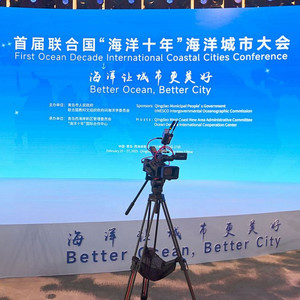
Currently, the Ocean Decade International Coastal Cities Conference is being held in Jingdao, China.
Just how important is China's marine economy to the country?
we'll dig into some details.
After that, Beijing stands as a testament to the enduring power of history, a city where millennia of imperial grandeur meet the vibrant pulse of modern life.
From the awe -inspiring Forbidden City to the tranquil beauty of the Summer Palace, each corner whispers tales of dynasties past, while the bustling hutongs and soaring skyscrapers showcase a city constantly evolving.
Today, we learn about what makes China's capital such a wonderful place.
We are live from the capital, from Beijing.
This is Roundtable.
Thank you so much for being with us today.
I'm Steve Hatherly, and for today's show I'm joined by Niu Honglin and Yuxian.
First on the program.
Jingdao in East China's Shandong province is holding the First Ocean Decade International Coastal Cities Conference in collaboration with UNESCO's Intergovernmental Oceanographic Commission.
This conference provides a vital platform for sharing knowledge, developing innovative solutions, and strengthening international cooperation to protect coastal communities and ecosystems, ensuring a resilient future for our oceans and cities.
It's a very important conference.
We're going to talk about the economy of the ocean here in China today.
Nyo Honglin and Yuxin, good afternoon.
Thanks for being with me.
Let's talk about our relationship with the ocean.
With the ocean. With the ocean, First of all, Yushin, I want you to go first because you said something to us before the show that really surprised me anyway.
Yeah, to be honest, you know, as people who grew up inland, you know, just being exposed to the, you know, local or authentic marine culture or just looking at the sea, you know, makes me feel fascinated.
And it was only, like, I have to say, and that is a fact, it was only a few years ago that I saw the ocean for the first time in my life, maybe like three years ago.
Wow, just three years ago.
How did you feel in that moment?
Did you get to dip your toes into the water or were you just looking?
Of course I did, and that's kind of a must do.
And basically, every time, like, when I was looking at the sea, I would take a picture with the sea, like, when I was on business trips.
or different business trips.
And, you know, we've always, like, read in our textbooks about how vast and boundless the sea is.
And then at the moment when I see it, yeah, the textbook didn't lie to me.
Yeah, that's wonderful.
Did you go for a swim, I wonder?
No, I'm, like, I'm afraid of, you know, getting a wave and God just disappear.
Sure, yeah, that's great, though.
I understand that feeling because previously I've seen the sea, the ocean several times and didn't impress me that much previously.
But once earlier last year, I spent a very busy month and every day it was like day and night I was working straight all the time as long as I'm awake.
and after conducting or finishing the task after that moment I had a half an hour going to the beach and looking at the sea and dip my toe in the sea water and I felt I felt so relaxed right so relaxed to the point that I got a high fever well just right after uh looking yes looking at the sea and listening
to the wave and I got so relaxed and I actually got high temperature because I was just too relaxed.
Like, yeah, everything hit me at that moment.
So yeah, the ocean does have that feeling, have that effect on you.
Yeah, I mean, I'm from Nova Scotia, Canada.
And Nova Scotia, the shape of it is kind of like a rabbit's foot.
It's a peninsula, so it's surrounded by water on three sides.
So I grew up very close to water every summer, going swimming at the beach, and I worked at a sailing club when I was a teenager.
But I get it because I remember meeting people from the Philippines, actually, who had been in Korea and were seeing snow for the first time in their lives.
They had never seen or touched snow before.
So I get that feeling of excitement.
And I think we can agree that our oceans are really important to our relaxation methods, but also to our economies for a number of different reasons.
And that's what we're going to talk about today.
So you shouldn't get us started.
We're going to talk about the marine economy and the fact that it's booming here in China.
Oh, yeah. So according to the 2024 China Marine Economic Statistical Bulletin compiled by the Department of Marine Strategic Planning and Economy, also Ministry of Natural Resources, China's growth oceanic product, China's gross oceanic product actually reached 10 .54 trillion yuan.
That's about 1 .45 trillion U .S.
dollars in 2024, marking a very astonishing 5 .9 % year -on -year increase.
And this increase is quite astonishing.
As I said, this growth rate even outpates the national GDP or gross domestic product growth by 0 .9 percentage points, with the marine economy accounting for 7 .8 % of the country's total GDP.
Impressive. Let's talk about what it is, because I think when we hear marine economy, that might not be a term that's familiar for everyone.
So what exactly is the definition?
What are we talking about?
Well, when we talk about ocean economy, marine economy, it's about the economic activities related to the oceans, such as offshore oil and gas, marine equipment and construction, container shipping, shipbuilding and repair, cruise tourism, port activities and marine energy.
All these things that are related to natural assets and ecosystem related to the sea would be in the category of marine economy.
And we already talked about the situation here in China.
But if you really think about it, take a look at the entire world economy.
Over 90 percent of international trade are actually shipped through marine time shipping.
And also among the 35 major megacities worldwide, actually 31 out of the 35 have something, have a coast, have something to do with the sea.
And also 50 % of world wealth are actually centered in what related to marine time industry.
So it is something quite important.
And if we think about the industries we've already listed and really think about it, actually, every sea can be a little bit different.
Every port have different conditions.
Not all ports are suitable for shipping.
Not all seas are quite favorable for tourism.
So they need to find their unique structure or unique strategy to develop, yet they also share some similarities, which I think is the most important reasons to have conferences like this.
This in -person conference have actually gathered over 150 to 200 participants, and they're talking about these interesting and can be different but can be similar kind of issues.
It's such an interesting conference, isn't it?
Because when we talk about the marine economy or the ocean economy, we're talking about so many different things.
Too many. Right. So that type of conference means they're covering a lot, a lot of different topics there.
Let's talk about some more statistics, some more figures, you should, in various marine economy industries, because there are a number of them.
Oh, yeah. So the first one I would like to mention is about tourism, because, yeah, thinking about the ocean or the sea, The first thing that comes to my mind is, as you only said, enjoying your time on the beach, right?
So tourism actually showed strong recovery signals in recent years, with cruise travel experiencing a significant uptick in popularity.
And the China Daily Report says coastal cities such as Shanghai, Tianjin, Guangzhou, and Shenzhen maintaining high tourist activity throughout the year.
Sure. And one cruise ship I would like to mention is the Adora company's Adora Magic City.
It is actually the first domestically produced large cruise ship.
And actually, they have collectively served over 520 ,000 domestic and international guests since its operation.
And the second domestically produced large cruise ship, the Adora Flower City, has now achieved full ship integration and also is scheduled for delivery by the end of 2026.
Exciting. I would encourage anyone to take a cruise as a vacation.
I've never tried before.
It's a totally different experience.
It's like you are when I was 18 years old, my parents gifted my sisters and I as a Christmas present, a family cruise in the Caribbean.
So to be in the Caribbean at Christmas time, first of all, is an odd thing because it's 30 degrees outside and there's Christmas trees all over the place.
But the experience of taking a cruise itself is unique in the sense that when you're on the ship, you feel like you are living in a department store, a giant department store.
They have everything on there, literally everything on there.
And what was cool, all cruises are different, of course, but you go to one island, you spend a day there, you get on the ship, you cruise at night, the boat goes to a different island.
When you wake up in the morning, you're at a different spot, you get off and explore.
I would really encourage people to to take that kind of trip.
You should be aware that it takes a day or two to get your sea legs, meaning for the first day or two, you're kind of wobbling back and forth.
But then your brain adjusts and then you're wobbling on land when you step back onto the land.
It's a very unique experience.
But I would encourage people to do it for for sure.
Yes. And besides tourism, another traditional something traditional industry related to the ocean, something we're familiar with, would definitely be the marine transportation.
That industry showed robust growth as well with cargo turnover rising by 9 .5 % year on year, while port service to 23 billion US dollars.
And it is quite reasonable to see that growth because to this day, marine transportation is still the cheapest way to get the large amount of stuff from one place to another.
So it makes a lot of sense.
And if we take a look at the one example in actually Hebei province here in China, information from the local government revealed that Hebei is aiming to boost the annual throughput capacity of its ports to 1 .4 billion metric tons and 8 million standard containers by 2027.
It's one of the most important industries in the world, you could argue.
We don't think about it, do we?
When we go to the grocery store and we see some product from some country overseas, well, how did it get here?
Well, the odds are, maybe not, but the odds are it was shipped on a container on a ship that took a long time to arrive.
Looking at the global situation, maybe we'll come back to China in a few minutes, but there was an article in 2024 from the London School of Economics and Political Science.
It talked about the growth of ocean -based economic activities and the fact that it's gathered pace over the past 50 years and that the ocean economy is now estimated to be worth about a trillion and a half dollars and it could increase by another three trillion by the year 2030.
they're looking at offshore wind marine aquaculture and fish processing as as areas of growth and if we look at figures from where I'm from excuse me I found and this is something that I've never thought of before you know being Canadian Canada is an interesting country because of its geography we have a lot
a lot of coastline and I told you about the geography from where I'm from, but I never thought about it before.
In Nova Scotia specifically, we have the largest center for ocean research.
We have 600 scientists and engineers and technicians.
We have over 500 sector companies in our part of the country, including the most ocean tech startups in Canada, which is cool.
I didn't know that before.
Our ocean -related industries generate approximately $6 billion.
That's about 13 .5 % of Nova Scotia's GDP.
And then the ocean technology industry, accounts for about a third of total R &D among Nova Scotia businesses.
And that's just Nova Scotia.
That's one province in the whole country.
In Canada, the marine industries represent an opportunity for economic growth and then job creation and innovation and all the things that come with it.
In Halifax, we have cruise ships that come in from the United States.
It's fun to look at a cruise ship out your apartment window.
But that's just further proof, isn't it, That even in a small place like Nova Scotia, the impact of the ocean economy can be really, really significant.
That's Canada. That's Nova Scotia.
Let's come back to China.
Where are some areas in China where ocean -related development is significant?
Oh, yeah. So Yangtze evening news in December 2024 reported a blue book on this urban development and on this kind of marine economy.
And the report revealed that the 2023 gross oceanic product of China's northern, eastern, and southern marine economic zones were all above 3 trillion yuan with a year -on -year growth of 4 .3%, 8 .2%, and 5 .5 % respectively.
Also, you know, recent report by the official website of the United Nations Conference on Trade and Development saying that the ocean economy has grown 2 .5 times since 1995 and outpacing the global average.
This is absolutely a huge number that we can see and we can absolutely feel that the ocean can bring us so much, I think, benefit.
I thought you were going to say joy.
It really did. That, too.
Not just huge numbers.
And those numbers are significant, aren't they, that growth, but also the geographical space that it covers, the northern regions of China, the eastern regions and the southern marine economic zones.
That's all down the side from the top to the bottom of the country, showing how important it is to those regions and also to the country as a whole.
Yes, and we don't think about it this way very often, to be honest, because, for example, if I think about Shandong province, actually, I didn't know that it is actually a maritime province with extensive coastal line.
It features seven coastal cities, each of which contributes to the rich marine culture of the region.
And besides Qingdao, for example, there is also Yan Tai.
And in Hebei province, which we already mentioned a little bit, there are also coastal cities.
And of course, there's Shenzhen, there's Shanghai.
And all these places have their unique way of conducting marine -related economy or marine -related research, which Steve has just mentioned, research is also a very interesting part of the marine industry because the condition, the environment and the kind of experiment you can conduct on the sea and deep
in the sea is totally different from what's inland.
You know what, like speaking of maritime culture, recently I've also seen many people from like coastal cities, as you mentioned, Qingdao and cities in Shandong province post videos of them like, you know, catching sea products or people call them Gan Hai or chasing the sea, you know, they're actually
just picking up like sea products on the beach.
And it has basically that kind of scenes of treasure hunting kind of feeling also.
But with everyday sea product, really, really feels novel to us inland people.
And just by looking at their videos, it makes me feel like, wow, they're so happy with such kind of environment.
And they can have that kind of marine time culture to grow up with them.
That's one thing. On top of go out and fishing and get the kind of creature that you might have never seen before.
Another thing that you can do is to raise some, let's say it's kind of like a smart, no, I was talking about the kind of smart agriculture, but on the sea.
So raise the fish in the sea.
That is another thing that you can do.
And actually, the Guo Xing Wan is the world's first 100 ,000 ton class, large scale aquaculture, I would assume.
That's what it's called.
It's a vessel, and it is a groundbreaking innovation in the field of marine fisheries.
And talking about something you can conduct on the sea, there is also something called a marine oil factory that is to harvest oil from when you're actually in a ship on the sea.
So, yeah, a lot of different industries that I was not familiar with.
There's so much. where the conference is being held they have multiple marine ecological protection and restoration projects because we have to remember that when we're harvesting from the sea when we're making use of the sea we have to protect it as well and they yield positive ecological and economic
and social benefits last November the Jintao West Coast Marine Ecological Protection and Restoration case was selected as a typical case for Marine Ecological Protection and Restoration in China for 2024.
And the case was shared at the First Ocean Decade International Coastal Cities Conference this year in Qingdao, which is a cool thing.
All right. Yushin, I have to ask about AI because every time we talk about a certain type of industry, we just make the assumption that AI will be implied somehow.
Is that the case here too?
Oh, yeah. So AI plus marine economy is also a topic right now.
Some recent reports saying that the vice president of Qingdao Institute of Marine Biopharmaceuticals in the Qingdao Laoshan Ocean Artificial Intelligence Industrial Cluster region, whose name is Yang Jingbo, said AI technology is widely applied in ocean medicine research and development.
For example, during the early stages of research, large AI models are used to shift through vast amounts of data and materials to identify necessary molecules.
And AI also helps predict drug toxicity, simulate clinical applications, and also improve the efficiency and safety of marine medicine research and development.
And these are some of the applications that you can see AI in marine economy.
Besides that, actually, AI is also applied in a lot of different ports, collecting data, finding out the best algorithm, which which box should go first, which container.
Yes, and also making the shipping and loading and downloading is not the right word, but getting the containers from the ship to the port.
These are also... Safely, yeah.
Those are huge and those are heavy, right?
And they have to be careful how they stack them on top of each other because of weight differences and things.
So, yeah, AI helps a lot there, too.
Other areas of China, the Hebei province.
According to a report last year, Hebei province, that's in northern China, right?
They have a coastline as well of 487 kilometers.
They govern over 7 ,200 square kilometers of sea area there.
They have three coastal cities.
They have capacity at their ports as well, and they're aiming to boost their annual capacity through their ports to 1 .4, Almost 1 .5 billion metric tons, about 8 million standard containers by 2027.
8 million containers, goodness me.
That's a lot of moving product, isn't it?
And it just goes to show how important these are.
So when we talk about the different areas, we've proven that having successful ports, having a successful system in place marine -wise is important for the economy, but there's also challenges as well.
What type of difficulties are we looking at here?
You know, I've always been thinking about when we're discussing, you know, how good, how beneficial the ocean can bring us.
And we'll realize that the ocean is...