
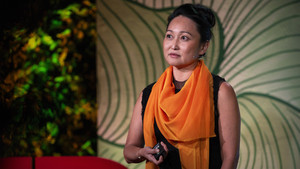
[Decoding the Future: How Gen Z’s Relationship with Food Reflects Our Changing World]-[Our savory, spicy, significant relationship with food | June Jo Lee]
📋 Summary
Decoding the Future: Food as a Mirror to Generational Evolution
In her insightful TED Talk, food ethnographer Jun-Jo Lee explores the profound connection between what we eat and who we are becoming. By analyzing the dietary habits and perspectives of Generation Z, Lee argues that food serves as a "portal" to understanding the anxieties, values, and aspirations of a generation navigating a complex, chaotic era.
The Ethnographic Approach to Nourishment
Lee defines her role as a food ethnographer, someone who decodes the "rich meaning" behind our food choices. She posits that our preferences reveal our "modern hungers" and "deepest desires." By asking, "What’s delicious to you?" or "What feeds your life?", Lee bypasses superficial trends to uncover the core of a person’s identity. This approach is not merely academic; it is deeply personal. For Lee, practicing ethnography became the bridge to reconnecting with her son, Lou, shifting her role from a "tiger mom" to an empathetic listener who truly seeks to understand her child’s internal world.
Gen Z: Surfing the Waves of a Chaotic Era
Describing Gen Z (born 1997–2012) as "open, fluid, and clear by default," Lee highlights the unique pressures this generation faces. Having come of age during a "global pandemic" and living on a "terminal timeline," their worldview is inherently colored by instability. Her son, Lou, describes the world as "spicy," reflecting the "irreversible levels" of climate change and systemic socio-economic frustrations.
Despite this, Gen Z is characterized by resilience. They are "hyper self-aware" and "data-based," using their digital connectivity to navigate a world that often feels "disorienting." They are, as Lee puts it, "power users of the future," learning to ride the waves of a tumultuous reality without losing their sense of agency.
Food as Resistance and Resourcefulness
One of the most striking observations in the talk is how Gen Z utilizes food as a tool for hope and sustainability:
- Cultural Pride and Connection: For individuals like Lou, food like "tacos" represents more than sustenance; it is a symbol of family, friends, and identity. It is a way to anchor oneself in heritage amidst a rapidly changing cultural landscape.
- The "Hot Sauce" Mentality: Lee notes that Gen Z often carries "hot sauce" to make "bland, no-change food palatable." This is a metaphor for their desire to add flavor and agency to a world that feels stagnant or uninviting.
- Sustainability and Upcycling: Entrepreneurs like Olivia represent a generation obsessed with "zero waste-ifying." By learning to make "kimchi, pao zai, and sauerkraut," they are actively "fermenting and upcycling" resources to create more "nutritious worlds." To them, "waste hurts," and they are determined to find their place in "well-functioning cultures."
Becoming a Food Ethnographer of Your Own Life
Lee concludes by inviting the audience to adopt the ethnographic mindset. She suggests that by asking simple, probing questions—such as "What’s your flavor of home?" or "How are you learning to care more about food in your life?"—we can foster deeper connections and gain clarity on our own values.
Ultimately, Gen Z serves as our "mentors of new ways." They are the "kimchi" of our society—transforming the "hot messes" of the present into something fermented, complex, and hopeful for the future. By paying attention to what we choose to eat, we gain the power to not only understand the present but to actively shape the future.
Deep Learning with ListenLeap


